7 Steps to Adjust Front Suspension on Your Mountain Bike
Many mountain bikers struggle to get their front suspension dialed in just right. It can be frustrating to ride with a setup that feels off, causing instability or noise. You’re not alone—fine-tuning your suspension can make a huge difference in comfort and control.
To adjust your front suspension, start by evaluating how it feels during rides, noting any instability or noises.
Next, measure and set the correct sag by marking the stanchion; adjust preload or air pressure accordingly. Tune rebound and compression settings based on terrain, making small tweaks and testing each time.
Verify the suspension’s stiffness for comfort and control. If you want to master the fine details, you’ll find useful tips that can help perfect your setup as you continue.
Key Takeaways
- Check for smooth, responsive fork movement. Listen for any bouncing or noises that might indicate issues.
- Measure and adjust the suspension sag. This helps ensure the suspension compresses properly and maintains good contact with the terrain.
- Fine-tune the rebound and compression settings based on your riding style and the terrain you’ll be tackling.
- Adjust the air pressure or coil spring tension so it matches your weight and how stiff you like your suspension.
- Take your bike for a test ride after each change. This way, you can see how it handles and make further adjustments if needed.
How to Assess Your Front Suspension Setup
Wondering if your front suspension is properly set up? First, see if the fork feels smooth and responsive during your ride. Pay attention to any excessive bouncing or if the handlebars feel unstable.
Stand on your bike and gently push down on the front end. The suspension should compress smoothly and return to its original position without resistance or delay. Also, check the tire contact patch; if it feels uneven or the bike feels sluggish, your suspension might need adjustment.
Look for signs of oil leaks or damaged seals, which can indicate issues. Finally, compare how your bike handles to your usual ride experience. If it feels off or unpredictable, it’s time to assess and fine-tune your suspension setup.
What Is Suspension Sag and How Do You Set It Correctly?
Suspension sag is how much your front suspension compresses when you sit on your bike. Getting this right is really important for the best performance.
You’ll want to measure how much your suspension compresses with your weight on the bike, then make adjustments as needed. Properly setting your sag means a smoother ride and better control over rough terrain.
Importance of Suspension Sag
Understanding suspension sag is crucial because it directly impacts how your mountain bike handles rough terrain and absorbs shocks. Getting it right ensures your suspension isn’t too stiff or too soft, helping you stay in control and ride comfortably.
When your sag is set properly, your suspension can absorb impacts efficiently without losing traction or feeling sluggish. If it’s too high, your suspension won’t respond well to bumps, which can make your ride less stable.
On the other hand, if the sag is too low, your bike might feel sluggish and easily bottom out. Correct sag improves responsiveness, prevents early wear, and makes your ride safer.
It also helps you stay in control on technical trails and steep descents. Prioritizing the right suspension sag means smoother rides and more confidence in all kinds of trail conditions.
How To Measure Sag
Measuring suspension sag correctly is key to setting up your mountain bike’s suspension for top performance. First, put on your riding gear and get into your usual riding position on the bike.
Make sure your bike is on a level surface. Carefully lift the rear wheel slightly, then sit back into your normal riding stance.
Next, use a marker or tape to mark the point on the fork stanchion where it meets the top of the dust seal or the fork crown. With your weight on the bike, measure the distance from the axle to this mark.
That measurement is your sag. Getting it right ensures your suspension is set at the proper compression level for the best control and comfort.
Adjusting Sag Properly
Once you’ve measured your sag, the next step is to adjust it to match your riding style and weight. Proper sag guarantees the best suspension performance, comfort, and control.
To do this effectively, turn the preload knob or adjust the air pressure to get the desired sag. Use your weight and riding style as a guide—more aggressive riders usually need less sag.
Double-check your sag after making adjustments to ensure it’s accurate. Remember, typical sag is about 15-30% of your suspension’s travel.
Take a test ride and tweak as needed to get a smooth, responsive feel. Getting your sag right helps your bike absorb shocks better and keeps traction, making your ride safer and more fun.
How to Adjust Rebound for Better Control
Adjusting the rebound setting on your front suspension is key to maintaining control and smoothness over different types of terrain. Rebound controls how fast the fork returns to its original position after compressing.
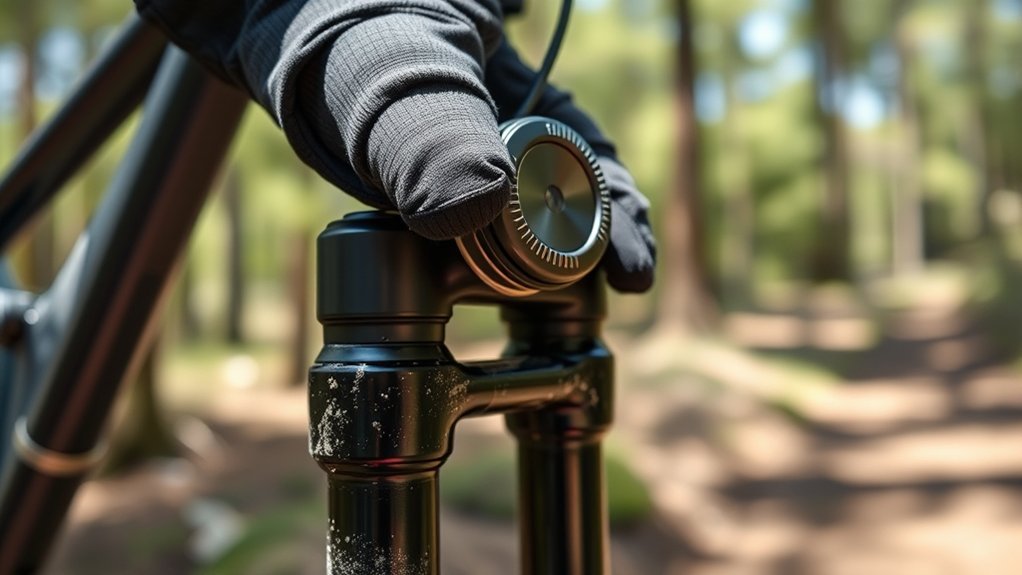
If it’s too quick, the fork might bounce too much, making things unstable. If it’s too slow, the suspension could pack down, which reduces traction. To adjust rebound, find the rebound dial on your fork, usually marked with “Reb” or something similar.
Turn it clockwise to slow down the rebound, or counterclockwise to speed it up. Test your settings by riding over rough terrain; your suspension should recover quickly without bouncing repeatedly.
Keep fine-tuning until you find a balance that feels smooth and controlled. This will give you better handling on a variety of trail conditions.
How to Tune Compression Settings for Different Terrains
Tuning your compression settings is key to getting the best performance from your front suspension on different terrains. Making small adjustments helps you stay smooth, controlled, and confident no matter what surface you’re riding on.
For smooth trails, soften your compression to better absorb small bumps and chatter. When tackling rough, technical sections, firm up the settings to prevent too much fork movement.
Adjust your compression for climbs to keep the front end stable without feeling sluggish. Loosen it up for downhill descents to allow more travel and better absorption.
On rocky or root-filled trails, tighten the compression for extra control and responsiveness. Remember, experiment with small tweaks, take test rides, and fine-tune based on how your suspension reacts. Proper compression tuning can really improve your riding experience.
How to Set the Right Air Pressure in Your Fork
Getting the right air pressure in your fork is key for top performance and control. Proper pressure ensures your suspension reacts correctly to different terrain, giving you comfort and stability.
Check your fork’s manufacturer recommendations, usually printed on the stanchion, to find the ideal pressure. Adjust by adding or releasing air with your pump until the fork feels firm but not rigid.
Think about your riding style when setting pressure. For cross-country riding, go for lower pressure for better bump absorption. Downhill riding needs higher pressure for more support and control.
Trail riding calls for medium pressure, balancing comfort and handling. Enduro riders should use slightly higher pressure to handle rough terrain better.
How to Test and Fine-Tune Your Suspension After Adjustment
Once you’ve set your suspension pressure, it’s important to test how it performs on the trail or in a controlled environment. This helps you see if your adjustments are working or if you need to fine-tune further.
Go for a few short rides over different types of terrain, paying close attention to how the fork responds. Focus on how smoothly it compresses and rebounds, and whether it feels too soft or stiff.
Check if you’re experiencing excessive bottoming out or if the bike’s stability and control feel off. Listen for any strange noises or resistance that shouldn’t be there.
Make small changes based on what you notice, then test again. Fine-tuning might take a few tries. The goal is a balanced suspension that absorbs bumps without feeling sluggish or too firm, making your ride smoother and more controlled.
Troubleshooting Common Front Suspension Issues
If your suspension feels less responsive or leaks oil, check around the seals and stanchions for leaks.
Adjusting the stiffness can make your ride better, but be sure your settings match your weight and riding style.
Troubleshooting these issues quickly helps keep your ride smooth and safe.
Identifying Suspension Leaks
Suspension leaks are one of the most common issues that can affect your bike’s performance. If you notice your suspension isn’t responding as well, it’s a good idea to check for leaks around the seals and stanchions.
Look for oil residue on the fork or shock, which is a clear sign of a leak. You might also hear a hissing sound when compressing the suspension—that’s air escaping and causing pressure loss.
Carefully examine the seals for cracks or damage. Keep an eye out for visible oil, spongy suspension feel, or pressure loss over time.
Unusual noises during compression or worn seals are also signs of leaks. Addressing these issues quickly helps keep your suspension working at its best and prevents more damage down the line.
Adjusting Suspension Stiffness
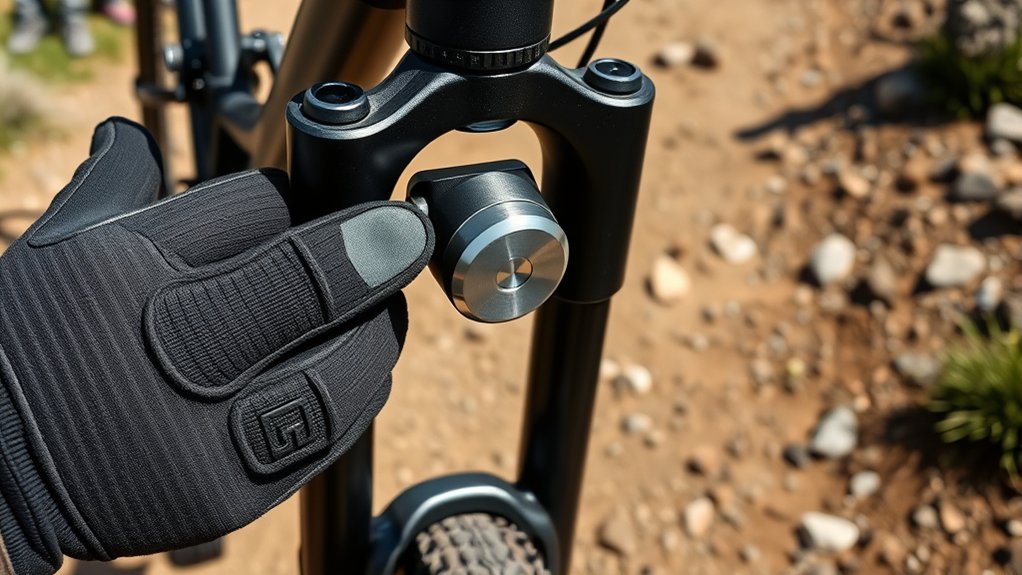
Adjusting the stiffness of your front suspension is key to getting the best ride comfort and handling on different terrains. Locate the preload adjuster or air spring valve on your fork to make adjustments.
If your fork uses air, add or release air pressure based on your weight and riding style. More pressure means firmer suspension, less pressure makes it softer. For coil springs, turn the preload knob to increase or decrease tension, which adjusts how much the spring compresses under load.
Make small adjustments and take a test ride afterward to find what feels best for you. Proper stiffness improves control, reduces fatigue, and enhances traction.
Always check your fork’s manual for specific instructions, as adjustment mechanisms can vary between models. Setting your suspension stiffness correctly makes your rides smoother and more responsive.
Frequently Asked Questions
How Often Should I Service My Front Suspension?
You should service your front suspension every 50 to 100 hours of riding, depending on the conditions. If you’re riding in muddy or dusty areas, it’s a good idea to do it more often.
Keep an eye out for leaks, strange noises, or if your bike feels less responsive. Regular cleaning and inspecting the seals can help extend the life of your suspension.
When you’re unsure, check your suspension manufacturer’s recommendations or take your bike to a professional shop for a thorough service.
Can I Upgrade My Suspension Components for Better Performance?
Yes, you can upgrade your suspension components for better performance. Think of your bike as a symphony; upgrading parts like forks or shock absorbers fine-tunes the harmony, enhancing ride quality.
Choose high-quality components suited for your riding style and terrain. Doing so not only improves handling and comfort but also extends your bike’s lifespan.
Invest wisely and consult with experts to ensure compatibility and peak performance.
What Tools Are Needed to Adjust My Front Suspension?
You’ll need a few essential tools to adjust your front suspension. Grab a suspension pump, designed for air forks, to fine-tune the pressure.
A shock pump with a pressure gauge helps you set the correct air pressure. Have an Allen wrench or hex key set for any necessary bolt adjustments.
A torque wrench is also important to make sure you tighten everything to the right specifications. These tools make suspension adjustments precise and easy.
How Do I Identify if My Suspension Is Too Stiff or Too Soft?
You’ll quickly notice if your suspension’s too stiff—your ride feels harsh and bouncy over bumps.
If it’s too soft, it feels sluggish, absorbing landings but bottoming out easily.
To check, press down on the handlebars and then release.
If it rebounds smoothly without excessive sag or delay, you’re probably good.
Otherwise, tweak your settings.
Is It Necessary to Recheck Suspension Settings After Riding?
Yes, you should recheck your suspension settings after riding. Riding exposes your bike to different terrains and impacts, which can change how the suspension performs.
Pay attention to how your bike feels during and after rides. If it feels too stiff or soft or isn’t responding like it should, adjust the settings accordingly.
Regular checks help keep your suspension tuned for maximum comfort and control, making your rides smoother and safer.
Conclusion
Now that you know the steps to perfect your front suspension, you’re ready to conquer any trail like a mountain biking superhero!
With proper setup, your ride will feel smoother, more controlled, and better able to handle even the wildest terrain. Don’t settle for a bumpy, unpredictable ride.
Your bike’s suspension is your secret weapon. So get out there, fine-tune your setup, and turn every trail into a victory parade with your perfectly adjusted front suspension!