7 Tips for Choosing the Perfect Enduro Mountain Bike
Finding the perfect enduro mountain bike can feel overwhelming, especially with so many options out there. Many riders struggle with choosing a bike that matches their skill level and riding style, leaving them frustrated or unsure.
To choose the perfect enduro mountain bike, assess your skill level and riding style, focusing on terrain preferences like steep descents or rocky trails.
Consider suspension travel and wheel size that match your riding needs, with higher travel for tough terrains. Set a budget based on your goals, and compare brands by reading reviews that highlight real-world performance.
If you’re curious about making the best choice, you’ll find more helpful tips ahead.
Key Takeaways
- Match bike suspension travel and geometry to your skill level and preferred terrain for optimal control and comfort.
- Consider wheel size, either 27.5 inches or 29 inches, based on whether you prioritize agility or momentum.
- Think about your riding style—whether it’s technical, downhill, or cross-country—and pick features that suit that style.
- Set a realistic budget, focusing on quality components and durability to ensure your bike performs well over time.
- Take the time to read a variety of recent reviews from riders with similar skills. This can help you spot reliable models and common issues.
What Is an Enduro Mountain Bike and Why Choose One?
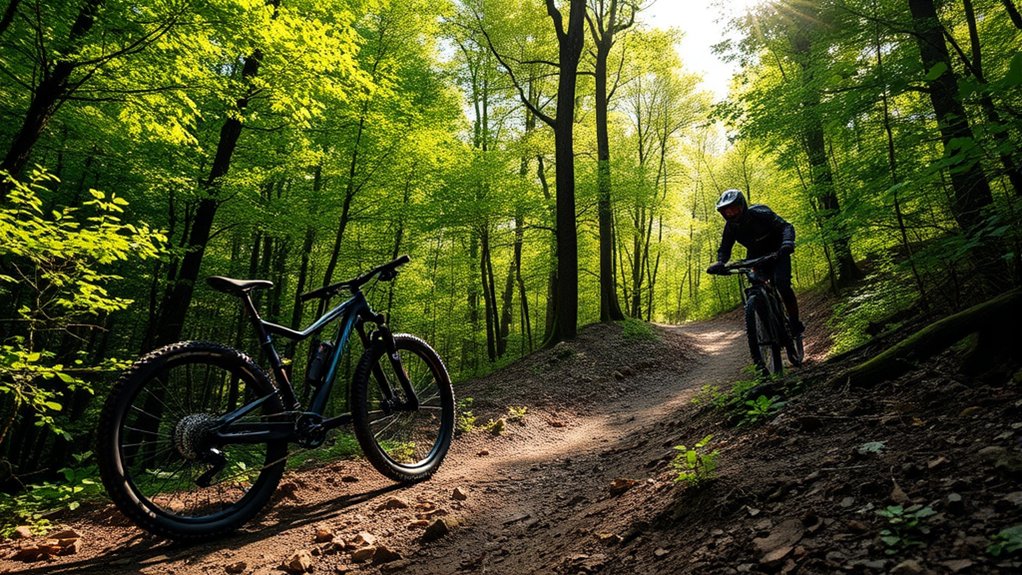
An enduro mountain bike is a versatile bike built for both tough climbs and technical descents with ease. It’s perfect for riders who want to conquer rough trails without losing efficiency.
Its suspension system is sturdier than cross-country bikes, offering comfort and control on steep, rocky downhill sections. The geometry also makes pedaling uphill more efficient.
Choosing an enduro bike means you’re ready for a mix of challenging terrain and fast downhill sections. It balances agility with stability, giving you confidence on tricky trails.
If you love adventurous rides that push your limits, an enduro bike provides the durability and performance you need.
What Are the Key Features to Look for in an Enduro Bike?
When choosing an enduro bike, you should focus on suspension travel and quality to handle rough terrain smoothly. Good suspension keeps you comfortable and in control on tough trails.
The frame’s durability and material also matter, ensuring your bike can withstand tough rides without breaking down. A strong, reliable frame is key for long-lasting performance.
Prioritizing these features helps you find a bike that’s both reliable and performance-ready. With the right setup, you’ll be ready for any trail adventure.
Suspension Travel and Quality
Suspension travel and quality are key factors that directly affect your enduro bike’s performance and comfort on rough terrain. Longer suspension travel, usually between 150-170mm, helps absorb big impacts, keeping you stable and confident on technical descents.
But too much travel can make pedaling less efficient on flat sections, so it’s all about finding a balance that matches your riding style. High-quality suspension components give you better damping control, which reduces harshness and improves handling.
Look for bikes with adjustable suspension settings so you can fine-tune your ride based on trail conditions. Reliable suspension also means fewer maintenance issues, saving you time and money.
In the end, choosing the right suspension travel and quality ensures a smoother, more controlled ride through challenging terrain.
Frame Durability and Material
Choosing a durable frame is key because it directly affects how well your bike can handle tough terrain and aggressive riding. The right material ensures strength without making your bike too heavy, so your ride stays smooth and safe.
When checking out frames, focus on these main features:
- Material Type: Aluminum is lightweight and durable, while carbon fiber offers high strength with less weight.
- Frame Geometry: Pick a geometry that gives you stability and responsiveness on challenging trails.
- Weld Quality: Look closely at the welds—solid, consistent welds mean a stronger frame.
- Reinforcements: Choose frames with reinforced areas around stress points for extra durability.
Focusing on these aspects helps you find a frame that lasts through the demands of enduro riding, giving you confidence and long-term reliability.
How Do I Assess My Skill Level and Riding Style?
To choose the right enduro bike, start by honestly evaluating your riding experience and comfort level on different trails. Think about the terrain you prefer, like whether you’re tackling technical descents or smoother climbs.
Also, consider your fitness, as it impacts how the bike handles and how long you can ride comfortably. Knowing your skill level and riding style helps you pick a bike that matches your needs and keeps you having fun out there.
Evaluate Your Riding Experience
Have you ever wondered how your current riding skills and style influence the type of enduro bike that’s right for you? To evaluate your experience, think about these key aspects:
- Trail Comfort: Are you comfortable riding technical descents, or do you prefer smoother trails?
- Handling Skills: Can you confidently navigate sharp turns, jumps, or rocky sections?
- Endurance Level: How long can you sustain demanding rides without feeling exhausted?
- Speed Preference: Do you enjoy pushing your limits on fast descents or taking a more relaxed pace?
Assessing these factors helps you figure out whether you need a bike built for aggressive riding, endurance, or versatility. Being honest about your skills ensures you pick a bike that matches your abilities and riding style, making your experience safer and more enjoyable.
Identify Terrain Preferences
Understanding your terrain preferences is key to matching your riding style with the right enduro bike. Think about the trails you enjoy most—are they steep descents or technical rock gardens?
Your riding style influences your bike choice, whether you want speed, control, or agility. To figure out what you need, check out this table:
| Terrain Type | Preferred Bike Features |
|---|---|
| Steep descents | Long suspension travel, aggressive geometry |
| Technical trails | Agile handling, precise steering |
| Flowing trails | Lightweight frame, efficient pedaling |
| Rocky terrain | Durable tires, robust build |
Knowing your preferences helps you pick a bike that boosts your riding and builds your confidence on your favorite trails.
Determine Fitness Level
Evaluating your skill level and riding style is key to choosing an enduro bike that matches your abilities and helps you improve. To do this well, think about these important points:
- Assess Your Confidence: Are you comfortable tackling technical descents, or do you prefer smoother trails? Knowing where you stand helps narrow down your options.
- Identify Your Strengths: Do you excel in climbs, jumps, or cornering? Recognizing your skills guides you toward a bike that complements your riding style.
- Reflect on Your Experience: Are you a beginner, intermediate, or advanced rider? Your experience level influences the type of bike that will suit you best.
- Determine Your Goals: Do you want to improve specific skills or focus on endurance? Clarifying your goals helps you choose a bike that supports your ambitions.
Understanding these aspects ensures you pick a bike with the right suspension, geometry, and components. This way, your ride feels confident and fun while helping you grow as a rider.
Which Suspension Setup Works Best for Different Trails?
Choosing the right suspension setup depends largely on the type of trail you’re riding. For technical, rocky terrain, go for a full suspension with more travel—around 150mm to 170mm—to absorb impacts and stay in control.
If you’re tackling smoother, flowy trails, a lighter setup with less travel—around 130mm—gives you better responsiveness and efficiency. Enduro races with mixed terrain often need adjustable suspension.
This way, you can switch between plush settings for descents and firmer ones for climbs. Keep in mind that softer setups soak up rough sections but might feel sluggish on fast, smooth trails.
On the other hand, stiffer setups give you more direct feedback, which is great for fast riding. But they might be less comfortable when the trail gets rough. Choose a suspension setup that matches your trail conditions for the best performance.
What Wheel Size and Tires Are Ideal for Enduro Riding?
Selecting the right wheel size and tires is key to optimizing your enduro experience, especially since terrain varies so much during races or rides. Your choice impacts handling, speed, and grip. Consider these options:
27.5-inch wheels offer a great balance of agility and rolling efficiency, making them ideal for technical trails.
29-inch wheels provide better momentum and rollover capability, perfect for fast, open sections.
Plus-sized tires, around 2.8 to 3.0 inches, improve traction and comfort on rough terrain.
Tubeless tires help reduce weight and allow for lower pressures, boosting grip and preventing flats.
Matching your wheel size and tire type to your riding style and terrain guarantees better control, comfort, and confidence on every ride.
How Much Should I Budget for a Good Enduro Bike?
Wondering how much you should set aside for a quality enduro bike? Prices can vary a lot, so it’s good to know what to expect.
Entry-level models usually start around $2,500 to $3,500, offering decent performance for beginners. If you’re looking for a bike built for serious riding and durability, expect to spend between $4,000 and $7,000.
Entry-level enduro bikes cost around $2,500–$3,500, perfect for beginners seeking decent performance.
High-end models with advanced components, lightweight frames, and top-tier suspension can cost $8,000 or more. Keep in mind, investing in a reliable bike often means better parts, durability, and a more enjoyable ride.
While it might be tempting to go for the cheapest option, think about your riding style and goals. A good enduro bike is an investment that can improve your riding experience for years.
How to Compare Brands and Read Reviews Effectively?
When comparing different brands and reading reviews, it’s key to focus on how a bike performs in real-world situations instead of just looking at specs. To do this effectively, follow these steps:
- Check multiple sources – Look at reviews from both experts and users to get a balanced view.
- Identify recurring themes – Notice patterns in reviews, like common issues or features people praise.
- Prioritize recent reviews – Technology changes quickly, so recent feedback gives the most relevant info.
- Assess rider experience – Find reviews from riders with similar skill levels and riding styles as yours.
Frequently Asked Questions
How Often Should I Perform Maintenance on My Enduro Mountain Bike?
You should perform maintenance on your enduro mountain bike regularly, ideally after every ride, especially if you’ve been on muddy or rough trails.
Weekly checks should include tire pressure, brake function, and chain lubrication.
Monthly, you should inspect and clean the drivetrain, suspension, and brake pads.
Make certain to schedule professional tune-ups every few months or after every 200-300 miles to keep your bike in top condition and guarantee safety.
What Safety Gear Is Essential for Enduro Riding?
You should always wear a helmet, gloves, and protective eyewear for enduro riding. Knee and elbow pads are essential to guard against falls and impacts, while body armor offers extra protection on tougher trails.
Consider a hydration pack to stay refreshed, and make sure your riding shoes have good grip. Wearing high-visibility clothing can also keep you seen by others, making your ride safer and more enjoyable.
How Can I Improve My Endurance for Long Rides?
To improve your endurance for long rides, focus on consistent training and gradually increase your ride duration. This helps build your stamina over time.
Incorporate interval training to boost your stamina, and consider adding cross-training activities like running or swimming. These can give your muscles a break while still building endurance.
Maintain a balanced diet rich in carbs, protein, and healthy fats to fuel your rides properly. Staying well-nourished makes a big difference.
Don’t forget to stay hydrated, get enough rest, and listen to your body. It’s important to avoid overtraining and prevent injuries.
With dedication and patience, you’ll see your endurance and overall riding performance improve significantly.
Are Electric Enduro Bikes Worth Considering?
Yes, electric enduro bikes are worth considering if you want to extend your riding range and tackle more challenging terrains with less fatigue. They give you extra power, making steep climbs easier and helping you focus more on your riding skills.
But keep in mind the added weight, maintenance, and cost. They’re a great choice if you enjoy longer rides and want to push your limits. An e-enduro bike could be a smart investment for your adventures.
What Are Common Beginner Mistakes to Avoid in Enduro Riding?
Imagine traversing a labyrinth with a torch. Your first mistake is ignoring your skill level and rushing into challenging trails. You might overspeed, risking falls, or underestimate technical sections.
Don’t neglect proper gear or skip trail prep, like checking your tire pressure or brake function. It’s easy to overlook these details, but they make a big difference.
Avoid overconfidence. Instead, focus on controlled, smooth movements and always stay within your limits. Respect the terrain, and your ride will be safer and more enjoyable.
Conclusion
Picture yourself conquering rugged trails, the wind whipping past as your enduro bike responds seamlessly to every twist and turn. By choosing the right bike with the perfect features, you’ll turn every ride into an adventure filled with adrenaline and freedom.
Keep your skills in check, pick the ideal setup, and invest wisely. With the right enduro bike, you’re not just riding—you’re embracing the thrill of every descent and climb, ready for whatever the trail throws your way.