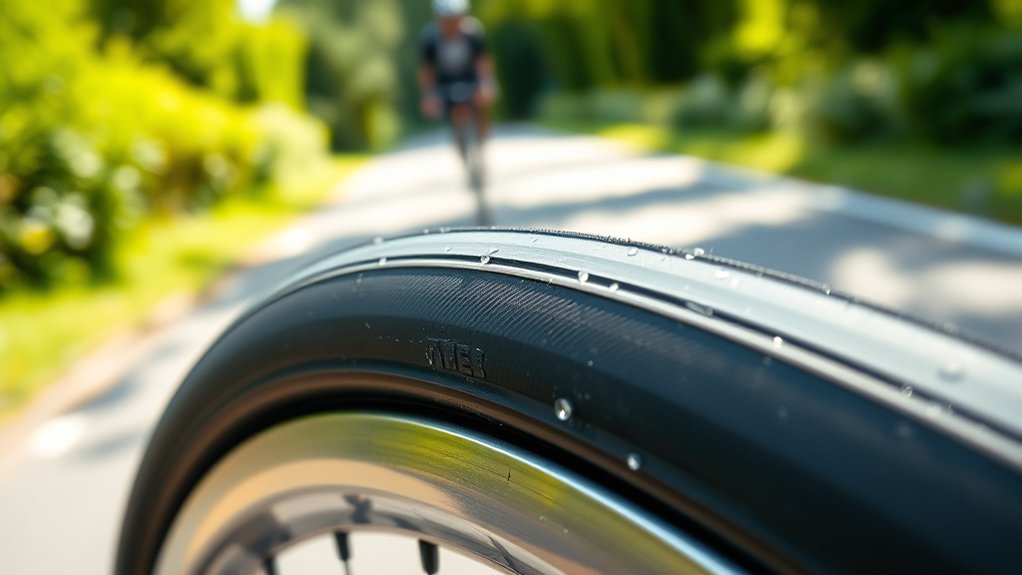
How Long Do Road Bike Tires Last and How to Care for Them
Many road cyclists know the frustration of unexpectedly dealing with flat tires or worn-out rubber just when you’re about to enjoy a ride. You’re not alone—keeping your bike tires in top shape can be a constant challenge.
If you’re wondering how long your road bike tires last and how to care for them properly, we’ve got you covered.
You can expect your road bike tires to last between 1,000 and 3,000 miles, depending on your riding style and road conditions. To get the most out of them, keep your tire pressure right, avoid rough surfaces, and inspect for wear or damage regularly.
Proper maintenance like cleaning and rotating tires also helps extend their life. If you want to understand how to spot signs for replacement and boost durability, there’s more useful info ahead.
Key Takeaways
- Road bike tires usually last between 1,000 and 3,000 miles. It really depends on how you ride and the types of roads you ride on.
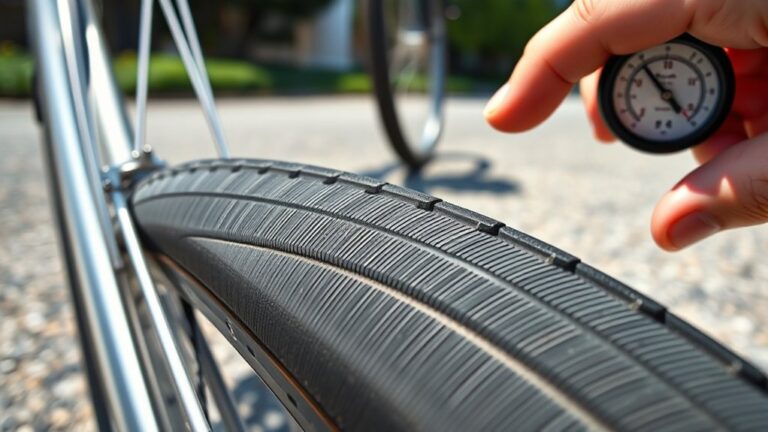
- Make it a habit to check your tire pressure regularly. Keeping your tires properly inflated helps prevent early wear and reduces the risk of blowouts.
- Take a close look at your tires often. Look for signs like tread wear, cracks, cuts, or damage to the sidewalls. This will help you know when it’s time to replace them.
- You can make your tires last longer by avoiding rough surfaces and rotating your tires if possible. Storing your bike indoors and away from sunlight also helps keep the rubber in good shape.
- After each ride, give your tires a quick clean. Applying a tire protectant can keep the rubber flexible and more durable over time.
How Long Do Road Bike Tires Usually Last?
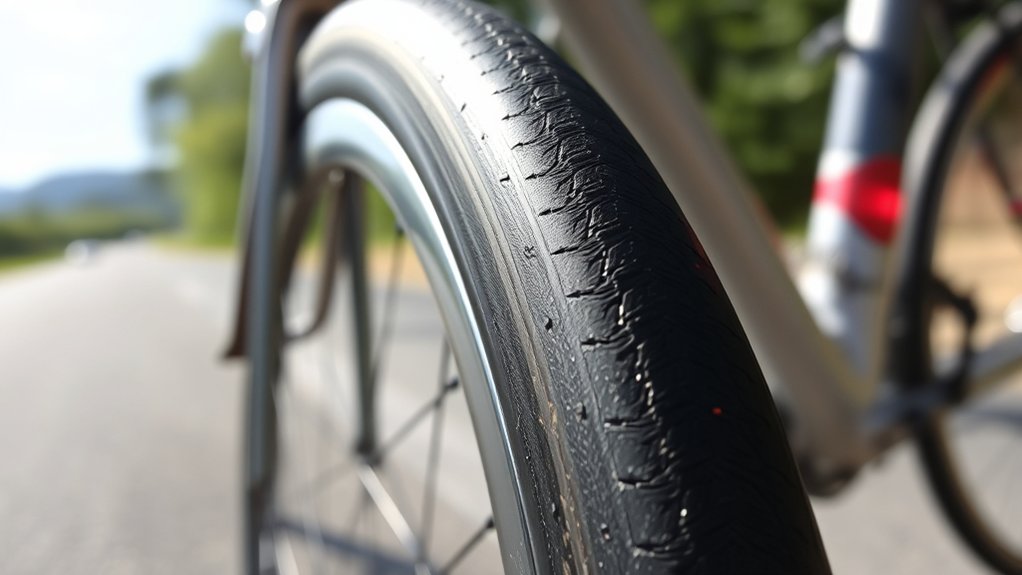
Although the lifespan of road bike tires varies, most riders can expect them to last between 1,000 and 3,000 miles. When they wear down to the lower end, it’s usually because of aggressive riding or rough surfaces.
Road bike tires typically last 1,000 to 3,000 miles, depending on riding style and terrain.
If you’re more casual or ride on smoother roads, your tires could easily reach or surpass the upper range. You’ll notice tread wear, flat spots, or a loss of grip as your tires near the end of their life.
Keep an eye out for visible cracks or thinning rubber, which signals it’s time to replace them. Paying attention to these signs will help you know exactly when to swap your tires.
This way, you can maintain control and safety without wasting money replacing them too soon.
Key Factors That Affect Road Bike Tire Lifespan
Your tire’s lifespan depends on more than just mileage. Several factors influence how long your road bike tires last, so understanding them helps you get the most out of every ride.
The terrain you ride on makes a difference. Smooth pavement is gentler on tires than rough or gravel roads. Next, your riding style matters—aggressive braking and cornering can wear tires out faster.
Tire pressure is also key. Underinflated tires increase rolling resistance and cause uneven wear, while overinflated tires risk blowouts.
Keep these key factors in mind:
- Road surface: Pavement versus rough trails
- Riding habits: Smooth cruising versus aggressive maneuvers
- Tire pressure: Maintaining the recommended PSI
Signs Your Road Bike Tires Need Replacing
You’ll want to replace your road bike tires if the tread wear indicators show they’re worn down.
Check for visible sidewall damage like cracks or cuts, which can weaken the tire.
If you’re dealing with frequent flats, it’s a clear sign your tires need attention.
Tread Wear Indicators
When the grooves on your road bike tires start to fade or disappear, it’s a sign that the tread is wearing thin. Tread wear indicators help you spot when it’s time to replace your tires, so you can avoid potential blowouts and stay safe.
Look for small raised bars molded between the tread patterns. These bars become flush with the surface as the tire wears down, indicating it’s time for a replacement.
You’ll also notice reduced grip on wet or slippery surfaces, which signals that the tread depth has diminished. This can affect your safety, so pay attention to it.
Finally, visible smooth patches on the tire mean there’s uneven wear or excessive use. Keep an eye out for these signs to maintain good traction and ride quality.
Visible Sidewall Damage
Tread wear indicators show when the rubber gripping the road gets thin, but damage to the sidewall can be even more dangerous. If you spot cuts, bubbles, or deep abrasions on the sidewall, it’s time to replace your tires. These flaws weaken the tire’s structure and increase the risk of blowouts.
Keep an eye out for worn patches or areas where the casing is visible. Damage types like cuts, bulges or bubbles, and abrasions all pose different risks.
| Damage Type | Description | Risk Level |
|---|---|---|
| Cuts | Sharp slashes or tears | High |
| Bulges/Bubbles | Raised areas or blisters | Very High |
| Abrasions | Rough, scraped patches | Moderate to High |
Replace tires promptly if you notice any of these signs to stay safe on the road.
Frequent Flats Occur
Frequent flats are a clear warning that your road bike tires might be nearing the end of their lifespan. When you start patching punctures more often than usual, it’s time to take a close look at your tires. Tires wear down internally, even if the surface looks fine, which makes them more vulnerable to sharp objects.
Watch for these signs:
- Multiple flats in a short period
- Small cuts or embedded debris you can’t easily remove
- Tires feeling thin or soft under pressure
Ignoring frequent flats can lead to sudden blowouts and put your safety at risk. It’s best to replace your tires promptly to keep your rides smooth and secure. Taking care of worn tires not only prevents flats but also boosts your bike’s performance and handling.
Proven Tips to Extend Your Road Bike Tires’ Life
Although road bike tires naturally wear down over time, you can take specific steps to greatly extend their lifespan. First, maintain proper tire pressure—check it before every ride and inflate to the recommended level. Underinflated tires wear unevenly and increase flats.
Avoid riding on rough or debris-strewn roads whenever possible, as sharp objects accelerate wear. Rotate your tires occasionally to balance out wear patterns, especially if your bike setup allows it.
Store your bike indoors, away from direct sunlight and extreme temperatures, which degrade rubber. Keep an eye on tread depth and sidewall condition, and replace tires at the first sign of significant wear or damage.
How to Clean and Maintain Your Road Bike Tires
Keeping your road bike tires clean and well-maintained helps guarantee peak performance and longevity. Regular care prevents dirt buildup and helps catch damage early.
Maintaining clean and cared-for road bike tires ensures optimal performance and extends their lifespan.
To clean and maintain your tires effectively, follow these steps:
Wipe down tires with a damp cloth after each ride to remove dirt and debris.
Inspect tires for cuts, embedded stones, or cracks to catch issues early.
Apply a tire protectant or conditioner occasionally to keep rubber supple and prevent drying.
Choosing Road Bike Tires for Maximum Durability
When choosing road bike tires, durability should be your top priority to avoid frequent replacements and stay safe on the road. Look for tires made from high-quality rubber compounds that resist wear and punctures.
Consider tires with reinforced sidewalls, which help protect against cuts and abrasions, especially if you often ride on rough surfaces. The tread pattern is also important—go for minimal tread on smooth roads to reduce rolling resistance but still get enough grip.
Wider tires can distribute pressure better, leading to less premature wear. Check the tire’s casing thickness too—thicker casings tend to last longer. Lastly, balance durability with weight; some tough tires might be heavier, but they’ll save you time and money in the long run.
Making the right choice keeps you riding confidently and safely.
When and How to Replace Your Road Bike Tires
Selecting durable road bike tires helps extend their lifespan, but eventually, every tire needs replacing. You should swap them out when you notice significant wear, frequent flats, or cuts in the rubber. Ignoring these signs can put your safety and performance at risk.
To replace your tires properly, start by inspecting them regularly for bald spots, cracks, or embedded debris. Then, use tire levers to carefully remove the old tire without damaging the rim. Mount the new tire, making sure it’s seated evenly and inflated to the recommended pressure.
Replacing your tires on time keeps your rides smooth and safe. Don’t wait until a blowout forces an emergency fix—stay proactive. This way, you’ll enjoy better control and comfort on every ride.
Frequently Asked Questions
Can Tire Pressure Affect My Bike’s Speed and Performance?
Yes, tire pressure definitely affects your bike’s speed and performance. When your tires are properly inflated, you’ll experience lower rolling resistance, making it easier and faster to ride.
Underinflated tires can slow you down, feel sluggish, and increase the risk of flats. Overinflated tires might make your ride harsh and reduce traction.
Check your tire pressure regularly and adjust it to the recommended range for the best balance of speed, comfort, and control.
Are Tubeless Tires Better for Road Bikes?
Tubeless tires can be better for road bikes, but they aren’t perfect for everyone. You get fewer flats and a smoother ride thanks to lower pressure. However, installation can be trickier and maintenance more involved.
If you care about speed and comfort, tubeless often wins. But if you want simplicity and easy fixes on the road, traditional tires might be a better choice.
It all depends on your riding style and what you prioritize.
How Do Weather Conditions Impact Tire Grip?
Weather conditions directly impact your tire grip. When it’s wet, your tires lose traction because water creates a slippery layer between the rubber and the road.
Cold temperatures can harden your tire’s compound, reducing grip. In contrast, warm, dry roads offer better traction since the rubber stays softer and more pliable.
To maintain good grip, you should adjust your tire pressure and choose tires designed for the specific weather conditions you’re riding in.
What Tools Do I Need for a Roadside Tire Repair?
You’ll need a few essentials for roadside tire repair: tire levers to pry the tire off the rim, a portable pump or CO2 inflator to reinflate the tire, and a patch kit or spare tube to fix or replace a punctured inner tube.
Don’t forget a multi-tool with a valve core remover and maybe some gloves. Having these tools ready helps you fix flats quickly and get back on the road without hassle.
Can I Use the Same Tires for Both Training and Racing?
Yes, you can use the same tires for both training and racing, but it depends on their quality and your goals. Training tires usually prioritize durability and puncture resistance, while racing tires focus on lightweight and grip.
If your tires strike a good balance, you’ll be fine. However, using dedicated racing tires can boost performance. Just make sure to regularly check tire wear and pressure to keep them in top shape for both uses.
Conclusion
To keep your road bike tires rolling reliably, remember to regularly check for wear and ripples. Replace them when the rubber shows roughness, and give them a routine cleaning to keep them in top shape.
Consistent care builds confidence, helping you enjoy crisp, clear rides with durable, dependable tires. Choosing quality compounds and thoughtfully checking the tread can truly transform your travels.
By balancing boldness with basic bike maintenance, you’ll enjoy smoother, safer streets. This helps prevent sudden stops and keeps you riding with peace of mind.
Stay sharp, stay swift, and keep cycling smoothly by paying attention to your tire care and knowing how long they last. Proper maintenance and quality tires are key to a great ride.