How to Shift a Road Bike in 7 Easy Steps
Many road cyclists struggle with shifting smoothly and efficiently, especially when tackling different terrains. If you’ve ever felt frustrated by missed gears or chain slips, you’re not alone. Improving your shifting technique can make your rides more enjoyable and less stressful.
To shift your road bike smoothly, first understand your front chainrings and rear cassette. Anticipate terrain changes and ease pedal pressure before shifting to avoid chain slips.
Keep a steady cadence between 80-100 RPM, shifting one gear at a time, especially uphill. Coordinate front and rear shifts to maintain efficiency and avoid extreme chain angles.
Avoid common mistakes like cross-chaining and shifting under heavy load. With practice, your rides will become more enjoyable and efficient. Learn how to fine-tune this skill for even better performance.
Key Takeaways
- Understand how front chainrings and the rear cassette work so you can pick the right pedaling effort and speed.
- Keep a steady pressure on your pedals and shift one gear at a time. This helps make the gear changes smooth and easy.
- Think ahead and shift to easier gears before you hit uphill sections. This keeps your cadence steady and prevents you from getting tired too quickly.
- Mix front and rear shifts carefully. This helps avoid extreme chain angles and makes pedaling more efficient.
- Practice shifting regularly. The more you do it smoothly and consistently, the better your ride will be. This also reduces wear on your drivetrain and keeps everything running smoothly.
Get to Know Your Road Bike’s Gears

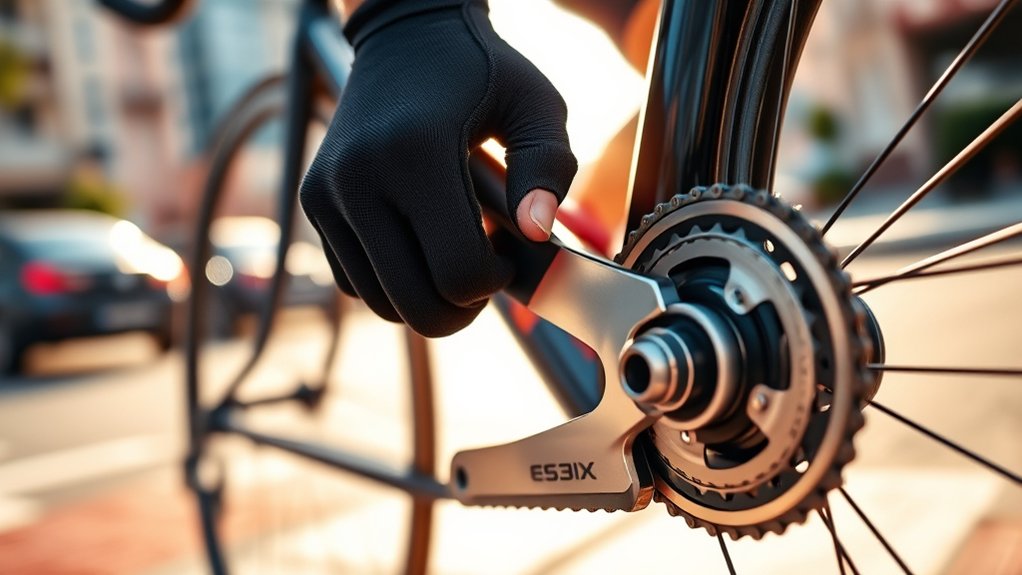
Before you start shifting, it’s important to understand how your road bike’s gears work. Your bike has two sets: the chainrings at the front and the cassette at the rear.
The front gears control how hard you pedal, while the rear gears adjust the pedaling resistance. Smaller chainrings make pedaling easier but slower, and larger ones make it harder but faster.
The rear cassette has multiple sprockets; smaller sprockets increase difficulty, larger ones reduce it.
You’ll find shifters on the handlebars—usually integrated with brake levers—that control these gears. When you shift, you move the chain across the chainrings or cassette sprockets to change the gear ratio.
Knowing this setup helps you shift smoothly and keep your ride efficient.
When to Shift Gears on Different Terrain
You’ll want to shift to easier gears as you approach uphill sections so you can keep a steady cadence without getting too tired. It makes climbing easier and helps you maintain your rhythm.
On flat terrain, adjust your gears to keep your pedaling smooth and efficient. Match your effort and speed to avoid unnecessary strain.
Knowing when to make these shifts makes your ride more comfortable and helps you conserve energy. It’s all about staying in control and riding smarter.
Uphill Gear Shifting
Uphill gear shifting requires timing to keep your momentum and save energy. As you get close to the slope, shift into a lower gear before you really feel the resistance. This way, you won’t lose speed or strain your legs.
Use your bike’s smaller chainring and larger rear cog to make pedaling easier. If the hill gets steeper, don’t hesitate to shift down again. Smooth, gradual shifts help keep your cadence steady.
Avoid waiting too long to shift. If you struggle, it can cause chain slips or throw off your balance. Focus on maintaining a steady pedal stroke instead of pushing hard with tough gears.
Flat Terrain Adjustments
Although flat terrain may seem straightforward, shifting gears effectively can boost your speed and conserve energy. When riding on flat roads, aim to keep a steady cadence, usually between 80-100 rotations per minute.
If you feel like you’re pedaling too quickly without enough resistance, shift to a higher gear. This helps you go faster without spinning out. On the other hand, if your legs start to feel tired or your cadence drops, downshift to an easier gear.
Pay attention to changes like wind or slight inclines and adjust your gears accordingly. Fine-tuning your gear choices on flat terrain helps maximize your performance and makes your ride more comfortable without wasting energy.
How to Shift Smoothly and Avoid Chain Slips
To shift smoothly and avoid chain slips, keep steady pedal pressure as you change gears.
Try to anticipate your gear changes early so the derailleur can align properly with the chain. This makes shifting easier and helps prevent any slipping.
Maintain Steady Pedal Pressure
Keep your pedal pressure steady as you shift to ensure smooth gear changes and prevent the chain from slipping. Sudden changes in force can cause the chain to skip or drop, which can disrupt your ride and even damage your drivetrain.
Focus on applying a consistent, even pressure on the pedals as you move through the gears. Avoid pushing too hard or easing off completely during the shift. This balance helps the chain engage cleanly with the new cog or chainring.
If you notice any slipping, ease up slightly to allow the shift to complete more smoothly. Practicing this steady pedal pressure will improve your overall shifting, reduce wear on your components, and keep your ride efficient and enjoyable.
Anticipate Gear Changes
When you anticipate gear changes, you can shift more smoothly and avoid chain slips by preparing your pedaling and focusing ahead of time. Look ahead to upcoming terrain, like a hill or flat stretch, and decide when you’ll need to shift.
Ease pedal pressure just before you shift to help the chain move cleanly onto the new gear without skipping. Avoid sudden shifts under heavy load, as this stresses the drivetrain and increases the risk of chain slip.
By thinking a few seconds ahead, you’ll maintain momentum and reduce wear on your components. Practicing this foresight makes shifting feel almost automatic, making your ride more efficient and enjoyable.
Anticipation is key to seamless gear changes on your road bike.
Align Derailleur Properly
Anticipating gear changes sets you up for smoother shifts, but properly aligning your derailleur guarantees those shifts happen without chain slips. To do that, start by checking the derailleur hanger for bends; even a slight misalignment can cause shifting issues. Use a derailleur alignment tool or take it to a shop if you’re unsure.
Next, adjust the high and low limit screws to prevent the chain from overshooting the gears. Fine-tune the cable tension with the barrel adjuster—turn it slowly while shifting through the gears until each shift feels crisp and precise. Regularly clean and lubricate your drivetrain too, since dirt can impact alignment and shifting performance.
Proper alignment keeps your chain on track and ensures smooth, reliable gear changes every ride.
Keep a Steady Pedal Cadence While Shifting
Although shifting gears might seem quick, it’s important to keep a steady pedal cadence to ensure smooth shifts. Pedaling consistently helps the chain move evenly across the gears, which reduces slipping or grinding.
Avoid sudden bursts or slowing down abruptly when you shift. These movements can throw off the derailleur’s alignment and make shifts feel rough. Instead, aim for a rhythm that’s not too fast or slow—around 70-90 RPM usually works well for most riders.
Keep your pedaling light but steady, especially when climbing or accelerating. This steady cadence guides the derailleur smoothly onto the new gear, making your ride feel more fluid and protecting your bike’s drivetrain. Practice this, and shifting will become effortless.
Combine Front and Rear Shifts for Better Efficiency
Since shifting both the front and rear gears strategically can optimize your pedaling efficiency, you’ll get smoother changes and better power output. When you shift the front chainrings, pair it with a rear shift to avoid extreme chain angles, which reduces wear and improves drivetrain life.
For example, if you move to a bigger front chainring, shift to a smaller rear cog to maintain a steady cadence. Conversely, when shifting to a smaller front chainring, use a larger rear cog to keep your pedaling effort consistent.
This combination helps you adapt to terrain changes smoothly without sudden jumps in resistance. Practice coordinating these shifts so your adjustments feel natural and your ride stays efficient and comfortable.
Common Shifting Mistakes That Harm Your Drivetrain
Mastering coordinated front and rear shifts can really improve your ride, but even small mistakes can cause serious wear or damage to your drivetrain.
One common error is shifting under heavy pedaling load. This puts strain on the chain and gears, leading to premature wear or chain slips.
Another mistake is not easing off the pedals slightly while shifting. Keeping some pressure helps the chain engage smoothly.
Also, avoid cross-chaining—that’s when you use extreme gear combos like the largest chainring with the largest sprocket. It puts too much tension on your chain and cassette.
Finally, don’t forget regular drivetrain maintenance. Dirty or dry components cause poor shifting and speed up wear.
Pay attention to these mistakes to keep your drivetrain running smoothly and extend its lifespan.
Practice Shifting Techniques During Your Rides
Start practicing your shifting techniques during every ride to build confidence and improve smoothness. Focus on anticipating changes in terrain and shifting gears before you need to, rather than reacting abruptly.
This helps you maintain momentum and reduces strain on your drivetrain. Try shifting one gear at a time to get a feel for how each change affects your pedaling.
Pay attention to how your bike responds and adjust your effort accordingly. Practice both front and rear derailleur shifts so you can switch smoothly between chainrings and cogs.
Over time, this will make your gear changes seamless and efficient. Remember, consistent practice helps you recognize when and how to shift effectively, making your rides more enjoyable and extending your bike’s lifespan.
Frequently Asked Questions
What Type of Lubricant Is Best for My Bike’s Chain?
You’ll want to use a wet or dry chain lubricant depending on your riding conditions. If you ride in wet or muddy areas, a wet lube will stick better and resist washing off.
For dry, dusty conditions, a dry lube keeps your chain cleaner and attracts less dirt. Always apply a few drops evenly on the chain, wipe off excess, and avoid using heavy oils or grease, which can gum up your drivetrain.
How Often Should I Service My Bike’s Drivetrain?
Imagine your drivetrain as the gears of a clock, always moving in sync. You should service it every 500 to 1,000 miles or at least twice a year to keep everything running smoothly.
If you ride in wet or muddy conditions, clean and lubricate it more often. Regular checks prevent wear, so your chain and cassette last longer.
Don’t wait for skipping gears. Stay ahead by maintaining your drivetrain consistently.
Can I Shift Gears While Going Uphill or Downhill?
Yes, you can shift gears while going uphill or downhill. In fact, shifting during these times helps you keep a steady rhythm and stay in control.
When climbing, shift to easier gears to make pedaling easier. When descending, shift to harder gears to better control your speed.
Just avoid sudden or forceful shifts when you’re under heavy load. That can damage your drivetrain.
Smooth, well-timed shifts make your ride more efficient and enjoyable.
What Gear Setup Is Ideal for Beginners?
Imagine feeling the thrill of a smooth ride, like dancing on wheels. For beginners, an ideal gear setup includes a compact crankset (50/34 teeth) paired with an 11-28 or 11-32 cassette.
This combo lets you climb hills without struggling and cruise easily on flats. You’ll gain confidence shifting through manageable gears, making every ride enjoyable and less intimidating.
As you master your road bike’s rhythm, you’ll find riding becomes more fun and comfortable.
How Do Electronic Shifting Systems Differ From Mechanical Ones?
Electronic shifting systems differ from mechanical ones by using buttons or switches to control gears instead of traditional cables and levers.
You get quicker, more precise shifts with less effort because motors move the derailleurs.
Plus, electronic setups often let you customize settings and include automatic trimming.
However, they need batteries and can be more expensive. Mechanical systems rely on your physical input through cables and are generally simpler to maintain.
Conclusion
Mastering your road bike’s shifting is like learning to dance with the road. You need rhythm, timing, and a little finesse. Knowing your gears, shifting smoothly, and avoiding common mistakes will help you glide over hills and flats with ease.
Keep practicing, and soon your shifts will feel as natural as breathing. This makes every ride smoother and more enjoyable.
So, gear up and let the road become your perfect dance partner. With a little practice, shifting your road bike will become second nature.