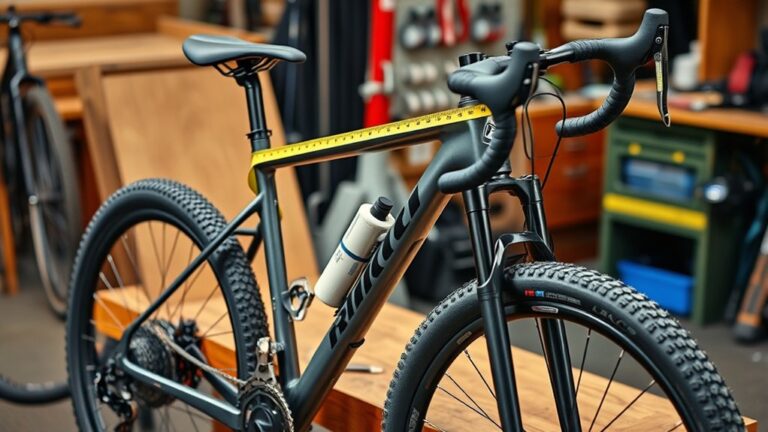
How to Measure Shoulder Width for Road Bike in 7 Easy Steps
Many cycling enthusiasts struggle with finding the perfect fit for their road bikes, especially when it comes to shoulder width and handlebar size. You’re not alone—getting comfortable and in control on your bike makes all the difference.
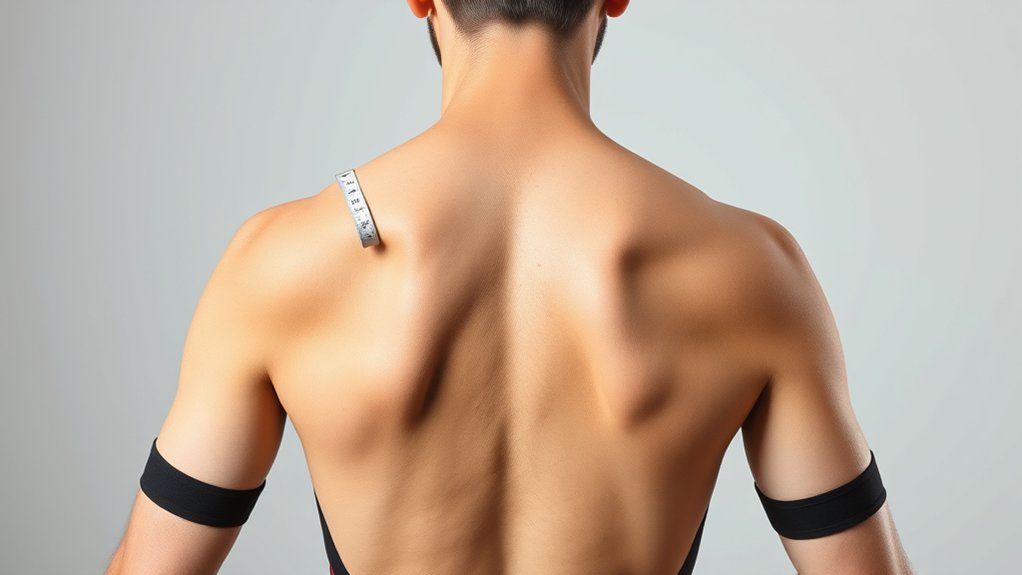
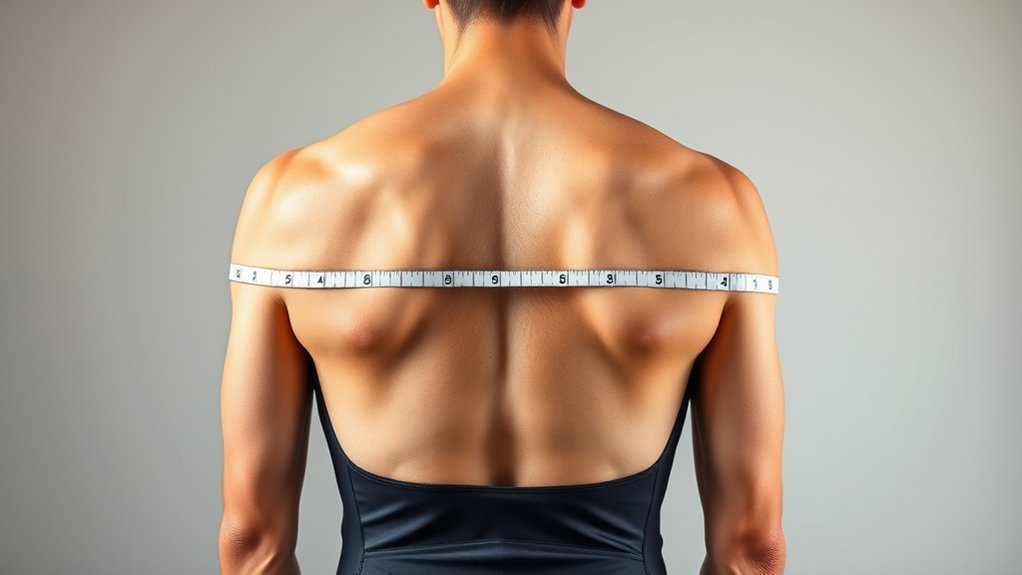
To measure your shoulder width for a road bike, stand straight with relaxed arms at your sides. Use your fingers to feel the outer edges of your acromion bones and mark these points.
With a flexible tape measure, run it straight across your back from one mark to the other, keeping the tape flat.
Note the measurement to choose your handlebar width for better comfort and control.
Keep going to uncover how this fits into selecting the perfect bike setup.
Key Takeaways
- Stand straight with your arms relaxed at your sides. This helps keep your shoulders in their natural position, giving you an accurate measurement.
- Find the outer edges of your acromion bones by gently feeling your shoulder tips. Take your time to locate these bony landmarks.
- Take a flexible measuring tape and place it across your back, from one shoulder edge to the other.
- Make sure the tape stays flat and straight. Avoid twisting it so you get an exact measurement.
- Note down the measurement in centimeters. This will help you choose the right handlebar width for your road bike.
Why Your Shoulder Width Matters for Road Bike Fit
Your shoulder width is key to getting a comfortable and efficient road bike fit. When your handlebars match your shoulder width, your arms stay in a natural position, which helps reduce strain on your shoulders and neck during rides.
If the handlebars are too wide, you might feel tension and fatigue more quickly. Too narrow, and your breathing and control could suffer. Proper alignment also boosts your bike handling and stability, especially at higher speeds or on tricky terrain.
Knowing your shoulder width allows you to pick or adjust handlebars for better posture and power transfer. It helps you avoid discomfort and potential injuries, making your cycling experience more enjoyable and sustainable.
Considering your shoulder width ensures your bike fits your body’s unique dimensions perfectly.
Tools You Need to Measure Shoulder Width Accurately
Accurate shoulder width measurement just needs a few simple tools you can find at home or buy online.
First, grab a flexible measuring tape—like the kind used in sewing—since it molds easily along your shoulders.
If you don’t have one, a ruler or yardstick can work, but it might not be as precise.
A mirror is also helpful so you can see what you’re doing when measuring yourself.
Alternatively, ask a friend to help out for more accuracy.
Finally, have a pen and paper or your smartphone ready to jot down your measurements.
With these tools, you’ll be all set to get an exact shoulder width measurement, making sure your road bike fits comfortably and your riding is better.
How to Position Yourself to Measure Shoulder Width
Start by standing straight against a wall to keep your posture steady. Let your shoulders relax naturally without tensing up.
Make sure your arms are aligned evenly at your sides before measuring.
Stand Straight Against Wall
When measuring your shoulder width for a road bike, standing straight against a wall helps you get an accurate reading.
Stand with your back flat against the wall, feet shoulder-width apart, and your head aligned with your spine. Make sure your shoulders touch the wall without leaning forward or tilting to one side.
This posture keeps your upper body stable, so you can measure from one shoulder’s edge to the other accurately. Use a flat object like a ruler or book to mark the outermost points of your shoulders on the wall.
Carefully step away to avoid smudging the marks. This method ensures you capture your natural shoulder width, which is key for choosing the right handlebar size and improving your bike fit.
Relax Your Shoulders Naturally
Once you’ve marked your shoulder edges while standing straight against the wall, it’s important to let your shoulders relax naturally for the actual measurement. Don’t tense up or pull your shoulders back; instead, breathe calmly and let your arms hang loosely at your sides.
This natural position shows how your shoulders rest during normal riding, giving you the most accurate width. Keep your posture upright but avoid stiffening your neck or upper back.
Relaxing your shoulders prevents an artificially widened or narrowed measurement, making sure the bike fit feels comfortable. Take a moment to check in with your body and let go of any tightness.
When your shoulders feel fully at ease, you’re ready to proceed with measuring your shoulder width accurately.
Align Arms Evenly Side
Two key steps will help you align your arms evenly at your sides for an accurate shoulder width measurement. First, stand straight with your back against a wall to ensure proper posture. This helps keep your shoulders level and prevents leaning that could skew the measurement.
Second, let your arms hang naturally and evenly on both sides without pushing them forward or backward. Avoid tensing your muscles; keep your arms relaxed to mimic your riding position.
You can use a mirror or ask someone to check that your arms are symmetrical and parallel to your torso. Once your arms are properly aligned, you’re ready to measure the distance between the outer edges of your shoulders confidently and precisely.
Measuring Your Shoulder Width in 3 Easy Steps
Measuring your shoulder width accurately takes just three simple steps and a few basic tools. First, stand straight with your arms relaxed at your sides. Use a mirror or ask someone to help for better accuracy.
Second, place a flexible measuring tape across your back, aligning it from the outer edge of one shoulder to the outer edge of the other. Make sure the tape is flat and not twisted.
Third, note the measurement where the tape meets both shoulder points. This number represents your shoulder width. Keep your posture natural throughout the process to avoid skewed results.
With this measurement, you’ll ensure your road bike’s handlebar width matches your body, boosting comfort and control during rides.
How to Locate Your Shoulder Width Points (Acromion Bones)
To measure your shoulder width accurately, find the acromion bones—the bony points at the outer edges of your shoulders. You can locate them by gently feeling along the top of your shoulders until you find the hard, rounded tips.
These points mark the exact spots to measure between for a perfect fit. Just feel for those bumps, and you’re all set to get an accurate measurement.
Identifying Acromion Bone Location
Finding the acromion bones is key to accurately measuring your shoulder width for a road bike fit. These bones are the bony points on the outer edge of your shoulders where your collarbone meets the shoulder blade.
To identify them, stand relaxed with your arms at your sides. Look for the prominent bones at each shoulder’s highest point. You can gently raise your arms to help the acromion bones become more noticeable as they protrude slightly.
Visually marking these points will guide your measurement, ensuring you capture the true shoulder width. Pinpointing the acromion bones precisely helps you avoid errors that could affect your bike’s handlebar width and overall comfort while riding.
Using Touch to Find Points
Anyone can quickly find their shoulder width points just by using touch. Start by standing straight and relax your shoulders. Then, use your fingertips to feel along the top edges of your shoulders until you find the bony protrusions—the acromion bones.
These points mark the outer edges of your shoulder width. To be sure, gently press each one; they should feel firm and slightly rounded. This simple method helps you get an accurate measurement for your road bike fit.
Here’s a quick guide to follow:
| Step | Action | Tip |
|---|---|---|
| 1 | Stand relaxed | Avoid shrugging your shoulders |
| 2 | Use fingertips to feel bones | Move slowly side to side |
| 3 | Confirm by pressing gently | Should feel firm, not soft |
Using this method makes measuring your shoulder width easy and reliable.
How to Measure Straight Across Your Shoulders
Measuring straight across your shoulders is an important step to make sure your road bike fits comfortably and works well for you.
Start by standing up straight with your arms relaxed at your sides. Have a friend place a measuring tape at the outer edge of one shoulder bone, right where you felt the prominent point earlier.
Then, stretch the tape straight across to the outer edge of the opposite shoulder bone. Make sure the tape stays level and doesn’t sag or dip anywhere.
Keep your shoulders relaxed to get an accurate measurement.
Note the number where the tape meets the second shoulder bone—that’s your shoulder width.
This simple method gives you a precise measurement to help customize your bike setup perfectly for your body.
How to Use Your Shoulder Width to Choose Handlebar Size
Once you know your shoulder width, you can pick a handlebar size that matches your body for better control and comfort. Usually, your handlebar width should be close to the distance between your shoulders. This helps you maintain a natural riding posture and makes steering easier.
If your shoulder measurement falls between sizes, go for the narrower option for better aerodynamics or the wider for more stability. Use the table below as a quick guide to find the right handlebar size based on your shoulder measurement:
| Shoulder Width (cm) | Handlebar Width (cm) |
|---|---|
| 36 – 38 | 38 |
| 39 – 41 | 40 |
| 42 – 44 | 42 |
| 45 – 47 | 44 |
| 48+ | 46+ |
Matching these measurements helps ensure you’re comfortable and can handle your bike more efficiently.
Frequently Asked Questions
Can Shoulder Width Affect My Overall Cycling Posture?
Yes, your shoulder width definitely affects your overall cycling posture. When your bike’s handlebars match your shoulder width, you’ll ride more comfortably and have better control.
If your bars are too wide or narrow, you might strain your shoulders, neck, or back. Proper alignment helps you breathe easier and pedal more efficiently.
Paying attention to shoulder width can improve both comfort and performance on your rides.
How Often Should I Re-Measure My Shoulder Width?
You shouldn’t wait too long before re-measuring your shoulder width.
Whenever you notice discomfort or changes in your riding posture, it’s time to check again.
Also, if you switch bikes or adjust your setup, measuring guarantees your fit stays perfect.
Remember, your body can subtly change over time, so re-measuring every 6 to 12 months keeps you riding comfortably and efficiently.
Don’t let an outdated measurement hold you back.
Does Shoulder Width Impact Other Bike Components Besides Handlebars?
Yes, your shoulder width affects more than just handlebars. It influences your bike’s overall fit, including stem length and handlebar reach, to keep you comfortable and in control.
If your shoulders are wider, you might need a shorter stem to maintain a natural posture. The positioning of brake levers and shifters can also be adjusted based on shoulder width.
These changes help you avoid strain during long rides. So, shoulder width is key for multiple bike components, not just the handlebars.
Can Shoulder Width Change With Age or Fitness Level?
Yes, your shoulder width can change slightly with age or fitness level. As you get older, posture changes or muscle loss might make your shoulders appear narrower.
On the other hand, regular strength training can broaden and strengthen your shoulder muscles, which can affect how wide your shoulders seem.
While your bone structure stays mostly the same, the muscle and posture around your shoulders change enough to influence how you feel and fit on your bike.
Are There Gender Differences in Ideal Shoulder Width for Road Bikes?
Yes, you’ll find gender differences in ideal shoulder width for road bikes since men generally have broader shoulders than women. That means you might need a wider handlebar if you’re a man to match your shoulder width and stay comfortable.
Women often prefer narrower bars to suit their typically slimmer frames. But remember, comfort and fit are what really matter, so always choose what feels best for your body, no matter your gender.
Conclusion
Think of your shoulder width as the foundation of a bridge—strong, precise, and perfectly aligned. Just like a sturdy bridge supports smooth travel, measuring your shoulder width accurately guarantees your road bike fits you seamlessly, giving you comfort and control.
By following these steps, you’re building a connection between you and your bike that lets every ride flow effortlessly. So, take the time to measure right and ensure your shoulder width is spot on for the perfect fit.
Remember, knowing your shoulder width is key to choosing the right bike fit. It makes all the difference in how comfortable and confident you feel on your rides.