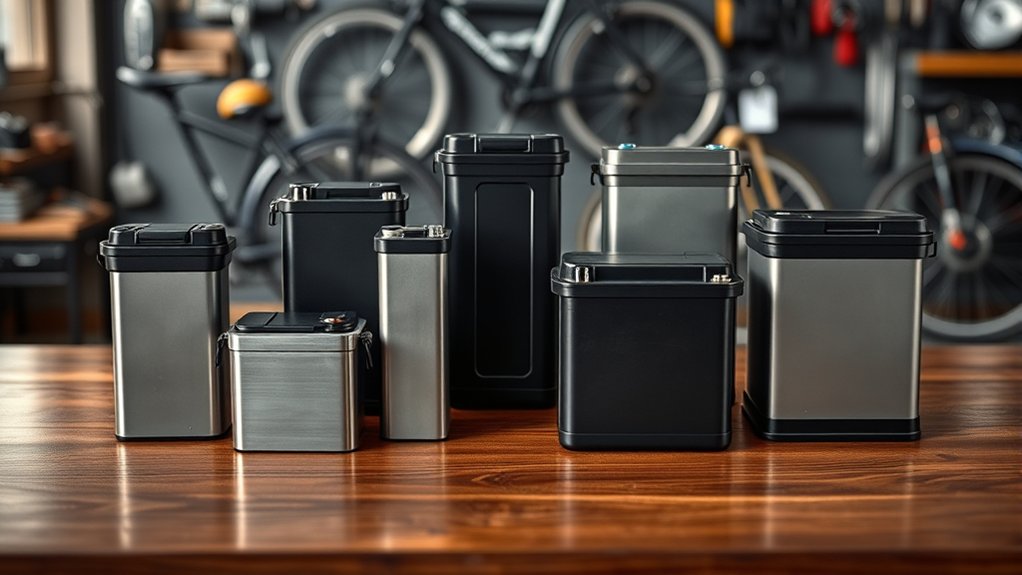
7 Best Battery Sizes for Electric Bikes in 2026
Many e-bike riders struggle with choosing the right battery size—balancing range, weight, and portability can feel overwhelming. You’re not alone; finding the perfect fit is a common challenge as you want enough power without sacrificing ease of use.
In 2026, the best battery sizes for your e-bike typically range from 300Wh to 700Wh, with 400Wh to 500Wh being the most popular for balancing range and weight. Smaller batteries are ideal for portability and quick charges, while larger ones offer longer rides and more power, perfect for adventure or extended commutes.
Choosing the right size depends on your riding style, terrain, and needs—exploring further reveals how to optimize your e-bike experience.
Key Takeaways
– The most popular e-bike battery sizes in 2026 range from 300Wh to 700Wh.
Most riders go for batteries in the 400Wh to 500Wh range because it offers a good balance of performance and weight.
– Larger batteries, like 600Wh and above, give you an extended range and more power.
They’re great for long-distance rides and tackling tough terrains.
– Smaller batteries, around 300Wh, focus on portability.
They’re perfect if you want quick charging, easy maneuverability, and mainly ride around the city.
– Advances in battery technology will make them lighter, more efficient, and capable of higher capacities.
This means you’ll have more options tailored to different riding styles and needs.
– When choosing the right size, think about your riding style, the terrain, and how far you need to go.
Weight and budget are also important factors to consider.
What Are the Most Common E-Bike Battery Sizes in 2026?
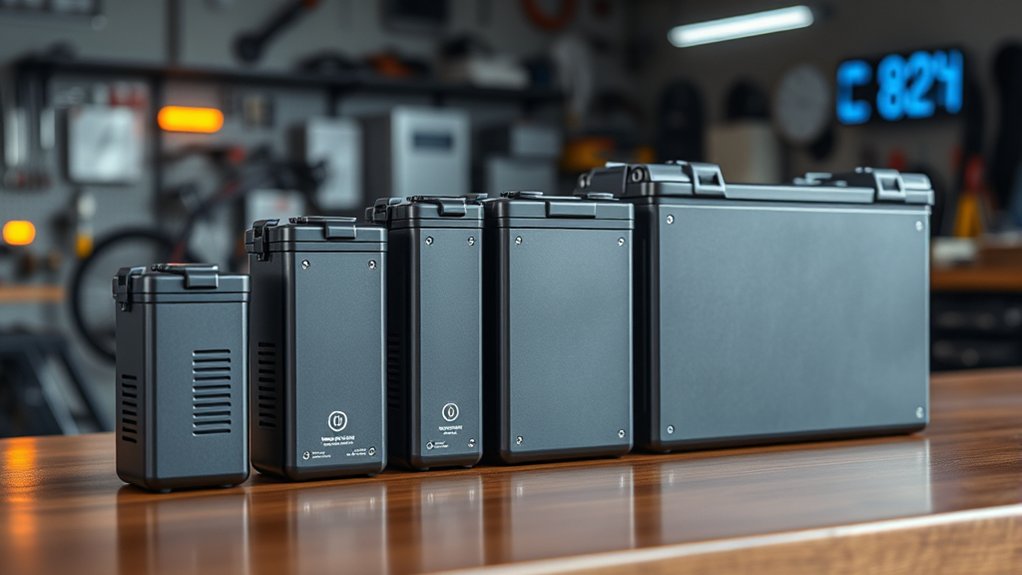
In 2026, the most common e-bike battery sizes are designed to balance power, weight, and range to meet riders’ needs. You’ll typically see batteries measured in watt-hours (Wh), with popular sizes ranging from 300Wh to 700Wh.
The 400Wh to 500Wh batteries are the most common, offering a good mix of lightweight design and enough range for daily commuting and leisure rides. Smaller options, around 300Wh, are great if you prioritize portability and quick charging.
400Wh to 500Wh batteries balance lightweight design with sufficient range for daily rides.
Larger batteries, 600Wh or more, are perfect for long-distance adventures. Manufacturers tailor these sizes to ensure you have enough power without adding excessive weight, making your ride comfortable and efficient.
Knowing these standard sizes helps you pick the right battery for your riding style and needs.
How Battery Capacity Affects Your Range and Power
A bigger battery capacity means you can ride farther before needing a recharge. It’s perfect if you want more freedom on your rides without constantly stopping.
It also gives you more power, making it easier to handle hills and tough terrains. Picking the right size can really boost your overall riding experience.
Impact on Riding Distance
Higher battery capacity directly boosts your electric bike’s riding distance, letting you cover more ground on a single charge. With a larger battery, you can enjoy longer rides without worrying about running out of power.
To get the most out of your range, keep a few things in mind: a bigger battery stores more energy, which extends your travel distance. Your riding habits also matter—smooth acceleration and steady speeds help save power.
Terrain plays a role too. Flat surfaces use less energy, making high-capacity batteries even more effective for longer rides.
Influence on Power Output
As battery capacity increases, your electric bike’s power output generally improves, allowing for more robust performance and quicker acceleration. A larger battery supplies more energy, which can translate into higher torque and better overall responsiveness.
With a bigger capacity, your motor can deliver consistent power even during steep climbs or aggressive riding, enhancing the bike’s performance. Plus, increased capacity can reduce power fluctuations and strain on the system, leading to smoother operation.
However, larger batteries add weight, which might slightly affect handling. Overall, a bigger battery not only extends your riding range but also boosts power output, making your ride more dynamic and responsive.
Choosing the right size means balancing performance needs with weight and size considerations.
Best Battery Sizes for Commuters: Balancing Range and Weight
Choosing the right battery size for commuting is all about balancing weight and range to match your daily routine.
Heavier batteries can give you more distance, but they might also slow you down. So, finding that sweet spot is important.
Portable batteries are a great option too. They offer flexibility and make your ride more convenient without adding much weight.
Weight Impact on Speed
The size and weight of an electric bike’s battery directly influence your speed and handling. Heavier batteries add resistance, making acceleration slower and requiring more effort to maintain high speeds.
Conversely, lighter batteries allow for quicker acceleration and better maneuverability. To understand this better:
- Heavier batteries may cause slower top speeds due to increased inertia.
- Lighter batteries improve handling, especially on tight turns and uneven terrain.
- Excess weight can drain your motor faster, reducing overall efficiency.
Balancing battery size and weight is essential. Opting for a slightly lighter battery might boost your speed and handling, but it could limit your range.
Choose wisely based on your riding priorities to get the best ride experience.
Range Optimization Strategies
Ever wondered how to get the most out of your e-bike’s battery without adding unnecessary weight? Optimizing your range involves making smart choices and adjusting your riding habits.
Use lower assist levels on flatter terrain to conserve energy, and plan your routes to avoid hilly areas when you can. Regularly check your tire pressure because underinflated tires waste power.
Choosing the right battery size helps balance weight and distance. Here’s a quick comparison:
| Battery Size | Typical Range | Weight (Approx.) | Best For |
|---|---|---|---|
| 400Wh | 20-30 miles | Light | Daily commuting |
| 600Wh | 30-50 miles | Moderate | Longer rides |
| 700Wh | 40-60 miles | Heavier | Extended trips |
| 800Wh | 50-70 miles | Heaviest | All-day adventures |
Applying these tips can help you maximize your range without sacrificing comfort or adding unnecessary weight.
Portable Battery Benefits
Portable batteries make it easy for commuters to extend their e-bike range without adding a lot of weight or bulk. They’re great for quick top-ups during longer rides or when you need extra power without upgrading your main battery.
With a portable battery, you can:
- Boost your ride distance whenever you need, especially on busy days.
- Help your main battery last longer by preventing overuse.
- Swap or carry an extra power source easily, making charging more flexible.
This flexibility helps you find the right balance between range and weight, keeping your e-bike lightweight and easy to maneuver. Plus, portable batteries are compact, simple to carry, and quick to connect—giving you reliable power without sacrificing comfort or performance.
Choosing the Right Battery Size for Weekend Off-Road Adventures
When gearing up for weekend off-road adventures, choosing the right battery size is key to making sure you have enough power without adding unnecessary weight.
You want a battery with enough capacity to handle long rides through tough terrain without needing frequent recharges.
Larger batteries give you more range, so you won’t run out of power halfway through your trip. But they also add weight, which can affect handling and maneuverability.
On the flip side, smaller batteries are lighter and more agile, making your ride easier. However, they might not last through the entire adventure.
Think about how far you usually ride, the difficulty of the terrain, and how much weight you’re comfortable carrying.
Finding the right balance between power and weight is essential to keep your off-road adventures smooth and fun.
Are Smaller Batteries a Budget-Friendly Option?
Smaller batteries often seem like a budget-friendly choice upfront because they cost less than larger ones. But while they save you money at first, it’s worth thinking about their limitations.
Reduced Range: Smaller batteries usually don’t last as long on a single charge, so you might need to recharge more often or carry a spare.
Less Power: They might struggle with demanding rides or heavier riders, which can impact how well they perform.
Frequent Replacements: Because they have a shorter lifespan, you could end up spending more over time replacing batteries, which eats into your initial savings.
In short, choosing a smaller battery might save you money initially, but it could end up costing more in the long run through reduced performance and more frequent replacements.
How to Pick the Perfect Battery Size for Your Riding Style
Choosing the right battery size depends largely on how you ride. If you prefer quick trips or short commutes, a smaller battery might be perfect, saving weight and money.
Selecting the right battery size depends on your riding style, balancing weight, cost, and range for optimal performance.
But if you enjoy long rides or tackling tough terrain, a larger capacity will give you more range and power without constantly needing to recharge.
Think about your typical ride distance and pace. Faster, longer rides demand bigger batteries. Consider how often you’ll need to recharge and whether extra weight impacts your comfort or handling.
Also, factor in your budget. Larger batteries usually cost more but can save you time and hassle in the long run.
In the end, matching your riding style with the battery’s capacity ensures you get the best balance of performance, efficiency, and convenience.
Future Trends in E-Bike Battery Sizes and Technology
As technology keeps advancing, e-bike batteries are set to see some exciting changes in size, capacity, and performance. Expect batteries to get smaller and lighter without losing power, making e-bikes easier to handle and more fun to ride.
With higher energy densities, you’ll be able to go longer between charges, which means more adventures and less downtime. Plus, new materials and cell designs will boost durability and speed up charging times.
Here are three trends to keep an eye on:
- Smaller, lighter batteries with more capacity that fit smoothly into frame designs.
- Fast-charging tech that cuts down on wait time and makes recharging super convenient.
- Smart battery management systems that help maximize efficiency, extend battery life, and keep you safe.
All these innovations will make e-bikes more accessible, dependable, and better suited to your changing needs as a rider.
Frequently Asked Questions
How Do Battery Sizes Impact E-Bike Charging Times in 2026?
Larger battery sizes usually mean longer charging times because they hold more energy. When you plug in, it takes more time to fully charge a bigger battery compared to a smaller one.
What Are the Safety Considerations for Different E-Bike Battery Sizes?
Think of your e-bike battery as the heart of your ride. Its safety is vital. Larger batteries need strong protection against overheating, punctures, and electrical faults.
Always check for proper insulation and secure mounts. Avoid exposing batteries to extreme heat or water. Use chargers specifically designed for your battery size.
Regular inspections and following the manufacturer’s guidelines keep your battery safe. This helps ensure your rides stay smooth and worry-free.
Can I Upgrade My E-Bike Battery Size Later?
Yes, you can upgrade your e-bike battery size later, but it depends on your bike’s compatibility and available space.
Check if your bike’s frame and wiring can handle a larger battery. You might also need to upgrade the controller or wiring to support the increased capacity.
It’s a good idea to consult your bike’s manufacturer or a professional technician. They can make sure the upgrade is safe and effective and won’t void your warranty or damage your bike.
How Does Climate Affect the Performance of Various Battery Sizes?
Climate can really impact how well your e-bike battery performs, especially when temperatures are extreme. Cold weather tends to reduce battery efficiency, so you might find your rides are shorter and charging takes longer.
Hot climates can speed up battery wear and tear, which means your battery might not last as long. No matter the size, you’ll notice less power or shorter range in these conditions.
To keep your battery working its best, store it in moderate temperatures. You might also want to consider climate-specific batteries or protective accessories to help reduce these effects.
Are There Legal Restrictions on Battery Sizes for E-Bikes in Different Regions?
Yes, there are legal restrictions on e-bike battery sizes in different regions. Many areas limit battery capacity to ensure safety and compliance with local laws.
For example, some regions restrict wattage or voltage, which directly affects battery size. You should always check your local regulations before choosing a battery.
Exceeding these limits can lead to fines or restrictions on your e-bike’s use, so it’s important to stay informed.
Conclusion
Choosing the right e-bike battery size depends on your riding style and needs. Balance range, weight, and budget to find your perfect fit.
Remember, “A penny saved is a penny earned,” so don’t overlook the long-term benefits of investing in the right battery. With advancements on the horizon, staying informed guarantees you’ll ride smarter and farther.
Make your choice wisely, and enjoy every mile ahead with the best battery size for your electric bike.