How to Choose the Right PSI for Road Bike Tires
Are you tired of dealing with flat tires or feeling like your bike isn’t performing optimally? You’re not alone—many cyclists struggle with finding the perfect tire pressure for their road bike.
Getting it just right can make a huge difference in comfort, speed, and safety.
To choose the right PSI for your road bike tires, start by checking the tire sidewall for the manufacturer’s recommended pressure range, which includes minimum and maximum PSI.
Your weight, road conditions, and riding style influence the ideal pressure within this range.
Higher PSI is good for smooth surfaces, while lower PSI offers better traction on rough terrain.
Keep an eye on your tires and adjust your inflation accordingly—there’s plenty more to optimize your ride effectively.
Key Takeaways
- Check the tire sidewall for the manufacturer’s recommended PSI range.
- Consider your weight, riding style, and terrain to pick the best pressure within that range.
It’s a good idea to think about how you ride and where you’ll be riding.
This helps you choose the right PSI for a smooth and safe ride.
Adjust the PSI based on weather conditions, like colder temperatures, which can lower tire pressure.
When it’s cold outside, you might need to add a little more air to keep things comfortable.
On warmer days, you can let some air out to avoid over-inflating.
Use higher PSI for smooth pavement and lower PSI if you’re riding on rough or gravel surfaces.
If you’re on bumpy trails, a bit less pressure can give you better grip and comfort.
Regularly check and maintain your tire pressure to keep your bike performing well and stay safe.
Why Proper Tire Pressure Matters for Your Bike
Proper tire pressure is vital because it directly affects your bike’s performance and safety. When your tires are at the right PSI, you’ll experience smoother rides, better traction, and more efficient power transfer.
Over-inflated tires can make your ride harsh, reduce grip, and increase the risk of flats or blowouts. Under-inflated tires cause sluggish handling, increased rolling resistance, and more tire wear.
Maintaining correct pressure also helps prevent accidents caused by tire failure. It ensures your bike handles predictably and responds well to your inputs.
How to Find Your Recommended PSI Range
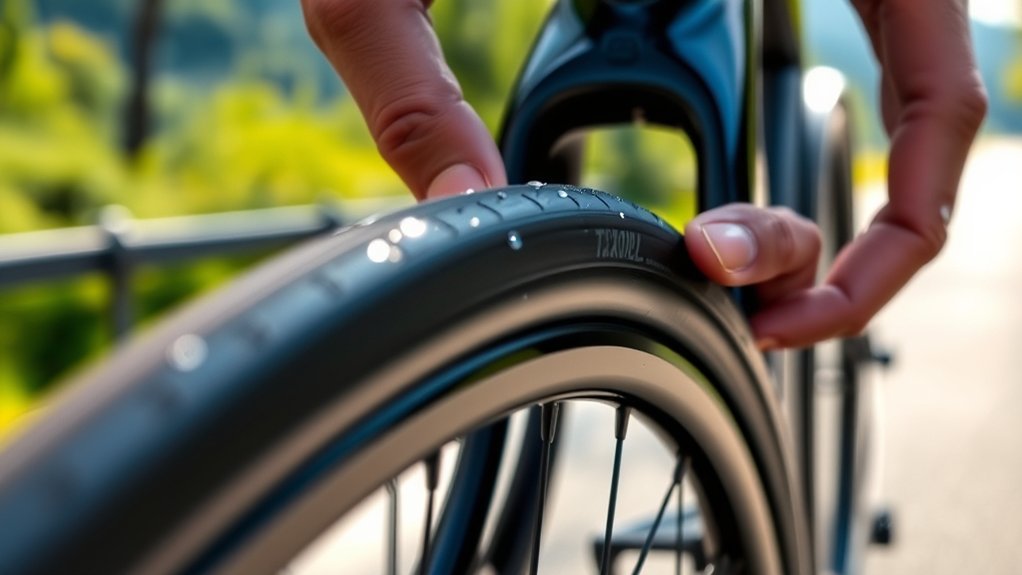
To find the right PSI range for your bike tires, start by checking the sidewall of each tire. The sidewall shows the manufacturer’s recommended pressure range, usually printed as a minimum and maximum PSI. This range gives you a safe starting point for inflation.
Keep in mind, your riding style, weight, and terrain can influence the ideal pressure within that range. If you’re riding on smooth pavement and want a faster ride, aim for the higher end of the range. For rougher surfaces or more comfort, lower pressures might be better.
Always stay within the recommended limits to ensure safety and peak performance. Adjust your PSI as needed, and make sure to check the pressure regularly to keep your rides consistent.
Key Factors That Affect Your Bike’s PSI
Your rider weight and the terrain you’re riding on directly impact the ideal PSI for your tires. Heavier riders or rough, uneven surfaces usually need higher pressures for better control and efficiency.
Think about these factors carefully to make sure your tires are inflated just right. This helps you enjoy a smooth, safe ride every time.
Rider Weight Influence
Rider weight plays a significant role in determining the ideal PSI for road bike tires. Heavier riders typically need higher PSI to prevent tire pinch flats and maintain proper support.
If you’re on the lighter side, lower PSI can improve comfort and grip by allowing the tire to conform better to the road surface. But be careful—too low a PSI can cause pinch flats or increase rolling resistance.
Conversely, higher weight requires increased PSI to stop the tire from compressing too much, which can reduce traction and make the ride feel rough. Your weight influences how much the tire compresses under load, impacting both performance and comfort.
Adjusting PSI based on your weight helps optimize handling, efficiency, and safety on your rides.
Terrain and Conditions
Terrain and conditions greatly influence the ideal PSI for your road bike tires. If you’re riding on smooth pavement, a higher PSI offers less rolling resistance and faster speeds.
On rough or uneven surfaces like gravel or cobblestones, lower PSI improves grip and cushions shocks. Wet or slick conditions also benefit from reduced pressure, increasing tire contact and traction.
Hot days might mean slightly lowering PSI to account for expansion, while colder weather can cause PSI to drop naturally. Always think about the terrain you’ll encounter and adjust your tire pressure accordingly.
Properly tailored PSI helps prevent flats, improves handling, and guarantees a smoother ride no matter the conditions.
How to Adjust Tire Pressure for Different Terrains
When adjusting your tire pressure, think about the terrain you’ll be riding on. Softer tires are better for rough or uneven surfaces, giving you more grip and comfort.
Firmer tires work well on smooth roads, helping you roll faster and more efficiently. Take some time to test and fine-tune your pressure to find the right balance for each terrain.
Adjust Pressure Accordingly
Adjusting your tire pressure based on the terrain guarantees peak performance and safety. When you switch terrains, tweak your PSI accordingly to optimize grip, comfort, and efficiency.
For smooth, paved roads, keep your PSI higher—around 80 to 100 PSI—to reduce rolling resistance. On rougher surfaces like gravel or chip seal, lower your PSI slightly—around 70 to 80 PSI—to improve traction and absorb shocks.
For off-road or uneven trails, reduce pressure further—around 60 to 70 PSI—to boost grip and prevent pinch flats. Always start with the recommended PSI range and adjust based on your riding experience and comfort.
Monitoring your tire pressure regularly guarantees you’re riding safely and performing at your best, no matter the terrain.
Consider Terrain Type
Your choice of tire pressure should directly reflect the type of terrain you’ll encounter, as different surfaces demand different levels of grip and shock absorption.
On smooth pavement, you can run higher pressures to reduce rolling resistance and improve speed. For rougher terrains like gravel or cobblestones, lower pressures help absorb shocks and increase traction.
When riding on soft surfaces like dirt or sand, even lower pressures provide better grip and prevent pinch flats. Conversely, on hard-packed trails, slightly increased pressure can boost stability.
Always adjust your PSI based on the terrain to optimize comfort, control, and safety. Keep in mind that the right pressure varies with surface conditions, so be ready to tweak your tire pressure accordingly for the best riding experience.
Test and Fine-Tune
To fine-tune your tire pressure effectively, start by testing how your bike feels on the specific terrain you’ll ride. Ride a short stretch and pay attention to comfort, control, and speed. Adjust your PSI based on these cues.
For example:
If the ride feels rough or sluggish, lower the pressure slightly to increase grip and comfort.
If you notice excessive bouncing or loss of control, reduce pressure further.
If the bike feels sluggish or you’re losing momentum, increase PSI for less rolling resistance.
Repeat this process after each adjustment, riding a bit longer each time. Fine-tuning guarantees peak performance, safety, and comfort tailored to your terrain. Remember, small changes make a big difference.
Common Mistakes When Setting Your Bike’s Tire Pressure
One common mistake is relying solely on the tire’s sidewall numbers without considering your riding conditions or personal preferences. These numbers are just a starting point, not a universal rule.
Ignoring factors like road texture, rider weight, or weather can lead to less-than-ideal pressure.
Overinflating can make your ride harsh and reduce grip, while underinflating risks flats and poor handling. Use the table below to see how different factors influence your ideal PSI:
| Factor | Effect on PSI |
|---|---|
| Road surface | Rough surfaces need lower PSI |
| Rider weight | Heavier riders require higher PSI |
| Weather conditions | Cold weather lowers PSI |
| Tire type | Wider tires need slightly lower PSI |
| Riding style | Aggressive riding needs higher PSI |
Avoid ignoring these details to ensure a safe, comfortable ride.
Tips for Checking and Maintaining Your Tire PSI Regularly
Regularly checking your tire PSI helps your bike perform at its best and keeps you safe on the road. To keep your tires in top shape:
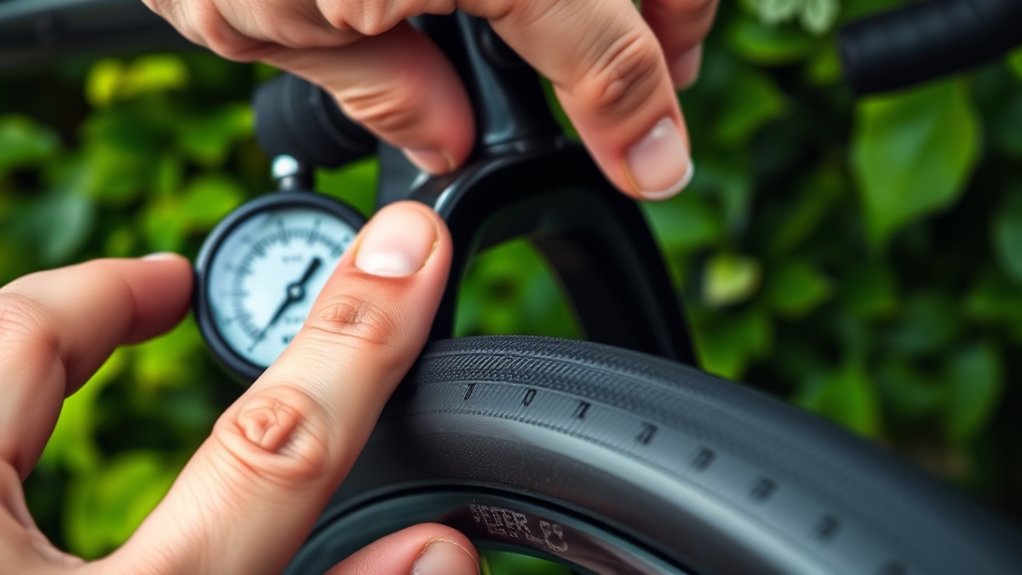
- Check PSI before every ride using a reliable pressure gauge. Don’t rely on just looking at them.
- Adjust the pressure based on your riding conditions and rider weight, as shown on the tire sidewall.
- Look over your tires for any damage, debris, or uneven wear that could cause pressure problems.
Make it part of your routine, like checking after filling or at the start of each week. Proper maintenance helps prevent flats, improves ride quality, and extends your tire’s life, making every trip safer and more efficient.
Frequently Asked Questions
How Often Should I Check My Bike Tire Pressure?
You should check your bike tire pressure before every ride to ensure top performance and safety. It’s a quick step that can make a big difference in how your bike handles.
It’s also a good idea to give your tires a look-over weekly, especially if you ride often or in different conditions. Regular checks help you catch slow leaks or pressure drops early on.
This way, you can prevent flats and enjoy a smoother ride. Just remember to use a reliable gauge for accurate readings and keep your tires inflated to the right PSI for your riding style.
Can Overinflating Damage My Bike Tires?
Overinflating your bike tires is like stretching a rubber band too far. It risks snapping and can damage the tire.
When you pump beyond the recommended PSI, it weakens the tire’s structure. This makes it more prone to punctures and blowouts.
Plus, overinflation reduces grip and comfort, turning your ride into a bumpy journey. Stick to the manufacturer’s suggested pressure, and your tires will perform like a well-tuned symphony—smooth and reliable.
What Tools Are Best for Measuring Tire PSI Accurately?
You should use a reliable digital or analog tire pressure gauge for accurate measurements. Digital gauges are often easier to read and more precise, while analog ones can be quick and convenient.
Make sure to check your tire pressure when the tires are cold, as heat can give false readings. Regularly measuring with these tools helps you maintain the right PSI, ensuring a smooth ride and preventing damage from over or underinflation.
How Does Rider Weight Influence Optimal PSI?
Rider weight really affects what your ideal tire PSI should be. Heavier riders might need higher pressure to stop the tire from squishing too much and to stay in control.
Lighter riders can go for lower pressures, which can give you better traction and make your ride more comfortable. It’s easy to get tempted to stick to general guidelines, but experimenting based on your weight and riding style will actually make your ride smoother and safer.
Always check your tire manufacturer’s recommendations and make adjustments. Finding that perfect balance is key to a better riding experience.
Should I Adjust PSI Based on Weather Conditions?
Yes, you should adjust your tire pressure based on weather conditions. When it’s hot, the air inside your tires expands, so lowering the PSI slightly helps prevent blowouts.
Conversely, in cold weather, the air contracts, and increasing PSI can help maintain good contact with the road. Always check your tire pressure regularly, especially when the weather changes.
This way, you can ensure a smooth, safe ride no matter the temperature outside.
Conclusion
Think of your bike’s tires as the sails of a ship. Just like the right tension catches the wind perfectly, proper PSI ensures a smooth ride.
Too loose or too tight, and you could have a bumpy journey. Regularly check and adjust your tire pressure to keep things running smoothly.
When you dial in your tires with the right PSI, every ride feels more comfortable and in control. For road bike tires, choosing the correct PSI makes all the difference.