How to Replace a Road Bike Tube in 7 Easy Steps
Fixing a flat tire on your road bike can be frustrating, especially if you’re new to cycling. Many riders struggle with replacing a bike tube quickly and easily, but don’t worry—you’re not alone.
With a little practice, it becomes a straightforward task that gets you back on the road in no time.
To replace a road bike tube, start by gathering tools like tire levers, a pump, and a new tube. Remove the wheel and inspect the tire for debris or damage.
Check your new tube for flaws before inserting it into the tire, lining up the valve stem with the hole in the rim.
Reattach the tire, inflate it to the proper pressure, and guarantee everything fits securely.
If you want a detailed guide, keep going—you’re about to learn all the steps.
Key Takeaways
- Remove the wheel from the bike using quick-release or axle nuts, then deflate the tire completely.
- Use tire levers to carefully pry the tire bead away from the rim on both sides. Take your time to avoid damaging the rim or the tire.
- Remove the damaged tube, inspect the tire for debris, and check for any damage or embedded objects that might cause a flat again.
- Slightly inflate the new tube. This makes it easier to insert and helps prevent pinching.
- Insert the new tube into the tire, making sure the valve stem lines up with the rim hole. Gently push the tube in without forcing it.
- Re-seat the tire bead onto the rim, ensuring it fits snugly all around. Then, inflate to the recommended pressure.
- Finally, reattach the wheel to the bike. Double-check that everything is secure and ready to ride again.
Tools Needed to Change a Bike Tube
To replace a bike tube efficiently, you’ll need a few essential tools. First, grab a set of tire levers. These make prying the tire away from the rim much easier.
Tire levers simplify removing the tire from the rim for quick tube replacement.
Next, find a bike pump, preferably with a pressure gauge, to inflate the new tube correctly. You’ll also want a patch kit or a spare tube, depending on whether you’re repairing or replacing.
A small multi-tool with Allen wrenches can be helpful if you need to remove the wheel from your bike. Finally, keep a cloth or rag handy to wipe away dirt and debris.
Having these tools ready before you start guarantees a smooth, frustration-free process. With everything in place, you’re all set to replace your bike tube efficiently.
Inspect the Tire and Remove the Flat
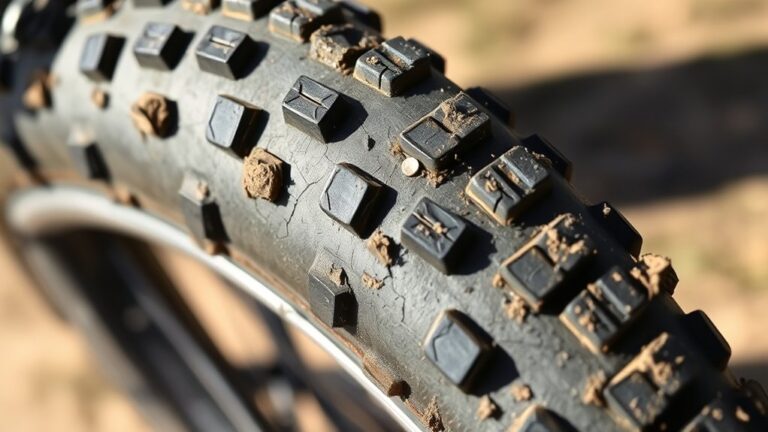
Start by visually inspecting the tire for any damage, cuts, or embedded debris that could cause a flat.
Remove any obvious debris like glass or thorns to prevent it from puncturing your new tube.
This quick check helps make sure your tire is clean and safe before you install the replacement tube.
Visual Tire Inspection
Examine the tire carefully to identify the cause of the flat. Look closely for any embedded debris, cuts, or punctures that might have caused the flat.
Check the tire’s surface for sharp objects like glass, thorns, or small stones. Feel along the tire’s sidewall and tread for irregularities or damage.
Inspect for embedded debris that could have caused the flat. Check for cuts, tears, or punctures in the tire’s surface. Feel for bulges, cracks, or other irregularities in the sidewall.
This step helps you understand what caused the flat and ensures you don’t overlook potential hazards that could cause another flat once you reinstall the tube. Proper inspection prevents future issues and keeps your ride smooth.
Remove Obvious Debris
After spotting potential hazards during your tire check, the next step is to remove any obvious debris that might be causing the flat. Carefully run your fingers around the inside of the tire and look for sharp objects like glass, thorns, or small stones.
Use your hands or a tool to gently pull out these hazards. Getting rid of debris helps prevent the new tube from getting punctured again. To stay organized, here’s a quick reference:
| Debris Type | How to Remove | Potential Cause |
|---|---|---|
| Glass | Use tweezers or fingers | Cuts the tube |
| Thorns | Pull out carefully | Punctures the tube |
| Small stones | Dislodge with fingers | Causes flats |
Be thorough to make sure your ride stays smooth and safe.
Check and Prepare Your New Tube
Before installing your new tube, take a moment to check it for any defects or damage. Carefully inspect the entire surface for punctures, tears, or weak spots. Make sure the valve stem is straight and securely attached, with no cracks or bends. Check that the tube is the correct size for your tire to ensure a proper fit.
Inspect your new tube for damage, proper size, and secure valve before installation for a smooth ride.
To prepare, you can:
- Slightly inflate the tube to make it easier to detect leaks or weak spots.
- Run your finger around the valve to verify it’s properly seated.
- Confirm the tube is clean and free of debris or sharp edges that could cause damage during installation.
Taking these steps will help ensure your new tube is ready for a smooth, safe ride.
How to Install the New Tube Into the Tire
To install the new tube, start by properly aligning it with the tire to prevent pinches. Carefully insert the tube into the tire, making sure it fits smoothly without twisting or bunching.
Once the tube is in place, check that it sits evenly around the rim before reinflating. This helps avoid any issues once the tire is inflated and ready to go.
Properly Align the Tube
Gently insert the new tube into the tire, making sure it slides in smoothly without twisting or bunching. As you do this, line up the valve stem with the rim’s hole to avoid any damage.
Keep the tube evenly distributed inside the tire to prevent pinching or uneven pressure. Once most of the tube is inside, carefully work it around the interior of the tire, checking for twists or folds.
To ensure proper alignment, make sure the valve stem sits straight and centered. Smooth out any visible twists or bunches and position the tube so it sits flush against the rim, avoiding pinched areas.
This careful positioning helps prevent future punctures and ensures the tire seats evenly on the rim. Proper alignment promotes a smooth, safe ride.
Carefully Insert Into Tire
Carefully slide the new tube into the tire, making sure it moves smoothly without twisting or bunching. Gently work the tube around the rim, starting on one side and moving evenly to avoid pinching.
Use your hands to softly press the tube into the tire bead, ensuring it’s seated properly. Keep an eye out for any twists or folds that could cause flats later.
To make this easier, check out the table below:
| Tip | Why it helps |
|---|---|
| Use gentle pressure | Prevents punctures and pinching |
| Work gradually | Ensures even seating |
| Check for twists | Avoids flats and damage |
Following these steps will help you install the tube correctly and get ready for a smooth ride.
Reattach the Tire to the Wheel and Check Fit
Slide the tire back onto the wheel, making sure the bead seats evenly inside the rim on both sides. Gently work the tire over the rim, starting at one point and moving around to ensure the bead is properly seated. Once in place, check the fit by pressing around the edges to confirm it’s evenly seated and secure.
Make sure there are no gaps or bulges along the rim, and confirm the tire bead is fully seated on both sides. Gently push around the tire to verify it’s evenly fitted and secure.
Taking your time during this step is important to prevent pinched tubes and to keep your tire in place during riding. Proper seating also helps maintain even pressure and stability.
Inflate the Tube to the Correct Pressure
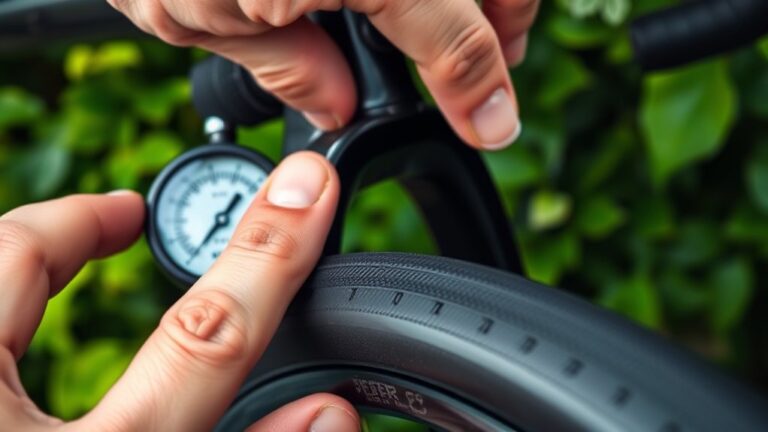
Once the tire is seated properly, it’s time to inflate the tube to the right pressure. Use a pump with a pressure gauge to make sure you get it just right.
Check your bike’s tire sidewall for the recommended PSI and set your pump accordingly. Over-inflating can cause the tube to burst, while under-inflating can lead to pinch flats and poor handling.
Here’s a quick guide:
| Tire Pressure (PSI) | Riding Conditions |
|---|---|
| 80-100 | Smooth, dry roads |
| 60-80 | Wet or rough terrain |
| 100+ | Racing or high-performance |
| 50-60 | Commuting with comfort |
Pump slowly, check the gauge often, and stop when you reach the recommended PSI for a smooth, safe ride.
Test and Get Back on the Road
Before hitting the road, give your bike a quick test to make sure everything’s working properly. Check that your tire is securely mounted and spins freely without wobbling. Make sure your brakes respond promptly and stop the wheel smoothly. Listen for any unusual noises or vibrations that might indicate an issue.
To keep safe and perform well, double-check that the tire pressure is at the recommended level. Also, ensure the valve stem is tight and secure. Don’t forget to tighten your quick-release skewer or axle nut properly.
Once you’ve confirmed these, take a short ride around the block. If everything feels steady and responsive, you’re ready to get back on the road confidently. Proper testing helps prevent surprises and keeps your ride smooth and safe.
Frequently Asked Questions
How Often Should I Replace My Bike Tube?
You should replace your bike tube whenever it’s damaged, punctured repeatedly, or shows signs of wear like cracks or thinning.
Generally, check your tubes regularly, especially after long rides or rough terrains.
If you notice frequent flats, think about replacing the tube sooner.
Also, replace tubes if they feel brittle or lose air quickly, as these issues can lead to sudden flats and affect your safety during rides.
Can I Reuse an Old Tube?
Yes, you can reuse an old tube, but only if it’s in good shape. Check it carefully for cracks, punctures, or weak spots—any damage and it’s time to replace it.
Sometimes, a patch can do the trick, but if the tube has multiple repairs or shows signs of wear, it’s safer to get a new one.
Reusing a damaged tube can lead to flats or blowouts, which could ruin your ride and put safety at risk.
What Should I Do if the New Tube Won’t Fit?
If the new tube won’t fit, first check if it’s the right size for your wheel. If it is, gently deflate the tube and try to fit it again, smoothing out any twists or folds.
Avoid forcing it, as that can cause damage. If it still doesn’t fit, try a different tube of the correct size.
Sometimes, small adjustments or switching brands makes installation easier.
How Do I Prevent Future Flats?
To prevent future flats, regularly check your tire pressure and keep it within the recommended range.
Inspect your tires for embedded debris, cuts, or worn spots before you ride. Using high-quality tires and tubes suited for your terrain can also make a big difference.
Think about installing puncture-resistant tires or liners for extra protection. Be cautious when riding over rough or debris-filled surfaces.
And don’t forget to carry a repair kit with you for quick fixes if needed. That way, you’ll be ready for anything that comes your way.
Is It Safe to Ride Immediately After Fixing the Tube?
Yes, it’s safe to ride immediately after fixing your tube if you’ve properly inspected and reassembled everything.
You might feel like you’re riding on a cloud, but don’t get too confident too quickly. Double-check that the tire is seated correctly and the valve is secure.
Test ride gently first to verify everything feels right. If all looks good, go ahead—your bike’s ready to conquer the road again!
Conclusion
Replacing your bike tube is quick and easy once you know the steps. Did you know that nearly 60% of bike accidents are caused by flat tires?
By mastering this simple repair, you can avoid being stranded and keep your rides smooth. Just follow these 7 steps, stay prepared with the right tools, and you’ll be back on the road in no time.
Learning how to replace a bike tube is essential for any cyclist. Whether you’re a beginner or a seasoned rider, knowing this skill keeps your rides hassle-free.
So next time you get a flat, don’t worry. With a little practice, replacing a bike tube becomes a quick fix. Happy cycling and safe travels!