How to Know When to Replace Mountain Bike Tires
Are you tired of dealing with unexpected flats or slipping on tricky trails? Many mountain bikers struggle with knowing when it’s time to replace their tires, which can be frustrating and even dangerous. You’re not alone—keeping your tires in top shape is key to a safer, smoother ride.
You should replace your mountain bike tires when you see cracks, cuts, bulges, or worn-down tread that affects grip and safety. Measure tread depth regularly; if it’s below 1-2 millimeters, it’s time for new tires.
Notice frequent flats or slipping during turns? That’s another clear sign.
Don’t ignore sidewall damage like bubbling or deep tears, as they compromise tire integrity. Keep an eye on these signs to ride safer and smoother—and uncover how to care for your tires to extend their life.
Key Takeaways
- Replace tires when the tread depth gets down to 1 to 2 millimeters. This helps you keep good traction and control on the trail.
- Take a close look at the sidewalls. Deep cuts, bulges, cracks, or bubbling mean there could be internal damage, so it’s time for a new tire.
- If you’re getting frequent flats or slipping during turns, your tires are probably worn out and need replacing.
- Watch out for uneven tread wear, bald spots, or visible deformities. These issues can make riding less safe and affect your bike’s performance.
- Riding on muddy or rocky trails can wear out tires faster. So, consider replacing them more often after tackling tough terrain.
Key Signs Your Mountain Bike Tires Need Replacement
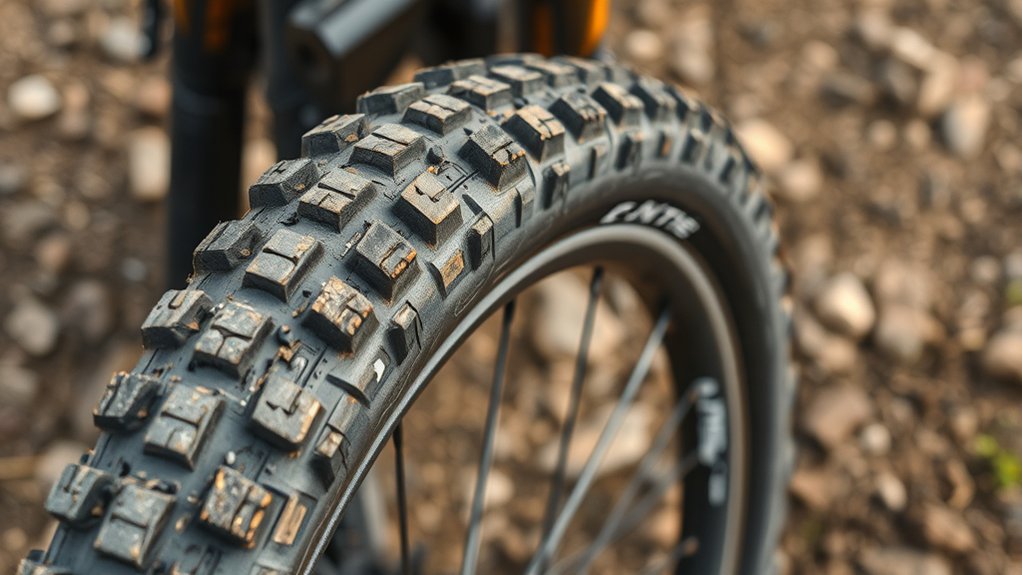
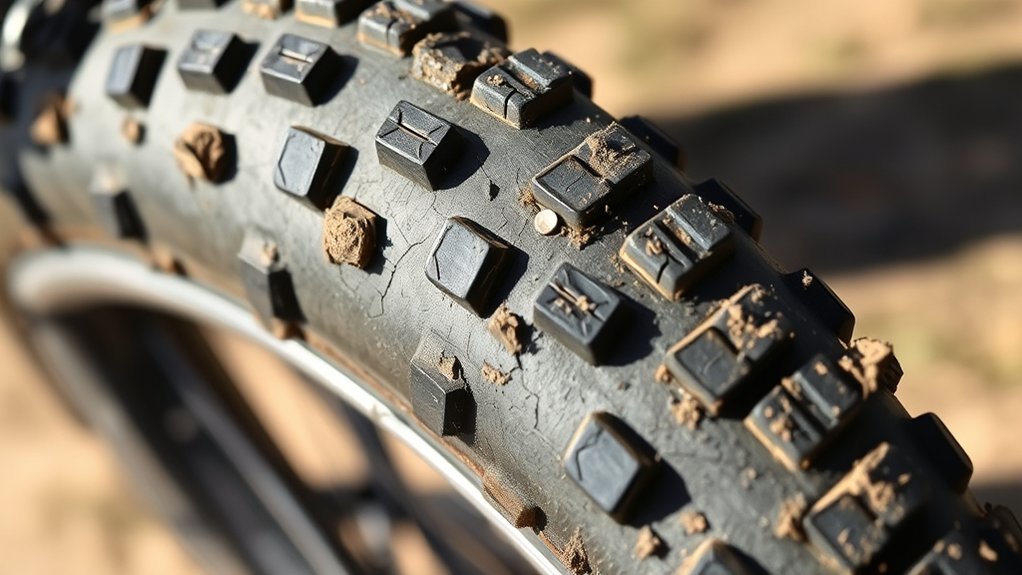
Although mountain bike tires are built to last, you’ll notice it’s time to replace them when they show significant wear and tear. Look out for cracks or cuts on the sidewalls—these weaken the tire and raise the chances of a blowout.
If you spot bald spots where the tread has worn smooth, your grip will suffer, especially on tricky trails. Bulges or deformities in the tire mean internal damage and can cause sudden failures.
Also, if you keep getting flats despite proper maintenance, your tires might be too worn to protect the inner tube. Lastly, if your tire slips or feels unstable when cornering, it’s a clear sign that replacing it will boost your safety and performance on the trails.
How to Measure Tire Wear With Tread Depth
When you notice signs like worn tread or instability, the next step is to measure your tire’s tread depth to see how much life it has left. You can use a tread depth gauge or a simple ruler for this.
Place the gauge or ruler at the deepest part of the tread and record the measurement. Most mountain bike tires start with knobs around 4 to 6 millimeters high.
When the tread wears down to about 1 to 2 millimeters, it’s time to think about replacing your tires. Regularly checking tread depth helps you stay on top of traction and control.
Keep in mind that measuring different areas can reveal uneven wear, so it’s a good idea to check multiple spots for accuracy.
What Happens If You Ride Worn-Out Mountain Bike Tires
If you keep riding on worn-out mountain bike tires, you risk losing traction and control, which can lead to dangerous falls or crashes. Your tires won’t grip the trail as well, especially on loose or wet surfaces. This makes your stability and handling worse, and every ride becomes riskier.
Riding on worn-out tires reduces traction and control, making every trail ride riskier and less stable.
Here’s what happens if you ignore worn tires:
- You’ll have less grip on roots, rocks, and corners, increasing the chances of slipping.
- The tread gets thinner, so punctures and flats become more likely.
- Handling becomes unpredictable, making maneuvering tricky and unsafe.
To stay safe and enjoy your rides, replace your tires before they become too worn out. Your bike’s performance and your safety depend on it.
How to Spot Sidewall Damage Before It’s Too Late
You should regularly check your tire’s sidewalls for cuts, cracks, or bulges that could cause problems later on.
Look closely to see how bad the damage is—small scratches might be nothing, but deep tears or exposed threads mean it’s time to get a new tire.
Catching these issues early can help you avoid bigger problems down the road, especially when you’re out on the trail.
Identifying Common Sidewall Issues
Though sidewall damage might seem minor at first glance, it can quickly compromise your tire’s integrity and safety. Make sure to regularly check your mountain bike tires for common sidewall issues to prevent unexpected failures.
Look out for visible cuts or tears that could weaken the sidewall. Bulges or bubbles are signs of internal damage and may lead to blowouts. Cracks or dry rot, which happen as tires age, reduce flexibility and overall strength.
Assessing Damage Severity
Recognizing sidewall damage early can save you from unexpected tire failure on the trail. Start by closely inspecting the sidewalls for deep cuts, tears, or bulges. Small nicks or scratches might be harmless, but if the damage exposes the casing threads or rubber layers, it’s a serious problem.
Press gently around the affected area. If it feels weak or soft, the tire’s integrity is compromised. Also, check for bubbling or blistering, which indicates internal damage. If you spot any of these signs, it’s time to replace your tire.
Don’t wait for a blowout. Riding on a damaged sidewall risks accidents and further damage. Trust your judgment. When in doubt, swap out the tire to stay safe on every ride.
Why Cracks and Dry Rot Mean It’s Time to Replace Mountain Bike Tires
When cracks start appearing on your mountain bike tires, they signal that the rubber is losing its flexibility and strength. This deterioration, known as dry rot, weakens your tires and increases the risk of failure during rides. Ignoring these signs can lead to sudden blowouts or poor traction.
You should replace your tires if you notice visible cracks on the sidewalls or tread, which indicate rubber breakdown. Also, a dry, brittle texture when you press the tire surface is a clear sign.
Small chunks or pieces flaking off the tire show advanced aging and mean it’s time for a replacement. Addressing cracks and dry rot promptly keeps you safe and maintains your bike’s performance.
Don’t wait until these signs worsen. Swap out your tires to avoid potential accidents and ensure a smooth, reliable ride.
How Punctures Affect Mountain Bike Tire Safety and Longevity
Cracks and dry rot aren’t the only threats to your mountain bike tires—punctures can also impact their safety and lifespan. Even small punctures weaken the tire’s structure, increasing the risk of blowouts or flats during rides.
If you notice frequent air loss or visible damage, it’s a sign the tire’s integrity is compromised. Repair kits can fix minor punctures, but repeated patches reduce the tire’s durability.
Over time, punctures can cause the casing to break down, making the tire less reliable on rough terrain. To stay safe, inspect your tires regularly for cuts or embedded debris.
When punctures become too frequent or repairs fail to hold, it’s time to replace your tires for consistent performance and safety.
How Trail Conditions Impact How Often You Replace Tires
You’ll notice your tires wear out faster on muddy trails because the constant moisture softens the rubber. Riding on rocky terrain can cause cuts and punctures, forcing you to replace tires sooner.
On the other hand, dry conditions help extend your tire’s lifespan by reducing overall wear.
Muddy Trails Accelerate Wear
Because muddy trails constantly grind your tires against abrasive dirt and debris, they wear down much faster than dry or rocky paths. When you ride through mud, your tires face extra challenges that speed up wear and tear.
You’ll notice the tread clogging quickly, reducing traction and making it harder to control your bike. Plus, mud traps small rocks and grit, which can cause micro-cuts and accelerate rubber degradation.
To keep your tires in good shape, focus on these key points:
- Clean your tires thoroughly after each muddy ride to remove embedded debris.
- Inspect the tread regularly for signs of flattening or cracking.
- Consider swapping to tires with deeper tread patterns designed for wet conditions.
Staying on top of maintenance helps you know exactly when it’s time to replace your tires.
Rocky Terrain Causes Damage
When you ride on rocky terrain, your tires take a serious beating from sharp edges and uneven surfaces. This kind of trail wears down your tread faster and can cause cuts or punctures, making your tires more vulnerable to flats.
You’ll notice your tires losing grip sooner, which compromises control and safety. If you frequently tackle rocky trails, check your tires often for sidewall damage and tread wear. Small cuts can turn into bigger problems if ignored.
Replacing tires sooner rather than later prevents unexpected failures during your ride. Remember, the harsher the terrain, the shorter the lifespan of your tires. Adjust your maintenance routine accordingly to keep your bike performing at its best.
Dry Conditions Extend Lifespan
While rocky terrain accelerates tire wear, dry trail conditions can actually help extend the lifespan of your mountain bike tires. When trails are dry, your tires face less abrasive friction and fewer sharp obstacles, reducing the rate of tread degradation. You’ll notice your tires maintain grip and structure longer, meaning fewer replacements.
Here’s why dry conditions help your tires last:
- Less mud buildup: Mud can cause slipping and uneven wear, which dry trails minimize.
- Reduced sidewall damage: Dry trails are less likely to have hidden rocks or roots that cut sidewalls.
- Lower risk of punctures: Hard, dry ground causes fewer sharp debris issues compared to wet, soft trails.
Riding in dry conditions means you can enjoy more miles before needing new tires.
When to Change Tubes Along With Your Mountain Bike Tires
How do you know if your mountain bike tube needs replacing along with your tires? First, check for frequent flats or slow leaks—these are signs your tube might be failing. Also, when you remove old tires, inspect the tubes for cracks, holes, or thinning rubber.
If the tube shows any damage or looks brittle, it’s time to swap it out. Changing tubes with your tires saves you the hassle of doing it twice soon after. Plus, a fresh tube pairs better with new tires, ensuring a secure fit and better performance.
Even if the tube seems fine, consider replacing it if it’s old or has been patched multiple times. This helps avoid unexpected failures on your rides.
How to Choose the Right Replacement Mountain Bike Tires
Replacing your mountain bike tires means choosing the right ones to match your riding style and terrain. Start by considering the tire width and tread pattern that suit your typical trails.
Wider tires offer more grip and stability, while narrower ones are faster on smoother paths. Next, think about the tire’s casing and durability. Tougher casings handle rough trails better but may weigh more.
Finally, select the right tire compound for your conditions. Softer compounds grip better but wear faster, while harder compounds last longer. Match tread design to trail type: aggressive for loose dirt, smoother for hardpack.
Choose your width based on terrain and bike clearance. Balance durability with weight depending on your riding demands. These choices will help your replacement tires perform well and last longer.
How Regular Tire Inspections Help Prevent Unexpected Flats
Because flat tires can ruin even the best rides, you should inspect your mountain bike tires regularly to catch issues early. Checking for cuts, embedded debris, and worn tread helps you spot problems before they cause flats.
Run your fingers along the tire surface and sidewalls, feeling for sharp objects or cracks that might lead to punctures. Also, look for bulges or uneven wear, which could indicate internal damage or improper pressure.
Don’t forget to check tire pressure before every ride. Underinflated tires are more prone to pinch flats. Making these inspections a habit means you can fix small issues, swap out damaged tires, or re-inflate as needed.
Staying proactive prevents unexpected flats, ensuring your rides stay smooth and trouble-free.
Tips for Extending the Life of Your Mountain Bike Tires
You can extend the life of your mountain bike tires by keeping them properly inflated and cleaning them regularly.
Avoiding harsh terrain when possible also helps reduce wear and tear. These simple habits will keep your tires in better shape for longer.
Proper Tire Inflation
Proper tire inflation plays an essential role in extending the life of your mountain bike tires. When your tires have the right pressure, they wear evenly and resist damage better, giving you more miles on the trail.
Underinflated tires can cause premature wear and pinch flats. Overinflated tires reduce traction and increase the risk of impact damage. To keep your tires in good shape:
Check tire pressure before every ride with a reliable gauge. Adjust the pressure based on terrain—lower for loose trails, higher for hard-packed surfaces. Follow the manufacturer’s recommended PSI range printed on the tire sidewall.
Regular Tire Cleaning
Several simple cleaning habits can greatly extend the life of your mountain bike tires. After every ride, especially on muddy or dusty trails, rinse off dirt and debris with water. Avoid using harsh chemicals that could degrade the rubber. Instead, use a mild soap and a soft brush to clean stubborn grime.
Be sure to remove stones or sharp objects lodged in the tread, as they can cause punctures over time. Dry your tires thoroughly before storing your bike to prevent moisture-related damage like cracking or dry rot. Regular cleaning also helps you spot early signs of wear or damage, letting you take action before problems worsen.
Avoiding Harsh Terrain
Keeping your tires clean helps you spot damage early, but steering clear of harsh terrain plays a big role in preventing that damage in the first place. When you avoid rough surfaces, you reduce wear and tear, which can really extend your tires’ lifespan.
Here are some ways to minimize exposure to tough conditions:
- Choose trails with smoother surfaces or well-maintained paths.
- Avoid sharp rocks, thorny bushes, and overly root-covered sections.
- Slow down on technical terrain to reduce tire stress and prevent punctures.
How to Maintain Your Tires for Safer, Smoother Rides
Maintaining your mountain bike tires starts with regular inspections to catch issues before they become serious. Check for cuts, embedded debris, or uneven wear that could compromise safety.
Keep your tires properly inflated. Too low and you risk pinch flats; too high and you lose traction.
Proper tire inflation prevents flats and maintains optimal traction for a safer, smoother ride.
Clean your tires after rides, especially if you’ve been on muddy or rocky trails. This helps prevent damage and extends their life.
Rotate your tires occasionally to promote even wear, swapping front and rear tires if their tread patterns allow.
Finally, store your bike in a cool, dry place away from direct sunlight to avoid rubber deterioration.
Taking these simple steps keeps your tires safe and smooth, helping you enjoy every ride with confidence.
Frequently Asked Questions
How Do Tire Pressure Variations Affect Mountain Bike Performance?
Tire pressure variations directly impact your mountain bike’s grip, comfort, and rolling resistance. Lower pressure gives you better traction and absorbs bumps well, but too low can cause pinch flats or rim damage.
Higher pressure reduces rolling resistance, making pedaling easier on smooth trails, but you’ll lose some grip and comfort. You’ll want to adjust pressure based on terrain and your riding style to get the best performance and control.
What Tools Are Essential for Changing Mountain Bike Tires on the Trail?
You’ll need tire levers, a mini pump or CO2 inflator, and a patch kit or spare tube for changing mountain bike tires on the trail.
Tire levers help you pry the tire off the rim easily. The pump or inflator gets your tire back to the right pressure quickly.
A patch kit or spare tube lets you fix or replace a punctured tire so you can keep riding without hassle.
Can Tire Width Influence My Bike’s Handling on Different Terrains?
Think of tire width as the shoes your bike wears. Wide tires grip like hiking boots on loose dirt, giving you stability and confidence on rough trails. Narrow tires act like running shoes, slicing through hardpack and pavement with speed but less traction.
How Do Tubeless Tires Compare to Traditional Tires for Mountain Biking?
Tubeless tires give you better traction and fewer flats because they run at lower pressures without pinch flats. You’ll feel more grip and smoother rides on rough trails.
Traditional tires with tubes are easier to fix but are more prone to punctures. If you want less maintenance and improved performance, tubeless is the way to go.
Just make sure you’re comfortable setting them up and sealing properly.
What Are the Environmental Impacts of Disposing Old Mountain Bike Tires?
You’ll find that disposing of old mountain bike tires can harm the environment because they’re made from non-biodegradable rubber and synthetic materials.
When thrown in landfills, they take decades to break down and can release harmful chemicals. Instead, you should recycle them or repurpose tires to reduce waste.
Some shops and programs accept used tires, so you can keep your impact minimal while staying responsible with your gear.
Conclusion
Knowing when to replace your mountain bike tires can save you from unexpected flats and accidents. Worn tires can really increase your chances of slipping—by up to 30%.
Regularly checking tread depth, sidewall damage, and cracks helps keep you safer on trails. Staying on top of inspections and maintenance means smoother, more reliable rides.
Don’t wait too long—giving your tires the attention they deserve is key to a safe adventure. Keep your mountain biking experience strong and stress-free by knowing when it’s time for new tires.