How Fast Can a Mountain Bike Go
Many mountain bikers dream of hitting top speeds but feel stuck wondering just how fast they can really go. You’re not alone—figuring out the limits of your bike and trails can be tricky.
You can reach speeds over 30 mph on downhill stretches when gravity helps, but average speeds vary widely. On smooth dirt or gravel, expect 15 to 25 mph, while rocky or muddy trails slow you below 10 mph.
Your bike type, skills, and trail conditions play big roles too. Cross-country rides average around 10-15 mph, demanding endurance and control.
If you want to ramp up your speed and confidence, there’s plenty more to discover on maximizing your ride.
Key Takeaways
- Mountain bike speeds change a lot depending on the terrain. On smooth dirt trails, you might go between 15 and 25 mph. On rougher trails full of rocks or roots, speeds often drop below 10 mph.
- When downhill riding, speeds can go over 30 mph thanks to gravity. Cross-country rides usually average around 10 to 15 mph, but it all depends on how tough the trail is.
- The design of the bike also plays a role. Downhill bikes are built for control and durability, while cross-country bikes are lighter and more efficient for climbing and long rides.
- Your riding skills really make a difference too. Good pedal technique and being able to read the trail can help you go faster and stay safe.
- Weather, trail conditions, tire choice, suspension setup, and how you position yourself on the bike all affect how fast you can ride and how well you control the bike.
How Fast Can Mountain Bikes Go on Different Terrains?
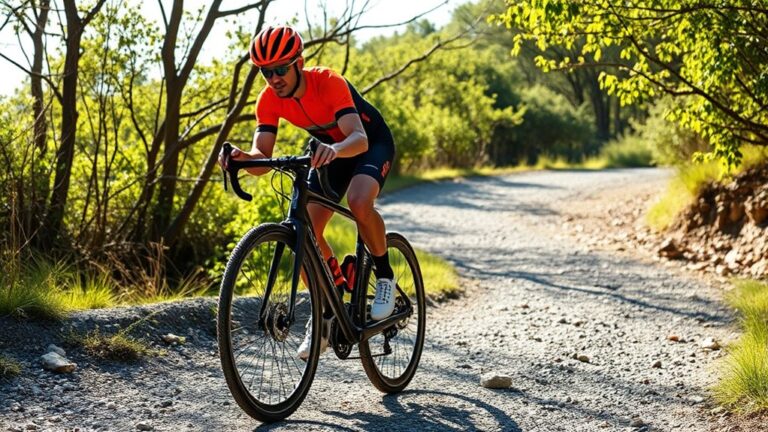
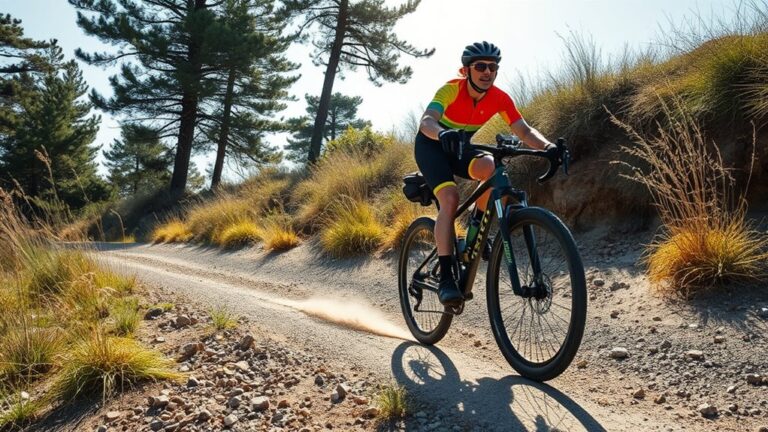
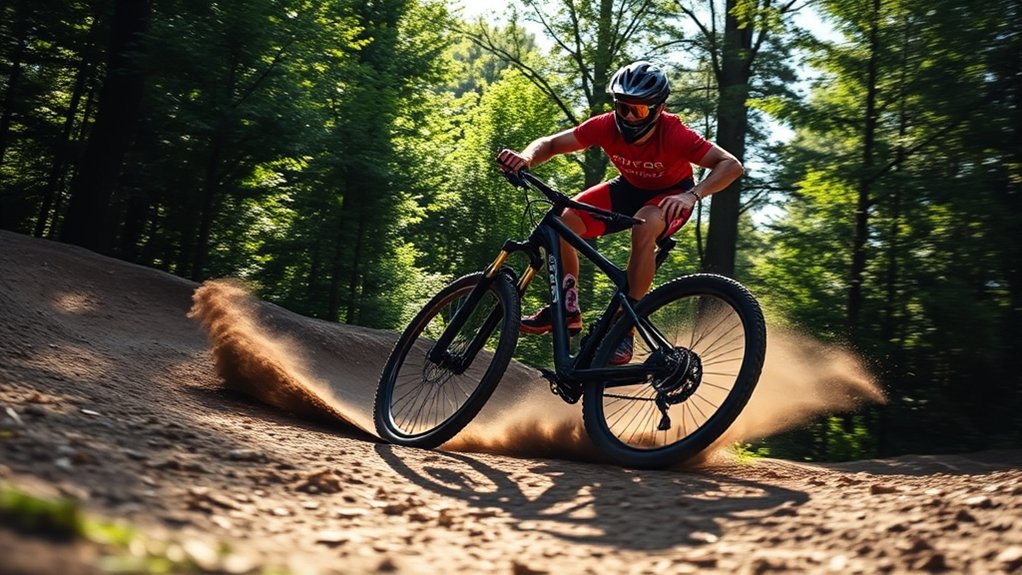
Although mountain bikes are built for rugged trails, their speed varies a lot depending on the terrain. On smooth, packed dirt or gravel, you can hit speeds of 15 to 25 mph because there’s less resistance and better traction.
When you get to rocky or root-covered trails, your speed usually drops below 10 mph since you need to navigate obstacles carefully. Muddy or loose sand sections slow you down even more because your tires don’t grip well.
Downhill stretches let gravity help you go faster without extra effort. But on flat or uphill terrain, your speed depends mainly on your power and endurance. Knowing how the terrain affects your speed can help you ride smarter and adjust your technique.
How Do Downhill and Cross-Country Speeds Compare?
You’ll notice that terrain plays a huge role in how fast you can go on downhill versus cross-country trails.
The design of your bike is built to handle these differences, which affects your speed and control.
Plus, your skill level can make a big difference in how quickly you navigate each type of ride.
Terrain Impact on Speed
When you ride downhill, gravity gives you a big boost, letting your mountain bike reach much higher speeds than on flat or uphill terrain. On cross-country trails, you’ll find yourself pedaling steadily, balancing speed with endurance. Terrain really affects how fast you can go.
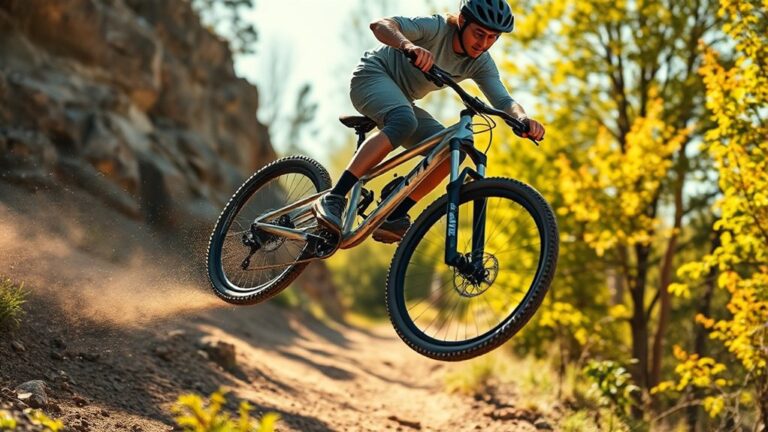
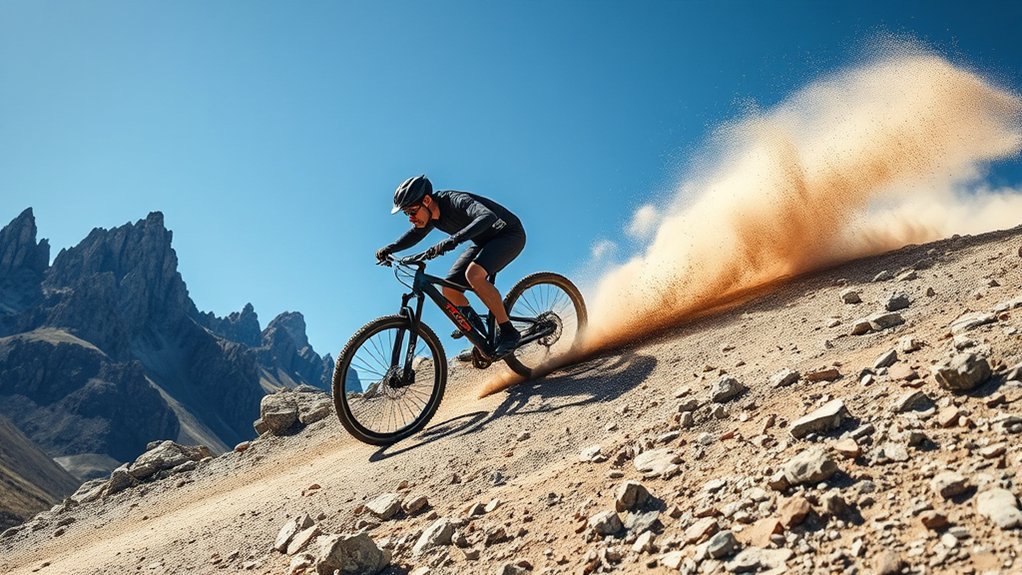
Downhill: Steep slopes and gravity help you hit top speeds, often over 30 mph. But you need good control and quick reflexes to stay safe.
Cross-Country: Mixed terrain and climbs slow you down, with average speeds around 10-15 mph depending on how tough the trail is.
Technical Terrain: Rocks, roots, and tight turns require careful navigation, which reduces your speed no matter what kind of trail you’re on.
Knowing how different terrains impact your speed can help you pick the right riding approach and stay safe on the trails.
Bike Design Differences
Two main types of mountain bikes are downhill and cross-country. They’re built for very different speeds and riding styles. When you pick one, you’re choosing a bike that either focuses on control on steep descents or efficiency over long distances.
| Feature | Downhill Bike |
|---|---|
| Weight | Heavier, built tough |
| Suspension | Longer travel for rough terrain |
| Speed Focus | High-speed descents |
| Maneuverability | Excellent on technical trails |
| Feature | Cross-Country Bike |
| Weight | Lightweight for climbing |
| Suspension | Shorter travel for efficiency |
| Speed Focus | Sustained speed over distance |
| Maneuverability | Agile on varied terrain |
Your choice affects how fast you can go and how you experience the ride.
Rider Skill Influence
Choosing between a downhill and cross-country bike shapes your speed potential, but your skill level is just as important. Downhill bikes are great on steep, technical descents, while cross-country bikes are better for endurance over varied terrain. How fast you go really depends on how well you control your bike and adapt to different trail conditions.
Your riding skills impact speed in key ways. For example, line choice—picking smoother or shorter paths—helps you keep your momentum. Braking control, or knowing when to brake and when to let gravity do its thing, keeps your speed steady. Body positioning, staying balanced and agile, makes handling obstacles easier.
Master these skills and you’ll push your bike’s speed limits, no matter what type of bike you ride.
Which Rider Skills Boost Mountain Bike Speed?
Although the bike and terrain are important, your riding skills are the key to going faster. Mastering smooth pedal strokes helps you keep a steady pace without wasting energy.
Learning to read the trail lets you spot obstacles early and pick faster lines. Keeping your body relaxed and balanced improves control, so you can react quickly and descend safely and faster.
Good braking technique is crucial—you need to know when and how much to brake to avoid slowing down too much while staying in control. Building confidence with cornering allows you to carry more speed through turns without losing traction.
Finally, developing endurance helps you maintain higher speeds over longer distances. By honing these skills, you’ll unlock your bike’s full potential and push your limits on any trail.
Why Trail Conditions Matter for Mountain Bike Speed
You’ll notice your speed changes depending on the trail’s terrain. Rocky paths slow you down, while smooth dirt lets you fly.
Weather also plays a big role. Wet or muddy trails can make your bike slip and force you to slow down.
Understanding these factors helps you ride faster and safer.
Impact Of Terrain Type
Because the type of terrain you ride on directly affects your mountain bike’s speed, understanding trail conditions is essential. Different surfaces create varying levels of resistance and traction, which influence how fast you can go.
For example, smooth dirt trails allow for faster speeds, while rocky or root-filled paths slow you down because you need to navigate carefully.
Here’s how terrain impacts your speed:
- Loose gravel or sand reduces traction and causes wheel slip, making you slow down.
- Hard-packed soil provides a firm surface, so you can maintain higher speeds easily.
- Technical terrain with rocks and roots demands control and balance, naturally lowering your pace.
Effects Of Weather Conditions
Since weather conditions directly influence trail surfaces, they play an essential role in determining how fast you can ride your mountain bike. Wet trails can become slippery and muddy, reducing your traction and forcing you to slow down to stay in control.
On the other hand, dry, dusty trails often provide better grip, letting you pick up speed more confidently. After heavy rain, trails might get eroded or develop puddles, creating obstacles that slow you down.
Wind also affects your speed. Headwinds can tire you out faster, while tailwinds can give you a helpful push. Temperature influences tire pressure and your stamina, too.
How Mountain Bike Design Affects Speed
Although many factors influence a mountain bike’s speed, its design plays a crucial role you can’t overlook. When you choose or customize your bike, you directly affect how fast it can go.
Key design elements to focus on include:
- Frame Material: Lighter materials like carbon fiber reduce weight, letting you accelerate quicker and maintain higher speeds.
- Geometry: A more aerodynamic frame shape helps you cut through the air efficiently, boosting your top speed.
- Gear Ratios: Proper gearing allows you to optimize pedaling efficiency for different terrains, making climbs easier and sprints faster.
How Tires and Suspension Impact Speed and Control
Your tires and suspension play a huge role in how fast you can go and how well you control your bike. The tread impacts traction and rolling resistance, which affects your speed and grip.
Suspension travel influences how efficiently you handle rough terrain. Choosing the right setup helps you find a good balance between speed and stability, making your ride smoother and more controlled.
Tire Tread and Traction
The tread pattern on your mountain bike tires is key to how fast you can ride and how well you stay in control. Different designs impact rolling resistance and grip, which directly affects your speed and stability.
When picking tires, think about how the tread interacts with the terrain. Knobby treads give you great traction on loose or muddy surfaces but can slow you down on hard-packed trails.
Low-profile treads help reduce rolling resistance, so you can keep higher speeds on smooth surfaces. Directional patterns help channel mud and water away, keeping your traction steady in wet conditions.
Suspension Travel and Efficiency
Tire tread sets the stage for how your mountain bike interacts with the trail, but suspension plays a big role in keeping you in control over rough terrain. When your suspension has enough travel, it absorbs bumps and obstacles, helping your wheels stay glued to the ground.
This means you can keep your momentum without bouncing uncontrollably. But too much travel or a poorly tuned suspension can drain your pedaling efficiency, especially on smoother sections. You want a setup that balances shock absorption with energy conservation.
Efficient suspension lets you pedal harder and faster, especially on technical descents. By dialing in the right travel and damping, you’ll feel more confident and in control. Ultimately, this boosts your speed without sacrificing stability.
Rolling Resistance Effects
Although suspension is key to keeping control, rolling resistance determines how fast you can actually maintain it. It’s the friction between your tires and the ground that slows you down. Tires with higher rolling resistance need more effort to keep your speed, while lower resistance lets you go faster with less energy.
Here’s how rolling resistance impacts your ride:
- Tire tread pattern: Aggressive treads give better grip but add resistance, making you slower on smooth surfaces.
- Tire pressure: Lower pressure boosts traction but increases rolling resistance. Higher pressure reduces resistance but might hurt control.
- Suspension setup: Too soft and it wastes energy in bobbing, raising rolling resistance. A firm setup improves efficiency.
Balancing these factors helps you go faster without losing control.
How Your Riding Position Affects Mountain Bike Speed
Because your riding position directly influences wind resistance and control, adjusting how you sit can really change your mountain bike speed. When you lower your torso and tuck your elbows in, you cut down on drag, helping you slice through the air more easily.
Sitting upright, on the other hand, increases wind resistance and slows you down but gives you better control on tricky terrain. Finding that sweet spot between speed and stability is key for a smooth ride.
| Riding Position | Impact on Speed |
|---|---|
| Aggressive (low torso) | High speed, less control |
| Upright (straight back) | Lower speed, better control |
| Standing on pedals | Burst speed, variable control |
| Leaning forward | Balanced speed and control |
| Relaxed posture | Lower speed, energy saving |
How Weather Conditions Affect Mountain Bike Speed
Your riding position can boost or limit your speed, but the weather also plays a big role in how fast you can go on a mountain bike. Different weather conditions directly impact your traction, visibility, and overall bike handling, which all influence your speed.
For example, rain and mud make trails slippery, so it’s harder to keep your speed up without risking a fall. Wind can either slow you down if it’s a headwind or help you along with a tailwind. Hot or cold temperatures also matter—cold weather can stiffen your muscles and bike parts, while heat can drain your energy faster.
What Safety Gear Helps You Maintain Speed Safely?
When you want to maintain high speeds on your mountain bike, wearing the right safety gear is essential. A well-fitted helmet protects your head from impacts, giving you confidence to push your limits.
Gloves improve your grip and reduce hand fatigue, helping you stay in control. Protective eyewear shields your eyes from debris, wind, and sunlight, so nothing distracts you while riding fast.
Don’t forget knee and elbow pads—they absorb shocks and prevent scrapes if you fall. A padded jacket or body armor offers extra protection, especially on aggressive trails.
Finally, sturdy shoes with good grip keep your feet secure on the pedals. With this gear, you can focus on speed while minimizing injury risk, making your ride safer and more enjoyable.
Training Tips to Increase Your Mountain Bike Speed
Boosting your mountain bike speed takes focused training that targets both your strength and technique. You want to build explosive power and sharpen your handling skills to confidently tackle different types of terrain. Here are three effective tips to help you go faster:
Interval Training: Mix sprinting with recovery periods to boost your cardiovascular fitness and leg strength.
Core Strengthening: A strong core keeps your body stable, which improves your balance and control on rough trails.
Technical Drills: Regularly practice cornering, braking, and choosing the right line to improve your bike handling and keep your momentum going.
What Are the Fastest Recorded Mountain Bike Speeds?
Ever wondered how fast mountain bikes can really go? The fastest recorded speeds are pretty incredible. On downhill courses, riders have hit speeds over 80 mph (130 km/h) thanks to gravity and steep terrain.
In speed record attempts, like the world record for the fastest mountain bike descent, cyclists have reached speeds over 100 mph (160 km/h) on specially prepared slopes. These feats need expert skills, specialized bikes, and perfect conditions.
While your everyday trail ride probably won’t push you to these extremes, knowing what’s possible can inspire you to push your limits safely. Whether you’re chasing speed records or just wanting faster rides, these top speeds show how thrilling mountain biking can be.
Frequently Asked Questions
What Is the Average Lifespan of a Mountain Bike?
You can expect the average lifespan of a mountain bike to be around 7 to 10 years if you take good care of it. Regular cleaning, replacing worn parts on time, and storing it properly will help it last longer.
Of course, how often you ride and the type of terrain you tackle matter a lot. Riding on rough trails often means some parts might need replacing more frequently, but the frame itself can last much longer.
How Often Should I Service My Mountain Bike?
Just like a trusty steed needs its regular care, you should service your mountain bike every 3 to 6 months, depending on how often you ride.
If you’re tackling muddy trails or rough terrain, check it more often. Regular tune-ups keep your bike running smoothly and prevent surprises on the trail.
Don’t wait until something breaks. Staying proactive guarantees every ride feels as thrilling and effortless as the first.
What Are the Best Mountain Bike Brands for Beginners?
You’ll want to check out brands like Trek, Giant, and Specialized for beginner mountain bikes. They offer reliable, user-friendly models that balance performance and affordability.
You’ll also find great options from Cannondale and Co-op Cycles, which are known for durability and comfort. These brands make it easier for you to build skills without overwhelming you with complicated features.
Start with one of these, and you’ll enjoy learning the trails confidently.
How Much Does a Typical Mountain Bike Cost?
Buying a mountain bike doesn’t have to break the bank. Most models range from $500 to $2,000.
If you’re just starting out, you’ll find decent entry-level bikes around $600 to $900 that give you a good balance of price and performance.
As you go up in quality, prices increase for better components and lighter frames. Think of it like investing in your adventure gear: the more you spend, the smoother your ride gets.
Can Mountain Bikes Be Used for Commuting?
Yes, you can definitely use a mountain bike for commuting. They’re sturdy, handle rough roads well, and give you a comfortable ride over different surfaces.
While they might be heavier and slower than road bikes, their durability and traction make them great for unpredictable city streets or trails.
Just consider adding fenders and lights for safety and convenience. You’ll enjoy a reliable, versatile ride that can handle more than just trails.
Conclusion
Riding a mountain bike is like taming a wild river. Your speed flows with the twists of terrain, your skills, and the craft of your bike.
Just as a river’s current quickens with weather and obstacles, your pace shifts with trail conditions. Master your gear, train with purpose, and respect the trail’s rhythm.
If you do, you’ll find yourself racing like the wind, carving your own path through nature’s ever-changing course. When it comes to how fast a mountain bike can go, it all depends on these factors.