How Do You Find the Mountain Bike Size You Need
Finding the right mountain bike size can feel overwhelming, especially with so many options out there. You’re not alone—many riders struggle with choosing a bike that fits just right, which can impact comfort and performance.
To find the right mountain bike size, start by measuring your height and inseam accurately. Use these measurements to check size charts from the bike brand you’re interested in, since sizes can vary.
Consider your riding style. Cross-country riders usually prefer smaller frames, while downhill riders benefit from larger ones.
Also, make sure the standover height has 1-2 inches of clearance for safety.
Test riding the bike is key—this helps you adjust the seat and handlebars for maximum comfort.
Keep going, and you’ll learn how to fine-tune your fit perfectly.
Key Takeaways
- Measure your height and inseam accurately to help determine the right mountain bike frame size.
- Check out brand-specific size charts to see which measurements match the recommended frame size.
- Make sure the bike’s standover height leaves you with about 1-2 inches of clearance. This makes mounting and dismounting safer and easier.
- Think about your riding style. Pick a frame size that offers a good mix of control, comfort, and suitability for the terrain you’ll be riding on.
- Take the bike for a test ride. Pay attention to how it feels in terms of fit, comfort, and handling.
- Don’t forget to make any necessary adjustments to the seat and handlebar positions to get the best fit.
Why Getting the Right Mountain Bike Size Matters
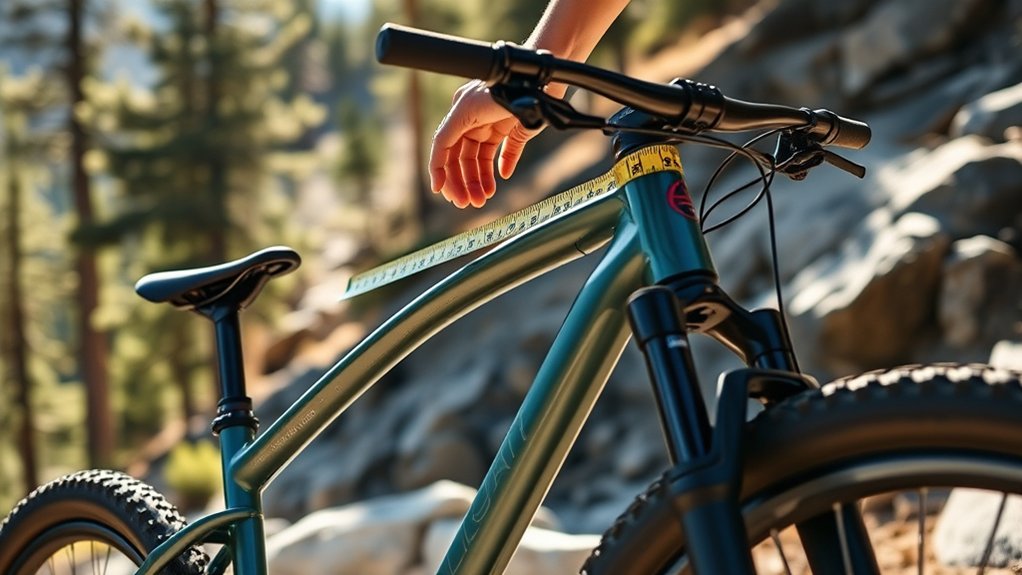
Although you might be excited to hit the trails, getting the right mountain bike size is key for your comfort, control, and safety. A properly fitted bike feels natural and helps you ride more confidently.
Finding the right mountain bike size is essential for comfort, control, and riding with confidence on any trail.
When your bike fits well, it reduces strain on your joints and muscles during long rides. This makes your experience more enjoyable and less tiring.
A good fit also improves your balance and lets you maneuver better over rough terrain. That’s important for avoiding accidents and feeling secure on tricky trails.
If your bike is too big or too small, handling becomes harder. Steep climbs and quick turns can turn into challenges you’d rather avoid.
Plus, an ill-fitting bike can cause discomfort or even lead to injuries over time. Choosing the right size means more comfort and less risk.
How to Measure Your Height and Inseam for Mountain Bike Sizing
To find the right mountain bike size, you’ll need to measure your height and inseam accurately. Stand straight against a wall without shoes, and measure from the floor to the top of your head.
For your inseam, stand with your feet about 6-8 inches apart. Place a book snugly between your legs, then measure from the floor to the top of the book spine.
These measurements help you choose a frame size that feels comfortable and gives you good control on the trail.
How to Use Size Charts to Find Your Mountain Bike Size
To find your mountain bike size, start by understanding how frame measurements match your height and inseam. Use size charts to compare these numbers with recommended frame sizes.
Keep in mind that size charts can vary between brands. Paying attention to these differences helps ensure you pick the right fit every time.
Understanding Frame Size Measurements
When you’re choosing a mountain bike, understanding frame size measurements is key to making sure you’re comfortable and in control.
Frame size usually refers to the length of the seat tube, measured from the center of the bottom bracket to the top of the seat tube. This measurement is often given in inches or centimeters.
Keep in mind that different brands might measure differently, so it’s a good idea to check their specific size charts.
Besides the seat tube length, top tube length and standover height also play a role in fitting.
Top tube length affects your reach and riding posture, while standover height ensures you can comfortably stand over the bike.
Matching Height With Size
Understanding frame measurements gives you a solid foundation, but matching your height with the right size is what helps you find the perfect fit. To use size charts effectively, start by measuring your height accurately.
Once you know your height, look for the corresponding frame size recommended in the chart. Most charts list height ranges alongside frame sizes, making it easy to identify your ideal bike.
Keep in mind that your inseam length can also influence the choice, but height remains the primary guide. When you pick a bike within your height range, you’ll get better control, comfort, and efficiency while riding.
Using size charts this way takes the guesswork out and gets you closer to a mountain bike that suits you perfectly.
Interpreting Chart Variations
How do you navigate the differences in mountain bike size charts? First, recognize that charts vary because brands use different measuring methods. Some use frame size in inches, others in centimeters, or general size categories like small, medium, and large.
Don’t rely solely on your height. Pay attention to your inseam length and riding style because these affect the ideal frame size. Comparing multiple charts from different manufacturers can help you spot common size recommendations.
If a chart lists a range, pick the size that matches your comfort preference. Go smaller for agility or larger for stability. Use charts as a starting point, but always test ride bikes whenever you can to see if the size feels right.
This approach helps you interpret chart variations effectively.
Understanding Standover Height and Reach for a Better Fit
To get the right fit, you’ll want to measure your standover height to ensure you can comfortably straddle the bike frame. It’s a simple way to make sure the bike isn’t too big or too small for you.
Frame reach is just as important because it affects your riding posture and control. Getting this measurement right means you’ll feel more comfortable and confident on your rides.
Balancing these two measurements helps you find a bike that feels natural and performs well on the trails. It’s all about making sure the bike suits your body and riding style.
Measuring Standover Height
Measuring standover height properly gives you confidence when mounting your mountain bike and helps ensure safety on rough trails.
To do this, stand with your feet about 6-8 inches apart on a flat surface. Place the bike between your legs, with the top tube directly beneath your crotch.
Make sure there’s at least 1 to 2 inches of clearance between the top tube and your body. This gap helps prevent injury if you need to quickly dismount or stop.
Use a ruler or tape measure to check the distance from the ground to the top tube where it crosses your crotch.
Getting the right standover height helps you choose a frame that fits your body well, making your ride safer and more comfortable.
Importance of Frame Reach
Frame reach is really important for how comfortably you handle your mountain bike and stay in control on tricky terrain. Reach is the horizontal distance from the bottom bracket to the top center of the head tube.
It influences your riding posture and how stretched out you feel on the bike. If the reach is too short, you might feel cramped and less stable. If it’s too long, you could overextend, which can cause discomfort or make it harder to control.
Along with standover height, reach helps ensure the bike fits you well so you can maneuver confidently. When trying out bikes, pay attention to how the reach feels both seated and standing, especially on technical trails.
Getting the reach right can improve your ride quality and help prevent fatigue during long rides.
Balancing Height and Reach
How do you find a mountain bike that fits just right? You balance your height and reach by understanding standover height and frame reach. Standover height ensures you can comfortably stand over the bike without discomfort, while reach measures how far you stretch to the handlebars. Getting these measurements right helps avoid strain and improves control.
| Rider Height | Ideal Standover Height | Recommended Reach (cm) |
|---|---|---|
| 5’2″ – 5’5″ | 27″ – 28″ | 40 – 43 |
| 5’6″ – 5’9″ | 28″ – 29″ | 43 – 46 |
| 5’10” – 6’1″ | 29″ – 30″ | 46 – 49 |
| 6’2″ – 6’5″ | 30″ – 31″ | 49 – 52 |
Check these measurements to find your best fit.
How Riding Style Affects Your Mountain Bike Frame Size
Because your riding style influences your control and comfort, it’s a key factor in choosing the right mountain bike size. If you like aggressive downhill riding, a slightly larger frame can give you more stability at high speeds.
Cross-country riders tend to prefer smaller frames for better maneuverability and quick handling. Trail riders usually want a balanced size that offers both comfort and control.
Enduro riders often go for medium to large frames to handle varied terrain with durability and performance.
Think about how your riding style impacts your frame size:
- Aggressive riding favors larger frames for stability
- Technical trail riding benefits from a more compact frame
- Cross-country demands nimble, smaller frames
- Enduro suits medium to large frames for versatility
- Comfort-focused riders might choose frames that prioritize ergonomic fit
Why Test Riding and Adjusting Seat and Handlebars Perfect Your Fit
Once you’ve narrowed down the ideal frame size based on your riding style, the next step is to test ride the bike and fine-tune the seat and handlebars. Test riding lets you feel how the bike handles and whether your position feels natural.
Adjusting the seat height ensures your legs extend properly during pedaling, preventing discomfort and maximizing power. Tweaking the handlebars affects your posture and control—too high or low can strain your back or wrists.
Small changes here can make a big difference in comfort and performance. Don’t hesitate to make multiple adjustments during your ride until everything feels just right.
This hands-on approach helps you perfect your fit, making every ride more enjoyable and reducing the risk of injury.
Frequently Asked Questions
What Materials Are Best for Mountain Bike Frames?
You’ll want to go with aluminum or carbon fiber for mountain bike frames since they’re lightweight and strong. Aluminum’s durable and affordable, making it great for beginners.
Carbon fiber’s even lighter and absorbs shocks well, perfect if you want top performance. Steel’s tough but heavier, giving you a smooth ride on rough trails.
Titanium’s strong and light but pricey. Choose based on your budget and riding style for the best experience.
How Do Tire Sizes Affect Mountain Bike Performance?
Tire sizes are the heartbeat of your mountain bike’s performance. Bigger tires give you better traction and smoother rides over rough terrain. But they can slow you down on climbs.
Smaller tires are lighter and faster but might struggle with grip on loose surfaces. You’ll want to match your tire size to the trails you tackle—balancing speed, control, and comfort. This way, you stay confident and efficient every time you ride.
What Maintenance Is Needed for a New Mountain Bike?
You’ll want to regularly check your tire pressure and keep it within the recommended range for better control.
Clean and lubricate the chain often to guarantee smooth shifting.
Inspect brakes for wear and adjust them as needed for safety.
Tighten bolts on the frame, handlebars, and seat post to avoid any rattling or loose parts.
Finally, give your bike a thorough wash after muddy rides to prevent rust and prolong its life.
Are Electric Mountain Bikes Suitable for Beginners?
Electric mountain bikes are perfect for beginners. They’re like having a superpower that helps you climb hills effortlessly and go farther without breaking a sweat.
You’ll feel confident tackling trails that might have seemed impossible before. Plus, the motor gives you a boost when you need it, so you can focus on learning technique and enjoying the ride.
Just remember to start slow and get comfortable with the extra weight and controls.
How Do Suspension Types Influence Ride Comfort?
Suspension types directly influence your ride comfort by absorbing shocks and smoothing out rough terrain. A hardtail has front suspension only, which gives you better efficiency but less cushioning.
Full suspension bikes have both front and rear shocks, making your ride much smoother by soaking up bumps. This is especially helpful on technical trails.
If you’re riding rough trails, full suspension is your best choice. For lighter trails, a hardtail might be enough to keep things comfortable.
Conclusion
Finding the right mountain bike size isn’t just about numbers. It’s about how you feel when you ride. Imagine cruising down a trail where your bike fits like it was made for you, with every pedal stroke smooth and confident.
By measuring yourself, checking size charts, and test riding, you’ll find that perfect match. Don’t guess—get sized right. When you do, every ride becomes the adventure you’ve been waiting for.