
10 Tips on How to Store an Electric Bike Battery Properly
Many electric bike owners know the frustration of dealing with a battery that doesn’t perform well over time. You’re not alone—properly storing your e-bike battery can be tricky, but it’s essential for keeping it in top shape.
To store your electric bike battery properly, keep it in a cool, dry, and well-ventilated space away from heat, sunlight, and metal objects.
Charge it to about 50-70%, and avoid full discharges or overcharging.
Maintain a steady temperature between 50°F and 68°F, controlling humidity with silica gel if needed.
Handle and inspect the battery carefully, keeping it upright and protected from shocks or damage.
Want more tips? Continue below to guarantee your battery stays in top shape.
Key Takeaways
- Store the battery in a cool, dry, ventilated area away from heat, sunlight, and metal objects.
- Keep the battery charged to around 50-70% before long-term storage.
It’s best to avoid places that get too hot or cold.
A stable, moderate environment helps keep the battery healthy.
- Avoid extreme temperatures; maintain storage between 50°F to 68°F (10°C to 20°C).
- Handle the battery carefully, avoiding drops, damage, or exposure to moisture.
Treat it gently to prevent any damage.
Be cautious when moving or storing the battery to keep it in good shape.
- Regularly check the battery’s charge and condition, recharging or inspecting as needed.
- Make sure to keep an eye on it periodically to catch any issues early.
Why Proper Storage Is Crucial for Your E-Bike Battery
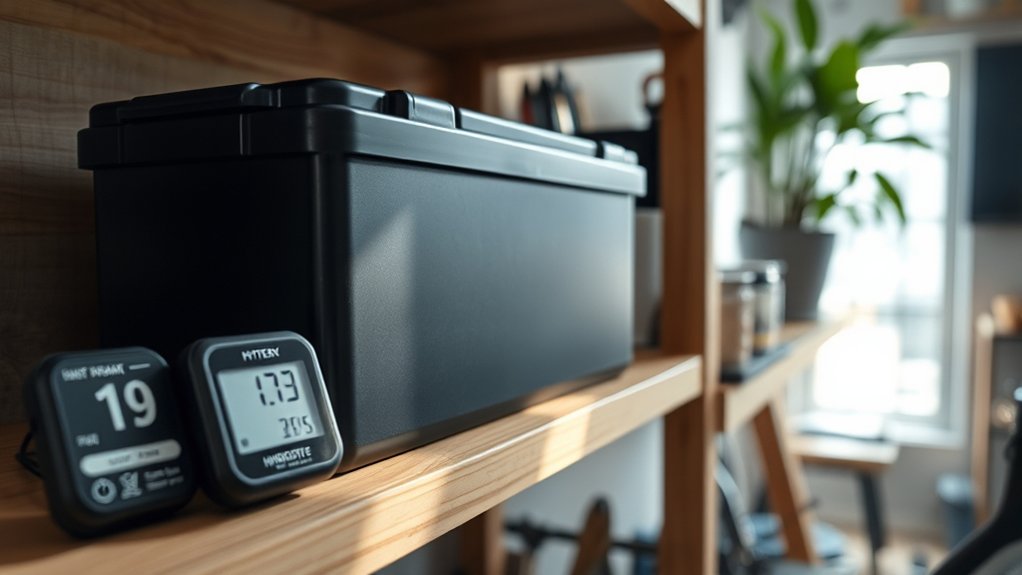
Proper storage is key to keeping your e-bike battery performing well and lasting a long time. When you store it properly, you help prevent capacity loss, lower the risk of damage, and extend its overall lifespan.
A poorly stored battery can degrade quickly, which means less power and shorter riding times. Things like temperature swings, moisture, and incorrect charge levels can speed up this process.
If you ignore proper storage, you might end up replacing the battery sooner than you expected, costing you more money. Keeping it in the right conditions helps ensure your battery stays healthy and ready to go whenever you need it.
Spending a little time on proper storage is a simple but effective way to protect your investment. It also helps keep your e-bike running smoothly for years to come.
How to Choose the Best Place to Store Your Battery
Choosing the right location to store your e-bike battery is key to keeping it healthy and long-lasting. You’ll want a spot that’s cool, dry, and away from direct sunlight or heat sources like radiators or windows.
Store your e-bike battery in a cool, dry, and ventilated spot away from heat and sunlight for optimal longevity.
Try to avoid places with high humidity, such as basements or garages that tend to be damp. Moisture can damage the battery’s internal parts over time.
Look for a well-ventilated area to prevent heat from building up, which can also harm the battery. Keep it away from metal objects that could cause short circuits.
A closet or storage cabinet in a temperature-controlled room usually works best. Picking the right spot helps ensure your battery stays in good shape and is ready to go when you need it.
The Right Way to Charge Your Battery Before Storage
Before storing your electric bike battery, make sure to charge it to about 50%. This helps keep the battery healthy over time.
Avoid fully discharging or overcharging the battery, as both can damage it. Using the correct charger made for your battery is important for safe and effective charging.
Charge to About 50
If you’re planning to store your electric bike battery for a long time, charging it to about 50% is key.
This level helps prevent capacity loss and keeps the battery healthy while in storage.
Aim for a charge that’s not too high or too low, so the battery stays in good shape.
Think of it as giving your battery a gentle rest before a long break.
Imagine the battery like a car tank—half full is just right.
Or like storing fruit that’s ripe but not overripe to avoid spoilage.
It’s also similar to setting a device’s battery to a middle level to prevent stress from full charges or deep discharges.
Keeping this balance helps extend your battery’s lifespan and maintain its performance.
Avoid Full Discharges
Avoid letting your battery fully discharge, as it can cause irreversible damage and reduce its overall lifespan. When a battery drops to zero, it risks entering a deep discharge state, which can damage the cells and make it unusable. To prevent this, always keep the charge level between 30% and 70% before storing for an extended period.
Here’s a quick guide:
| Charge Level | Effect on Battery |
|---|---|
| Below 20% | Risk of deep discharge damage |
| 30-70% | Ideal storage charge range |
| Above 80% | Can stress the battery over time |
| 100% | Not recommended before storage |
| Regular checks | Maintain proper charge level |
Maintaining proper charge levels helps preserve your battery’s health during long-term storage.
Use Proper Charger
Using the right charger is key to keeping your electric bike battery healthy before storage. A proper charger prevents overcharging and keeps the battery in good condition.
Always use the charger that comes with your bike or one that’s specifically compatible with your battery. This helps avoid damage caused by incorrect voltage or current.
When you’re charging, keep an eye on the process. Unplug the charger once the battery reaches about 60-70%, especially if you’re planning to store it for a while.
Think of the charging process like this: connect the charger securely to avoid loose contacts, watch the indicator lights for proper charging, and unplug promptly to prevent overcharging or overheating.
Following these simple steps will help preserve your battery’s capacity and extend its lifespan for future rides.
Keep Your Battery at the Right Temperature and Humidity
To keep your e-bike battery in good shape, it’s important to keep an eye on the temperature and humidity levels.
Avoid exposing it to extreme heat, cold, or moisture, as these can hurt the battery’s performance.
Staying in stable conditions helps ensure your battery stays healthy and lasts longer.
Maintain Optimal Temperature Levels
Have you ever wondered why temperature is so important for your battery? Keeping your electric bike’s battery within the right temperature range helps prevent capacity loss and makes it last longer.
Store your battery in a cool, dry place between 50°F and 68°F (10°C to 20°C). Avoid direct sunlight or freezing conditions, as these can damage the cells.
Imagine a sunny garage that heats up over time, a cold, unheated shed in winter, or a climate-controlled closet at home. All these environments impact your battery differently.
Maintaining steady temperatures helps prevent thermal stress, which can cause swelling or degradation. Regularly check your storage area to make sure it stays within the recommended range.
This way, your battery stays safe, efficient, and ready to go whenever you need it.
Control Humidity Exposure
Because humidity levels can significantly impact your electric bike battery, controlling moisture exposure is key to keeping it healthy. Excess humidity can cause internal parts to corrode and reduce the battery’s performance over time.
To prevent this, store your battery in a dry, well-ventilated space away from vents or windows that might let in moisture. Avoid humid areas like bathrooms or basements with high humidity levels.
Using silica gel packs or dehumidifiers in your storage area can help absorb excess moisture. Always keep the battery in a sealed container or bag when you’re not using it, especially in humid conditions.
Managing humidity helps extend your battery’s life and ensures it performs well for years to come.
Avoid Temperature Fluctuations
Temperature fluctuations can seriously harm your electric bike battery, making it degrade faster and lose capacity over time. Rapid shifts between hot and cold environments put stress on the battery’s internal parts, shortening its lifespan. To keep it in good shape, store your battery in a stable temperature zone, ideally between 50°F and 68°F (10°C to 20°C).
Avoid leaving it in places exposed to direct sunlight or freezing temperatures. When storing, choose a climate-controlled room or an insulated container. Be mindful of seasonal changes and don’t leave your battery in a hot car or outside during cold snaps. Keeping conditions steady helps preserve its longevity and performance.
Always store your battery in a cool, dry place away from direct sunlight. Avoid extreme heat or cold environments, and check temperature conditions regularly during storage. This simple care can make a big difference in how long your battery lasts.
How to Store Your Battery for Long-Term Care
Properly storing your electric bike battery for long-term care is key to keeping it performing well and lasting longer. First, make sure to fully charge the battery to around 50-70% before putting it away.
Store it in a cool, dry place away from direct sunlight and extreme temperatures. Keep the battery in a well-ventilated area to prevent moisture buildup.
Regularly check the storage environment to avoid humidity or temperature changes that can harm the cells. Use the table below to understand some important storage tips:
| Tip | Explanation |
|---|---|
| Charge level | Keep between 50-70% for ideal storage |
| Temperature | Store in a cool environment around 20°C or 68°F |
| Humidity | Maintain low humidity to prevent corrosion |
| Storage duration | Avoid storing over 3-6 months without checking or maintenance |
| Battery placement | Keep upright to prevent leakage or damage |
Regularly Check and Maintain Your Battery During Storage
To keep your electric bike battery in good shape during storage, it’s important to check its status and health regularly.
Inspect the charge level, surface condition, and voltage from time to time. Keeping the right charge prevents the battery from becoming overly discharged or overcharged, which can damage it.
Regularly check charge, surface, and voltage to prevent damage and ensure optimal battery performance.
Watch out for signs of corrosion, swelling, or leakage—these are signs you need to act quickly.
Use a multimeter to check the voltage levels and look for any corrosion or debris on the terminals.
Make sure the battery stays clean and dry at all times.
Regular checks help catch issues early, preventing long-term damage and ensuring your battery is ready to go when you need it.
Protect Your Battery From Physical Damage and Corrosion
Protecting your electric bike battery from physical damage and corrosion is key to making it last longer and keep it working well. Handle your battery carefully—avoid dropping it, hitting it, or stacking heavy stuff on top.
Store it in a dry, cool spot away from moisture and direct sunlight. This helps prevent corrosion and keeps your battery in good shape.
When transporting or storing your battery, use protective cases or padding. This minimizes the risk of damage during movement.
| Protection Method | Benefits |
|---|---|
| Soft padding or case | Absorbs shocks, reduces impact |
| Keep dry and cool | Prevents corrosion, extends life |
How to Clean Battery Contacts Safely and Effectively
Cleaning your battery contacts is key to keeping a good connection and your bike running smoothly. Dirt, dust, or corrosion can cause performance issues, so it’s important to clean them regularly.
Start by turning off your bike and removing the battery. Use a soft, lint-free cloth to wipe away any surface dirt. For stubborn grime, dip a cotton swab in isopropyl alcohol and gently clean the contacts.
Be careful not to use abrasive tools or harsh chemicals that could damage the contacts. A gentle approach will keep everything in good shape and working well.
Follow Your Manufacturer’s Storage Recommendations
Following your manufacturer’s storage recommendations guarantees your electric bike battery stays in peak condition. Always check the user manual for specific instructions on voltage, temperature, and storage duration.
Manufacturers often recommend storing the battery at a partial charge, typically around 40-60%, to prevent capacity loss. Keep the battery in a cool, dry place away from direct sunlight and extreme temperatures.
Avoid storing it fully charged or completely drained for long periods, as both can harm the battery’s health. Follow any specific guidelines on removing or disconnecting the battery during long-term storage.
Adhering to these recommendations helps preserve the battery’s lifespan, guarantees safety, and maintains ideal performance when you’re ready to ride again. Always prioritize manufacturer guidance for the best results.
FAQs: Common Questions About E-Bike Battery Storage
Understanding common questions about e-bike battery storage can help you make better decisions and avoid mistakes that could shorten your battery’s lifespan. Many users wonder about the best storage conditions, charging habits, and safety tips.
For example, you might ask whether you should fully charge or store the battery partially charged. You may also wonder how often to check or charge the battery if it’s not in use.
Another common question is whether it’s safe to store the battery in cold or hot environments. To keep your battery healthy, store it in a cool, dry place with a charge level around 40-60%.
Avoid exposing it to extreme temperatures, and don’t leave it unused for long periods without checking on it periodically. Asking these questions helps ensure your battery stays reliable and lasts longer.
Frequently Asked Questions
How Often Should I Check My E-Bike Battery During Storage?
You should check your e-bike battery every 4 to 6 weeks during storage. Regular inspections help you keep an eye on the battery’s health and catch any issues early.
Make sure it’s not swollen or leaking, and check that the charge level stays in a good range. Keep the battery in a cool, dry place, and recharge it to about 50-60% if it drops below that.
This routine helps prevent capacity loss and can extend the battery’s lifespan while it’s stored.
Can I Store My E-Bike Battery Outside?
Storing your e-bike battery outside is like leaving a precious jewel in a hurricane—it’s not safe! You should always keep it indoors in a cool, dry place, away from extreme temperatures and moisture.
Outside exposure can cause rapid deterioration, corrosion, and even dangerous leaks. Protect your investment by storing your battery inside, where it’s shielded from the elements and can stay healthy and powerful for years to come.
What Signs Indicate My Battery Needs Replacement After Storage?
After storage, you’ll want to watch for signs that your battery needs replacing. If it won’t hold a charge or shows noticeably reduced range, that’s a clear sign it’s time to replace it.
Also, keep an eye out for swelling, leaks, or corrosion, which are signs of damage. Unexpected overheating during use or frequent charging problems are warning signs too.
If you notice any of these issues, it’s best to replace the battery to ensure your e-bike stays safe and performs well.
Should I Remove the Battery From the E-Bike During Long-Term Storage?
Think of your e-bike battery as a delicate seed needing protection. Yes, you should remove it during long-term storage to prevent damage from the bike’s vibrations and potential leaks.
Store the battery in a cool, dry place away from direct sunlight, just like shielding a seed from harsh elements. This keeps it safe, maintains its health, and guarantees it’s ready to bloom back into action when you’re prepared to ride again.
Does Storage Temperature Affect Battery Lifespan?
Yes, storage temperature greatly affects your electric bike battery’s lifespan. Keep it in a cool, dry place, ideally between 50°F and 68°F (10°C to 20°C).
Excessive heat speeds up chemical reactions inside the battery, leading to faster capacity loss. Cold temperatures can temporarily reduce performance.
Avoid extreme temperatures because both can damage the battery over time. Proper temperature control helps keep your battery healthy and lasts longer.
Conclusion
Properly storing your e-bike battery isn’t just a task; it’s an act of care that keeps your ride alive and vibrant. Think of it as tending to a delicate plant—attention and patience guarantee it flourishes.
By following these tips, you’ll safeguard your battery’s longevity and performance. Remember, a well-maintained battery isn’t just about avoiding trouble. It’s about fueling your adventures and keeping the thrill alive.
So, treat your e-bike battery right, and let it carry you further and longer. Proper storage ensures you get the most out of your electric bike experience.