Tune Up a Road Bike in 8 Simple Steps
Many bike lovers have faced the frustration of a sluggish ride or unexpected breakdowns. If you’re tired of dealing with these issues and want to enjoy smooth, reliable cycling, you’re not alone. Regular tune-ups are key, and luckily, they’re easier than you might think.
To tune up your road bike, start by inspecting it for common issues like tire pressure, brake wear, and wheel alignment.
Clean and lubricate the chain and drivetrain, then check the brakes for proper response and adjust if needed.
Verify your tires are properly inflated and examine them for damage.
Align and tighten wheels and axles, then fine-tune your gears for smooth shifting.
If you want to master each step, there’s more to learn to keep your bike in top shape.
Key Takeaways
– Conduct a thorough inspection of tires, brakes, drivetrain, and frame for wear, damage, and proper function.
Take a close look at your tires for any cuts, cracks, or embedded debris. Check the brakes to see if they’re working well and look for worn brake pads. Also, examine the drivetrain and frame for any signs of damage or excessive wear.
Next, clean and lubricate all moving parts, including the chain, cassette, and derailleurs. This helps keep everything running smoothly and prevents rust.
Check the tire pressure and adjust it to your preferred level. While you’re at it, inspect the tires for any damage or debris that might cause flats.
Adjust the brake tension if needed, replace worn brake pads, and make sure the brakes engage properly. Proper brake function is key for safety and control.
Finally, fine-tune your gears by adjusting the derailleur limit screws and cable tension. Shift through all gears to verify smooth, crisp shifting across the entire range.
Inspect Your Road Bike for Common Issues Before Tuning
Before you start tuning your road bike, it’s really important to give it a good once-over for common issues. Check the tires for cuts, embedded debris, or low pressure, and make sure they’re inflated to the recommended PSI.
Next, take a look at the brake pads for excessive wear or uneven contact with the rims. Spin the wheels to see if they wobble or if the spokes are loose, and make sure they rotate smoothly.
Check brake pads for wear, ensure wheels spin smoothly, and spokes are tight for safe riding.
Inspect the frame for any cracks, dents, or rust. Tighten loose bolts on the handlebars, stem, and seat post. It’s also a good idea to test the brake and shifter cables for slack or fraying.
Getting these things checked early helps prevent problems during tuning and makes for a safer ride. Addressing issues upfront saves you time and keeps your bike performing at its best.
Clean and Lubricate the Chain and Drivetrain for Smooth Shifting
Regularly cleaning and lubricating your chain and drivetrain keeps your bike shifting smoothly.
Start by removing the old lubricant to stop grit and debris from causing wear. Then, apply fresh lubricant carefully to ensure your bike performs at its best and lasts longer.
Removing Old Lubricant
Start by applying a degreasing solution or chain cleaner to the bike’s chain and drivetrain parts. Use a brush or rag to scrub off old lubricant, grease, and dirt. Focus on all moving parts, including the cassette, chainrings, and derailleurs.
Make sure to reach into tight spots and remove stubborn grime. Wipe everything thoroughly with a clean rag to ensure all residue is gone. Removing the old lubricant is key because it helps fresh, proper lubrication stick better and keeps shifting smooth.
Don’t rush the process—take your time to get rid of all built-up grime completely. Once you’re happy with the cleanliness, move on to re-lubricating the chain and drivetrain for optimal performance.
Applying Fresh Lubricant Properly
Applying fresh lubricant correctly is essential to keep your bike shifting smoothly and prevent premature wear. After cleaning your chain and drivetrain, wipe off any excess dirt and old lubricant.
Then, apply a high-quality bicycle chain lubricant directly onto the inside of each link as you slowly pedal backward. Make sure the lubricant reaches the rollers and pins.
Avoid over-lubricating, as excess can attract dirt. Once you’ve applied the lubricant, wipe off any excess with a clean cloth to prevent grime buildup.
Spin the pedals a few times to evenly distribute the lubricant. Proper lubrication reduces friction, prevents rust, and guarantees smooth gear changes.
Regularly maintaining your chain with fresh lubricant keeps your ride quiet and prolongs the life of your drivetrain.
Check Your Brakes and Adjust for Proper Performance
Before hitting the road, it’s important to make sure your brakes are working properly. Good stopping power keeps you safe and confident during your ride.
First, squeeze the brake levers to see how they respond. If they feel spongy or too tight, you might need to adjust the cable tension.
Next, check the brake pads. They should contact the rim evenly and not be too high or low. If the pads are worn out, replace them.
Also, inspect your brake cables for fraying or rust. Make sure the cables have the right tension for smooth braking.
Use this quick reference table to guide your checks:
| Action | What to Check | Adjustment Needed? |
|---|---|---|
| Squeeze brake lever | Responsiveness and feel | Yes/No |
| Inspect brake pads | Position and wear | Yes/No |
| Examine cables | Fraying, rust, tension | Yes/No |
Properly adjusted brakes keep you safe and in control.
Ensure Proper Tire Pressure and Look for Damage
Making certain your tires are properly inflated and free of damage is essential for a safe and efficient ride. Check the sidewall of each tire for the recommended pressure, usually printed there, and use a pressure gauge to verify.
Under-inflated tires can cause sluggishness and increase the risk of flats, while over-inflation makes rides uncomfortable and reduces traction. Inspect the tires carefully for cuts, punctures, embedded debris, or sidewall bulges.
Under-inflation causes sluggish rides and flats; over-inflation reduces comfort and traction. Check tires carefully for damage.
Replace or repair damaged tires before riding. Keep an eye out for uneven wear or cracks that could lead to failure. Proper tire pressure and damage checks help improve ride quality, prevent flats, and extend your tires’ lifespan.
Take a few minutes now to make sure your tires are in top condition before hitting the road.
Align and Tighten Wheels and Axles for a Safe Ride
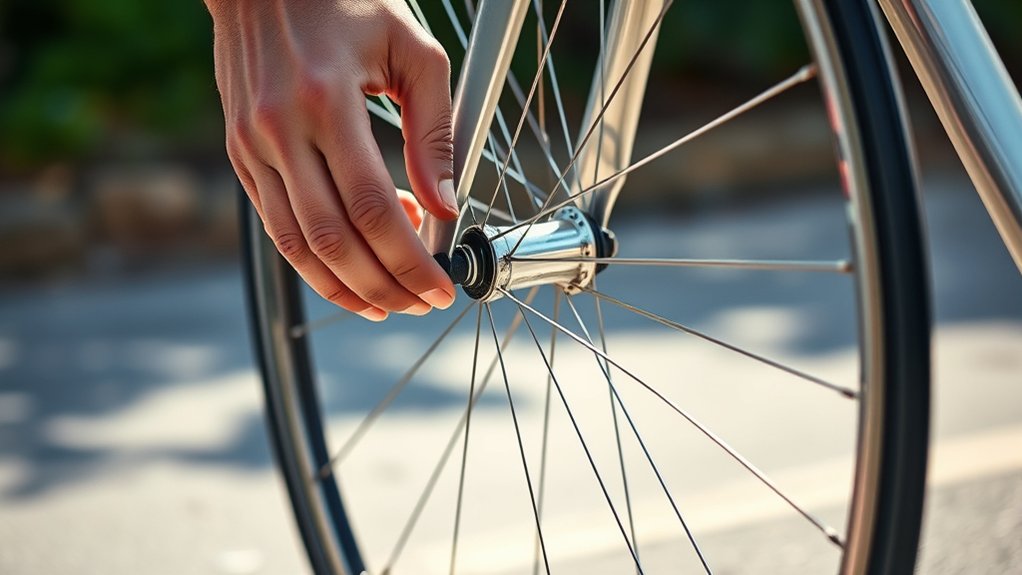
Checking and tightening your wheels and axles is essential for a smooth, safe ride. Loose wheels can cause dangerous wobbling, while misaligned axles lead to poor handling.
Start by inspecting your wheels for play—rock them side to side. Tighten the quick-release levers or axle nuts securely. Use a wrench if needed, making sure the skewers are snug but not overtightened.
Proper alignment keeps your bike stable and responsive. It helps you feel confident and in control while riding.
| Safe Ride Feel | What Happens If Not Done |
|---|---|
| Smooth handling | Wobbly wheels, falls |
| Reliable control | Poor steering, accidents |
| Confidence boost | Increased risk of crashes |
| Comfortable ride | Fatigue, discomfort |
Fine-Tune Your Gears and Shifting for Seamless Shifts
To achieve smooth, reliable gear shifts, you need to fine-tune your derailleur and cable tension. Start by shifting to the smallest chainring and smallest rear sprocket.
Check the derailleur’s limit screws to make sure it’s properly aligned. Then, adjust the barrel adjuster on your shifter to increase or decrease cable tension.
Turn it clockwise to tighten and improve upshifts; loosen it for better downshifts. Shift through each gear and watch how the chain moves.
If it hesitates or skips, make small adjustments to the tension. Also, ensure the derailleur hanger is straight because a bent hanger can cause poor shifting.
Fine-tuning your gears takes patience, but it’s worth it for smoother, more reliable shifts every time you ride.
Test Ride Your Bike and Confirm It’s Ready to Ride
Before hitting the road, take your bike for a test ride to see if it’s ready to ride smoothly and safely. Start by riding at a gentle pace and pay attention to how the bike feels under you.
Check that the brakes respond well and stop the bike effectively without any strange noises or pulling. Notice if the gears shift smoothly and stay engaged without slipping.
Feel for any wobbling or unusual vibrations that might mean there are alignment issues. Test the bike on different surfaces to make sure it stays stable.
Make sure the handlebars feel secure and the tires keep consistent contact with the road. If anything feels off, fix those issues before heading out for a longer ride.
A quick test ride can help confirm your bike is safe and ready to go.
Maintain Your Road Bike for Long-Term Top Performance
To keep your road bike performing at its best over time, you need to stick to regular inspection routines and follow proper storage practices. Checking key components regularly will help catch issues early before they become big problems.
Keeping your bike clean and dry is essential. A tidy, moisture-free environment prevents rust and damage, ensuring everything stays in top shape.
Staying consistent with these habits will extend your bike’s lifespan and keep it running like new. Regular maintenance isn’t just about fixing things—it’s about enjoying smooth, trouble-free rides for years to come.
Regular Inspection Routines
Regular inspection routines are essential for keeping your road bike in peak condition and preventing costly repairs down the line. By routinely checking your bike, you catch issues early and guarantee smooth rides.
Start by inspecting the tires: look for cuts, embedded debris, or low pressure, which can cause flats or poor handling. Next, examine the brake pads; confirm they aren’t worn down unevenly and engage properly.
Finally, check the chain and drivetrain: look for rust, dirt buildup, or stiff links that affect shifting and pedaling efficiency. Regularly tightening bolts and lubricating moving parts also prevents wear and tear.
Consistent inspections keep your bike safe, reliable, and ready for every ride, saving time and money while extending its lifespan.
Proper Storage Practices
Proper storage is key to keeping your road bike in good shape over time. When you’re not riding, store your bike in a cool, dry spot away from direct sunlight and humidity.
Hang it on a sturdy wall mount or keep it upright on a bike stand to avoid tire deformation and frame stress. Before putting it away, give your bike a good clean to remove dirt, grime, and sweat that can cause rust.
Apply a light coat of lubricant to the chain and moving parts to help prevent rust and keep everything running smoothly. Try not to lean your bike against walls or put heavy objects on it.
Check on your bike regularly during long storage periods to catch any issues early. Proper storage helps keep your bike ready to ride and extends its lifespan.
Frequently Asked Questions
How Often Should I Perform a Full Tune-Up on My Road Bike?
You should perform a full tune-up on your road bike every 3 to 6 months, depending on how often you ride and the riding conditions.
Regular maintenance keeps your bike running smoothly and helps prevent costly repairs.
If you notice squeaks, sluggish shifting, or decreased braking performance, it’s a good idea to do a tune-up sooner.
Consistent care ensures a safer, more enjoyable riding experience.
What Tools Are Essential for Tuning a Road Bike at Home?
Think of your bike as a well-oiled machine, and having the right tools is like having a toolbox full of magic wands.
You’ll need a set of Allen wrenches, a tire pump, screwdrivers, chain lube, and ideally, a bike stand.
These essentials let you make precise adjustments, making sure your ride feels smooth and safe.
With these tools, you’re all set to keep your bike in top shape right at home.
How Can I Identify Worn-Out or Damaged Bike Components?
You can spot worn-out or damaged bike parts by giving them a close look for any signs of wear, like cracks, rust, or dirt buildup.
Check the brake pads to see if they’re getting thin, and look at the chain for stiff links or elongation. Also, examine the tires for cuts or bald patches.
Make sure the gears shift smoothly without skipping, and listen for weird noises while riding. Regular visual and functional checks can help catch problems early before they get worse.
When Should I Replace Bike Parts Instead of Just Adjusting Them?
You should replace bike parts instead of just adjusting them when they show signs of significant wear or damage, like cracks, rust, or persistent slipping.
If adjustments no longer improve performance or safety, it’s a clear sign to swap out components. Regularly inspecting your bike helps you catch these issues early.
Don’t risk riding with compromised parts; timely replacements keep your ride smooth, safe, and reliable.
Are There Any Safety Precautions to Consider During Bike Tuning?
You should always prioritize safety during a bike tune-up. Wear gloves and eye protection to avoid injuries from sharp or moving parts.
Make sure the bike is stable on a stand before working on it, and double-check that all components are properly tightened before riding.
Many accidents happen because people overlook simple precautions. Taking these steps helps prevent injuries and keeps your ride smooth and safe.
Conclusion
Now, with your bike tuned up, you’re practically unstoppable—like a rocket ready to launch down every road and conquer every hill. No more squeaks, slips, or flat tires to hold you back.
You’ll be gliding smoother than a hot knife through butter. Get out there, pedal like the wind, and turn every ride into an epic adventure.
Your bike’s performance is now so perfect, it’s almost like riding a brand-new machine. So go ahead, ride like a legend on your freshly tuned-up road bike!