Should I Get a Mountain Bike or Road Bike?
Are you feeling overwhelmed trying to decide between a mountain bike and a road bike? You’re not alone—many bike enthusiasts struggle with choosing the right type for their riding style. The right bike can make all the difference in how much you enjoy your ride.
Choosing between a mountain bike and a road bike depends on where and how you want to ride. If you enjoy off-road trails, rugged terrains, or want versatility, a mountain bike is your best bet.
For long-distance, speed, and smooth pavement, a road bike offers better performance and comfort.
Think about your terrain and riding style; exploring more details can help you find the perfect fit for your adventures.
Key Takeaways
- Choose a mountain bike if you enjoy off-road trails, rugged terrain, or outdoor adventures.
- These bikes are perfect for exploring nature and tackling uneven surfaces.
- Opt for a road bike if your main focus is on speed, long-distance rides, or commuting on paved roads.
- They’re great for covering more ground quickly and comfortably on smooth surfaces.
- Think about where you’ll be riding most often: rough, uneven terrain calls for a mountain bike.
- Smooth pavements are better suited for a road bike.
- Consider your fitness level and riding style too.
- Mountain bikes are ideal if you like adventurous, versatile riding.
- Road bikes work well if you’re aiming for fitness and faster rides.
- Don’t forget to match your budget and how much maintenance you’re willing to do.
- Mountain bikes usually need more rugged upkeep compared to road bikes.
What’s the Difference Between Mountain Bikes and Road Bikes?
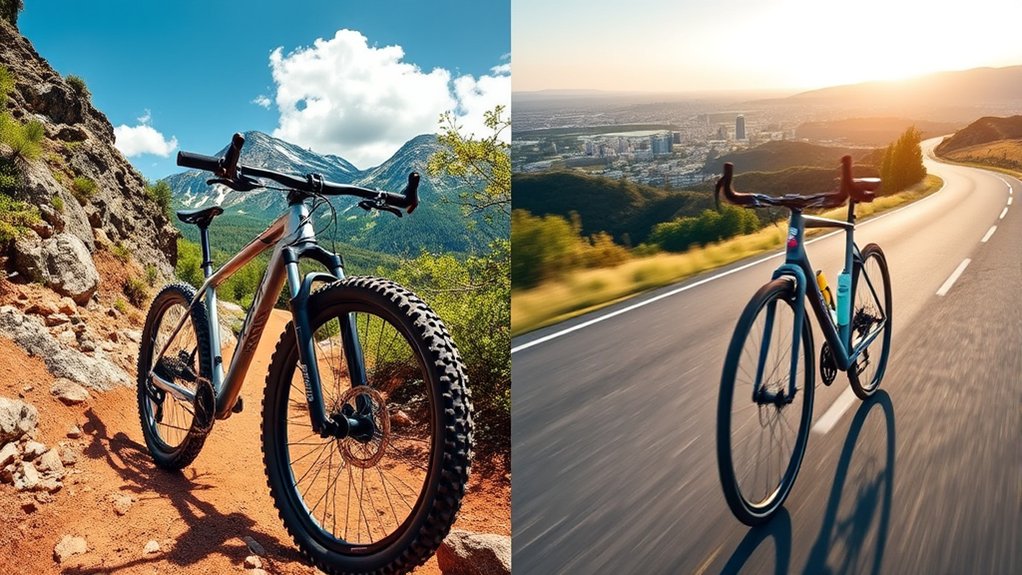
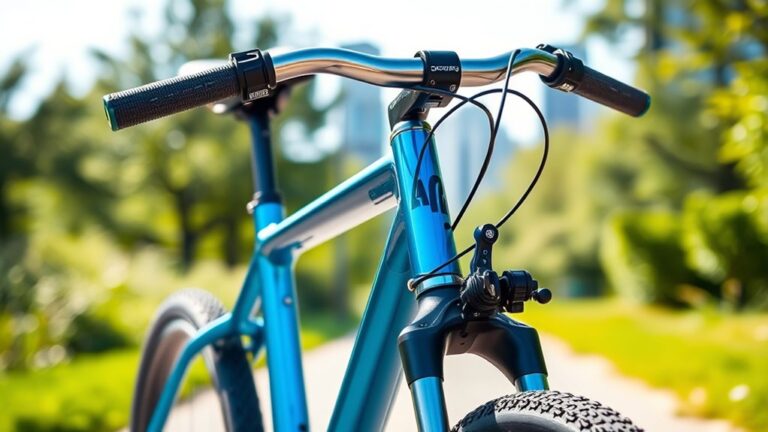
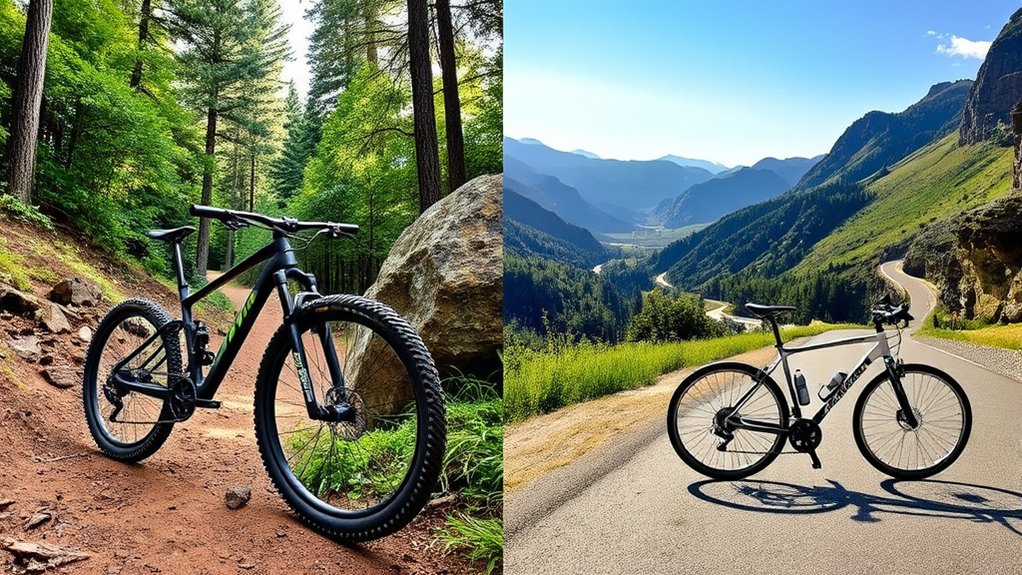
When choosing between a mountain bike and a road bike, it’s key to understand what sets them apart. Mountain bikes are made for off-road trails, with thick tires, strong suspension, and a sturdy frame to handle rough terrain.
They give you stability and control on uneven surfaces, making them perfect for trails, dirt paths, and rocky areas. Road bikes, on the other hand, are built for speed and efficiency on paved roads.
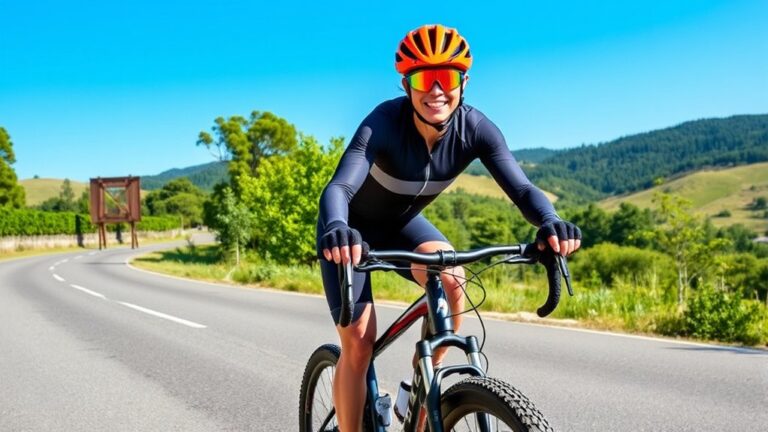
They feature lightweight frames, narrow tires, and drop handlebars that help you stay aerodynamic. Their smooth tires and minimal suspension make them great for fast riding on highways and city streets.
Knowing these main differences helps you pick the right bike based on where you want to ride and what kind of adventures you’re after.
Who Should Consider a Mountain Bike for Their Adventures?
If you love tackling rough, uneven terrain, a mountain bike is your best choice.
Whether you’re seeking exciting trail adventures or exploring off-road paths, this bike is built for durability and versatility.
Consider a mountain bike if you’re passionate about outdoor exploration and want a reliable ride across challenging landscapes.
Off-Road Terrain Enthusiasts
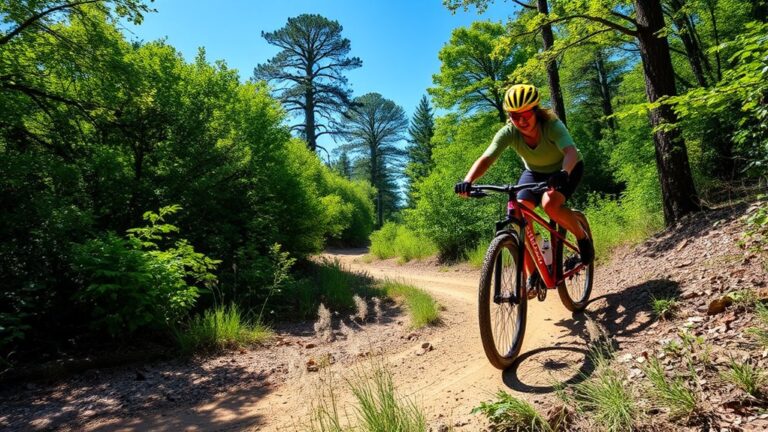
For those who thrive on challenging, uneven terrain, a mountain bike is the ultimate choice. If your adventures often take you off paved paths into rocky, muddy, or root-covered trails, a mountain bike’s durability and suspension are built for those obstacles.
Its wide, knobby tires give you better grip and control on loose surfaces, while sturdy frames and powerful brakes keep you safe on steep descents. You’ll love the geometry designed for aggressive riding, stability, and maneuverability.
If you enjoy exploring forests, mountains, or rugged backcountry, a mountain bike lets you push your limits and enjoy the thrill of off-road riding. It’s built for adventure, resilience, and the unpredictable terrain that keeps off-road enthusiasts coming back for more.
Adventure and Trail Seekers
Adventure and trail seekers find that a mountain bike is the perfect companion for exploring rugged landscapes and remote terrains. If you crave adrenaline, challenging climbs, and off-the-beaten-path adventures, a mountain bike fuels your passion.
Feel the thrill of conquering rocky trails, descending steep descents, and uncovering hidden natural wonders. With a mountain bike, you’ll experience:
- Unmatched freedom as you navigate untamed wilderness.
- Heart-pumping excitement on rugged terrains that test your limits.
- A deep connection with nature, immersing you in breathtaking settings.
This bike is designed to handle the unpredictable, giving you confidence to push boundaries and welcome adventure at every turn. If adventure fuels your spirit, a mountain bike is your ultimate ticket to exploring the wild.
Versatility and Durability
A mountain bike’s versatility and durability make it perfect for riders who want to explore different terrains and conditions. Whether you’re cruising rocky trails, muddy paths, or rough singletrack, it’s built to handle it all.
Its sturdy frame and tough components can withstand impacts and wear, making sure it lasts through tough rides. If you like exploring various environments or often ride in unpredictable weather, a mountain bike gives you the confidence to go anywhere.
Unlike road bikes, which are made for paved surfaces, mountain bikes are designed for resilience and adaptability. They’re ideal for riders who value a bike that can keep up with their adventurous spirit and handle any terrain they encounter.
Is a Road Bike Better for Speed and Long Rides?
If you’re aiming for speed and long-distance comfort, a road bike might be your best choice.
Its aerodynamic design and lightweight frame help you ride faster with less effort, especially over extended distances.
Plus, the gear setup maximizes efficiency, making long rides feel smoother and more manageable.
Aerodynamics and Speed
In regard to speed and long rides, road bikes usually have the edge because of their aerodynamic design. Their sleek frames, drop handlebars, and lightweight materials cut through the air efficiently, giving you a noticeable boost on open roads.
Feel the rush as you accelerate effortlessly, knowing your bike’s design minimizes drag. It’s all about making your ride smoother and faster.
Here are three reasons you’ll love the speed advantage:
- Streamlined frames that slice through wind, making every pedal stroke more powerful.
- Drop handlebars that position your body for maximum aerodynamics and help reduce fatigue.
- Lightweight construction that allows quicker acceleration and easier climbs.
If speed and endurance are your goals, a road bike’s design powers you forward with confidence.
Comfort Over Distance
While a road bike’s aerodynamic design boosts your speed, it also affects how comfortable you feel over long distances. The aggressive riding position can lead to fatigue, especially if you’re not used to it.
The narrow, hard tires and stiff frame prioritize efficiency, which can cause discomfort on bumpy roads or during extended rides. If comfort is your main goal, a road bike might feel less forgiving after hours in the saddle.
That said, many modern road bikes include features like adjustable handlebars and ergonomic seats to help improve comfort. Ultimately, if you plan long rides mainly on paved surfaces and want to go fast, a road bike can work well—just be ready for some trade-offs in comfort.
Gear and Efficiency
Road bikes are built with gear setups and frame shapes that focus on aerodynamics and efficiency, making them perfect for speed and long rides. Their lightweight frames and narrow tires slice through the air, helping you go faster with less effort.
When you’re riding a road bike, you’ll notice how the gears make pedaling smooth and steady, whether you’re on flat roads or climbing hills.
Think about the rush you feel when you accelerate easily and cover more miles than you expected.
Or the joy of long rides where efficiency keeps you energized and eager to keep going.
And there’s nothing like the confidence of riding a bike designed for speed, making every ride exciting and purposeful.
Key Factors to Consider When Choosing Between Mountain and Road Bikes
Choosing between a mountain bike and a road bike really depends on what you want to do, where you’ll ride most often, and your personal style.
If you mostly want to ride on smooth pavement and go fast, a road bike is the way to go because it’s lightweight with narrow tires.
But if you’re planning to hit dirt trails, rocks, or uneven surfaces, a mountain bike is better. It provides more stability and shock absorption with wider tires and suspension.
Think about your fitness level too. Mountain biking can be more physically demanding on rough terrain, while road biking lets you go longer and faster.
Finally, consider your storage and commuting needs. Road bikes are great for city riding, while mountain bikes shine off-road.
How Do Terrain and Riding Style Influence Your Bike Choice?
Have you ever wondered how your preferred terrain and riding style shape the bike that’s right for you? The type of terrain you ride on and how you like to ride directly impact your choice.
For example, if you crave adventure on rugged trails, a mountain bike with sturdy suspension and wide tires will give you confidence and control. If you prefer smooth, fast rides on paved roads, a lightweight road bike with narrow tires will help you go further and faster.
Think about these factors:
- The thrill of conquering challenging trails fuels your passion for a mountain bike.
- The desire to cover long distances quickly makes a road bike irresistible.
- Your riding style determines whether comfort, speed, or durability takes priority.
Which Budget Should You Allocate for Your New Bike?
Wondering how much to spend on your new bike? Your budget plays a big role in choosing the right model.
If you’re just starting out or on a tight budget, look for entry-level bikes that offer good quality without breaking the bank. These usually cost between $500 and $1,000.
If you’re more serious or plan to ride often, consider investing $1,000 to $2,000 for a mid-range bike with better components and durability.
High-end bikes, over $2,500, are perfect for competitive riders or enthusiasts who want top performance.
Remember, spending more often means better materials and features, but it’s important to match your budget with your riding goals.
Don’t forget to include extra costs like gear, accessories, and maintenance.
How Easy Is It to Maintain and Keep Your Bike Durable?
Maintaining your bike and keeping it durable is pretty straightforward with a bit of regular care and some basic know-how. Staying on top of maintenance means smoother rides and fewer breakdowns.
Here are three simple tasks to keep your bike in great shape:
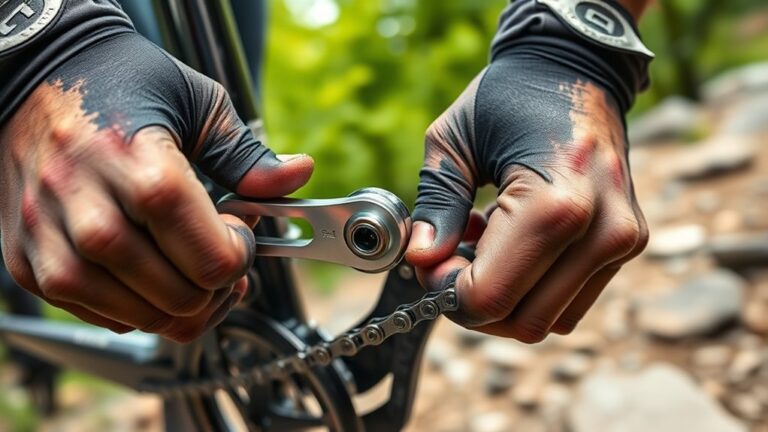
- Regularly clean and lubricate the chain to prevent rust and ensure smooth gear shifts.
- Check tire pressure often to avoid flats and make riding more efficient.
- Inspect brake pads and cables to keep stopping power reliable and safe.
Finding the Right Fit: Comfort and Bike Size Tips
Finding the right fit is key for comfort and control on your bike.
Make sure your frame size matches your height for a comfortable ride.
Adjust your saddle height so your knee is slightly bent at the bottom of each pedal stroke.
Don’t forget to set your handlebar reach so you can ride comfortably without straining your neck or shoulders.
Proper Frame Sizing
Choosing the right frame size is key for a comfortable and efficient ride, whether you’re on a mountain bike or a road bike. A good fit can boost your confidence and keep you motivated to ride longer.
To find your perfect size, keep these points in mind:
- Stand over height: Ensure there’s at least 1-2 inches of clearance on a mountain bike or 1 inch on a road bike to avoid discomfort.
- Inseam measurement: Measure your inseam accurately because it’s the foundation for selecting the right frame.
- Reach and top tube length: Pick a bike that matches your arm length to prevent strain and fatigue during your rides.
Getting these right will make every pedal stroke feel natural and empowering, transforming your riding experience.
Adjusting Saddle Height
Adjusting your saddle height is key to a comfortable and efficient ride. To find the right height, sit on your bike and put your heel on the pedal. Pedal backward; your leg should be fully extended at the bottom of the stroke. This keeps your hips level and reduces strain.
When you ride with the ball of your foot on the pedal, your knee should have a slight bend at the top of the stroke. Make small adjustments and go for a test ride to fine-tune the fit.
Getting your saddle height right boosts power, comfort, and helps prevent fatigue. Remember, a saddle that’s too high or too low can cause discomfort or even injury. Take your time to find the perfect position for your body and riding style.
Ensuring Handlebar Reach
To guarantee a comfortable ride, it’s important to set your handlebar reach so that your arms are slightly bent and relaxed. This helps reduce strain on your shoulders and wrists. Proper reach also helps you stay in control and avoid fatigue on longer rides.
To do this, consider a few tips:
- Test different handlebar positions before buying or adjusting your bike to see what feels most natural.
- Adjust the stem length if you can; a longer stem gives you more reach, while a shorter one offers better control.
- Make sure your elbows are slightly bent when holding the handlebars, keeping your posture relaxed and efficient.
Finding the right handlebar reach makes every ride more enjoyable and helps prevent discomfort.
Upgrades and Customizations for Mountain and Road Bikes
Upgrades and customizations can really enhance your riding experience, whether you’re tackling tough mountain trails or cruising on smooth pavement. For mountain bikes, think about upgrading to a suspension fork for better shock absorption or installing wider tires for more grip.
Upgrading your drivetrain can also make shifting smoother, especially on steep climbs. Plus, adding a dropper seat post lets you quickly change saddle height on tricky terrain. On road bikes, swapping handlebars for more aerodynamic or ergonomic styles can boost comfort and speed.
Lightweight wheels are another great upgrade—they help you accelerate faster by reducing rotational weight. You might also consider electronic shifting systems for seamless gear changes or adding a power meter to monitor your performance. Customizing parts lets you tailor your bike’s performance and comfort to fit your riding style and the terrain.
When Should You Pick a Mountain Bike Over a Road Bike?
Deciding between a mountain bike and a road bike depends largely on the terrain you plan to ride. If you’re looking for adventure and want to tackle challenging trails, a mountain bike is your best bet. It’s built for rugged, unpredictable terrain, giving you better control and durability.
Consider a mountain bike when you want to explore off-road trails filled with rocks, roots, or steep inclines. If you’re after adrenaline on rough terrain that pushes your limits, this is the way to go.
You should also choose a mountain bike if you prefer riding in conditions like mud, sand, or snow. Picking a mountain bike in these situations makes sure you’re ready for tough terrains, making your ride safer, more exciting, and truly rewarding.
Final Tips to Help You Choose the Best Bike for Your Needs
When choosing the right bike for your needs, it’s important to think about your riding style, terrain, and fitness goals. Consider where you’ll ride most often—smooth pavement or rugged trails.
If you enjoy long, fast rides on flat roads, a road bike is probably your best choice. For off-road adventures, a mountain bike offers durability and control.
Your fitness level matters too. If you’re just starting out, look for a bike with comfort features. Budget is also key—more expensive bikes usually have better components and are lighter.
Take the time to test ride a few models to see how they feel in terms of comfort and handling. Don’t rush your decision—finding the right bike will make your rides more enjoyable and tailored to your lifestyle.
Frequently Asked Questions
Can I Switch Between Mountain and Road Biking Easily?
You can switch between mountain and road biking, but it’s not always seamless. Each bike is built for specific terrains, so you might need to adjust your riding style and sometimes swap tires or make small tweaks.
If you want more flexibility, a hybrid bike could be a good choice. It combines features of both mountain and road bikes, making switching easier.
Keep in mind, true mountain and road bikes perform best in their own environments. So, switching between them may require some prep and getting used to the different setups.
What Safety Gear Is Essential for Mountain and Road Biking?
You need a helmet, gloves, and protective pads for both mountain and road biking to stay safe.
For mountain biking, add sturdy shoes, eye protection, and a hydration pack.
For road biking, consider high-visibility clothing and lights for better visibility.
Regularly check your gear for wear and proper fit.
Wearing the right safety gear helps prevent injuries and keeps you confident on any terrain.
How Does Weather Impact Mountain Versus Road Biking?
Weather impacts mountain and road biking differently, and you need to adapt your riding accordingly. Rain makes trails muddy and slippery, which can be tough on mountain bikers and increases the risk of falls. Wet roads become slick and dangerous for road cyclists.
Snow and ice are hazards for both types of biking, so you’ll need to be extra cautious and use the right gear. Wind can slow you down or push you off course, so always check the weather before heading out, no matter what bike you’re riding.
Are There Specific Training Tips for Each Bike Type?
For mountain biking, focus on technical skills like maneuvering around obstacles, mastering bike handling, and practicing controlled descents. Incorporate interval training to build strength and stamina on varied terrain.
For road biking, emphasize endurance through long rides, maintain a steady pace, and work on cadence and breathing techniques. Cross-training and core workouts help improve overall stability.
Tailoring your training to each bike type boosts performance and enjoyment on your rides.
How Do I Store and Transport My Bike Properly?
You should store your bike in a cool, dry place to prevent rust and damage. Using a bike rack or wall hooks helps keep it off the ground and avoids leaning it against walls or furniture.
When transporting, secure your bike with straps or padding to prevent movement and scratches. Removing loose parts like water bottles or accessories can also help.
If you’re using a vehicle, think about getting a bike rack for safe, easy transport. It makes carrying your bike much simpler and safer.
Conclusion
No matter which bike you choose, keep in mind that your enjoyment and safety come first.
It’s easy to get overwhelmed by all the options, but focus on what excites you most—adventure, speed, or versatility.
Don’t worry if you start with one and switch later; bikes are adaptable, and your riding style will evolve.
Just get out there and have fun—your perfect ride, whether a mountain bike or road bike, is waiting for you on the terrain you love!