How Fast Does a 48V Electric Bike Go
Many electric bike enthusiasts wonder just how fast their 48V electric bike can go. If you’re considering one, you’re probably curious about its top speed and what influences it. You’re not alone—most riders want to know what to expect on the road.
A 48V electric bike usually reaches speeds between 20 and 28 mph, depending on factors like motor power, rider weight, and terrain. If you ride on flat surfaces with a strong motor, you might hit around 28 mph.
Speeds tend to drop when going uphill or carrying extra cargo. Your bike’s settings and battery level also impact how fast you can go. Keep exploring to find out how different elements influence your bike’s performance and safety.
Key Takeaways
- Typical top speeds for 48V e-bikes usually fall between 20 and 28 mph. This can vary based on the motor power and riding conditions.
- Things like rider weight, the terrain you’re on, and the type of tires you use can really affect how fast you actually go.
- If you opt for higher wattage motors or bigger batteries, you might get a boost in both speed and how long you can ride.
- Keep in mind that legal speed limits for 48V e-bikes generally range from 20 to 28 mph, depending on where you are.
- You can safely increase your bike’s speed by upgrading components, but it’s important to stay within legal restrictions.
What Is the Typical Speed Range of a 48V E-Bike?
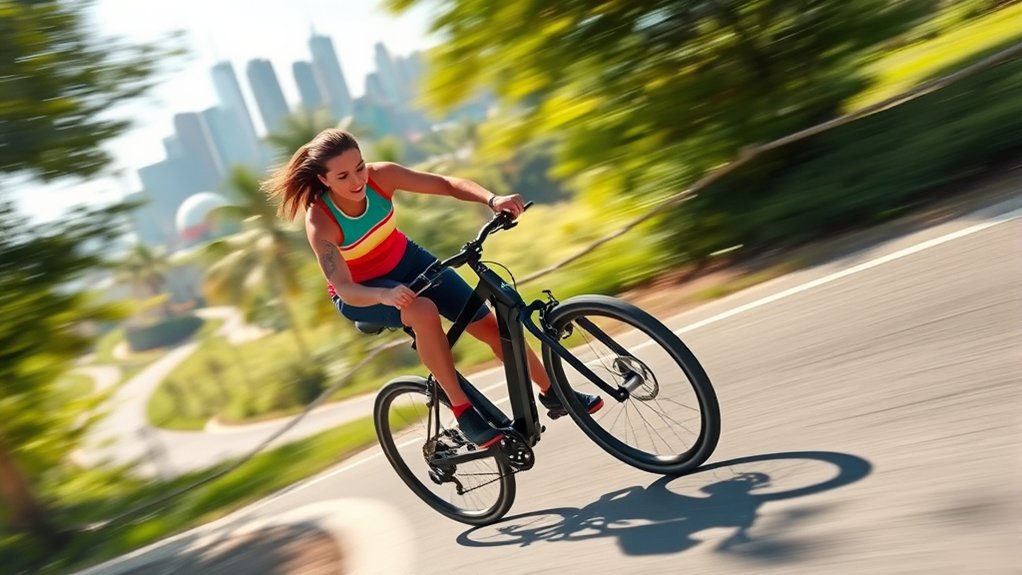
A 48V e-bike usually has a top speed between 20 and 28 miles per hour. This can vary based on things like motor power, rider weight, and the terrain you’re riding on.
Most 48V e-bikes reach 20 to 28 mph, depending on rider, terrain, and motor power.
If you’re on flat, smooth roads with a strong motor, you might hit closer to 28 mph. But if you’re carrying extra weight or going uphill, your speed could drop to around 20 mph.
The bike’s settings and how much charge is left in the battery also impact your top speed. Overall, this range offers a good mix of performance and safety.
Most 48V e-bikes are built to stay within these speeds, making them great for city commuting and casual riding.
What Factors Affect the Speed of a 48V Electric Bike?
Several key factors directly influence how fast your 48V electric bike can go. First, the motor’s power output determines the maximum speed you can reach. Generally, more powerful motors allow for higher speeds.
The weight of the rider and cargo also plays a role; heavier loads can slow you down. Tire size and type affect speed as well. Larger or slick tires reduce rolling resistance and can help you ride faster.
The bike’s gear system impacts acceleration and top speed, especially on varied terrains. Plus, the level of pedal assist or throttle setting you choose can either limit or boost your speed.
Finally, environmental conditions like wind, road surface, and incline can either hinder or help your bike’s speed. These factors make your ride faster or slower depending on the situation.
How Do Motor Power and Battery Capacity Influence Speed?
How do motor power and battery capacity directly impact your e-bike’s speed? Higher motor power usually means you can reach faster speeds because it delivers more torque. On the other hand, battery capacity affects how long you can ride at that speed before needing a recharge.
Higher motor power boosts speed through greater torque, while larger batteries extend riding time at top speeds.
Consider these points:
- Motor wattage: More watts typically boost top speed and acceleration.
- Battery size: Larger capacity batteries can keep you going at higher speeds longer.
- Power-to-weight ratio: Having more motor power relative to your bike’s weight leads to quicker acceleration.
- Efficiency: Better battery health and motor efficiency help you maintain consistent speeds.
Together, these factors decide whether your ride is swift and sustained or limited and sluggish. Upgrading either component can significantly change your overall speed and riding experience.
What Are the Legal Speed Limits for 48V E-Bikes in Your Area?
Understanding your bike’s speed capabilities means knowing the legal limits in your area. Speed regulations for 48V e-bikes vary widely depending on where you are, so it’s important to check local laws.
In many places, e-bikes are classified based on their top speed and motor power. For example, some areas restrict e-bikes to 20 mph (32 km/h) on roads and bike paths.
Other regions allow speeds up to 28 mph (45 km/h) for certain classes. Violating these limits can lead to fines or losing your riding privileges.
Always verify your local regulations before riding, especially if you want to boost your bike’s speed or use it in different environments.
Staying within legal limits keeps you safe and ensures you’re following the law.
How Can I Safely Boost My 48V E-Bike’s Speed?
To safely boost your 48V e-bike’s speed, it’s important to make informed adjustments without risking damage or legal issues. Start by understanding your bike’s limits and local regulations.
Safely enhance your 48V e-bike’s speed by understanding limits and following legal guidelines.
Here are four ways to increase speed responsibly:
- Upgrade the controller to one with higher power capacity, which allows more current to flow to the motor.
- Replace the motor with a higher wattage model designed for faster speeds.
- Adjust the cadence or pedal assist settings to favor higher power output.
- Check and upgrade the tires to lower rolling resistance, improving efficiency and speed.
Always verify that any changes comply with local laws. Consider consulting a professional to prevent damaging your e-bike or voiding warranties.
How to Choose a 48V E-Bike That Fits Your Speed and Riding Style?
When choosing a 48V e-bike, think about how motor power and speed match your riding style. Whether you like quick acceleration or steady cruising, make sure the bike suits your preferences.
Consider your typical terrain—hilly, flat, or mixed—as it affects the motor’s performance and your overall riding experience. A motor that works well on hills might not be necessary if you mostly ride on flat roads.
Also, check the battery capacity to ensure the range meets your needs. You want enough power for longer rides without sacrificing speed or overall performance.
Motor Power and Speed
Choosing the right motor power is essential because it directly influences your e-bike’s speed and performance. If you want a faster ride, go for higher wattage motors. Here’s what to evaluate:
250W motors give steady, legal speeds perfect for casual riding.
500W motors improve acceleration and handle hills better, offering more speed.
750W or higher motors are for serious riders chasing top performance and speed.
Motor torque also matters; more torque means better power delivery and quicker starts.
Balance your desired speed with motor power to fit your riding style. Keep in mind, more power can drain the battery faster and affect handling. Choose wisely based on your needs.
Riding Terrain Considerations
Your riding terrain plays a big role in choosing the right 48V e-bike for you. If you mainly ride on smooth city streets or bike paths, a lighter, more streamlined model can help you go faster and save battery.
On the other hand, if you often ride on hilly or off-road trails, look for a bike with a sturdy frame, wider tires, and a motor built for climbing. Rough terrains need more power and stability.
Think about how steep or uneven your usual routes are. Pick a bike that can handle those conditions comfortably. Matching your terrain with the bike’s design ensures you get the speed you want without losing control or comfort.
Battery Capacity and Range
Selecting the right battery capacity is key to matching your e-bike’s speed and riding style. It directly affects how far you can go on a single charge.
When choosing a 48V e-bike, think about your typical riding distance and terrain. Higher capacity batteries give you longer ranges but also add weight and cost.
To decide what’s best for you, consider:
- How far you ride daily—whether it’s short trips or long adventures
- The terrain—flat roads or hilly landscapes
- Your preferred riding speed—faster speeds use more power
- Storage options—like charging stations nearby or carrying extra batteries
Matching your needs ensures you get enough range without unnecessary weight or expense. This makes your rides more enjoyable and efficient.
Frequently Asked Questions
Can I Modify My 48V E-Bike to Go Faster Legally?
Yes, you can modify your 48V e-bike to go faster legally, but you should check your local laws first.
Upgrading the motor or adjusting the controller can boost your speed, but some areas limit how fast your bike can go for safety reasons.
Always make sure your modifications follow the regulations to avoid fines or losing your insurance coverage.
It’s a good idea to consult a professional to make sure your upgrades are safe and legal, and that they improve performance without causing legal issues.
How Does Rider Weight Affect the Bike’s Top Speed?
Think of your bike’s speed like a racecar on a track. Your weight is the fuel that either powers or stalls your engine.
The heavier you are, the more resistance you create, which slows down your top speed. A lighter rider helps the bike glide more smoothly.
This allows the bike to reach higher speeds. So, your weight acts like a secret handbrake, subtly influencing how fast your e-bike can go.
What Maintenance Tasks Can Impact E-Bike Speed?
Regularly maintaining your e-bike can really impact its speed. Keep the tires properly inflated to reduce rolling resistance, making your rides smoother and more efficient.
Also, check and lubricate the chain, gears, and other moving parts to prevent friction that can slow you down. Keeping these parts in good shape helps your bike run at its best.
Don’t forget to clean the motor and battery terminals. Good contact ensures maximum power transfer, which is key for staying at top speed.
Staying on top of these maintenance tasks will help your e-bike perform at its best and reach its maximum speed.
Do Different Terrains Significantly Alter a 48V E-Bike’s Speed?
Imagine riding your 48V e-bike up a steep hill; you’ll notice a significant decrease in speed. Different terrains definitely impact your bike’s performance.
Rough, uneven surfaces create more resistance, which slows you down. On the other hand, smooth, flat roads let the motor run at its best, helping you stay faster.
How Does Weather Influence the Bike’s Maximum Speed?
Weather can impact your 48V electric bike’s maximum speed noticeably. Cold temperatures thicken the battery’s chemical reactions, which reduces power output and slows you down.
Rain and wet conditions increase rolling resistance, making it harder to maintain top speeds. Wind resistance also plays a role; riding against strong headwinds decreases your speed, while tailwinds can give you a boost.
Always consider weather conditions before heading out to optimize your ride.
Conclusion
In the world of e-bikes, a 48V setup offers a sprightly ride, often reaching speeds of 20-28 mph depending on various factors. Think of it as a finely tuned engine—your speed depends on motor power, battery capacity, and legal limits.
To ride safely and enjoy the breeze, choose a bike that matches your style and always stay within the law.
A well-matched e-bike with a 48V system is like a trusted dance partner—smooth, reliable, and ready to lead.