10 Things You Should Know Before You Put Road Tires on a Hybrid Bike
Upgrading your hybrid bike with road tires can feel overwhelming, especially when you’re unsure about compatibility and performance. Many riders struggle with choosing the right tires to match their riding style and bike setup. Don’t worry—you’re not alone in feeling a bit lost here.
Before putting road tires on your hybrid bike, consider compatibility with your rims, as they can vary in supported widths. Think about tire size and tread pattern based on your riding conditions, and choose narrower tires for speed or wider ones for comfort.
Installing tires can be tricky, so be prepared for fitting challenges and check your tubes before inflating.
If you notice uneven wear or handling issues, consulting a bike shop is wise. Keep these tips in mind to optimize your upgrade.
Key Takeaways
- Verify your hybrid bike’s rim compatibility with narrow road tires to ensure proper fit and safety.
- Consider narrower tires, like 35mm or less, for increased speed and less rolling resistance on paved surfaces.
- Be aware that installing road tires may require tire levers and careful fitting. This helps avoid damage or improper seating.
- Choose tires with the right tread patterns. Slick tires are great for smooth roads, while semi-slicks work well on mixed terrain.
- Regularly check your tires for wear, cracks, or uneven tread. Doing this helps prevent flats and keeps your ride safe.
Why Should You Upgrade to Road Tires on Your Hybrid Bike?
Have you ever wondered why switching to road tires on your hybrid bike can make such a difference? Upgrading can boost your ride’s efficiency and speed.
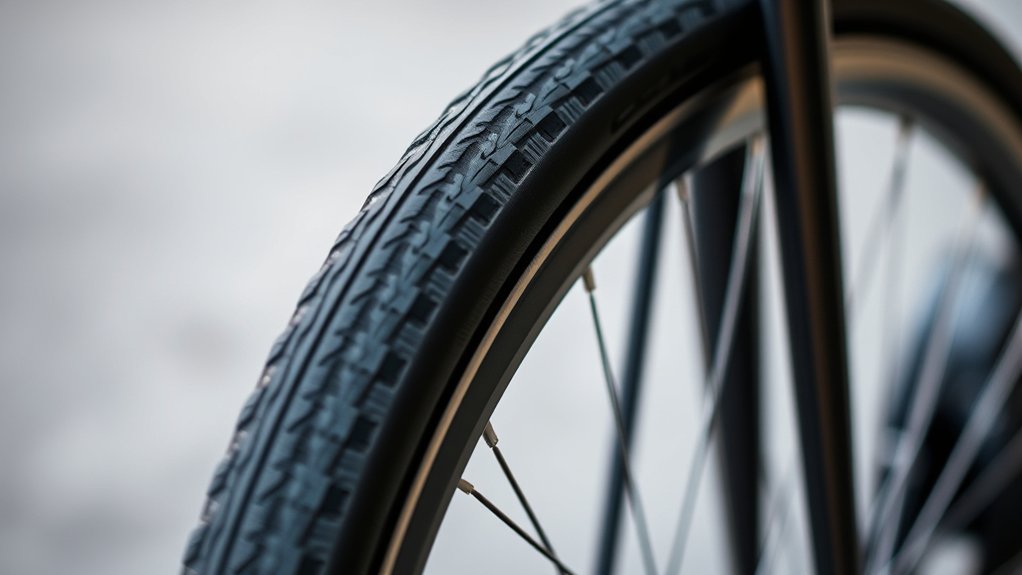
Road tires are narrower and have less rolling resistance, so you’ll glide more easily on pavement. They also offer better grip and handling, especially on smooth surfaces, giving you more control.
Plus, road tires tend to be lighter than hybrid tires, which helps reduce fatigue during longer rides. If you want to get the most out of your bike and enjoy a faster, smoother experience, switching to road tires is a smart choice.
It’s a simple upgrade that can greatly improve your riding quality without any major modifications. If you mainly ride on paved roads, road tires are definitely worth considering.
How Do Road Tires Differ From Hybrid Tires?
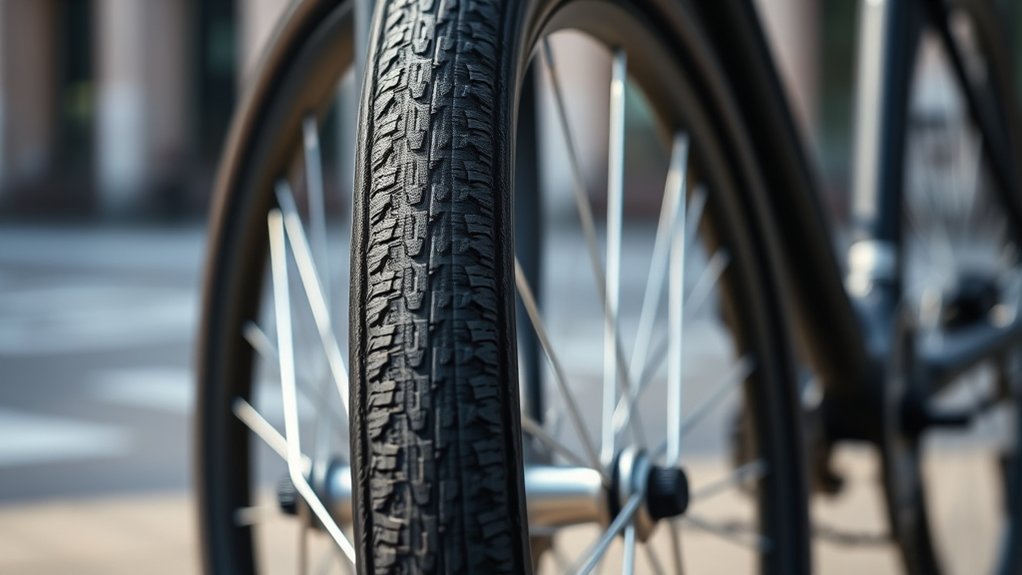
Road tires usually have a smoother tread pattern, which helps reduce rolling resistance and increases speed on pavement.
In contrast, hybrid tires often have a wider profile and more textured tread for better versatility on different surfaces.
Knowing these differences can help you pick the right tire for your riding style and the terrain you’ll be tackling.
Tread Pattern Differences
Tread patterns play an essential role in how your tires perform, especially when comparing road tires to hybrid tires. Road tires usually have smooth, minimal treads designed for low rolling resistance and speed on pavement.
Hybrid tires often feature a mix of smooth centers with slight grooves or textured patterns to handle varied surfaces. These patterns help with grip and drainage, especially on damp roads.
- Smooth, slick surfaces for maximum speed
- Small grooves or sipes for water dispersion
- Slightly textured patterns for versatile terrain handling
This difference means road tires prioritize speed and efficiency on smooth surfaces, while hybrid tires aim for a balance of comfort, grip, and versatility across different conditions. Your choice of tread pattern influences how well your bike handles various environments.
Tire Width Variations
Tire width greatly influences how your bike handles different surfaces and riding conditions. Road tires are usually narrower, around 23-28mm wide, designed for speed and efficiency on smooth pavement.
Hybrid tires are wider, about 32-42mm, offering more comfort and stability on various terrains. Narrower road tires reduce rolling resistance, helping you go faster on hard surfaces.
Wider hybrid tires provide better grip, shock absorption, and comfort, especially on rough or uneven terrain. If you switch from wider hybrid tires to narrower road tires, you’ll notice a change in how your bike feels—faster but less cushioned.
Choosing the right width depends on your riding style and the terrain you’ll most often encounter.
What Sizes and Widths Are Suitable for Hybrid Bikes?
Choosing the right size and width for hybrid bike tires is key for a smooth and efficient ride. The most common sizes are 700c wheels with widths between 35-42mm, offering a good balance of speed and comfort.
Selecting 700c tires between 35-42mm ensures a comfortable, versatile ride on hybrid bikes.
If you want to ride faster on paved roads, go for narrower tires around 32-35mm. For mixed terrain or more comfort, wider options like 40-42mm are better. Keep in mind that wider tires give you more grip and cushioning but might create a little more resistance.
Here are some tips to help you pick the right tires:
- Stick to 700c wheels because they are compatible with most hybrid bikes.
- Choose widths between 35-42mm for versatility and comfort.
- Match your tire width to your riding style and the terrain you’ll be on.
Are Your Bike’s Rims Compatible With Road Tires?
Before swapping in new road tires, it’s important to check if your bike’s rims can handle them. Not all rims work well with narrower, higher-pressure tires. The key factors are rim width and compatibility with tire width.
Look at your rim’s internal width and compare it with the tire’s recommended width. This helps ensure a proper fit and safe riding.
| Rim Width (mm) | Compatible Tire Width (mm) |
|---|---|
| 13-15 | 23-25 |
| 16-19 | 25-28 |
| 20-23 | 28-32 |
| 24+ | 32+ |
If your rim falls outside these ranges, your tires may not seat properly or could be unsafe. Always double-check your rim specs before installing new road tires.
What Factors Should You Consider When Choosing Road Tires?
Selecting the right road tires involves considering several key factors to guarantee peak performance and safety. First, think about tire width. Narrower tires reduce rolling resistance, but wider ones offer more comfort and stability.
Next, consider the tread pattern. Slick tires excel on smooth roads, while textured treads improve grip in wet conditions. Finally, pay attention to tire durability and material quality, as these affect longevity and puncture resistance.
When choosing, keep in mind compatibility with your bike’s rim and frame, your typical riding conditions like wet or dry terrain, and your riding style, whether fast commuting or leisurely rides.
Balancing these factors helps you select tires that optimize your hybrid bike’s performance and assure a smooth, safe ride.
How Do Tire TPI and Tread Pattern Affect Performance?
TPI, or threads per inch, affects how flexible and comfortable your tire feels, especially on rough roads.
The tread pattern directly impacts your grip and stability, especially in wet or uneven conditions.
Knowing how these factors influence performance helps you pick tires that match your riding style and terrain.
TPI and Flexibility
The TPI, or threads per inch, directly affects a tire’s flexibility and ride quality. The tread pattern impacts grip and handling. Higher TPI tires are more flexible, giving a smoother ride and better conformity to road surfaces.
Lower TPI tires tend to be stiffer, which can boost durability but may reduce comfort. When choosing tires, think about how flexibility influences your ride.
Higher TPI tires mold better to uneven surfaces, making for a more comfortable experience. Lower TPI tires are more resistant to pinch flats but might feel harsher.
Flexibility can also affect rolling resistance, which impacts your speed and effort. Balancing TPI with your riding style and terrain helps you optimize performance.
Keep in mind, softer tires with high TPI give a plush ride but might wear out faster.
Tread Pattern Grip
Tread pattern grip plays an essential role in how your hybrid bike performs on different surfaces. A well-designed tread pattern improves traction, helping you stay stable whether you’re on smooth pavement or rougher paths.
Tires with minimal tread, like slicks, work great on asphalt. They offer low rolling resistance and faster speeds. On the other hand, tires with more aggressive patterns, such as knobbies or multi-surface treads, give better grip on uneven or loose terrain.
While TPI affects flexibility and ride comfort, tread pattern directly influences how well your bike grips the road. Choosing the right tread pattern depends on your usual riding conditions—smooth for city commuting, textured for mixed surfaces.
Picking the right tires guarantees a safer, more confident ride tailored to your needs.
Performance in Conditions
Tire performance in different conditions really depends on the mix of TPI and tread pattern. Tires with higher TPI have more threads per inch, giving a smoother ride and better grip on rough surfaces. Lower TPI tires are tougher but might feel stiffer.
Tread patterns are just as important: slicks work great on dry pavement, while knobbier designs grip better on wet or uneven terrain.
Keep these in mind: higher TPI means a softer ride but can be more prone to punctures. Tread pattern affects how well your tires channel water or grip loose surfaces. For mixed conditions, a semi-slick with a balanced tread pattern is a good all-around choice.
Matching TPI and tread pattern to your riding conditions helps you get the best performance and stay safe.
Can You Install Road Tires Without Changing Your Rims?
Can you install road tires on your hybrid bike without swapping out the rims? Generally, yes, you can. Most hybrid bikes have rims compatible with a range of tire widths, so switching to narrower road tires is usually straightforward.
Check your current rim’s width and compatibility before buying new tires. Most rims support tires between 23mm and 32mm wide. If your rims are in good condition and compatible, you won’t need to change them.
Check your rim’s width and compatibility to ensure a proper fit before switching to new tires.
However, not all rims are suitable for ultra-narrow or wide tires. Make sure your rims match the tire’s specifications to avoid issues like poor fit or safety concerns.
Always verify your rim’s dimensions and consult a bike shop if you’re unsure.
What Are Common Installation Challenges and How to Fix Them?
Installing road tires on a hybrid bike can sometimes be tricky, especially if you’re new to it. One common problem is the tire not fitting easily onto the rim. To fix this, make sure the tire bead is evenly seated and gently work it onto the rim using your hands or a tire lever.
Another issue is pinched tubes or punctures during installation. Be careful when inserting the tube—check for twists or any sharp edges that could cause damage before you inflate. Always inspect the tube thoroughly to prevent flats.
Finally, improper inflation can lead to a rough ride or even tire blowouts. Always inflate your tires to the pressure recommended on the sidewall, and avoid using too much force, which can damage the tire or tube.
How Do Road Tires Improve Speed, Comfort, and Handling?
Road tires are designed to optimize your bike’s performance by reducing rolling resistance, which directly boosts speed. Their smooth, narrow tread minimizes friction against the pavement, helping you glide faster with less effort. This improved efficiency lets you cover distances quicker and makes riding feel effortless on smooth surfaces.
Besides speed, road tires improve comfort by providing a more responsive ride, especially on paved roads. Their increased grip and precise handling give you better control, making turns more confident and stable.
Lighter tires also cut down overall bike weight, helping you accelerate faster and climb hills more easily. Overall, switching to road tires transforms your riding experience by making it faster, smoother, and more responsive, especially on well-maintained roads.
When Should You Talk to a Bike Professional About Switching Tires?
If you notice unusual tire wear or persistent handling issues, it’s time to talk to a bike professional.
They can help identify if your tires need replacing or if there’s a bigger problem.
Compatibility concerns, like fitting new tires to your bike, are also good reasons to seek expert advice.
Getting it right early on can save you time and prevent bigger issues down the road.
Addressing these signs early keeps your ride smooth and enjoyable.
Unusual Tire Wear
Unusual tire wear can be a clear sign that your hybrid bike’s tires need attention. If you notice uneven tread, bald spots, or excessive fraying, it’s time to see a bike professional.
These signs can point to misalignment, incorrect tire pressure, or suspension problems that could get worse if you ignore them. Keep an eye out for:
- Bald patches or smooth spots that reduce grip
- Uneven tread wear on one side or in patches
- Cracks or cuts along the sidewalls or tread area
Addressing these issues early can prevent blowouts, improve riding comfort, and help your tires last longer. If you’re unsure whether the wear is normal or serious, a bike expert can check it out and suggest the best steps to take.
Persistent Handling Issues
Persistent handling issues on your hybrid bike often mean it’s time to think about changing tires, especially if adjustments haven’t helped.
If your bike feels unsteady, pulls to one side, or seems sluggish despite proper tire pressure, the tires might be the problem.
Different road tires designed for various conditions can change how stable and responsive your bike feels. Consider swapping out tires if yours cause a lot of vibration, make cornering tough, or make it hard to stay in control.
Don’t ignore these signs—they might mean your tires aren’t suited for your riding style or terrain.
If handling problems stick around even after checking alignment and pressure, it’s a good idea to see a bike professional.
They can recommend the best tires for your needs and help keep your bike riding safely and smoothly.
Compatibility Concerns
Sometimes, your hybrid bike’s tires just don’t match your riding style or the terrain you cover, which can cause handling issues or safety concerns. If you notice problems like inconsistent grip, trouble steering, or frequent flats, it’s a good idea to talk to a bike professional.
They can help you figure out if your tires are compatible with your bike’s frame and rim size. You should also seek advice if you’re unsure about the tire’s fit or clearance, experience wobbling or unusual vibrations, or are thinking about switching to a different tire type or size.
Talking to an expert ensures your tires are safe and work well with your bike’s specs. Proper compatibility keeps your rides smooth, safe, and enjoyable.
Frequently Asked Questions
Are There Any Legal or Safety Regulations for Using Road Tires on Hybrid Bikes?
Yes, there are safety considerations, but legal regulations mainly depend on your location. You should make sure your tires meet local laws related to bike equipment, like proper reflectors or lighting if required.
More importantly, verify that the tires fit your hybrid bike’s rims and frame to avoid safety issues. Always check your local regulations and your bike’s specifications to ensure compliance and safe riding with road tires.
How Does Tire Pressure Impact Performance and Safety on Hybrid Bikes?
Think of your hybrid bike as a dance partner; proper tire pressure is the rhythm that keeps you moving smoothly. When you inflate your tires correctly, your ride becomes more efficient and safer, reducing the risk of flats or blowouts.
Under-inflated tires create drag and make handling tricky, while over-inflated tires risk popping. Maintaining the right pressure helps you stay in control and makes your ride more comfortable.
Keep your tires properly inflated to ensure a balanced, safe, and enjoyable ride every time.
Can Different Tread Patterns Affect Ride Quality on Hybrid Road Tires?
Yes, different tread patterns can really impact your ride quality on hybrid road tires. Smooth, minimal treads tend to offer less rolling resistance, making your ride faster and smoother on pavement.
On the other hand, tires with more pronounced treads give you better grip and control on rougher surfaces or in wet conditions. Choosing the right tread pattern depends on the kind of terrain you usually ride on.
Pick a pattern that matches your riding needs to boost comfort, safety, and performance. This way, your hybrid bike will perform just how you want it to.
Do Road Tires Wear Out Faster Than Hybrid Tires on Mixed Surfaces?
Yes, road tires tend to wear out faster than hybrid tires on mixed surfaces. Imagine your sleek, narrow road tires practically melting away with every rough patch, like ice cream under the summer sun.
Hybrid tires, with their tougher, more rugged design, last longer. So if you’re hitting varied terrains, expect to replace your road tires sooner—like every few thousand miles—while hybrid tires hold up for the long haul.
What Maintenance Is Required After Switching to Road Tires on a Hybrid Bike?
After switching to road tires, make sure to regularly check the tire pressure to keep things running smoothly. Proper inflation is key for good performance and comfort.
Take a close look at your tires for any cuts, debris, or uneven wear. If you notice any damage, it’s best to replace the tires to stay safe.
Since narrower road tires can affect braking, keep your brakes aligned and responsive. This helps you stop safely and confidently.
Don’t forget to clean your rims and check for any damage. Regular maintenance like this helps your tires last longer and keeps your hybrid bike performing its best on the road.
Conclusion
Switching to road tires on your hybrid bike is like giving your ride a sleek new suit—it totally changes your experience. With the right fit and a bit of know-how, you’ll glide smoother, faster, and more comfortably down the road.
Just remember, it’s not about rushing to the finish line. It’s about enjoying every mile you ride. So, gear up, make smart choices, and let your bike’s new tires be the wings carrying you to new adventures.