How Can I Put Bigger Tires on My Hybrid Bike?
Are you tired of feeling limited by your hybrid bike’s tires? Many riders wish they could go bigger for better comfort, traction, or performance, but don’t know where to start. You’re not alone—upgrading your tires can seem tricky, but with a little know-how, it’s totally doable.
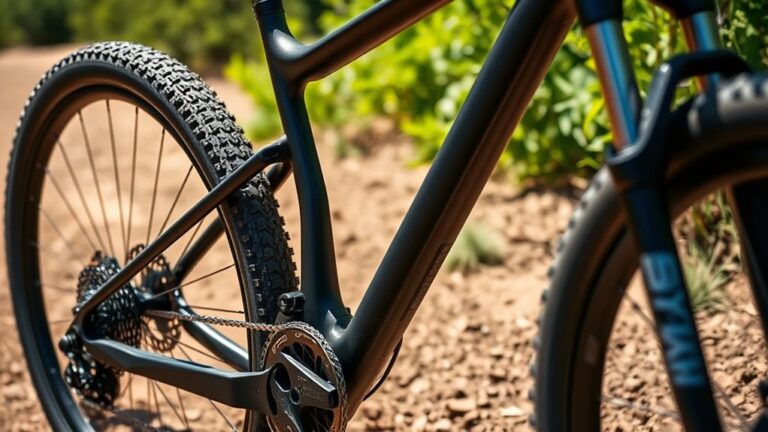
To put bigger tires on your hybrid bike, start by measuring your current tire size and checking your frame’s clearance. Make sure your brakes can handle the wider tires—especially if you have rim brakes.
Choose a size suitable for your riding style, whether for rough terrain or smoother roads.
You’ll need tire levers, a pump, and possibly some brake adjustments.
Want more tips on optimizing your upgrade? Keep exploring to get all the details you need.
Key Takeaways
- Measure your current tire size and check the space in your bike’s frame to see how big the new tires can be. Make sure there’s enough clearance for the wider tires without rubbing against the frame or brakes.
- Next, double-check your brake setup. Some brakes might not be able to handle larger tires, so ensure they can accommodate the bigger width.
- When selecting new tires, think about where you’ll be riding. Pick a size that matches your terrain and riding style, balancing both width and speed.
- Use tire levers and a pump to take off your old tires carefully. Then, install the new, larger tires, making sure they’re seated properly on the rims.
- After everything’s installed, don’t forget to adjust your gears and brakes. This helps keep your bike shifting smoothly and stopping effectively.
Benefits of Installing Larger Tires on Your Hybrid Bike
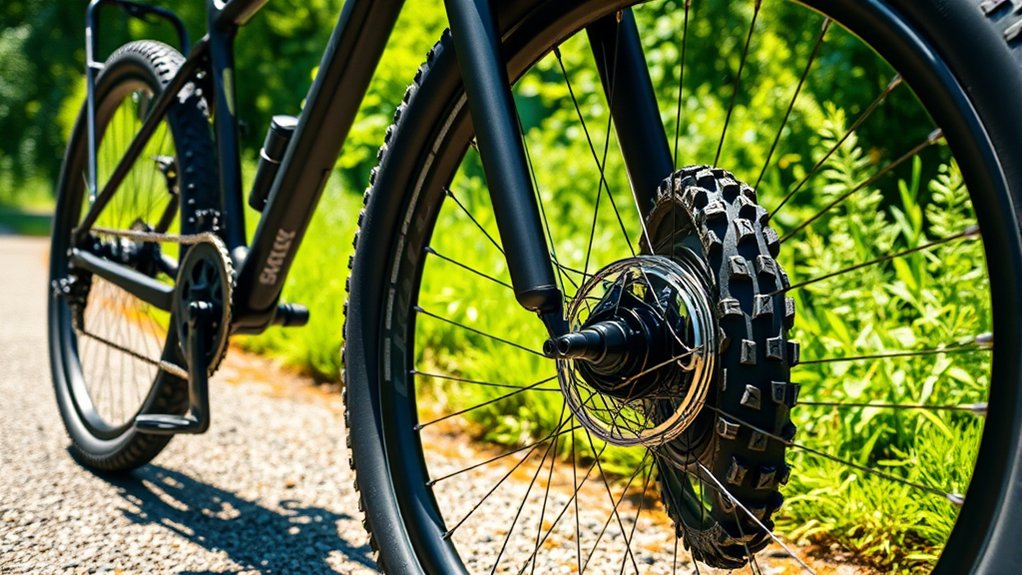
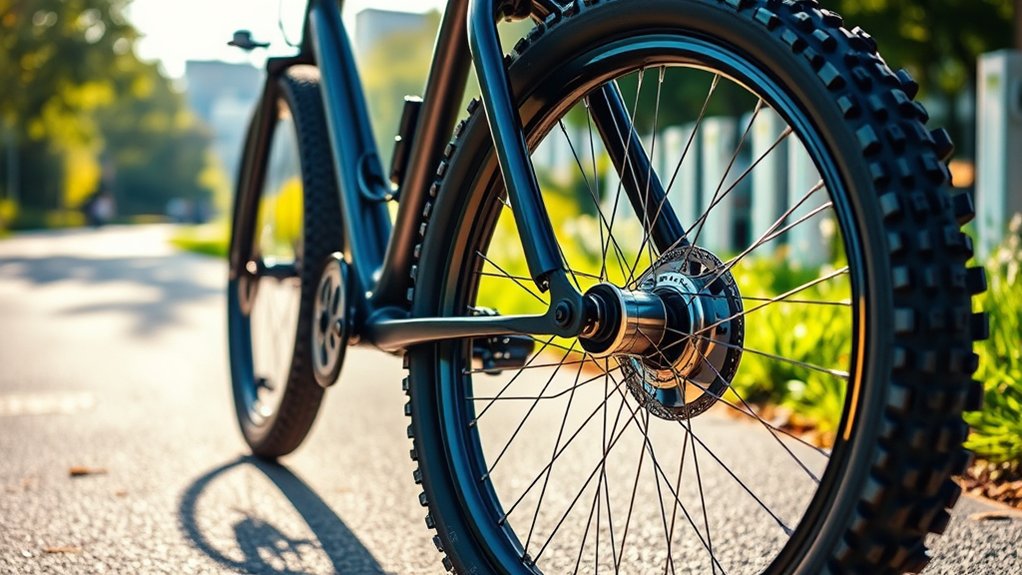
Installing larger tires on your hybrid bike can really improve your riding experience by offering better comfort and stability. Bigger tires soak up shocks from rough terrain, making your ride smoother and helping you stay less tired.
They also give you better traction, so you can grip uneven surfaces like gravel or dirt more easily. With larger tires, you’ll notice improved balance and control, especially on tricky paths or off-road sections.
Plus, bigger tires usually need less pressure, which cushions your ride even more. That means fewer punctures and fewer worries about small obstacles. Overall, upgrading to larger tires makes your bike more versatile, letting you handle different terrains comfortably and enjoy a more stable, fun ride.
How to Check If Your Frame Can Fit Bigger Tires
Before you try fitting larger tires on your hybrid bike, it’s important to see if your frame can handle the extra width. Start by measuring your current tire width and diameter.
Check your bike’s frame clearance before fitting larger tires to ensure a safe and proper fit.
Check the space between the tires and the frame, fork, and brake parts. Look for any signs of tight fit or rubbing when the bike is still.
It’s a good idea to check your bike’s manufacturer specs or user manual to find the maximum tire size recommended for your model.
If you don’t have those details, visit a local bike shop for an expert opinion.
Don’t forget to consider how the wider tires might affect your bike’s handling and stability.
Making sure there’s enough clearance helps prevent damage and keeps your riding safe with bigger tires.
Brake Compatibility When Upgrading to Larger Tires
When upgrading to larger tires on your hybrid bike, it’s important to make sure your brakes can handle the bigger size. Larger tires can change how well your brakes work, so you need to check a few things.
First, look at clearance. Make sure your brake calipers can fit the wider tires without rubbing. Next, consider your brake type—disc brakes usually adapt better to bigger tires than rim brakes do.
You should also check your cable length. Bigger tires might mean you’ll need longer brake cables or hoses to keep everything working smoothly. Lastly, verify your stopping power. Make sure your brakes still stop reliably with the larger tires.
Skipping these checks can lead to safety issues or poor braking performance. Take the time to evaluate your brake system thoroughly—your safety and confidence riding depend on it. Proper compatibility means smoother rides and peace of mind whenever you’re out on the road.
Choosing the Best Tire Size for Your Riding Style
To pick the right tire size, think about the terrain you ride most often. Wider tires give you better grip on rough surfaces, while narrower ones are faster on smooth roads.
Consider what feels comfortable for you and how fast you want to go. Finding a good balance that matches your riding style is key.
Don’t forget to check your bike frame’s clearances. You want to make sure the new tires will fit without any trouble.
Match Tire Width to Terrain
Choosing the right tire width for your hybrid bike really depends on the terrain you’ll be riding on. Narrower tires work great on smooth pavement, giving you speed and efficiency. Wider tires grip rougher surfaces, offering better stability and comfort.
Here are some options to consider:
- Road surfaces: Stick with 28-32mm tires for fast, effortless rides.
- Gravel trails: Go for 40-45mm tires that strike a good balance between speed and traction.
- Off-road terrain: Use 50mm or wider tires for maximum grip and control.
- Mixed terrain: Choose versatile tires around 35-40mm that can handle both pavement and dirt.
Matching your tire width to the terrain helps ensure a smoother, safer ride. It boosts your confidence and reduces fatigue, making every adventure more enjoyable.
Consider Riding Comfort and Speed
Your riding comfort and speed are closely linked to your tire size, so choosing the right dimensions can really improve your experience. Larger tires often give a smoother ride by absorbing shocks better, which makes things more comfortable on rough surfaces.
They also spread out your weight more evenly, helping reduce fatigue over long rides. But keep in mind, bigger tires can slightly slow you down because of increased rolling resistance.
If comfort and a relaxed ride are your priorities, go for wider, larger tires that cushion impacts. If you want to go faster, opt for narrower tires that cut down on rolling resistance.
Think about how you ride most—whether it’s commuting, fitness, or off-road adventures—and find a balance between comfort and efficiency. The best tire size depends on your riding style and terrain, so you can enjoy each ride to the fullest.
Evaluate Bike Frame Compatibility
The bike frame itself plays an essential role in determining the suitable tire size, as not all frames can accommodate larger tires without modifications. Before upgrading, you need to assess your frame’s clearances carefully.
First, measure the current tire width and diameter to see what’s possible. Then, check the space between the fork and rear triangle when the wheel is in place.
Look for any obstructions like brake mounts or disc calipers that could limit size. Consider if your frame’s design allows for wider tires without rubbing or damaging components.
If you’re excited about increased comfort and better traction, verify your frame can handle the bigger tires safely. Making the right assessment now prevents costly mistakes later.
Tools You Need to Swap Your Bike’s Tires
To swap your bike’s tires, you’ll need some essential tools like tire levers and a pump.
Proper tire installation also requires a set of tire wrenches or bead breakers to guarantee a secure fit.
Having the right equipment on hand makes the process quicker and easier.
Essential Tire Removal Tools
Swapping tires on a hybrid bike needs a few key tools to keep things smooth and easy. Without the right gear, you might get frustrated or even damage your bike.
Here are four must-have tools:
- Tire levers – They help remove stubborn tires easily and save your hands from strain.
- Pump or CO2 inflator – To reinflate your tire after installing it.
- Rag or cloth – For cleaning the rim and clearing out debris during the process.
- Gloves – To protect your hands from dirt and sharp edges.
Having these tools ready means you’ll be confident tackling tire removal, especially when fitting larger tires.
With the right gear, you’ll face fewer setbacks and enjoy a smoother upgrade process.
Proper Tire Installation Equipment
Having the right tire installation tools makes fitting larger tires onto your hybrid bike much easier and safer. Essential tools include tire levers, a floor pump, and a torque wrench for proper tightening.
Tire levers help you remove and install tires smoothly without damaging the rim or tube. A quality floor pump guarantees you can inflate the new tires to the correct pressure efficiently.
A torque wrench allows precise tightening of the axle nuts or quick-release skewers, preventing damage or unsafe riding conditions. Here’s a quick overview:
| Tool | Purpose |
|---|---|
| Tire Levers | Remove and install tires easily |
| Floor Pump | Inflate tires to proper pressure |
| Torque Wrench | Tighten nuts to manufacturer specs |
How to Replace Your Hybrid Bike’s Tires
Replacing your hybrid bike’s tires might seem tricky at first, but with the right tools and a bit of patience, it’s pretty easy. First, take the wheel off your bike and make sure to deflate the old tire completely.
Next, use tire levers to gently pry the tire away from the rim. Then, slide off the old tire and tube, checking for any damage.
Use tire levers carefully to remove the tire from the rim, then slide off the old tire and tube.
Place your new, bigger tire onto the rim, making sure it sits evenly. Insert the tube, then carefully work the tire back onto the rim, avoiding pinches.
Take your time to ensure everything fits snugly. Once it’s all in place, inflate the new tire to the recommended pressure. Reattach the wheel, and you’re ready to ride with your upgraded tires!
Adjust Your Gears and Brakes After Upgrading
After installing bigger tires, you need to check if your gears are compatible and adjust the derailleur accordingly. Make sure the derailleur is set correctly to handle the new tire size.
Next, verify that the brake reach is right so your brakes work well without rubbing. Proper brake adjustment ensures safety and effective stopping power.
Finally, test your shifting to guarantee it’s smooth and responsive with the new tire size. Make any necessary tweaks to keep your ride feeling seamless.
Check Gear Compatibility
When you install larger tires on your hybrid bike, your gear system and brakes might need some adjustments to work properly. Larger tires can cause your gears to misalign or slip, which can be unsafe and reduce efficiency. To keep things running smoothly, check gear compatibility carefully.
First, test your shifting to make sure your derailleur can handle the new tire size without skipping. Then, adjust the cable tension by tightening or loosening cables to prevent sluggish or overly sensitive shifts.
Next, inspect the derailleur clearance to ensure there’s enough space for the bigger tires and avoid rubbing. Finally, verify the gear indexing and fine-tune the gears so they shift smoothly across all cogs.
Following these steps will help your ride stay safe, responsive, and enjoyable with your upgraded tires.
Adjust Brake Reach
If you’ve upgraded to larger tires, you’ll need to adjust your brake reach to keep stopping safely and effectively. Larger tires can make the brake pads sit too close or too far from the rim, which can hurt braking performance.
To fix this, turn the barrel adjuster on your brake levers or calipers to fine-tune the pad distance. Proper brake reach lets you easily engage the brakes without pulling too hard or having weak pad contact.
Use the table below to understand your options:
| Adjustment Method | Tools Needed | When to Use |
|---|---|---|
| Barrel adjuster | Hands, no tools required | Minor reach adjustments |
| Cable tensioner | Screwdriver or Allen key | Significant reach changes |
| Brake pad alignment | Wrench or Allen key | Ensuring proper pad contact |
| Caliper positioning | Allen wrench | Adjusting caliper alignment |
| Brake pad replacement | New pads, basic tools | Worn-out pads affecting reach |
Proper adjustment helps ensure safe, reliable braking after tire upgrades.
Test Shifting Smoothness
Once you’ve adjusted your brake reach for larger tires, it’s time to check if your gears shift smoothly. Good shifting makes your ride safer and more enjoyable. To do this well, follow these steps:
- Pedal slowly and shift through each gear to see if there’s hesitation or slipping.
- Listen for any grinding sounds that might mean things are misaligned.
- Watch the chain to see if it moves smoothly without skipping.
- If shifting feels stiff or delayed, make small adjustments to the derailleur screws.
Making sure your gears are dialed in gives you confidence over your bigger tires. If shifting isn’t smooth, don’t rush—tweak and test again until every shift feels crisp. Smooth gear changes really improve comfort and control while riding.
Troubleshooting Frame Clearance and Brake Rubbing Issues
Bigger tires can sometimes cause frame clearance and brake rubbing issues, especially if your bike wasn’t designed for wider tires. If you notice rubbing or limited clearance, start by checking your tire size and comparing it to your bike’s specifications.
You might need to adjust your brake calipers or replace them with ones designed for wider tires. For disc brakes, make sure the rotor isn’t rubbing against the caliper or frame.
If the frame feels tight, consider installing spacers or using a different fork or frame with more clearance. Also, verify that your wheel is properly centered and securely installed.
Making small adjustments can often solve rubbing problems without major modifications. If issues persist, it’s a good idea to consult a bike shop for professional help.
Safety Tips for Riding With Bigger Tires
Riding with bigger tires can make your ride more comfortable and give you better traction, but it also means you need to pay extra attention to safety. Larger tires change how your bike handles, so stay alert.
Here are four safety tips to keep in mind:
- Check your brake response. Bigger tires can increase your stopping distance, so make sure your brakes are working well.
- Adjust your riding style. Be extra careful on sharp turns and rough terrain to stay in control.
- Maintain proper tire pressure. Over- or under-inflated tires can affect how well you ride, so check your pressure regularly.
- Be visible. Bigger tires might change your bike’s profile, so wear bright gear and use lights to stay seen.
Always test ride your bike in a safe, controlled area before hitting busy streets. Staying cautious helps you enjoy the benefits of bigger tires safely and confidently.
Maintaining Your New Tires for Longevity
Proper maintenance is key to making sure your new tires last longer and perform well over time. Regularly check the tire pressure and keep it within the recommended range to avoid uneven wear and flats.
Inspect your tires for cuts, punctures, or debris after each ride, and remove any foreign objects promptly. Rotate your tires periodically to promote even wear, especially if you notice one side wearing faster.
Keep the sidewalls clean and dry, and avoid harsh chemicals that can damage the rubber. When storing your bike, keep it in a cool, dry place away from direct sunlight.
Finally, steer clear of sudden impacts or rough terrain that could damage your tires. Consistent maintenance helps your tires stay in top shape, maximizing their lifespan and your riding enjoyment.
Frequently Asked Questions
Will Larger Tires Affect My Bike’s Speed and Efficiency?
Larger tires can slow you down a bit because they increase rolling resistance and weight, making pedaling tougher.
But they can also boost comfort and stability, especially on rough terrains. Your bike’s speed and efficiency depend on tire size, terrain, and riding style.
If you care more about comfort and off-road riding, bigger tires might be worth it.
For faster rides on smooth surfaces, smaller tires usually perform better.
How Much Weight Will Bigger Tires Add to My Bike?
Bigger tires can add roughly 0.5 to 1.5 pounds (about 0.2 to 0.7 kg) to your bike’s weight, depending on their size and material. You’ll notice some extra heft, especially during acceleration or climbing.
But don’t worry—this added weight is usually manageable and often balanced out by benefits like better traction, comfort, and stability. Just keep in mind that larger tires may slightly affect your bike’s handling and efficiency.
Can I Put Wider Tires on Any Hybrid Bike Model?
You can’t put wider tires on any hybrid bike model without checking compatibility first. Think of your bike as a carefully tailored suit; not every fabric fits every cut.
Some hybrids have limited clearance or specific rim sizes.
To be safe, measure your current tires and consult your bike’s manual or a professional mechanic. Upgrading might require new rims or fork adjustments, so confirm your bike can handle the wider tires.
Do I Need New Wheel Rims for Bigger Tires?
Yes, you might need new wheel rims for bigger tires, especially if your current rims aren’t compatible with the wider size.
Check your bike’s rim width and diameter to see if they match the new tires.
If the rims are too narrow or not the right size, you’ll need to replace them.
Make sure the new rims can safely handle the larger tires for peak performance and safety.
How Do Larger Tires Impact Bike Handling and Stability?
Larger tires are like adding cushions to your ride. They improve comfort but can change how your bike handles.
They boost stability on rough terrain, making your ride smoother. However, they might make tight turns feel less responsive.
You might notice a slight decrease in agility and an increase in rolling resistance. With some adjustments and practice, you’ll gain better control and enjoy a more comfortable ride, especially on uneven surfaces.
Conclusion
Upgrading to bigger tires on your hybrid bike can boost comfort, traction, and versatility, making every ride more enjoyable. Just like a knight prepares his armor before battle, make sure your frame and brakes are compatible. Take your time to install and adjust everything properly.
With the right tools and a bit of patience, you’ll be cruising with upgraded tires in no time. You’ll be ready for adventures that even a wise old sage would envy. Ride safe and enjoy the journey with your bigger tires!