7 Tips to Make Your Hybrid Bike Faster
Many hybrid bike riders wish they could go faster without constantly pushing harder. If you’re looking to boost your speed and make every ride more exciting, you’re not alone. Luckily, small adjustments can make a big difference.
To make your hybrid bike faster, start by optimizing tire pressure. Keeping it at the recommended PSI reduces resistance and helps you glide more smoothly.
Upgrade to lightweight components and gear ratios suited for your terrain to boost efficiency and speed.
Add aerodynamic accessories like streamlined handlebars or helmets to cut wind drag and make your ride more effortless.
Find your best riding position to minimize fatigue and keep your energy focused on moving forward.
Regularly lubricate the chain for smooth pedaling and better power transfer.
Lastly, check brake and wheel alignment to ensure maximum performance.
These simple tips can lead to noticeable speed gains if you keep exploring more.
Key Takeaways
- Keep your tire pressure just right. Proper inflation reduces rolling resistance, which can make a noticeable difference in speed.
- Think about upgrading to lighter components and aerodynamic accessories. These small changes can boost your bike’s efficiency and help you go faster.
- Make sure your wheels are properly aligned and true. Misaligned wheels create extra drag that slows you down.
- Adjust your riding position for better aerodynamics. A more streamlined posture cuts down on air resistance and helps you ride faster.
- Don’t forget to regularly lubricate and maintain your drivetrain. A smooth, well-kept drivetrain transfers power more efficiently, giving you that extra boost.
Boost Your Speed by Improving Tire Pressure
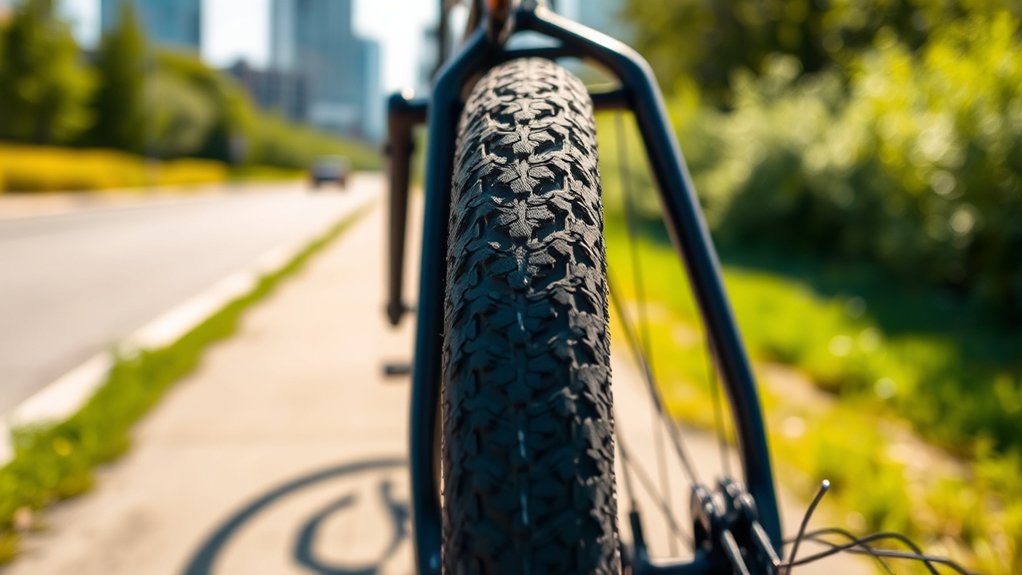
To increase your hybrid bike’s speed, start by checking and adjusting your tire pressure. Properly inflated tires reduce rolling resistance, making pedaling easier and quicker. Use a reliable pressure gauge to verify your tires are at the manufacturer’s recommended PSI, usually found on the sidewall.
Under-inflated tires create more friction and slow you down, while over-inflated tires can make your ride rough and uncomfortable. Regularly inspect your tires for any signs of damage or embedded debris that could affect pressure or performance.
Adjust the pressure before each ride if needed, especially if you’ve been riding in different weather conditions. Maintaining ideal tire pressure is a simple, effective way to improve your hybrid bike’s speed and efficiency on every ride.
Upgrade Your Gearing System for Faster Rides
Upgrading your gearing system can give you a real speed boost. Focus on choosing lightweight components and optimizing your gear ratios for smoother, faster rides.
These improvements make your bike more efficient and responsive on the road.
Choose Lightweight Components
Choosing lightweight components can really boost your hybrid bike’s speed by cutting down weight and making handling easier. Swap out heavy parts like wheels, handlebars, and seat posts for lighter options made from carbon fiber or aluminum. These materials reduce weight without sacrificing strength or durability.
Lighter components make pedaling easier, especially on climbs and sprints, so you can go faster with less effort. They also improve maneuverability, helping you handle turns and obstacles more smoothly. Focus on replacing the heaviest parts first, like wheels and frame accessories, for the biggest impact.
Every gram you remove from your bike helps you accelerate faster and maintain higher speeds. This makes your rides more efficient and more enjoyable.
Optimize Gear Ratios
Maximizing your gear ratios can really boost your hybrid bike’s speed by making pedaling more efficient on different terrains. To do this, consider these steps:
- Choose the right cassette sprockets: Pick a gear range that fits your riding style and terrain, balancing high-speed options with easy pedaling uphill.
- Use a compatible chainring: Make sure it matches your cassette so shifting is smooth and power transfer is peak.
- Adjust the derailleur: Proper calibration helps you switch gears seamlessly and prevents wasted effort.
- Experiment with gear combinations: Try different setups to find the most efficient ratios for your ride, which reduces fatigue and boosts speed.
Maximizing gear ratios helps you pedal more efficiently, so you can ride faster with less effort.
Use Aerodynamic Accessories to Reduce Wind Resistance
Aerodynamic accessories can help you cut through the wind and ride faster with less effort. Installing aero handlebars, fairings, or a wind-cheating helmet reduces drag and makes your ride more efficient.
These accessories streamline airflow around your bike and body, decreasing wind resistance. To get the most benefit, make sure they fit well and are installed correctly.
| Accessory | Benefit | Tips |
|---|---|---|
| Aero handlebars | Reduce frontal drag | Pick ergonomic designs for comfort |
| Frame fairings | Smooth airflow over the bike | Check compatibility with your bike |
| Aero helmet | Minimize head wind resistance | Choose snug-fitting, aerodynamic models |
Using these accessories strategically can boost your speed and help you save energy during your rides.
Choose Lightweight Components for Your Hybrid Bike
Choosing lightweight components can really boost your bike’s speed and efficiency. Focus on materials that are strong yet light, like carbon fiber or titanium, to cut down on weight without sacrificing durability.
Plus, go for aerodynamic design and compact parts to reduce drag and improve your overall performance. Small changes can make a big difference!
Material Choices Matter
Selecting lightweight components is one of the best ways to boost your hybrid bike’s speed. Material choices directly affect the overall weight and performance. Focus on these key areas:
- Frame Material – Go for carbon fiber or aluminum frames; they’re lighter and still sturdy.
- Wheels – Opt for lightweight alloy or carbon fiber rims to cut down rotational mass.
- Drivetrain Components – Pick lighter cranks, chainrings, and shifters to reduce weight without losing durability.
- Saddles and Handlebars – Choose lightweight, aerodynamic designs to save weight and improve handling.
Prioritize Aerodynamic Design
Building on lightweight components, optimizing your bike’s aerodynamic design can significantly boost speed. Focus on streamlining your frame with a profile that cuts through the air efficiently.
Swap out bulky accessories for sleeker options like aero handlebars or integrated cables to reduce drag. Keep your riding position low and forward to minimize wind resistance.
Tighten or remove unnecessary parts that create turbulence, such as large water bottles or bulky racks. Wearing tight-fitting clothing and a streamlined helmet also helps decrease air resistance.
Opt for Compact Components
Opt for compact components to shave weight and boost your bike’s speed. Lightweight parts make a noticeable difference, especially during climbs and sprints. Focus on these four areas:
- Choose a lightweight frame made from carbon fiber or aluminum.
- Swap out heavy wheels for lighter, aerodynamic ones.
- Use compact cranksets with fewer teeth for easier pedaling.
- Replace bulky accessories with streamlined, minimal designs.
These changes reduce overall weight and improve handling, helping you accelerate faster and maintain momentum longer. Compact components also lower the bike’s center of gravity, which boosts stability. Remember, every gram counts when you’re aiming for speed.
Upgrading parts thoughtfully guarantees you maximize performance without sacrificing durability or comfort. By prioritizing lightweight, compact components, you’re setting yourself up for a faster, more efficient ride.
Find Your Best Riding Position for Faster, More Comfortable Rides
Finding the right riding position is key to boosting your bike’s speed and making longer rides more comfortable. Start by adjusting your saddle height so your legs have a slight bend at the bottom of each pedal stroke.
Finding the perfect riding position enhances speed and comfort on long rides.
Keep your hands relaxed on the handlebars and position them comfortably to reduce strain. Lean forward slightly to improve aerodynamics, but don’t overextend your back, as that can cause fatigue.
Your elbows should be bent and close to your body, creating a more streamlined posture. Shift your weight forward or back to find a good balance between power and comfort.
Try small adjustments to see what feels best. This helps you ride faster without sacrificing endurance or comfort. Proper positioning improves efficiency and minimizes fatigue on longer rides.
Lubricate Your Chain for Smoother Power Transfer
Keeping your chain well-lubricated guarantees smoother power transfer and reduces friction that can slow you down. Proper lubrication not only improves efficiency but also extends your chain’s lifespan. To keep your chain in prime shape, follow these steps:
- Clean the chain thoroughly to remove dirt and old lubricant.
- Apply a suitable bike-specific lubricant evenly along the entire length of the chain.
- Pedal backward slowly to work the lubricant into the links.
- Wipe off any excess to prevent dirt buildup.
Regular lubrication ensures your drivetrain operates smoothly and minimizes energy loss. Be careful not to over-lubricate, as excess oil can attract dirt and grime. It’s a good idea to lubricate after wet rides or every few hundred miles for peak speed and performance.
Check and Adjust Brake and Wheel Alignment for Better Efficiency
Making sure your brakes and wheels are properly aligned is key to getting the most out of your bike’s efficiency and safety. Misaligned wheels can cause uneven wear and drag, which slows you down. Brake misadjustments can reduce stopping power or cause unnecessary friction.
To check alignment, spin your wheels and watch for side-to-side wobbling. If you see any, adjust the spoke tension or use a truing stand if you have one. For brakes, ensure the pads contact the rim evenly. If they don’t, reposition or replace them.
Proper alignment reduces resistance, improves handling, and saves energy. Regularly inspecting your bike helps keep everything running smoothly and efficiently.
| Component | Adjustment Tips |
|---|---|
| Wheels | True wheels using spoke tension or a stand |
| Brakes | Align brake pads so they contact rims evenly |
| Overall | Regular checks keep your bike running at its best |
Frequently Asked Questions
How Does Riding Technique Influence Hybrid Bike Speed?
Your riding technique directly impacts your hybrid bike speed. When you keep a smooth, steady cadence, you use less effort and save energy.
Staying consistent and avoiding sudden bursts helps you maintain higher speeds more easily. Proper body positioning, like staying low and centered, cuts down on wind resistance.
Using efficient gear shifts keeps your pedaling effective. Focus on these tips to ride faster without putting in extra effort.
Can Training Improve My Hybrid Bike’s Overall Performance?
Absolutely, training can really boost your hybrid bike’s performance. As you push your limits, you’ll build strength, endurance, and speed, transforming your rides.
Consistent cycling, interval workouts, and focusing on technique will reveal hidden potential. This keeps you motivated and excited about making progress.
What Role Does Bike Weight Play in Speed Enhancement?
Bike weight greatly impacts your speed; the lighter your hybrid bike, the easier it is to accelerate and maintain higher speeds.
Reducing weight cuts down resistance, making pedaling more efficient, especially on climbs or long rides. You can do this by choosing lightweight components or removing unnecessary accessories.
Just keep in mind, a good balance between weight and durability is key to ensure safety and the bike’s longevity while still boosting your speed.
How Does Weather Affect Hybrid Bike Speed and Performance?
Weather greatly impacts your hybrid bike’s speed and performance. Wind resistance can slow you down, especially against headwinds, while tailwinds help you go faster.
Rain and wet conditions reduce traction and increase braking distances, making riding more cautious. Cold temperatures can stiffen your bike components, decreasing efficiency.
To maintain speed, plan your rides around favorable weather, wear appropriate gear, and adjust your riding style to weather conditions.
Are There Specific Maintenance Routines to Maximize Speed?
Yes, there are specific maintenance routines to maximize your hybrid bike’s speed. Regularly clean and lubricate the chain to reduce friction and keep gear shifts smooth.
Check your tire pressure often because under-inflated tires slow you down. Aim for the recommended PSI to keep rolling efficiently.
Inspect your brakes regularly to prevent drag, and make sure your wheels are true for the best rolling performance.
Finally, tighten bolts and look for worn components, replacing them promptly to keep your bike running at peak performance and speed.
Conclusion
By applying these seven tips, you’ll notice a real boost in your hybrid bike’s speed and efficiency. Did you know that proper tire pressure alone can improve your ride by up to 3%? Small adjustments, like upgrading components or optimizing your riding position, add up quickly.
So get out there, fine-tune your bike, and enjoy faster, smoother rides. Every little improvement makes a big difference—your perfect, speedy ride is just a tune-up away. Focus on these tips to make your hybrid bike faster and more efficient.