8 Factors That Affect How Long Hybrid Bike Tires Last
Are you tired of constantly replacing your hybrid bike tires? You’re not alone—many riders struggle with figuring out how to make their tires last longer. Knowing what affects tire lifespan can save you money and keep you riding smoothly.
Your hybrid bike tire life depends on your riding habits, like smooth riding and avoiding aggressive turns, which reduce wear. Proper tire pressure prevents uneven tread and flats.
Riding on rough terrain or in harsh weather accelerates deterioration, while high-quality tires last longer than cheap ones. Regular maintenance, managing cargo weight, and choosing suitable treads help extend lifespan.
Keep an eye on external factors—continue exploring how each aspect influences tire durability for smarter bike care.
Key Takeaways
- Proper tire pressure and regular maintenance help prevent uneven wear and punctures. This can really extend the lifespan of your tires.
- Riding on smooth, well-maintained paths puts less stress on your tires and slows down their degradation.
- The type of terrain you ride on makes a difference. Paved roads are easier on tires compared to rough or off-road surfaces.
- High-quality tires made with durable materials tend to resist faster wear and damage better than cheaper options.
- Environmental factors such as weather, UV exposure, and debris can speed up tire deterioration over time.
How Riding Habits Affect Hybrid Bike Tire Wear
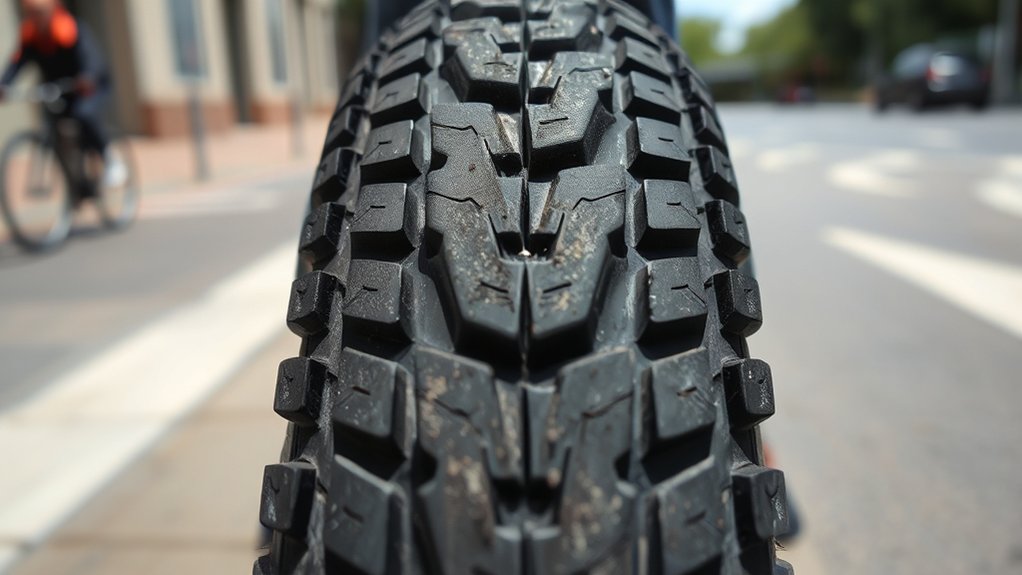
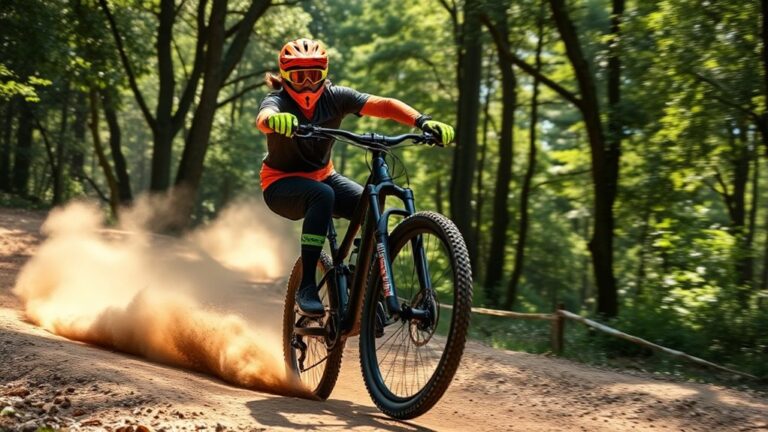
Your riding habits greatly influence how quickly your hybrid bike tires wear out. If you often ride on rough, uneven surfaces, expect the tires to degrade faster because of increased abrasion and stress.
Your riding style directly affects how quickly hybrid bike tires wear out.
Aggressive actions like sharp turns or sudden stops can cause uneven wear and damage the tread. Overloading your bike also puts extra pressure on the tires, speeding up the wear process.
On the other hand, smooth, steady riding on well-maintained paths puts less strain on your tires, helping them last longer. Braking hard or skidding wears down the edges of your tires quickly.
To make your tires last longer, ride conservatively on rough terrain, avoid sudden stops, and distribute your weight evenly. Your riding style directly impacts how long your tires stay in good shape.
How Tire Pressure Impacts Tire Longevity
Maintaining the correct tire pressure is key to getting the most out of your hybrid bike tires’ lifespan. When your tires are properly inflated, they wear more evenly and are less likely to get damaged early.
If your tires are underinflated, they tend to flex more, which speeds up tread wear and raises the chance of flats. Overinflated tires, on the other hand, become stiff and are more prone to punctures. They also don’t absorb shocks like they should.
It’s a good idea to check and adjust your tire pressure regularly according to the manufacturer’s recommendations. Doing this helps prevent issues like sidewall damage and uneven tread wear, keeping your ride smooth and safe.
Proper inflation guarantees even wear across the tire surface, which extends its lifespan. It also reduces the risk of flats and punctures, saving you time and money.
Plus, well-inflated tires improve your overall riding comfort and efficiency, making your trips more enjoyable.
How Terrain and Road Surface Influence Tire Durability
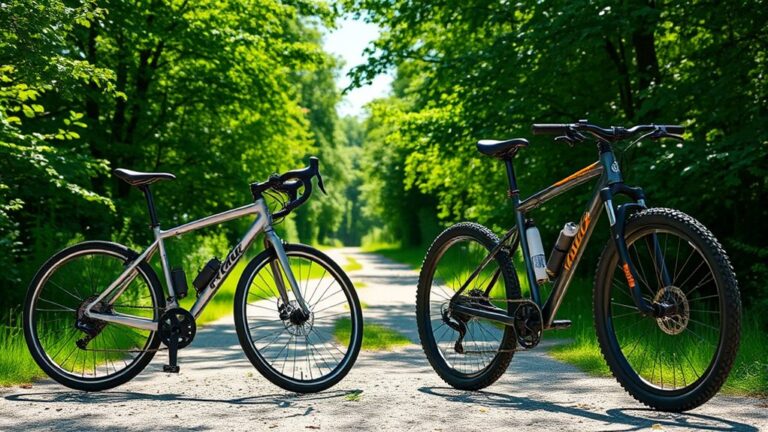
The type of terrain and road surface you ride on really affects how long your hybrid bike tires last. Rough or uneven surfaces like gravel or dirt trails put more stress on your tires, which leads to faster wear and tear.
Paved roads, especially smooth asphalt, are easier on tires and can help them last longer. Riding often on sharp, rocky, or debris-filled paths increases the chance of punctures and cuts, reducing your tires’ durability.
Riding on wet or muddy surfaces can soften the rubber, making your tires more vulnerable to damage. To get the most out of your tires, adjust your riding style based on the terrain.
Try to avoid aggressive acceleration or braking on rough surfaces, and make sure to check your tires regularly for signs of wear or debris stuck in them.
Why Tire Quality and Materials Matter
High-quality tires made from durable materials can significantly extend the lifespan of your hybrid bike tires. When you opt for tires with better materials, they’re more resistant to wear and punctures, saving you both money and hassle.
The quality of rubber and reinforcement layers directly affects how well your tires handle different conditions and how long they last. Cheaper tires tend to wear out quickly and are more prone to damage, which means more frequent replacements.
Investing in good materials ensures your tires stay grippy, flexible, and strong over time. Better rubber compounds resist wear longer, and reinforced sidewalls help prevent punctures and cuts.
How Maintenance Practices Extend Tire Life
Maintaining proper tire pressure and inspecting your tires regularly can significantly extend their lifespan.
When your tires are inflated correctly, they wear more evenly and are less likely to get flats.
Regular checkups help you spot issues early and keep your bike in top shape.
Proper Tire Inflation
Proper tire inflation is key to getting the most life out of your hybrid bike tires. When your tires are inflated properly, you’ll see less uneven wear and fewer flats caused by pinch flats or rim damage.
Under-inflated tires tend to flex more, leading to early tread and sidewall wear. On the other hand, over-inflated tires become stiff, which reduces grip and makes the ride less comfortable. To keep your tires in top shape, check the pressure regularly and follow what the manufacturer recommends for PSI.
Make sure to maintain the right PSI based on your riding conditions and bike weight. Use a reliable pressure gauge to get accurate readings, and remember to adjust the inflation after temperature changes, since air expands or contracts with temperature.
Consistently maintaining proper tire pressure helps your tires wear evenly. That means a smoother ride and longer-lasting tires overall.
Regular Inspection Routines
Regular inspection routines are key to catching early signs of wear and damage that can shorten your tire’s lifespan. Check regularly for cuts, embedded debris, or uneven tread wear, which may point to alignment issues or overuse.
Keep an eye on sidewall cracks or bulges, as these can signal potential blowouts. Use the table below to guide your inspections:
| Inspection Focus | What to Look For | Action Needed |
|---|---|---|
| Tread Wear | Bald spots or low tread depth | Replace or rotate tires |
| Sidewall Damage | Cracks, cuts, or bulges | Repair or replace |
| Embedded Debris | Glass, thorns, or stones | Remove carefully |
| Overall Condition | Uneven wear or damage signs | Schedule maintenance or replace |
Consistent checks help extend your tires’ life, making your rides safer and smoother.
How Cargo and Rider Weight Affect Tire Wear
Your cargo and rider weight directly influence how quickly your tires wear out. Heavier loads put more pressure on the tires, causing faster degradation, especially on rough surfaces.
Understanding how your weight impacts tire lifespan helps you plan for more durable tires and better riding habits.
Cargo Weight Impact
When carrying extra cargo or riding with a heavy load, tire wear tends to increase more rapidly. The added weight puts extra pressure on your tires, causing the rubber to wear down faster. This can lead to quicker tread deterioration and a higher risk of punctures or flats.
To keep your tires in good shape, make sure they’re properly inflated for the load you’re carrying. Regularly check your tire pressure because under-inflation makes wear worse. Also, think about using tires made for heavier loads, which often have stronger sidewalls.
Keep in mind that heavier loads increase the contact patch between the tire and the road, speeding up tread wear. Overloading can cause sidewall bulging and damage, so it’s best to avoid exceeding weight limits. Proper inflation helps distribute the weight evenly and extends the life of your tires.
Rider Load Effects
Adding extra rider weight can really impact tire wear on a hybrid bike. When you’re carrying more load, it puts more pressure on your tires, making the rubber wear down faster.
As your load increases, your tires flex more with each pedal stroke. This speeds up tread degradation and can cause uneven wear, especially on the edges.
To help prevent this, check your tire pressure regularly and inflate to the recommended PSI for your load. Using tires designed for heavier loads can also improve durability.
Being aware of how your rider weight affects your bike and keeping up with maintenance can make your tires last longer. Plus, it helps ensure a smoother, safer ride.
Which Tread Patterns Last Longer on Different Terrains
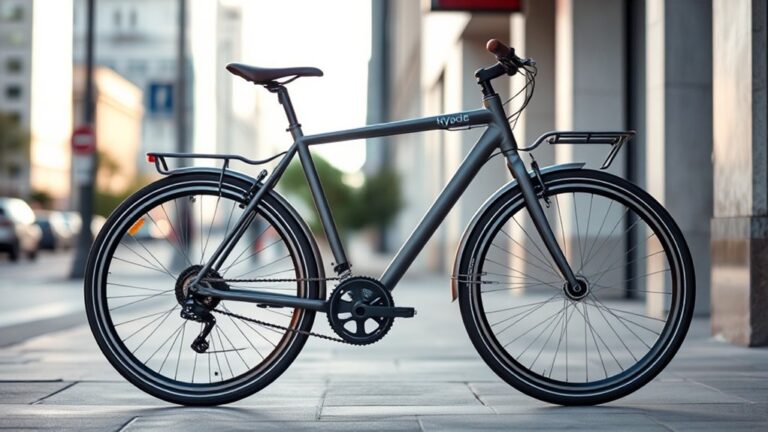
Different tread patterns are designed to optimize performance on specific terrains, and this directly impacts their longevity. For example, tires with smoother treads tend to last longer on paved roads because they experience less friction.
Smooth treads last longer on paved roads due to reduced friction and wear.
If you ride mainly on asphalt, choose tires with fine, tightly spaced patterns for durability. On mixed terrains, tires with moderate, multi-purpose treads balance grip and wear.
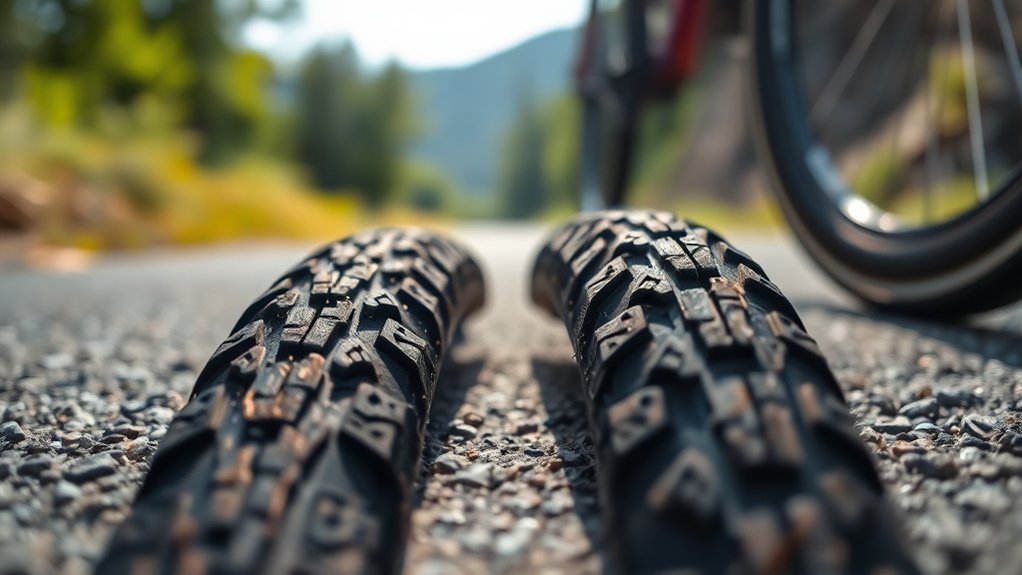
For off-road conditions, chunkier, aggressive treads provide traction but may wear faster on hard surfaces. Consider these factors:
- Smooth, slick treads last longer on paved surfaces
- Multi-purpose patterns suit varied terrains and wear evenly
- Aggressive, knobby treads excel off-road but wear quicker on roads
Matching your terrain with the right tread pattern can help extend your tire’s lifespan.
How Climate and Weather Speed Up Tire Wear
Climate and weather conditions play a big role in speeding up tire wear, especially if you often ride in extreme temperatures or tough environments.
Hot weather makes tires soften, which can cause sidewall cracking and faster tread wear.
On the other hand, cold temperatures make rubber brittle, leading to cracks and quicker deterioration.
Rain and humidity can break down the tread and cause slipping, especially if your tires aren’t made for wet conditions.
Potholes, debris, and rough surfaces are more common in certain climates, putting extra stress on your tires and speeding up their breakdown.
UV exposure from prolonged sun can weaken rubber, leading to cracks and a shorter lifespan.
To keep your tires in good shape longer, store your bike in a shaded, cool spot and check the tire condition often.
Frequently Asked Questions
How Does Improper Storage Affect Hybrid Bike Tire Lifespan?
Improper storage can significantly reduce the lifespan of your hybrid bike tires. When tires are left in direct sunlight, extreme temperatures, or damp environments, the rubber wears out faster.
This can cause cracks, dry rot, and a loss of elasticity. Storing your bike in a cool, dry place away from sunlight helps keep the tires in good shape.
Additionally, keeping tires properly inflated and avoiding contact with sharp objects during storage can prevent unnecessary damage. Taking these steps can help your tires last longer and perform better.
Can Regular Cleaning Extend Tire Durability?
Yes, regular cleaning can extend your hybrid bike tires’ durability. By removing dirt, debris, and grime, you prevent buildup that can cause premature wear and deterioration.
Use mild soap and water, and avoid harsh chemicals that might damage the rubber. Keeping your tires clean helps maintain their condition and makes it easier to spot any potential issues early.
Regular cleaning also ensures better grip and performance, which ultimately helps prolong their lifespan.
Do Different Hybrid Bike Brands Have Varying Tire Longevity?
Yes, different hybrid bike brands can have varying tire longevity. You’ll notice some brands use higher-quality rubber or more durable compounds, which can help your tires last longer.
Brand reputation for making reliable components often means their tires will be more durable too. But remember, your riding style, how well you maintain your bike, and the terrain you ride on also matter a lot.
How Does Riding at Higher Speeds Impact Tire Wear?
Riding at higher speeds increases tire wear because it puts more stress on your tires, causing the rubber and tread to deteriorate faster. The faster you go, the more heat and friction are generated, which can lead to quicker degradation.
To help your tires last longer, try not to ride at top speeds all the time and keep your tire pressure in check. Proper inflation helps distribute the load evenly and reduces unnecessary wear.
What Role Does Tire Alignment Play in Tire Longevity?
Proper tire alignment guarantees your tires wear evenly, greatly extending their lifespan. When your wheels are correctly aligned, there’s less unnecessary stress and friction on certain parts of the tire.
This helps prevent uneven tread wear and reduces the risk of punctures or blowouts. Regularly checking and adjusting your bike’s alignment keeps your tires lasting longer, saving you money and keeping your rides smooth and safe.
Conclusion
By paying attention to your riding habits, maintaining proper tire pressure, and choosing quality tires, you can significantly extend the lifespan of your hybrid bike tires.
Did you know that carrying extra cargo or riding on rough terrains can wear out tires up to 30% faster? Staying mindful of these factors helps you save money and stay safer on the road.
With just a little care, your tires can last longer and perform better, making every ride a smoother experience. Proper maintenance of your hybrid bike tires is key to ensuring they last as long as possible.