7 Factors That Affect How Fast a Hybrid Bike Can Go
Are you tired of feeling like your hybrid bike isn’t as fast as it could be? You’re not alone—many riders struggle with optimizing their speed on mixed terrain. Understanding what factors influence your hybrid bike’s speed can make all the difference in your rides.
Your hybrid bike’s speed is influenced by factors like frame design and material, which affect weight and aerodynamics. Proper tire choice and maintenance help reduce rolling resistance, while riding techniques and position can minimize wind drag.
Bike weight and components impact acceleration, and terrain plus weather conditions can slow you down. Regular maintenance and gear management guarantee smooth performance.
If you want to uncover how to optimize these factors for faster rides, keep exploring the details below.
Key Takeaways
- Bike frame material and aerodynamics influence weight and reduce air resistance, helping you go faster. A lighter frame and sleek design make a noticeable difference.
- Tire type, tread pattern, and proper inflation affect rolling resistance and grip. Well-inflated tires with the right tread can make your ride smoother and quicker.
- Riding position and technique are key for optimizing airflow and pedaling efficiency. Small adjustments can help you conserve energy and boost speed.
- Gear management and brake functionality ensure smooth operation and effective power transfer. Keeping everything in good shape means fewer hiccups on your ride.
- Overall bike condition and environmental factors like terrain and weather also impact how fast you can go. Tough terrain or strong headwinds can slow you down, no matter how well your bike is set up.
How Bike Design Affects Your Hybrid Bike Speed
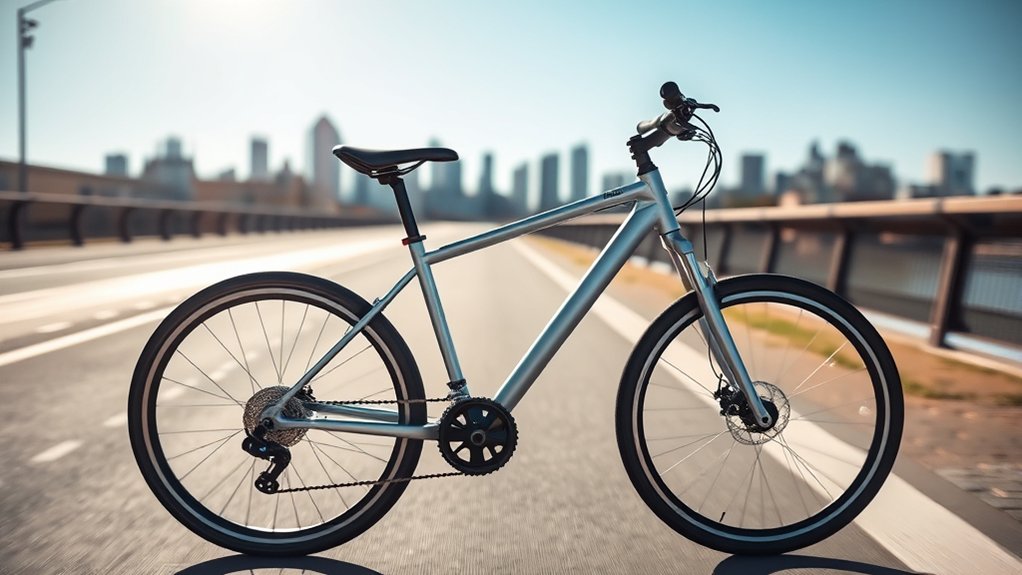
Your hybrid bike’s design plays a key role in how fast you can go. The frame shape and material affect weight and aerodynamics, which directly impact speed.
A lightweight frame made from aluminum or carbon fiber reduces overall weight, making pedaling easier and faster. The bike’s geometry also matters; a more aerodynamic design with a lower handlebar position cuts through the air and decreases drag.
Tire size and tread pattern are important too. Narrower tires with smooth surfaces lessen rolling resistance on paved surfaces, boosting speed. The placement of components like gears and brakes affects weight distribution and handling.
Techniques to Improve Your Riding Speed
To boost your riding speed, focus on your pedaling technique by maintaining a smooth, efficient motion.
Adjust your riding position to reduce wind resistance and improve power transfer. Small changes in these areas can make a noticeable difference in your overall speed.
Proper Pedaling Technique
Efficient pedaling is key to getting the most speed from your hybrid bike and saving energy. Focus on smooth, circular motions instead of just pushing down on the pedals.
Engage both your quadriceps and hamstrings by pulling up as well as pushing down. This creates a fluid pedal stroke and makes pedaling more effective.
Keep your cadence steady and consistent, ideally around 70-90 RPM, to maintain momentum. Avoid sudden surges or using too much force, which can tire out your muscles and reduce efficiency.
Make sure your feet are properly positioned on the pedals. The ball of your foot should be over the pedal’s axle for better control and power.
Regularly check and adjust your pedaling technique to stay smooth and efficient. This will help you go faster with less fatigue.
Optimizing Riding Position
Adopting the right riding position can significantly boost your speed and cut down on fatigue on a hybrid bike. Keep your back flat and elbows slightly bent to reduce strain and stay comfortable.
Position your saddle so your knee is slightly bent at the bottom of each pedal stroke. Keep your hands relaxed on the handlebars with your wrists straight. This stance improves aerodynamics and efficiency.
Here are some key adjustments to consider:
| Adjustment | Benefit |
|---|---|
| Lowering handlebars | Decreases wind resistance and increases speed |
| Raising saddle | Ensures proper leg extension and reduces fatigue |
| Forward saddle position | Improves power transfer during pedaling |
| Narrower handlebar grip | Reduces air drag and enhances control |
Fine-tuning your riding posture helps maximize both speed and comfort on every ride.
How Tire Type and Tread Pattern Impact Speed and Traction
Your choice of tire material and tread pattern directly affects how fast you can ride and how well you grip the road.
Durable tires with low rolling resistance help you go farther with less effort, making your ride more efficient.
The right tread pattern boosts traction on different surfaces, so you stay safer and in control.
Understanding these factors lets you optimize your bike’s speed and safety easily.
Tire Material and Durability
Tire material and tread pattern are key factors in how fast and how well a hybrid bike grips the road. The material influences the tire’s weight, grip, and durability.
For example, rubber compounds that balance softness and toughness give good traction without slowing you down. Durability ensures your tires last longer and keep performing well over time.
Soft tires grip better on rough surfaces but tend to wear faster, while harder tires last longer but may not provide as much traction. The construction of the tire also affects how it handles pressure, impacts, and different road conditions.
All of this directly impacts your ride’s efficiency. Picking the right material and keeping your tires well-maintained helps you ride faster and safer, especially on long rides or tricky terrain.
Your choice of tires really makes a difference in your overall riding experience.
Tread Pattern Efficiency
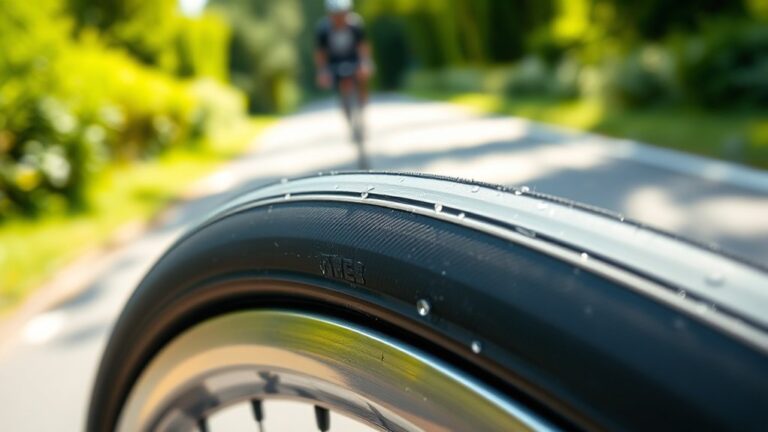
The tread pattern on a hybrid bike tire is key to balancing speed and traction. A smooth, minimal tread means less rolling resistance, so you can go faster on paved roads.
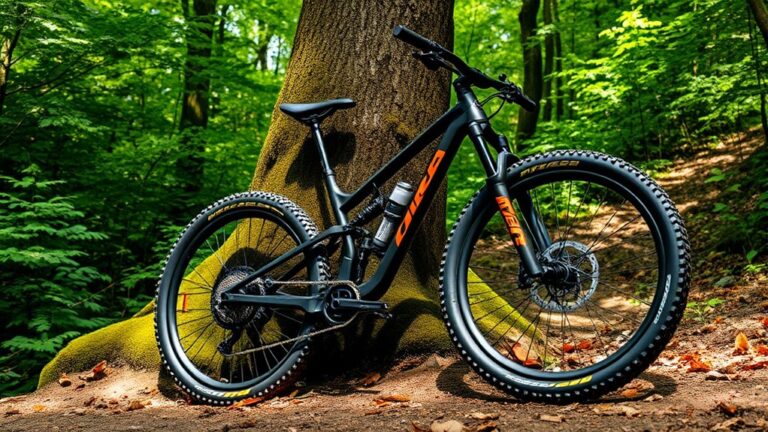
Tires with more aggressive or knobby patterns give you better grip on dirt or uneven terrain. But they can slow you down on smooth surfaces.
The trick is picking a pattern that matches your riding style and the terrain you usually ride on. If you mostly ride in the city, a sleek, slick tread helps maximize speed.
For mixed conditions, a pattern with slight grooves offers a good middle ground. Proper tread design helps you stay safe with good traction without sacrificing too much speed, so you can ride efficiently everywhere.
The Effect of Bike Weight and Frame Material on Speed
While bike weight and frame material might seem like minor details, they greatly influence your hybrid bike’s speed. A lighter bike requires less effort, making it easier to accelerate and maintain higher speeds.
A lighter, high-quality frame enhances speed and efficiency, making every ride smoother and more enjoyable.
Carbon fiber and lightweight aluminum frames reduce overall weight without sacrificing strength, which makes pedaling more efficient. Heavier bikes, often made of steel or thicker aluminum, need more energy to move and can slow you down, especially over long distances or on inclines.
The frame material also impacts stiffness and responsiveness. A stiffer frame transfers power directly from your pedaling to the wheels, boosting acceleration. On the other hand, a less rigid frame might absorb some energy, reducing your speed.
Choosing a lightweight, high-quality frame can really improve your overall cycling performance.
Aerodynamics Tips to Boost Your Cycling Velocity
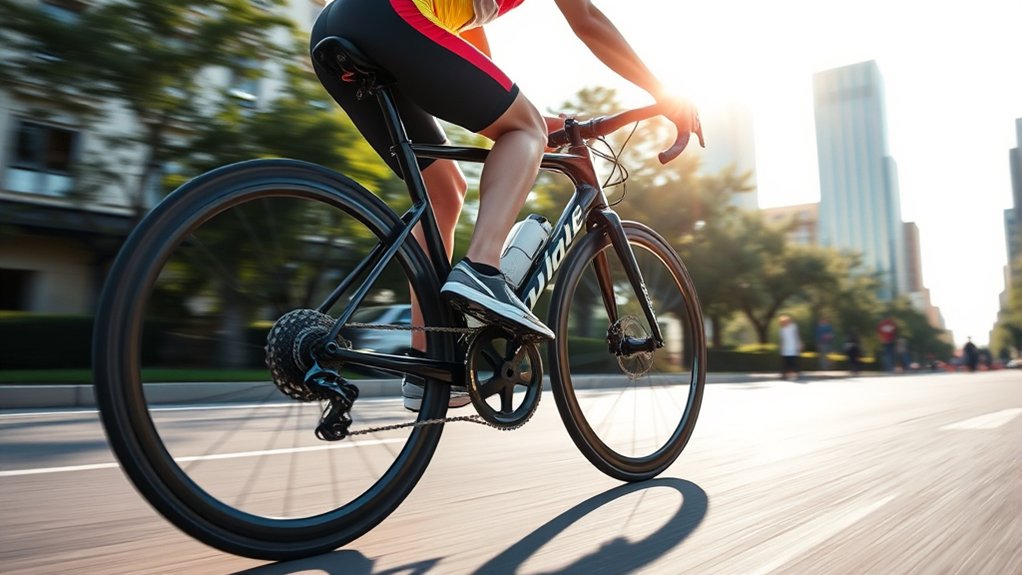
Optimizing your riding position and bike setup can significantly cut down air resistance. This helps you ride faster with less effort. Keep your body low and streamlined by tucking in your elbows and lowering your torso.
Use aerodynamic handlebars and adopt a forward-leaning posture to slice through the air more efficiently. Choosing sleek, smooth tires and reducing accessories like bags or loose clothing can also cut drag.
| Tip | Benefit | Example |
|---|---|---|
| Drop your handlebars | Reduces frontal area and drag | Aero bars for time trials |
| Wear tight-fitting gear | Limits wind resistance | Lycra or synthetic fabrics |
| Use a streamlined helmet | Minimizes head wind impact | Aero helmet designs |
Terrain and Weather Conditions That Slow or Speed You Up
Your riding speed is heavily influenced by terrain and weather conditions you encounter along your route. Flat, smooth surfaces like asphalt let you go faster, while rough, uneven trails slow you down.
Wind can be a game changer. A headwind resists your motion and reduces your speed, while a tailwind pushes you forward and boosts your pace. Rain and wet conditions create slippery surfaces, making acceleration dangerous and slowing you down.
On the other hand, clear, dry days with mild temperatures make pedaling easier. Imagine riding uphill through rocky, rugged terrain or steering through wind-blown open fields.
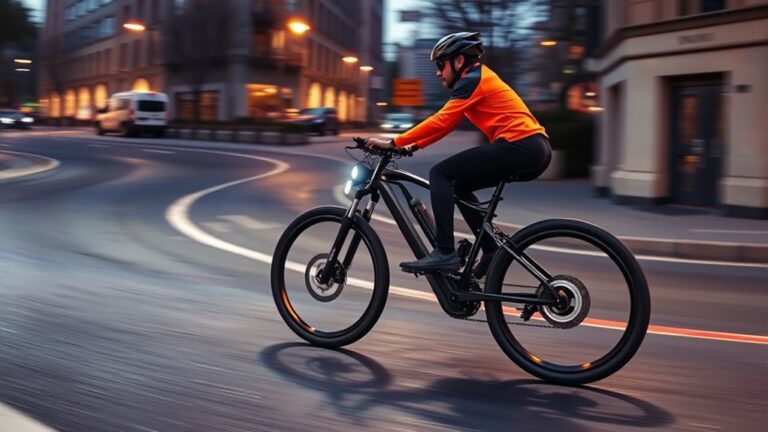
Cycling on a smooth, paved bike lane or coasting on a calm, sunny day can help you maintain a steady, faster pace. These factors can either hinder or improve your speed, depending on how intense they are.
Maintenance and Gear Tips to Maximize Your Hybrid Bike Speed
Regular maintenance and proper gear selection are essential for keeping your hybrid bike running at its fastest. Regularly check and inflate your tires to the ideal pressure to reduce rolling resistance.
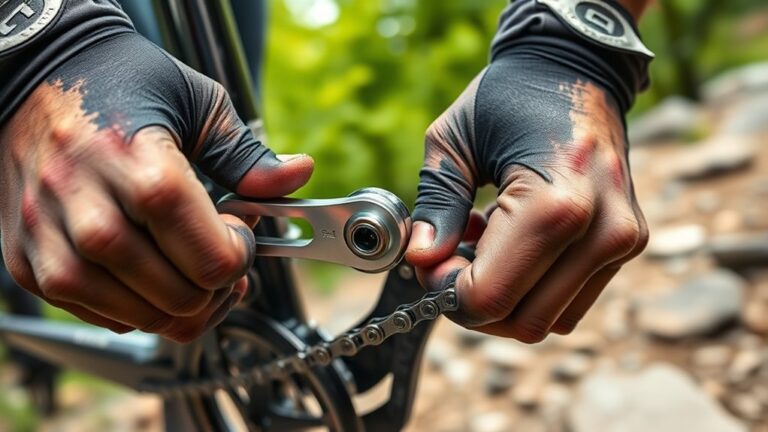
Keep your chain clean and lubricated to guarantee smooth pedaling and prevent unnecessary effort. Shift gears smoothly to maintain a consistent cadence and avoid strain on your drivetrain.
Use gears suited for your terrain; higher gears work better for flat surfaces, while lower gears help on hills. Verify your brakes aren’t rubbing, as that can slow you down.
Also, keep your bike’s components tight and aligned. If you want to boost speed, consider upgrading to lightweight tires or a more aerodynamic setup.
Proper maintenance and gear choices make a noticeable difference in your riding efficiency.
Frequently Asked Questions
How Does Rider Weight Influence Hybrid Bike Speed?
Your weight directly impacts how fast your hybrid bike can go. When you’re heavier, your bike needs more energy to accelerate and keep going, which can slow you down.
On the other hand, a lighter rider puts in less effort, making it easier to ride faster and save energy. So, your weight affects how efficiently you ride.
Generally, lighter riders tend to reach and maintain higher speeds more easily on a hybrid bike.
Can Bike Suspension Systems Affect Speed on Different Terrains?
Yes, bike suspension systems can influence your speed on different terrains. When your suspension absorbs shocks well, you stay in control and ride more comfortably, which helps you pedal more efficiently.
On rough or uneven surfaces, good suspension prevents energy loss from vibrations and impacts, letting you go faster. But on smooth terrain, too much suspension can add weight or resistance, which might slow you down a bit.
What Role Does Rider Posture Play in Cycling Speed?
They say, “A good rider is a fast rider.” Your posture plays a crucial role in cycling speed. When you lean forward, you cut down wind resistance, making it easier to go faster.
Keep your back flat and elbows relaxed to stay in an aerodynamic position. Proper posture also helps prevent fatigue so you can pedal efficiently for longer.
Do Cycling Apparel and Gear Impact Hybrid Bike Performance?
Yes, your cycling apparel and gear can impact your hybrid bike performance. Wearing form-fitting, aerodynamic clothing reduces air resistance, helping you ride faster. Proper footwear guarantees efficient pedaling, and gloves improve grip and comfort.
Furthermore, lightweight gear decreases overall bike weight, making acceleration easier. Investing in quality accessories like a good helmet and reflective gear boosts safety and confidence. This ultimately enhances your riding experience and speed.
How Do Bike Handling Skills Contribute to Overall Speed?
Your bike handling skills are like a skilled pilot steering a swift, winding river. When you guide smoothly and anticipate obstacles, you reduce unnecessary movements, cutting through air and terrain efficiently.
This agility allows you to maintain higher speeds with less effort, like a bird gliding effortlessly through the sky. The better you handle your bike, the more control you have, enabling you to push your speed limits safely and confidently.
Conclusion
By paying attention to these factors, you can gently encourage your hybrid bike to perform at its best.
Small adjustments and mindful choices can help you glide more smoothly and confidently on your rides.
Remember, a little patience and care go a long way in revealing your bike’s potential.
So, welcome the journey and enjoy every pedal stroke. After all, every ride is an opportunity to uncover new horizons and enjoy the ride just a bit more.
Keep these factors in mind to maximize your hybrid bike’s speed and performance.