How to Buy a Mountain Bike – Step by Step Guide
Many people dream of hitting the trails on a mountain bike but feel overwhelmed by where to start. With so many options and technical details, it’s easy to get confused or make the wrong choice. You’re not alone—finding the perfect bike can seem daunting, but I’ve got your back.
To buy a mountain bike, first identify your riding style—casual trail, downhill, or cross-country—and pick a matching bike type like hardtail or full suspension. Measure your height and inseam to find the right frame size, then set a budget factoring in gear and maintenance.
Understand suspension and key components like drivetrain and brakes. Test ride different models for comfort and handling. Knowing where to buy and what to ask will help you choose smartly.
Here’s how to get started on your perfect ride.
Key Takeaways
- Identify your riding style and pick a bike type that matches. Options include hardtail, full-suspension, or cross-country bikes.
- Measure your height and inseam to find the right frame size. This will help ensure a comfortable and proper fit.
- Set a realistic budget that includes extras like a helmet and maintenance tools before you start shopping.
- Think about suspension type, travel, and key components like the drivetrain and brakes. Consider what terrain you’ll be riding on and how often.
- Take the time to test ride multiple bikes on different terrains. Pay attention to how they handle and how the brakes feel.
- Don’t forget to ask about warranties and return policies before making your final decision.
Pick the Mountain Bike That Fits Your Riding Style
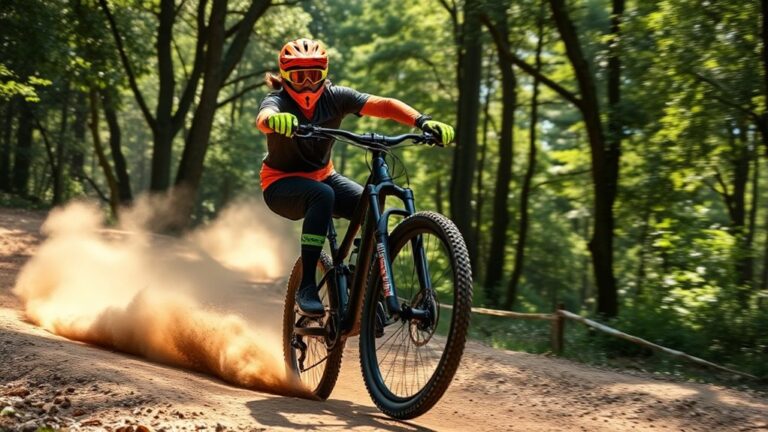
Anyone looking to buy a mountain bike should first consider their riding style. Are you planning to cruise smooth trails, tackle rugged downhill runs, or cover long cross-country distances? Each style demands a specific type of bike.
For casual trail riding, a hardtail with front suspension works well and keeps costs down. If you’re into aggressive downhill or freeride, a full-suspension bike with robust components offers better control and comfort.
Hardtail bikes suit casual trails, while full-suspension models excel in aggressive downhill riding for better control and comfort.
Cross-country riders benefit from lightweight bikes designed for efficiency and speed. Knowing your preferred terrain and riding intensity helps you choose the right suspension, geometry, and durability.
Focus on what you want to do most often. That way, your bike will match your needs and improve your overall riding experience.
Find Your Mountain Bike’s Perfect Frame Size and Fit
How do you know if a mountain bike really fits you? The key is the frame size and fit. A good fit makes sure you’re comfortable, in control, and efficient on the trail.
Start by measuring your height and inseam to match the manufacturer’s size chart. When you sit on the bike, your feet should touch the ground lightly, and there should be a 1-2 inch clearance between your crotch and the top tube.
| Rider Height | Frame Size |
|---|---|
| 5’2″ – 5’6″ | Small (15-17 inches) |
| 5’7″ – 5’10” | Medium (17-19 inches) |
| 5’11” – 6’2″ | Large (19-21 inches) |
Make sure to test ride the bike to check for comfort and handling before making your decision.
Set a Budget You Can Stick To
Choosing a clear budget early on helps you narrow down your options and focus on mountain bikes that meet both your needs and your wallet. Decide how much you’re willing to spend before diving into features or brands. This prevents overspending and keeps your search efficient.
Remember to account for extras like a helmet, gloves, and maintenance tools, which add to the total cost. Don’t forget that sometimes spending a bit more upfront can save you money later with better durability and fewer repairs.
Set a realistic budget based on your riding goals and how often you plan to ride. Sticking to it guarantees you get the best bike possible without financial stress. This makes your buying experience both smart and satisfying.
Understand Mountain Bike Suspension Types and Needs
You’ll want to understand the different types of mountain bike suspension and how they affect your ride. Suspension improves control and comfort, especially on rough trails.
Knowing which suspension travel suits your riding style helps you pick the right bike. Whether you’re tackling technical climbs or fast descents, the right suspension makes a big difference.
Types Of Suspension
Although mountain bikes come with various suspension options, understanding the differences can help you pick the one that fits your riding style and terrain. Suspension mainly comes in three types:
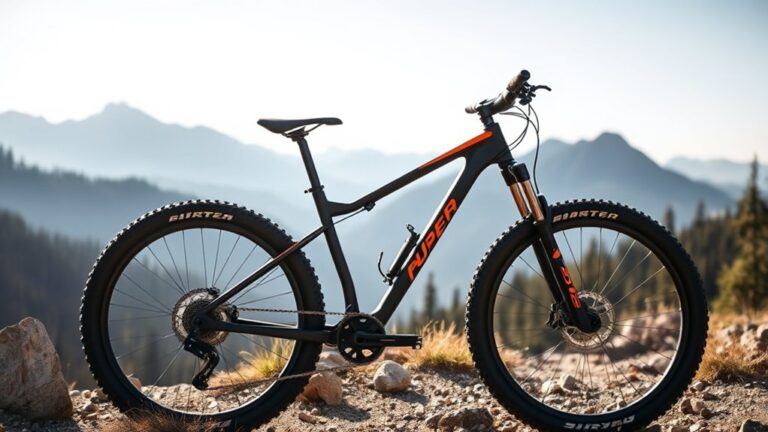
- Hardtail: These have suspension only in the front fork. They’re lighter, simpler, and better for smoother trails or cross-country riding. If you want efficiency and less maintenance, hardtails are a solid choice.
- Full Suspension: These bikes feature suspension both in the front and rear. They provide better control and comfort on rough, technical trails but tend to be heavier and more expensive.
- Rigid: No suspension at all. These bikes are rare nowadays but offer maximum pedaling efficiency on very smooth surfaces.
Knowing these types helps you match your bike to the terrain and riding style you prefer.
Benefits Of Suspension
When you ride over rough terrain, suspension absorbs shocks and keeps your bike steady, making your ride smoother and more controlled. Suspension reduces the impact on your body, so you’ll feel less fatigue and can ride longer.
It also improves traction by keeping your tires in better contact with the ground, helping you navigate tricky trails safely. With suspension, you gain more confidence tackling rocks, roots, and drops because your bike handles bumps without losing balance.
Whether you choose front or full suspension, you’ll notice better control and comfort. Understanding how suspension benefits you helps you pick a bike that matches your riding style and trail conditions, making your mountain biking experience better all around.
Choosing Suspension Travel
Choosing the right suspension travel can really change how your mountain bike handles on different trails. Suspension travel is how much your bike’s suspension can compress, usually measured in millimeters. The amount you need depends on what kind of riding you plan to do.
Here’s a quick guide to help you choose:
- Short Travel (80-120mm): Perfect for cross-country and smoother trails. It’s efficient and keeps your bike lightweight.
- Medium Travel (120-150mm): Great for trail riding. It offers a good mix of control and comfort on rougher terrain.
- Long Travel (150-180mm+): Best for downhill and aggressive riding. It handles big hits and tricky obstacles with ease.
Pick the travel that matches your riding style to get the most fun, control, and comfort on every ride.
Choose the Best Mountain Bike Wheel Size for Your Trails
How do you know which mountain bike wheel size suits your trails best? Generally, 29-inch wheels roll over obstacles smoothly and keep your speed up, making them perfect for cross-country and less technical trails.
If your trails have tight turns and need quick handling, 27.5-inch wheels offer better agility and responsiveness. They’re a great choice when maneuverability matters most.
For downhill or really rough terrain, smaller 26-inch wheels can give you more control and durability, though they’re not as common these days. Consider the trail conditions and your riding style when choosing.
Bigger wheels boost momentum but might feel less nimble, while smaller ones respond faster but can struggle over larger obstacles. Pick the size that matches the terrain you ride most often to get the best speed, control, and comfort.
Evaluate Key Components: Drivetrain, Brakes & Tires
Now that you’ve picked the right wheel size, it’s time to check out the drivetrain, brakes, and tires. Knowing the different drivetrain types can help you find the perfect gear setup for your riding style.
You’ll also want to choose brakes and tires that match the terrain you’ll be tackling. Picking the right components makes all the difference in how your bike performs and how much fun you have.
Drivetrain Types Explained
Understanding the drivetrain system is key when buying a mountain bike because it directly impacts your riding efficiency and control. The drivetrain includes gears, chain, chainrings, cassette, and derailleurs, all working together to transfer power from your pedals to the wheels.
Here are the three main drivetrain types you’ll come across:
- 1x Drivetrain – Features a single chainring upfront and multiple gears in the rear. It’s simple, lightweight, and low-maintenance, making it great for trail riders who want less shifting hassle.
- 2x Drivetrain – Has two chainrings at the front, offering a wider gear range. It’s perfect if you need versatility for climbing steep hills and riding fast on flats.
- 3x Drivetrain – Uses three front chainrings, giving you maximum gear options but also adding weight and complexity. It’s best for beginners or riders tackling varied terrain.
Pick the drivetrain that matches your riding style and terrain for the best experience.
Choosing Brakes And Tires
Several key components, including brakes and tires, play a crucial role in your mountain bike’s performance and safety.
When choosing brakes, you’ll typically pick between hydraulic and mechanical disc brakes. Hydraulic brakes offer stronger, more consistent stopping power and require less maintenance, making them ideal for intense trails.
Mechanical brakes are simpler and cheaper but might not perform as well in wet conditions.
For tires, consider the terrain you’ll ride most. Wider tires with aggressive tread provide better traction on rough, muddy trails, while narrower, smoother tires work well for hard-packed dirt or cross-country riding.
Also, check the tire’s width and casing to balance grip, speed, and puncture resistance.
Selecting the right brakes and tires guarantees better control and confidence on every ride.
Decide Between New, Used, or Custom Mountain Bikes
Before you commit to a mountain bike, you’ll need to decide whether a new, used, or custom model suits your needs best. Each option has its perks and drawbacks, so think about what fits your budget, skill level, and preferences.
New Bikes come with the latest technology, full warranties, and no wear and tear. They’re perfect if you want reliability and up-to-date features without surprises.
Used Bikes can save you some money, but you’ll want to inspect them carefully. Look for signs of damage or worn components to avoid costly repairs later.
Custom Bikes are great if you want a bike made just for your riding style and body. They tend to be pricier and take longer to build, but they offer unmatched personalization.
Choosing wisely now will set the foundation for a great ride.
Take Test Rides and Learn What Feels Right
Although choosing the right mountain bike can feel overwhelming, taking test rides will quickly show you what fits best. When you hop on different bikes, pay attention to how each one handles, how comfortable you feel, and how responsive the brakes and gears are.
Notice if the frame size feels right—your legs should extend without locking at the pedals. Try different terrains if you can, as this helps you see how the bike’s suspension and stability perform.
Don’t hesitate to adjust the seat height or handlebars to find your perfect fit. Test rides give you real-world insights that specs alone can’t provide.
Trust your instincts. If a bike feels natural and effortless, it’s probably the right one for you.
Find Where to Buy and What Questions to Ask
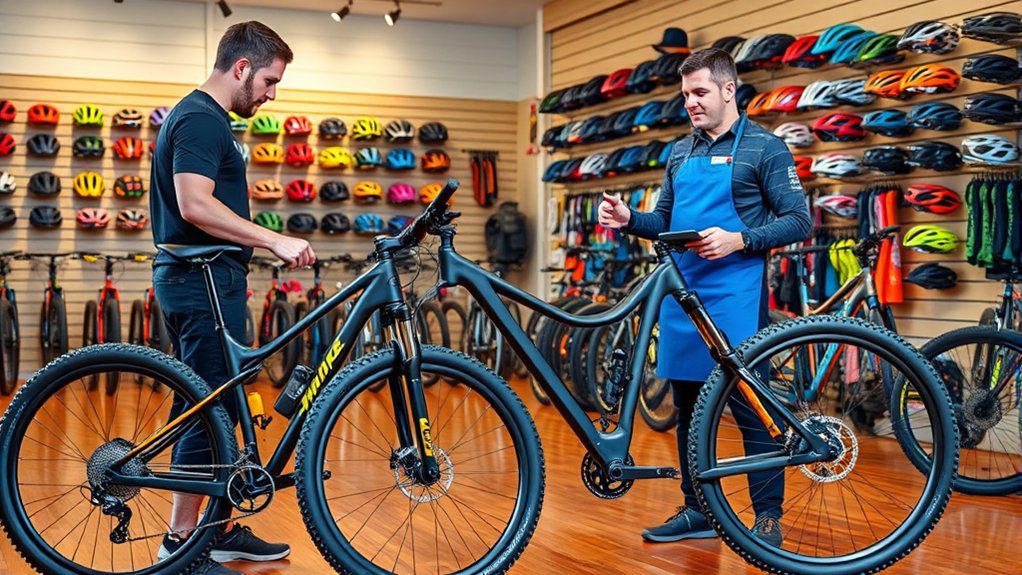
Once you’ve found a bike that feels right during test rides, the next step is figuring out where to buy it and what questions to ask the seller. You can choose between local bike shops, online retailers, or secondhand markets. Each option has its pros and cons, so think about convenience, price, and support.
When talking to the seller, it’s important to gather details to avoid surprises later. Here are three key questions to ask:
- What warranty and return policies come with the bike?
- Has the bike undergone any maintenance or repairs?
- Are there any recommended accessories or upgrades I should consider?
Asking these questions helps ensure you’re making a smart and confident purchase.
Frequently Asked Questions
How Do I Maintain My Mountain Bike After Purchase?
You should regularly clean your mountain bike to prevent dirt buildup, especially after muddy rides.
Check tire pressure before every ride and keep it within the recommended range.
Lubricate the chain and other moving parts to ensure smooth performance.
Inspect brakes and gears frequently, adjusting as needed.
Tighten bolts and check for wear on tires and cables.
Doing these simple steps helps your bike stay reliable and extends its lifespan.
What Safety Gear Should I Use While Mountain Biking?
You should always wear a helmet to protect your head during falls. Gloves help improve grip and protect your hands from scrapes.
Knee and elbow pads shield your joints from impacts. Don’t forget protective eyewear to keep dirt and debris out of your eyes.
Consider wearing bright, moisture-wicking clothing for visibility and comfort. Proper shoes with good traction are essential for control.
Staying safe lets you enjoy your rides worry-free.
How Do I Transport My Mountain Bike Securely?
You might think tossing your mountain bike in the back of your car is enough, but securing it properly is key. Use a sturdy bike rack or a padded truck bed mount to keep it stable during transit.
Straps and locks prevent movement and theft. Coincidentally, just like you double-check your helmet, double-check these straps before every ride.
This keeps your bike safe and you worry-free on the road.
What Are the Best Cleaning Products for Mountain Bikes?
You’ll want to use bike-specific cleaners like Muc-Off or Simple Green to keep your mountain bike spotless without damaging the components. They’re gentle yet effective at cleaning.
A gentle degreaser helps remove grime from the drivetrain, while a soft brush and sponge tackle dirt on the frame. This combo makes cleaning easier and safer for your bike.
Avoid harsh household chemicals that can strip lubricants and cause damage. Instead, stick with products designed for bike maintenance to keep everything in good shape.
Finish up by applying a bike lubricant on the chain. That way, you’ll ensure smooth riding and prevent unnecessary wear. These products make cleaning simple and help protect your bike’s performance.
How Often Should I Service My Mountain Bike?
You should service your mountain bike at least every 3 to 6 months, or more often if you ride through mud, rain, or rough trails that feel like a tornado hit. Regular servicing keeps it running smoothly and helps avoid costly damage.
After every ride, do a quick clean and check to keep your bike in good shape. If you’re riding frequently, think about a full tune-up once each season. This helps keep your bike feeling new and ready for any adventure.
Conclusion
Picture yourself gliding down rugged trails, the perfect mountain bike humming beneath you, every turn and bump feeling just right.
By choosing a bike that fits your style, size, and budget, you’re setting yourself up for success.
Understanding key features like suspension and wheels will help you find the right ride for your adventures.
Whether you’re buying new, used, or custom, taking test rides will show you what truly clicks.
Now, get ready to find your ideal mountain bike and conquer those trails with confidence and joy.