How to Manual a Mountain Bike in 10 Essential Steps
Many mountain bikers struggle with mastering the manual, a skill that can make riding over obstacles much smoother. If you’ve ever felt nervous about lifting the front wheel or keeping control, you’re not alone.
The good news is, with some simple steps, you can improve your technique and ride more confidently.
To manual a mountain bike, start by setting your tire pressure and suspension for better control. Shift your weight back while keeping shoulders over the bars and hips aligned over the rear wheel.
Pull the handlebars up smoothly and use your core to stay balanced. Feather the rear brake gently to prevent flipping.
Practice your body position and build strength to hold manuals longer. With these steps, you’ll improve control and tackle obstacles more smoothly—there’s plenty more to master ahead.
Key Takeaways
- Shift your weight back smoothly while keeping your shoulders over the handlebars. This helps lift the front wheel without pedaling.
- Keep your core engaged and elbows slightly bent. This gives you stability and helps absorb shocks during the manual.
- Use controlled arm movements to pull the handlebars up firmly but smoothly. Try to maintain even weight distribution on both wheels.
- Feather the rear brake gently to prevent flipping forward. It also helps you stay balanced on the rear wheel.
- Practice regularly with proper bike setup. Make sure your tire pressure, suspension settings, and seat height are all dialed in for best results.
What’s a Manual and Why You Should Learn It
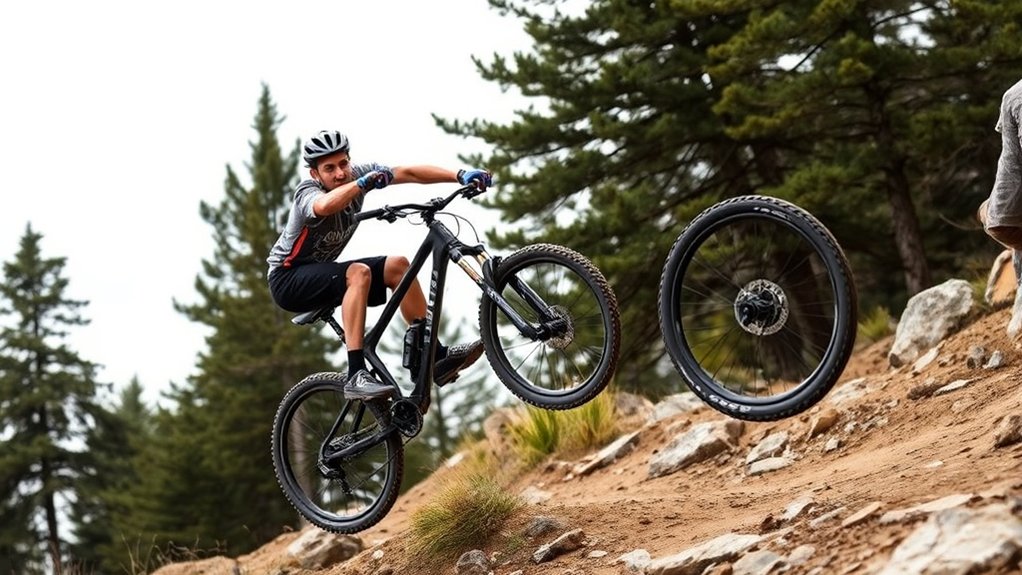
A manual is a key mountain biking skill that lets you lift and balance your front wheel without pedaling. Once you master it, you’ll have better control over your bike and can handle obstacles more smoothly.
It boosts your balance, coordination, and confidence on different types of terrain. You’ll find it easier to clear roots, rocks, and drops, making your rides safer and more fun.
Plus, manuals help you keep your speed without pedaling, saving energy on long trails. Learning this skill also improves your overall bike handling, which can make you better at other riding techniques.
When you’re comfortable with manuals, your riding becomes more fluid and efficient. This makes tackling challenging trails easier and more stylish.
How to Set Up Your Bike for Manuals
To get your bike ready for manuals, you’ll want to adjust your tire pressure for better grip and control.
Next, fine-tune your suspension settings to handle weight shifts smoothly.
Finally, set your seat height just right to give you the freedom to move without obstruction.
Adjust Tire Pressure
Although it might seem minor, adjusting your tire pressure is crucial for setting up your bike for manuals. Proper pressure boosts grip and control, helping you balance better on the rear wheel.
If your tire pressure is too high, it reduces traction, making manuals harder. On the other hand, too low pressure increases rolling resistance and can cause pinch flats.
Here’s a quick guide to help you get your tire pressure just right:
| Terrain Type | Recommended Pressure (psi) |
|---|---|
| Smooth Pavement | 30-35 |
| Hard-packed Dirt | 25-30 |
| Loose Dirt/Gravel | 20-25 |
| Rocky Trails | 22-28 |
| Wet/Muddy | 18-22 |
Adjust within these ranges based on your weight and riding style. Experiment to find what feels best for your manuals.
Optimize Suspension Settings
Three key suspension settings can make or break your ability to manual smoothly on a mountain bike. First, set your front suspension to a firmer compression. This stops the fork from diving too much when you lift the front wheel, giving you more control.
Next, dial in a slightly softer rebound on the rear shock to absorb bumps without losing your manual’s balance. Finally, adjust the sag to about 25-30% of total travel, so your bike feels responsive yet stable.
These tweaks help maintain traction and keep your bike balanced while you ride the manual. Take some time to experiment with these settings to find what works best for your weight and riding style. Small changes can lead to big improvements.
Set Proper Seat Height
Fine-tuning your suspension sets the foundation, but proper seat height plays a big role in how well you control your bike during a manual.
You’ll want to lower your seat just enough to give you freedom of movement without sacrificing pedaling efficiency. Start by setting your seat height so your feet barely touch the pedals when they’re at the lowest point.
This allows you to shift your weight back easily to lift the front wheel. If the seat is too high, you’ll struggle to lean back and maintain balance. Too low, and you’ll lose power and stability.
Adjust incrementally, testing how it feels when you try to pull the front wheel up. Find the sweet spot where you can move fluidly and control your bike confidently.
Find a Safe Spot to Practice Manuals
Where should you practice manuals to build your confidence safely? Choose a spot that lets you focus without distractions or hazards. You want a place that encourages you to push your limits while feeling secure.
Look for smooth, flat ground. This helps you stay balanced and avoid surprises from uneven surfaces.
Pick a wide open space. Having room to move freely makes practicing less stressful and reduces the chance of crashes.
Soft surroundings like grass or dirt are ideal. They help cushion falls, giving you peace of mind as you work on your manual skills.
Master Manual Body Position
To nail your manual, you need to focus on your body alignment and weight distribution. Keep your shoulders over the handlebars and shift your weight back to lift the front wheel.
Mastering this balance will give you better control and longer manuals. It’s all about finding that sweet spot and staying steady as you ride.
Optimal Body Alignment
Mastering your body alignment is key to nailing the manual on a mountain bike. Keep your head up and eyes focused ahead. This helps you stay balanced and in control.
Your shoulders should stay relaxed but firm, aligned over the handlebars. This guides the bike naturally and keeps your body in sync.
Keep your spine neutral—avoid hunching or leaning too far back. This allows your body to move smoothly with the bike.
Focus on these essentials to feel more in tune with your ride:
- Engage your core to stay stable and prevent unwanted sway.
- Keep your elbows slightly bent to absorb bumps and stay flexible.
- Align your hips over the rear wheel for smooth, confident manuals.
Perfecting this alignment creates a solid foundation for effortless manuals.
Weight Distribution Techniques
How do you find the perfect balance point to pull off a smooth manual? It all comes down to mastering your weight distribution.
Start by shifting your weight back over the rear wheel without leaning too far, which helps lift the front wheel effortlessly. Keep your arms relaxed but ready to adjust, allowing subtle body movements to control the bike’s angle.
Your hips should move slightly backward, while your chest stays low and balanced. Avoid putting too much weight on your hands; instead, let your legs absorb the bike’s motion. Practicing this balance helps maintain control and keeps the manual steady.
Shift Your Weight Back for a Manual
Shift your weight back to lift the front wheel off the ground and maintain balance during a manual. As you shift, focus on pushing your hips behind the saddle while keeping your arms relaxed. This move helps you control the bike’s center of gravity, making it easier to hold the manual longer.
Remember, it’s not about leaning too far back but finding that sweet spot where balance meets control. By mastering this shift, you’ll feel more confident and in control.
You’ll also experience a thrilling sense of freedom as you glide effortlessly. Confidence grows with every successful manual, and the excitement of pushing your riding skills to new heights becomes real.
Keep practicing this weight shift, and soon manuals will feel natural and fun.
Lift Your Front Wheel With Your Arms
Use your arms to pull the handlebars up and lift the front wheel smoothly off the ground. Keep your elbows slightly bent and controlled, not locked, so you can absorb any bumps.
Grip the handlebars firmly and pull back in a steady motion instead of jerking. This helps start the manual without losing control.
Hold the bars tight and pull back smoothly to begin the manual with full control.
Your arms do the heavy lifting here, so focus on strength and timing. Practice this move slowly until it feels natural.
The key is controlled lifting with your arms to get the front wheel airborne.
Balance Your Weight to Hold a Manual
To hold a manual, you want to keep your body centered over the bike. Then, slowly shift your weight toward the rear wheel.
Make sure your movements are smooth so you don’t lose your balance. Engaging your core will help you stay steady during the whole move.
Center Your Body Position
Finding the right balance point on your bike is key to nailing a manual. You want to center your body so your weight is evenly spread out, giving you better control and stability. Keep your chest low, arms relaxed but firm, and your eyes focused ahead. This alignment helps you hold the manual longer without wobbling or losing balance.
To get your body centered effectively:
- Feel the connection between your pedals and the bike frame to ground your balance.
- Engage your core to stay steady and avoid overcompensating.
- Stay calm and confident because tension can throw off your center and make balancing harder.
Shift Weight Rearward Gradually
Shift your weight rearward slowly as you start the manual, letting the front wheel lift up without losing control. Don’t rush this part; a gentle shift helps you find the right balance where it feels natural.
As your weight moves back, keep your arms relaxed but ready to adjust the handlebars. Moving the weight gradually stops the front wheel from popping up too high or dropping too fast.
Pay close attention to how your body reacts. If the front wheel dips down, shift more weight back. If it rises too much, ease forward slightly.
Fine-tuning your rearward weight shift will help you hold the manual longer and ride smoother. Practice this consistently to build confidence and improve your bike handling skills.
Maintain Core Stability
Although lifting the front wheel is key, maintaining core stability is what keeps you balanced throughout the manual. Your core acts as the control center, stabilizing your body and bike as you shift weight. Engage your abdominal and lower back muscles to hold a steady posture.
Avoid leaning too far forward or backward. Instead, find that sweet spot where you feel centered. When you maintain core stability, you gain confidence and control, making the manual smoother and longer.
Focus on these essentials to strengthen your core stability:
- Feel your body stay connected and balanced, even with small bike movements
- Trust your muscles to keep you steady, reducing fatigue and wobbling
- Experience the thrill of holding your manual longer and with more control
Use the Rear Brake to Control Manuals
When you start to lift the front wheel during a manual, using the rear brake helps you keep your balance and control. Squeezing the rear brake gently shifts your weight forward, stopping the front wheel from rising too high or flipping over.
It acts as your safety net, letting you fine-tune the height of the manual without losing stability. Don’t grab the brake abruptly; instead, apply smooth, controlled pressure to keep the bike steady.
Practice feathering the rear brake while balancing on the rear wheel to get a feel for how it affects your bike. Mastering this technique lets you extend your manuals confidently.
It also gives you better control over your bike’s movement and helps you stay upright throughout the trick.
Build Strength and Balance for Longer Manuals
Developing your core strength and balance is key to holding manuals for longer. When you build up your core, legs, and arms, you get better control and endurance, so you can stay in the manual longer without getting tired.
Balance is just as important. It helps you stay centered over your bike, which prevents your front wheel from dropping or losing control unexpectedly.
Focus on exercises that target these main areas:
- Core workouts like planks and Russian twists help stabilize your body.
- Leg strength training such as squats and lunges support your weight better.
- Balance drills like standing on one leg or using a balance board improve your coordination.
How to Use Manuals on Trails and Obstacles
Mastering manuals on trails and obstacles helps you navigate technical sections smoothly and keep your momentum without pedaling. When you see roots, rocks, or small drops coming up, shift your weight back and keep your eyes focused ahead to anticipate what’s next.
Use manuals to roll over obstacles without losing speed or control. This saves energy and keeps your ride feeling fluid. On tight switchbacks or narrow paths, a good manual can help you avoid clipping pedals or tires on uneven ground.
Practice controlling your rear brake to stay balanced and stop the front wheel from dropping. Remember, the key is to stay relaxed and responsive, adjusting your body position as needed. With regular practice, manuals become a valuable skill for tackling tricky trail features efficiently.
Frequently Asked Questions
What Type of Mountain Bike Is Best for Learning Manuals?
You’ll want a trail or all-mountain bike with a balanced geometry for learning manuals. These bikes give you enough stability and control without feeling too heavy or twitchy.
Look for one with a lower bottom bracket and a slack head angle. That makes leaning back easier and helps you get the hang of manuals.
Avoid super aggressive downhill bikes—they’re harder to handle, especially if you’re just starting out.
A bike with good suspension and responsive brakes will also help build your confidence while practicing manuals.
How Do Manuals Affect Bike Maintenance and Wear?
Manuals put extra stress on your bike’s rear wheel, tires, and suspension, causing faster wear. You might notice your rear tire tread wearing down quicker and some loosening in your suspension parts.
Make sure to regularly check your wheel spokes, tire pressure, and suspension settings. Keeping everything tight and responsive helps prevent damage.
If you don’t maintain your bike after practicing manuals, you risk issues that can hurt performance and safety.
Can Manuals Help Improve Overall Mountain Biking Skills?
Imagine you’re learning to dance with your bike, balancing on just the back wheel like a tightrope walker. Yes, manuals can boost your mountain biking skills by sharpening your balance, control, and bike handling.
They teach you to read terrain better and react swiftly, making tricky trails feel like a smooth waltz. By mastering manuals, you’ll ride more confidently and tackle obstacles with grace.
This improves your overall technique and flow on the trail, helping you become a smoother, more skilled rider.
What Common Mistakes Should Beginners Avoid When Learning Manuals?
You should avoid leaning too far back or pulling up the front wheel too abruptly, as this can cause you to lose control or crash.
Don’t forget to keep your arms relaxed and knees slightly bent to stay balanced.
Avoid looking down at your front wheel—focus ahead instead.
Also, don’t try manuals at high speeds before you’ve mastered slower control.
Practicing these tips will help you build confidence and improve steadily.
Are There Any Safety Gear Recommendations Specific to Manuals?
You absolutely need a helmet that fits like a glove. It’s your best defense against the unexpected.
Besides that, gloves with good grip help you hold on like your life depends on it because it kind of does.
Knee and elbow pads protect you from crashes that can feel like falling off a skyscraper.
Don’t forget sturdy shoes with good pedal grip to keep you locked in.
Safety gear isn’t optional; it’s your ride’s secret weapon.
Conclusion
Now that you’ve got the basics of manuals down, you’re ready to add some extra flair to your ride. Remember, every expert was once a beginner trying to find their balance. Keep practicing in safe spots, and soon you’ll be gliding smoothly over trails and obstacles like it’s second nature.
Manuals aren’t just tricks—they’re your ticket to riding with confidence and style. So, get out there and let your bike do the talking, and soon you’ll be mastering the art of the manual on your mountain bike.