What Is a Hardtail Mountain Bike?
Are you tired of feeling weighed down or overwhelmed by complicated bike setups? You’re not alone. Many riders want a simple, reliable mountain bike that’s easy to maintain and helps build skills without extra weight. That’s where a hardtail mountain bike comes in.
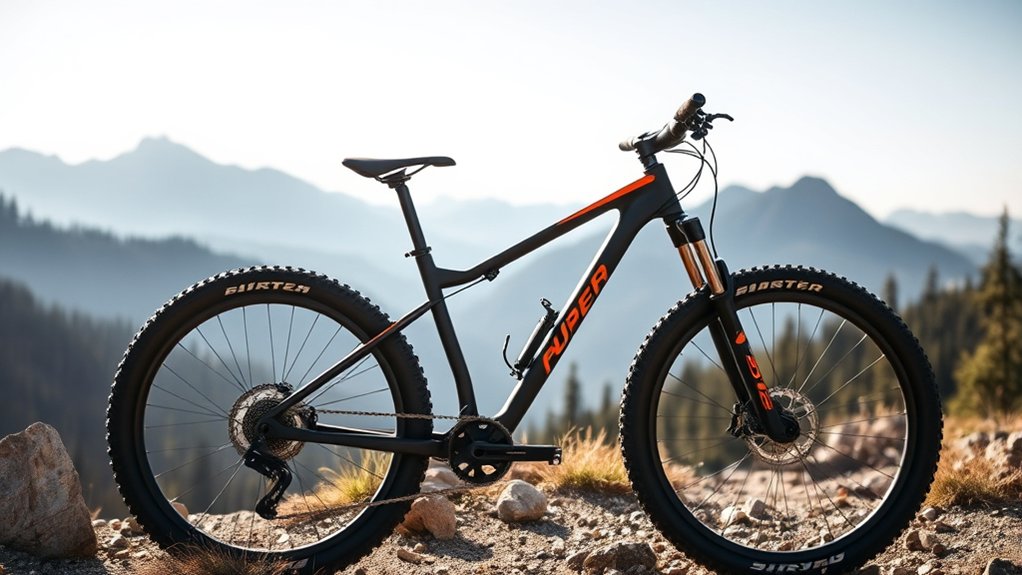
A hardtail mountain bike has front suspension to absorb shocks but a rigid rear frame, making it lighter and easier to maintain. You’ll get efficient power transfer for smoother climbs and better control on less technical trails.
It’s great if you want a straightforward, durable bike that encourages skill development without extra weight or complexity.
If you’re curious about how this design impacts ride comfort, handling, and climbing, there’s more to explore.
Key Takeaways
- A hardtail mountain bike has front suspension but a rigid rear frame. This design helps with shock absorption and keeps the bike lightweight.
- It provides direct power transfer, which means better control and more efficient pedaling, especially on smoother trails.
- Hardtails are generally lighter and easier to maintain than full-suspension bikes.
- They’re a good choice for beginners, cross-country riders, and cyclists on a budget.
- Common frame materials include aluminum, steel, and carbon fiber. These materials influence ride quality and how durable the bike is.
What Is a Hardtail Mountain Bike and How Does It Work?
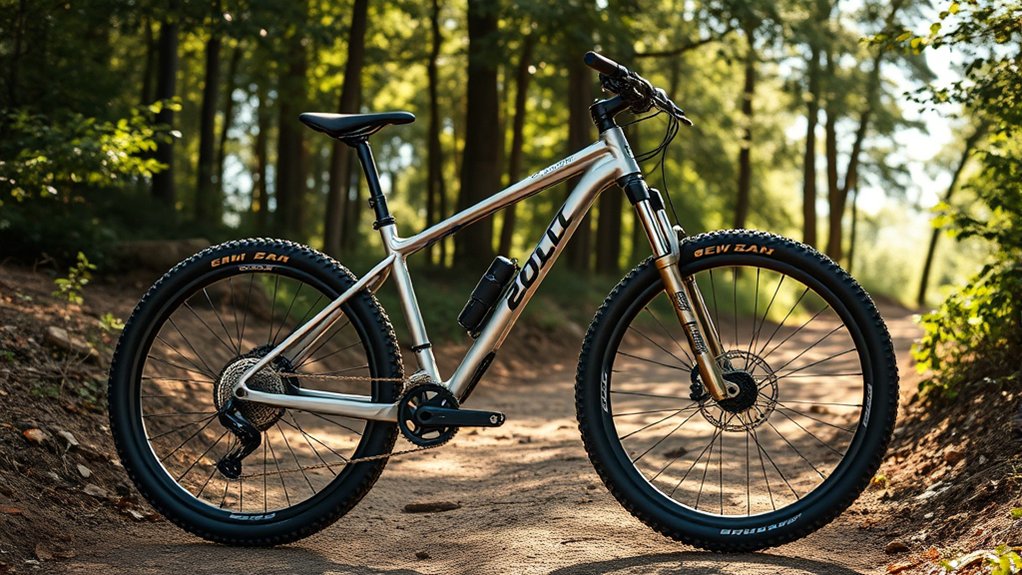
Although you might be familiar with full-suspension mountain bikes, a hardtail mountain bike offers a simpler design that can improve your riding experience in specific ways. It features a front suspension fork to absorb shocks from rough terrain, while the rear part of the frame remains rigid, meaning no rear suspension.
This setup makes the bike lighter and more efficient when pedaling, especially on smoother trails or climbs. When you ride a hardtail, you’ll feel more direct power transfer from your pedals to the wheels, giving you better control and responsiveness.
The front suspension cushions impacts, reducing arm fatigue and improving comfort. Overall, a hardtail mountain bike combines simplicity with functionality, making it a great choice if you want a reliable, straightforward ride without the complexity of rear suspension.
Hardtail vs. Full-Suspension: Key Differences Explained
When choosing between a hardtail and a full-suspension bike, it’s helpful to understand how their suspension systems influence performance.
Hardtails have only front suspension, while full-suspension bikes absorb impacts on both the front and rear.
This difference really affects how each bike handles different terrains and riding styles, making one better suited for certain types of riding than the other.
Suspension Types Compared
Understanding the differences between hardtail and full-suspension mountain bikes can help you pick the right ride for what you need. Hardtails only have suspension in the front fork, making them lighter and easier to take care of.
Full-suspension bikes have both front and rear shocks. They offer more comfort but tend to be heavier and more complex to maintain.
Here’s a quick comparison:
- Weight: Hardtails are lighter, which makes climbing and acceleration easier.
- Maintenance: With fewer moving parts, hardtails usually need less upkeep.
- Comfort: Full-suspension absorbs bumps better, helping reduce fatigue on rough trails.
Performance and Terrain Differences
Since hardtail and full-suspension mountain bikes handle terrain differently, your choice will affect your riding experience.
Hardtails excel on smoother trails and climbs because their rigid rear end transfers more power directly to the pedals, giving you efficient pedaling and better speed. They’re lighter and simpler, making them easier to maintain.
On rough, technical terrain, full-suspension bikes shine by absorbing impacts with both front and rear shocks. This offers better control and comfort over rocks, roots, and drops.
This lets you ride faster downhill and tackle challenging trails with confidence. However, full-suspension bikes are heavier and need more upkeep.
If you mainly ride cross-country or less technical paths, a hardtail is a good fit. For aggressive trail riding or downhill, full suspension improves performance and reduces fatigue.
Pros and Cons of Riding a Hardtail Mountain Bike
You’ll find that hardtail mountain bikes offer advantages like lighter weight and easier maintenance, making your ride more efficient.
However, they also come with limitations, especially on rough terrain where full suspension might perform better.
Let’s investigate what benefits you can expect and what challenges you should keep in mind.
Advantages of Hardtails
Although hardtail mountain bikes may seem simpler than full-suspension models, they offer several advantages that can improve your riding experience. When you choose a hardtail, you get a bike that’s lightweight, making climbs easier and handling more responsive. You’ll also find them more affordable, so you can invest in better components or gear. Plus, they require less maintenance since there are fewer moving parts to worry about.
Here are three key benefits you’ll appreciate:
- Efficiency: You pedal directly, with less energy lost to suspension movement.
- Durability: Hardtails hold up well on rough trails, with fewer parts to break.
- Skill Development: You’ll improve your line choice and bike control without relying on rear suspension.
Limitations to Consider
While hardtail mountain bikes offer many benefits, they also have some limitations you should think about before deciding. Since they don’t have rear suspension, you’ll feel more bumps and vibrations, which can tire you out on longer rides.
They’re less forgiving on technical trails with rocks and roots, so your control might suffer. Plus, if you plan to ride very rough terrain often, a hardtail might not give you the comfort or traction you need.
| Limitation | Impact on Riding Experience |
|---|---|
| No rear suspension | More bumps and vibrations |
| Less technical trail control | Reduced comfort and grip |
| Not ideal for rough terrain | Increased rider fatigue and risk |
Knowing these things can help you figure out if a hardtail is right for your riding style.
Who Should Choose a Hardtail Mountain Bike?
Who benefits most from choosing a hardtail mountain bike? If you value simplicity, efficiency, and lower maintenance, a hardtail might be your best pick. Here are three types of riders who should consider one:
- Beginners. You’ll find it easier to learn bike handling without the complexity of rear suspension.
- Cross-country riders. You’ll appreciate the lighter weight and direct power transfer for faster climbs and longer rides.
- Budget-conscious cyclists. You’ll save money upfront and on upkeep compared to full-suspension models.
If you’re focused on trail efficiency, want a reliable ride, or are just starting out, a hardtail mountain bike fits your needs perfectly. It’s a straightforward choice that keeps you connected to the trail without unnecessary distractions.
How Hardtail Suspension Affects Ride Comfort and Control
Choosing a hardtail mountain bike means going with a simpler suspension system that directly affects how you feel the trail beneath you. Without rear suspension, every bump, root, and rock gets transmitted through the frame to your hands and seat.
This can make the ride feel harsher, especially on rough terrain. But it also gives you a better sense of control and connection with the trail.
Since the rear triangle is rigid, your body absorbs more shock. You’ll need to rely on your legs and arms as natural suspension. This setup encourages more active riding, so you have to pick your lines carefully and use your skill to stay tractioned.
What Trails Are Best for Hardtail Mountain Bikes?
Where do hardtail mountain bikes really shine on the trail? They excel on terrain that rewards pedaling efficiency and precise handling. Hardtails are perfect when the trail isn’t too rough or technical.
Here are three types of trails where you’ll get the most out of a hardtail:
- Cross-country (XC) trails: Smooth singletrack and rolling hills help you keep your speed and momentum.
- Fire roads and gravel paths: These wide, packed surfaces highlight the bike’s lightweight and responsive feel.
- Flowy trails with minimal obstacles: Gentle berms and small jumps let you carry speed without the rear suspension soaking up bumps.
On these trails, you’ll enjoy the hardtail’s direct power transfer and nimble handling, making every pedal stroke count.
Why Hardtail Bikes Are Lighter and Easier to Maintain
You’ll notice hardtail bikes weigh less because they skip the rear suspension components that add bulk. Their frames are also simpler, making them easier to clean and repair.
This design means you spend less time on maintenance and more time riding. It’s a straightforward setup that’s perfect for riders who want a hassle-free bike.
Reduced Suspension Components
A hardtail mountain bike has only a front suspension fork, leaving the rear wheel rigid. This design cuts down on suspension parts, making your bike lighter and easier to handle.
Since there’s no rear shock, you avoid the extra linkages and pivots, which means less mechanical wear and simpler maintenance. Plus, fewer parts like seals, bearings, and bolts mean fewer things that can break.
With fewer hardware components, cleaning is quicker and repairs are simpler. This streamlined setup keeps your hardtail lighter, more reliable, and ready for any trail.
Simplified Frame Design
By removing rear suspension components, hardtail mountain bikes have a simpler frame design that’s lighter and easier to maintain. You’ll find fewer moving parts, so there’s less that can go wrong, making upkeep straightforward.
The frame’s simplicity also means the bike responds more directly to your pedaling, giving you efficient power transfer on climbs and flats.
Here’s a quick comparison to show why hardtails stand out:
| Feature | Hardtail Frame |
|---|---|
| Weight | Lighter because of fewer parts |
| Maintenance | Easier with fewer components |
| Durability | Better with less wear points |
| Power Transfer | Direct, minimal energy loss |
| Cost | Usually more affordable |
This design is perfect for riders who want simplicity and reliability without sacrificing performance.
Common Hardtail Frame Materials and What They Mean for Your Ride
Frame materials play a crucial role in shaping how your hardtail mountain bike performs on the trail. Choosing the right frame material affects weight, durability, and ride feel. Here are three common options:
- Aluminum is lightweight and stiff. It offers efficient power transfer and is budget-friendly, but it can feel a bit harsh on rough terrain.
- Steel is known for its durability and smooth ride quality. Steel frames absorb trail vibrations well but tend to be heavier.
- Carbon Fiber is the lightest and strongest option. Carbon frames provide excellent shock absorption and responsiveness, though they come at a higher price.
Understanding these materials helps you pick a hardtail that matches your riding style and trail demands.
Key Components That Impact Hardtail Mountain Bike Performance
Although the frame provides the foundation, several key components really impact how your hardtail mountain bike performs on the trail. Focusing on these parts ensures you get the best ride quality and control.
| Component | Impact on Performance |
|---|---|
| Suspension Fork | Absorbs shocks and boosts comfort on rough terrain. |
| Tires | Affect grip and rolling resistance, shaping how the bike handles. |
| Brakes | Provide stopping power and keep you safe. |
| Drivetrain | Controls gear range and ensures smooth shifting. |
| Wheelset | Influences weight, strength, and acceleration. |
All these parts work together to improve your bike’s handling, speed, and durability. Picking the right suspension, tires, and brakes helps you stay in control, while a solid drivetrain and wheels keep you efficient across different trails.
How Hardtails Improve Climbing Efficiency and Speed
Three key features of hardtail mountain bikes make climbing more efficient and faster for you. First, the rigid rear triangle means less energy is lost to suspension movement, so more of your pedal power goes uphill.
Second, hardtails are generally lighter than full-suspension bikes. That makes it easier to accelerate and keep your momentum on steep climbs.
Third, the direct power transfer helps you feel the trail better. This allows you to pick the best line and adjust your effort as needed.
- Rigid rear triangle minimizes energy loss
- Lighter frame improves acceleration and momentum
- Direct power transfer enhances trail feedback and line choice
With these advantages, you’ll find yourself climbing smoother and quicker on a hardtail.
How to Choose the Right Hardtail Mountain Bike for You
Wondering how to pick the perfect hardtail mountain bike for your riding style and terrain? First, consider the frame size—make sure it fits you comfortably to stay in control and avoid fatigue.
Next, think about the suspension travel. Most hardtails have front suspension ranging from 80 to 120mm, which offers a good balance of comfort and efficiency.
Choose the right wheel size. 29-inch wheels roll over obstacles easily, while 27.5-inch wheels provide quicker handling.
Don’t forget the frame material. Aluminum is lightweight and affordable, whereas carbon is lighter but more expensive.
Also, check out the bike’s components like gears and brakes to match your trail demands.
Finally, set a budget that fits your goals. By focusing on these factors, you’ll find a hardtail that suits your needs perfectly.
How to Upgrade Your Hardtail for Better Performance
Boost your hardtail’s performance by upgrading key components that directly impact your ride quality and control. Start with your tires; swapping to a higher-quality set with better tread can improve traction and handling on varied terrain.
Next, upgrade your suspension fork to one with adjustable settings. This lets you tailor your ride for smoother control and comfort. Finally, consider replacing your brakes with hydraulic disc brakes for more reliable stopping power and modulation.
- Swap tires for improved grip and durability.
- Upgrade to an adjustable suspension fork for better shock absorption.
- Install hydraulic disc brakes for superior braking performance.
These upgrades will make your hardtail more responsive, capable, and enjoyable to ride on challenging trails.
Frequently Asked Questions
Can I Use a Hardtail Mountain Bike for Commuting?
Yes, you can use a hardtail mountain bike for commuting. It handles rough roads and potholes well, giving you a comfortable ride. You might want to swap the knobby tires for smoother ones to make pedaling easier on pavement.
Adding fenders and lights can improve safety and practicality. Overall, it’s a versatile choice if your route includes mixed terrain or you prefer a bike that’s durable and low-maintenance.
How Do Tire Choices Affect Hardtail Bike Performance?
Tire choices affect your hardtail bike’s grip, speed, and comfort. Picking wider tires gives you better traction and helps absorb bumps. Narrower tires cut through terrain faster but might feel harsher.
Knobby tires are great off-road because they grip dirt and loose surfaces well. Slick tires roll smoothly and efficiently on pavement, making your ride more effortless.
Match your tires to your riding style and terrain for the best control. The right tires help you feel more confident, handle better, and enjoy every mile you cover.
Are Hardtail Mountain Bikes Suitable for Downhill Racing?
Hardtail mountain bikes aren’t usually the best choice for downhill racing because they don’t have rear suspension. That suspension helps absorb big impacts and rough terrain.
Without it, you might find the ride less comfortable and harder to control on steep, technical descents. If you’re on a budget or prefer a lighter bike, you can still use a hardtail for downhill.
Just keep in mind you’ll need to work harder and probably take things slower compared to a full-suspension bike made for downhill racing.
What Maintenance Tools Should I Carry on Hardtail Rides?
About 60% of trail issues come from minor mechanical problems, so you’ll want to carry a multi-tool, spare tube, tire levers, and a mini pump on your hardtail rides.
Don’t forget a chain tool and quick links to fix chain breaks quickly. Carrying these tools means you can handle common problems without turning your ride into a rescue mission.
This way, you’ll stay rolling smoothly and confidently on the trails, ready for whatever comes your way.
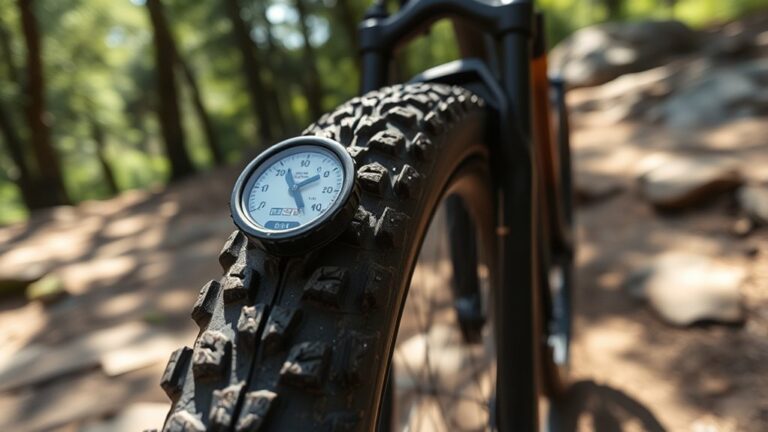
How Does Tire Pressure Impact Traction on a Hardtail?
Tire pressure directly impacts your traction on a hardtail by controlling how much your tires grip the trail.
Lower pressure lets your tires conform to rocks and roots, boosting traction but increasing puncture risk. Higher pressure rolls faster but reduces grip, making slides more likely.
You’ll want to find a balance based on trail conditions and your weight to maximize control without sacrificing speed or risking flats.
Conclusion
Now that you know what makes a hardtail mountain bike unique, you can decide if it fits your riding style, terrain, and budget. You’ll enjoy better climbing, easier maintenance, and a more connected ride.
You’ll face fewer mechanical issues, gain confidence on trails, and improve your skills. Whether you’re upgrading or choosing your first bike, a hardtail offers simplicity, efficiency, and fun—all in one package.