How to Choose the Right Mountain Bike Size for a 6-Foot Man
Finding the perfect mountain bike size for a 6-foot man can feel overwhelming. You’re not alone—many riders struggle with choosing the right fit to stay comfortable and safe on the trails.
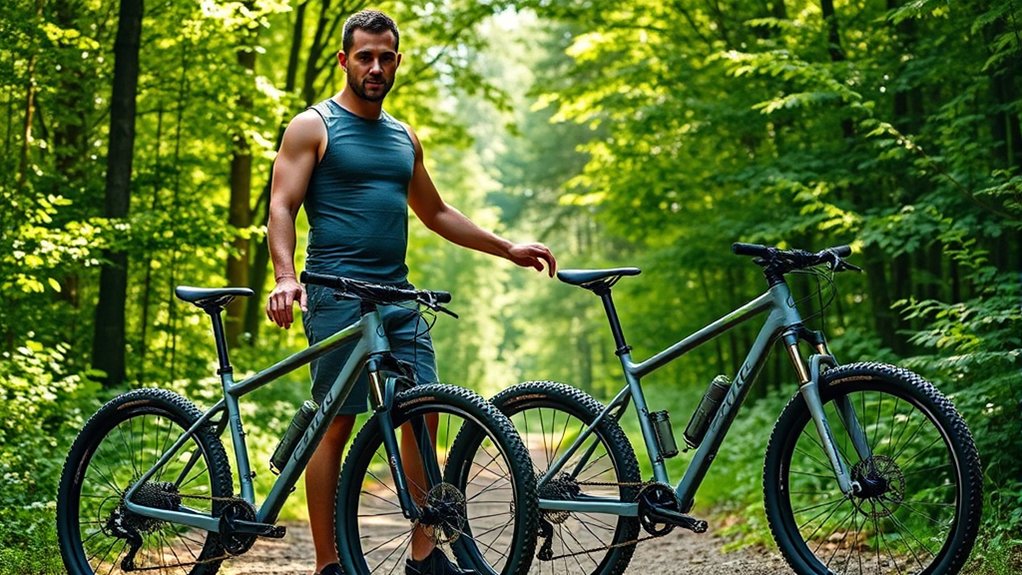
To choose the right mountain bike size for a 6-foot man, look for a frame between 19 and 21 inches, usually labeled large or extra-large. Make sure your standover height has 1 to 2 inches of clearance to stay safe and comfortable.
Consider your riding style—smaller frames offer better agility, while larger ones provide stability.
Paying attention to reach and top tube length will improve your comfort and control. Keep exploring to find out how specific bike types and test rides help fine-tune your fit.
Key Takeaways
- For a 6-foot man, look for a frame size between 19 to 21 inches, which is usually labeled as large (L) or extra-large (XL).
- Make sure there’s about 1 to 2 inches of standover clearance. This helps keep you safe and comfortable, especially during sudden stops.
- Don’t rely only on size charts. Think about what feels best for your comfort and riding style. Everyone rides a bit differently.
- It’s a good idea to take a test ride. Check how the bike handles, your reach, and overall control. You want to avoid feeling stretched out or cramped.
- Keep in mind the type of bike you’re choosing. Full suspension bikes might need sizing up, while hardtails tend to fit true to size.
Find Your Ideal Mountain Bike Size at 6 Feet
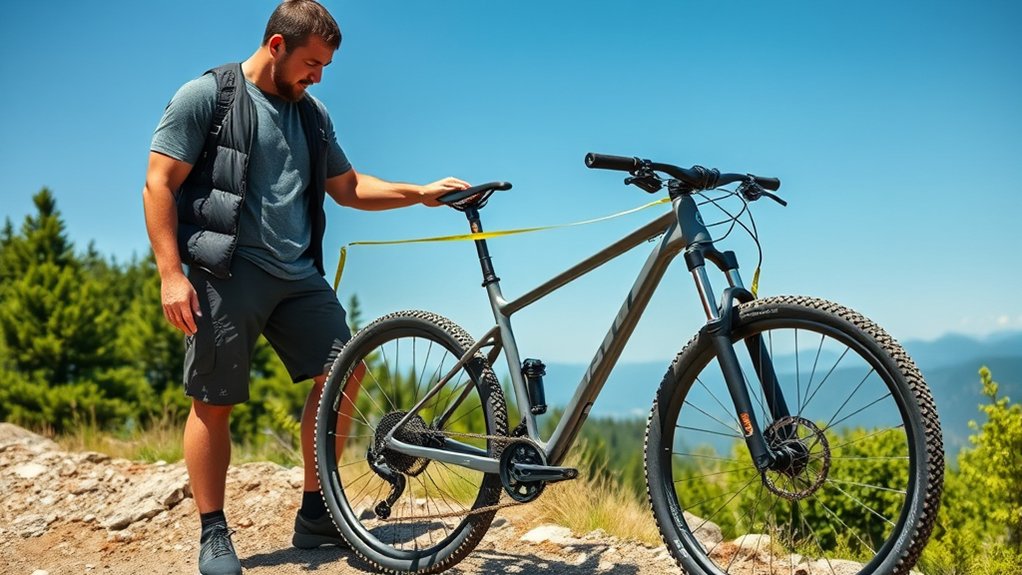
If you’re around 6 feet tall, finding the right mountain bike size is key for comfort and control. Usually, a frame size between 19 to 21 inches works well, often labeled as large (L) or extra-large (XL).
This range helps ensure you don’t feel cramped or overstretched while riding. Your perfect frame will let you stand over the bike comfortably, with enough clearance to stay safe during sudden stops.
Plus, the top tube length should match your torso and arm length to keep your riding position natural. Remember, suspension type and wheel size also play a role, but frame size is the foundation.
The top tube length must suit your torso and arms for a natural, comfortable ride position.
Getting the right size means better handling, less fatigue, and a more enjoyable ride every time you hit the trail.
How to Measure Your Height and Inseam for Sizing
To find the right mountain bike size, you’ll need to measure your height and inseam accurately.
Stand straight against a wall to get your height, then measure the distance from your crotch to the floor for your inseam.
These numbers will help you choose a bike that fits comfortably and performs well.
Measuring Your Height
Because your height and inseam directly affect how a mountain bike fits, it’s important to measure them accurately before choosing a size.
To measure your height, stand straight against a wall without shoes, with your feet flat and heels touching the baseboard. Keep your back, shoulders, and head aligned.
Use a flat object like a book, place it on top of your head, and mark where it meets the wall. Then, measure from the floor to that mark with a tape measure or ruler.
Try to measure yourself in the morning if you can, since your spine compresses slightly throughout the day.
Getting an accurate height measurement helps you select a bike frame that fits your proportions, which leads to better comfort and control on the trails.
Calculating Your Inseam
Along with your height, your inseam measurement is important for finding the right mountain bike size. It helps determine the standover height, which keeps you comfortable and in control while riding.
To measure your inseam accurately, follow these simple steps:
- Stand barefoot against a wall with your feet about 6 inches apart.
- Place a book or flat object snugly between your legs, at the position of the bike saddle.
- Have someone measure the distance from the floor to the top edge of the book.
- Write down this measurement in inches or centimeters. That’s your inseam length.
Use this number along with your height to select a bike frame that fits well and makes riding more enjoyable.
Sizing Differences Among Mountain Bike Types
When choosing between hardtail and full suspension bikes, you’ll notice their sizing can feel different because of frame design and travel.
Trail bikes usually have a more relaxed fit, so they’re comfortable for longer rides. Downhill bikes need a precise fit to give you better control at high speeds.
Knowing these differences helps you pick a size that matches your riding style and the terrain you prefer.
Hardtail Vs Full Suspension
Although both hardtail and full suspension mountain bikes serve the same purpose, they require different sizing considerations to guarantee comfort and performance. When choosing between them, keep these points in mind:
- Hardtails usually fit true to size, so pick a frame that matches your height and inseam closely.
- Full suspension bikes often feel smaller due to their compact geometry, so consider sizing up slightly.
- The suspension travel in full suspension frames affects standover height; make sure you have enough clearance to avoid discomfort.
- Test ride both types to feel differences in reach and handling, as frame design impacts your riding posture and control.
Understanding these nuances helps you find the best fit for your riding style and body dimensions.
Trail Bikes Frame Sizing
Since trail bikes blend features from both hardtail and full suspension models, their frame sizing can feel a bit tricky at first. You’ll want a size that offers both comfort and control on varied terrain. Trail bikes tend to have slightly longer top tubes than hardtails to improve stability without sacrificing agility. Here’s a quick comparison of sizing elements among mountain bike types for a 6-foot rider:
| Bike Type | Top Tube Length | Suggested Frame Size | Reach Measurement |
|---|---|---|---|
| Hardtail | Shorter | Medium/Large | Moderate |
| Full Suspension | Medium | Large | Longer |
| Trail | Slightly Longer | Medium/Large | Balanced |
| Downhill | Longest | Large/XL | Extended |
Focus on reach and comfort. You want to feel balanced, not stretched.
Downhill Bike Fit
If you want maximum control and stability on steep, technical descents, choosing the right downhill bike size is essential. Downhill bikes differ from trail bikes in geometry and fit, focusing more on stability than agility. When sizing your downhill bike, keep these points in mind:
- Longer wheelbase: Offers better stability at high speeds but might make maneuvering trickier.
- Slack head angle: Helps absorb impacts and keeps you in control on rough terrain.
- Lower standover height: Gives you more room to move and lowers your center of gravity.
- Adjustable suspension: Make sure the bike fits your height and riding style for the best shock absorption.
Why Standover Height Makes a Big Difference
Understanding standover height can save you from discomfort and injury when choosing a mountain bike. Standover height is the distance between the ground and the top tube of the bike frame when you stand over it.
Knowing standover height helps prevent injury and ensures a comfortable mountain bike fit.
If the top tube is too high, you risk scraping or injuring yourself on sudden stops or rough terrain. Too low, and the bike might feel awkward or unstable.
You want enough clearance—typically 1 to 2 inches—to comfortably stand over the bike without straining. This clearance provides safety and confidence, especially when you need to quickly put your feet down.
Ignoring standover height can lead to bruises or difficulty handling your bike, so make sure you test this fit carefully before buying.
How Reach and Top Tube Length Affect Your Ride
While standover height ensures safety, reach and top tube length directly affect how comfortable and in control you feel on your bike. These measurements influence whether you feel stretched out or more compact while riding, which impacts your handling and endurance.
Here’s how they matter:
- Reach determines how far forward you have to lean, shaping your riding posture and balance.
- Top tube length affects arm extension and the overall size of your cockpit, influencing comfort during long rides.
- A longer reach and top tube give you more stability at high speeds but might make handling less nimble.
- A shorter reach and top tube allow for quick, snappy handling but can feel cramped if too small.
Knowing these measurements helps you pick a bike that fits your style and keeps you comfortable on every trail.
Decide When to Size Up or Down Your Mountain Bike
Getting the right reach and top tube length is a good start, but sometimes you’ll need to size up or down to match your riding style and comfort preferences.
If you enjoy aggressive downhill riding or want more stability at high speeds, sizing up can give you a longer wheelbase and better control.
On the other hand, if you prefer technical trails or quick maneuvers, sizing down might help you handle tight corners more easily.
For technical trails or quick turns, a smaller frame can enhance your bike’s agility and control.
Pay attention to how the bike feels when you stand over it and reach for the handlebars. Your body should feel balanced without strain.
In the end, trust your comfort and riding goals more than strict size charts.
Test rides can reveal if a slightly larger or smaller frame improves your overall experience.
Fix Common Mountain Bike Size Issues for Taller Riders
If you’re taller than average, finding a mountain bike that fits comfortably can be tough but definitely doable. You might run into issues like cramped legroom or an awkward reach.
Here’s how you can fix common fit problems:
- Adjust the seat height and position. Raise the seat so your legs can extend properly without locking your knees.
- Swap to a longer stem. This increases reach and helps prevent feeling cramped.
- Upgrade to wider handlebars. Wider bars improve control and comfort for bigger frames.
- Consider a frame with a taller standover height. This avoids discomfort when you stand over the bike.
These tweaks make riding more comfortable and boost your confidence, even if standard sizes don’t fit perfectly.
Test Ride Tips to Confirm Your Mountain Bike Size
Before you commit to a mountain bike, taking it for a test ride helps you see if the size feels right in real-world conditions. Start by checking your comfort while seated—your knees should bend slightly without feeling cramped or overstretched.
Next, stand over the frame; there should be at least 2-3 inches of clearance between you and the top tube. During the ride, pay attention to how the bike handles turns and climbs.
If you feel stretched out or cramped on the handlebars, the frame might be too big or small. Also, test braking and shifting to see if your reach to controls feels natural.
Finally, trust your instincts. If anything feels off, try a different size before making your decision.
Frequently Asked Questions
What Maintenance Is Essential for a Mountain Bike Used by Taller Riders?
You need to regularly check your mountain bike’s frame and components for stress, especially around the seat post and handlebars, since taller riders put extra pressure there.
Keep the suspension tuned to handle your weight, and adjust the saddle height and stem length for comfort.
Don’t forget to lubricate the chain and inspect brakes and tires often. Staying on top of these maintenance tasks will keep your ride smooth and safe.
How Does Tire Size Impact Mountain Bike Performance for Tall Riders?
Tire size impacts your mountain bike’s performance by affecting traction, stability, and rolling resistance. Larger tires give you better grip and absorb shocks well, which is great for your weight and height.
They also boost stability on rough trails, making your ride smoother. But keep in mind, bigger tires can add weight and might slow you down a bit.
Choosing the right tire size is all about balancing control and speed. This way, you can handle different terrains comfortably and confidently.
What Accessories Improve Comfort on a Mountain Bike for a 6-Foot Man?
You’ll want accessories like a well-padded saddle designed for longer legs and wider hips, plus ergonomic grips to reduce hand fatigue. A longer seat post and adjustable handlebars help you find a comfortable fit, while suspension seat posts absorb shocks.
Don’t forget clipless pedals for efficient power transfer and proper foot alignment. Ultimately, investing in quality padded cycling shorts and gloves will boost your comfort on longer rides and rough trails.
How to Choose the Right Mountain Bike Suspension for Different Terrains?
Imagine your bike as an extension of your body. Its suspension should match the terrain’s personality.
For smooth trails, a hardtail with front suspension keeps things efficient and light. If you’re tackling rocky, unpredictable paths, a full-suspension bike absorbs shocks better.
It gives you more control and comfort. Think about your usual rides and choose suspension that balances performance and comfort.
This way, you stay in command without feeling every bump.
What Safety Gear Is Recommended for Tall Mountain Bikers?
You should wear a helmet that fits well and offers extra coverage for your larger head. Gloves protect your hands, and padded shorts reduce discomfort on long rides.
Tall riders benefit from knee and elbow pads sized for longer limbs, plus sturdy shoes with good grip. Don’t forget reflective gear for visibility and a hydration pack that fits your torso length.
Always choose gear that matches your size to stay safe and comfortable.
Conclusion
Now that you’ve got the know-how, picking the right mountain bike size for your 6-foot frame feels as natural as riding a trusty steed through the old Wild West.
Remember, it’s all about comfort—measure your height and inseam, consider standover height, and don’t forget to test ride.
With the right fit, your adventures will be smooth and thrilling, ready to tackle any trail that comes your way.
Choosing the right mountain bike size for a 6-foot man is key to enjoying every ride. Saddle up and ride on!