How Do You Wheelie a Mountain Bike in 7 Easy Steps?
Are you eager to master the art of wheelies on your mountain bike but feel overwhelmed by where to start? You’re not alone—many riders struggle with controlling that front wheel lift and keeping their balance. The good news is, with a bit of practice and the right technique, you’ll soon be pulling off smooth, confident wheelies.
Start by finding a flat, open area with firm ground to practice safely. Check your bike’s tire pressure and brakes to verify everything works well.
Position your body by shifting weight back, keeping arms relaxed, and engaging your core. Lift the front wheel by positioning a pedal at 2 o’clock, pushing down hard, and pulling up on the handlebars. Control the wheel’s height using your arms and body weight.
With practice, you’ll build smoother, longer wheelies and master safe braking techniques—keep going to uncover how.
Key Takeaways
- Choose a flat, open area with firm ground and no obstacles. This way, you can practice your wheelies safely without worrying about hitting anything.
- Make sure to check your tire pressure and brakes. You want your bike to be in good shape before trying any tricks.
- Position your body by shifting your weight back. Keep your arms relaxed and engage your core to help with balance.
- Pedal hard at about 2 or 10 o’clock to lift the front wheel. Pull up on the handlebars at the same time to get that front wheel off the ground.
- Use small adjustments with your arms and body weight to control the height of your wheelie. This will help you stay balanced and ride smoothly.
Find the Right Spot for Your Mountain Bike Wheelie
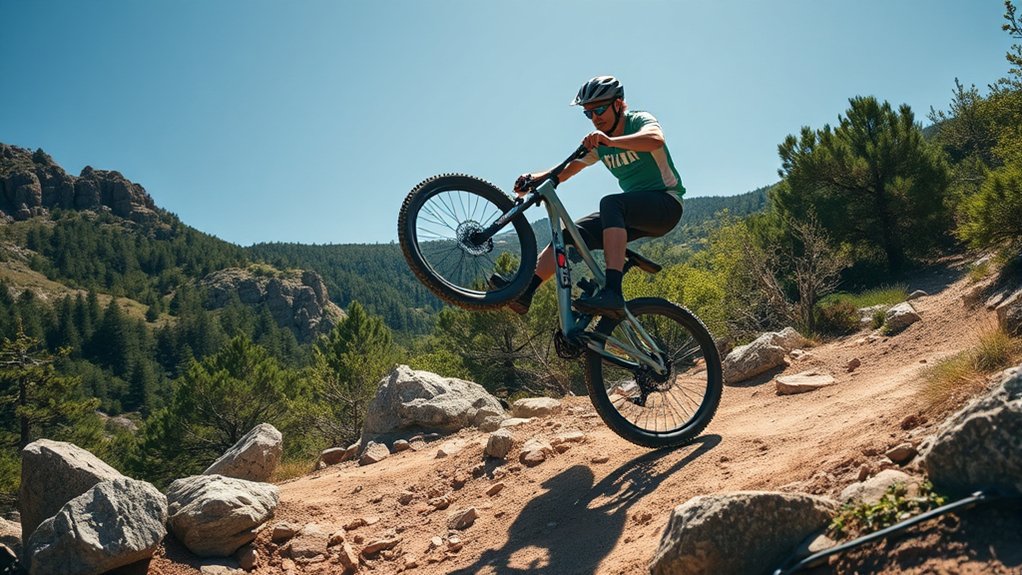
Before you try your first wheelie, find a flat, open area with plenty of space to move around safely. This way, you can practice without worrying about obstacles or traffic.
Pick a spot with firm, smooth ground to help you maintain better control and balance. Avoid loose gravel or uneven terrain, as these can make it harder to lift and hold your front wheel.
Choose firm, smooth ground to improve control and balance; avoid loose or uneven surfaces for easier wheelies.
Places like parks, empty parking lots, or quiet streets with little traffic are perfect. Just make sure the area is free from pedestrians and pets to prevent accidents.
A clear space lets you focus on your technique rather than dodging hazards. Choosing the right spot makes learning your first wheelie safer, easier, and more fun.
Check Your Bike Condition Before Riding
Before you start practicing wheelies, make sure your bike is in good shape.
Check that your tire pressure is correct and your brakes are working properly.
This way, you stay safe and have better control of your bike.
Inspect Tire Pressure
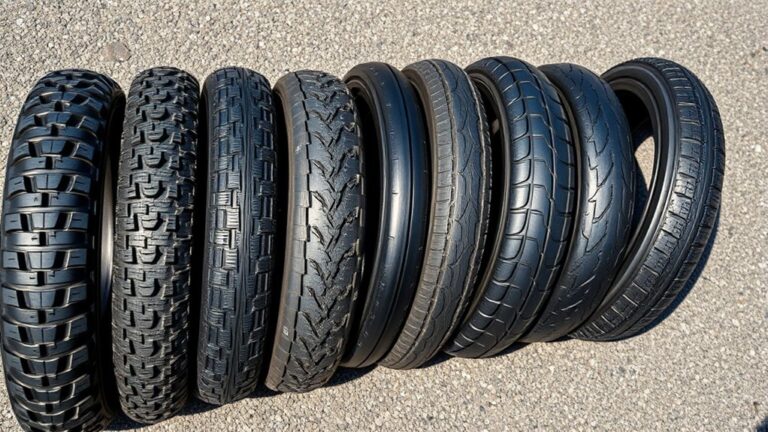
Two quick checks can make a big difference when inspecting your tire pressure: using a reliable gauge and feeling the tires by hand. First, use the gauge to verify your tires match the recommended pressure printed on the sidewall.
Then, squeeze the tires to detect any softness that the gauge might miss. Proper pressure improves control and helps you pop wheelies more confidently.
| Tire Type | Recommended PSI | Feel Test Result |
|---|---|---|
| Front Tire | 30-40 PSI | Firm, slight give |
| Rear Tire | 35-45 PSI | Slightly firm, no squish |
| Tubeless | 25-35 PSI | Firm but cushioned |
Check both tires regularly to maintain ideal pressure and elevate your mountain biking experience.
Verify Brake Functionality
Although you’re keen to master your wheelie, you need to check that your brakes work properly to stay safe. Start by squeezing both brake levers firmly and feeling for any sponginess or excessive travel.
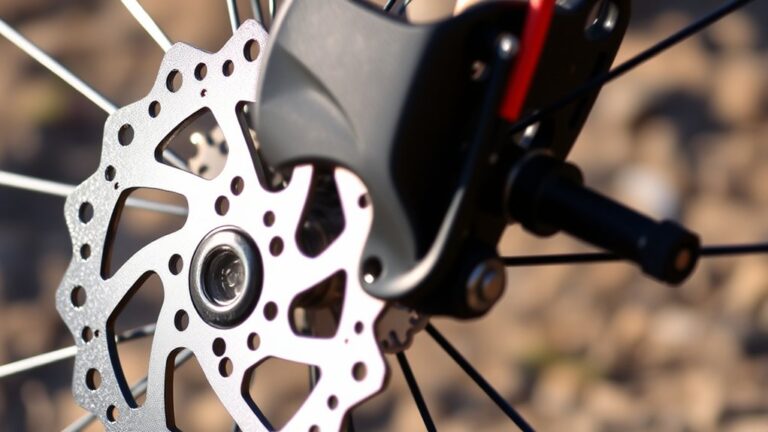
If the levers feel soft or pull too close to the handlebars, your brakes might need adjustment or new pads. Make sure your rotors or rims are clean and free from oil or debris, since contamination can cut down braking power.
Test each brake separately by rolling your bike forward and applying them to see if they engage smoothly and stop the wheels quickly. Reliable brakes give you control and confidence, especially when lifting the front wheel or landing.
Never skip this step before practicing wheelies because your safety depends on it.
Position Your Body for Maximum Balance
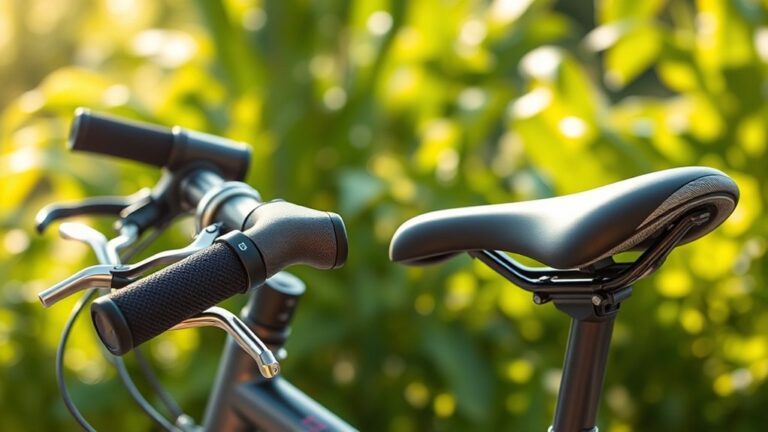
When you position your body correctly, maintaining balance during a wheelie becomes much easier. Start by shifting your weight slightly back while keeping your arms relaxed but firm on the handlebars.
Bend your elbows and knees to absorb any movement, giving you better control. Keep your head up and focus your eyes on a point ahead, not down at the front wheel.
Your hips should be centered over the bike, not leaning too far back or forward, to avoid tipping over. Engage your core muscles to stabilize your upper body and prevent unnecessary wobbling.
Lift the Front Wheel With a Strong Pedal Stroke
Once your body is well-positioned for balance, it’s time to lift the front wheel. You’ll do this by delivering a strong, controlled pedal stroke. Here’s how to do it effectively:
- Find the power spot: Place one pedal at the 2 o’clock or 10 o’clock position so you can push down with maximum force.
- Explode upward: As you push down hard on that pedal, simultaneously pull up on the handlebars to help lift the front wheel.
- Keep your core engaged: Use your core muscles to stabilize your body and prevent tipping backward.
Control Your Front Wheel Height Using Arms and Weight
Mastering the height of your front wheel is key to a smooth wheelie. Use your arms and body weight effectively to control it.
Keep your arms slightly bent and flexible so you can gently push forward or pull back to adjust the wheel’s height.
If the front wheel rises too high, lean forward and extend your arms to bring it down.
If it dips too low, shift your weight back and pull up with your arms.
Your body acts as a natural counterbalance, so stay relaxed and responsive.
Small, precise movements are important—avoid jerky motions that can throw off your balance.
With practice, you’ll naturally manage the wheel’s height, staying stable and confident during your wheelie.
Practice Braking to Stay Safe While Doing Wheelies
Practice braking regularly to stay in control and avoid accidents while doing wheelies. Braking is your safety net; it helps you manage speed, stop quickly, and stay safe.
Focus on gentle modulation of the rear brake to control your wheelie height without flipping backward. Be cautious with the front brake—just a light touch can help bring the front wheel down smoothly.
Combine braking with your body position. Shift your weight back as you brake to keep your balance and maintain control.
Build Longer, Smoother Wheelies With Confidence
To build longer, smoother wheelies, you need to focus on your balance and body position.
Keep your weight centered and use controlled throttle techniques to maintain steady power.
Once you master these, you’ll ride with more confidence and control.
Balance and Body Position
Finding the right balance and body position is key to holding a wheelie longer and riding it smoothly. To master this, focus on these three essentials:
- Center Your Weight: Keep your weight centered over the rear wheel. Lean slightly back, but avoid overextending, which can cause you to tip too far.
- Use Your Arms and Core: Keep your arms relaxed and engaged, while tightening your core. This helps stabilize the bike and maintain control as you adjust your position.
- Foot Placement: Position your dominant foot forward on the pedal to deliver power evenly and stay balanced. Your back foot should make subtle adjustments for fine control.
Controlled Throttle Techniques
Mastering controlled throttle techniques is key to building longer, smoother wheelies with confidence. When you modulate the throttle precisely, you can keep the front wheel in the air without flipping over or dropping too soon.
Start by giving a quick burst of power to lift the front wheel, then smoothly ease off to keep it balanced. Use small, consistent throttle adjustments instead of jerky movements.
This control helps you stay centered and react to shifts in your balance quickly.
| Throttle Action | Effect on Wheelie | Tips for Control |
|---|---|---|
| Quick burst | Lifts front wheel | Use at the start of wheelie |
| Smooth throttle off | Keeps wheel height steady | Gradually ease off power |
| Small adjustments | Fine-tunes your balance | Avoid sudden changes |
| Increase throttle | Prevents front wheel from dropping | React quickly to shifts |
Frequently Asked Questions
What Type of Mountain Bike Is Best for Learning Wheelies?
You’ll want a mountain bike that’s lightweight with a responsive frame to learn wheelies effectively. Hardtail bikes are your best bet since they’re lighter and easier to control than full suspension models.
Look for a bike with a lower saddle height and a good balance between front and rear grip. Make sure the brakes are reliable so you can control your speed confidently while practicing wheelies.
Can Wheelies Damage My Mountain Bike?
Yes, wheelies can damage your mountain bike if you’re not careful. Repeatedly landing hard on the rear wheel or overusing the front brake can wear out your suspension, tires, and spokes faster.
But if you practice proper technique—lifting smoothly, controlling your balance, and landing gently—you’ll minimize wear and tear. Regular maintenance like checking tire pressure and tightening bolts also helps keep your bike in good shape while you master wheelies.
How Do I Prevent Wrist Pain While Doing Wheelies?
To prevent wrist pain while doing wheelies, keep your wrists relaxed and avoid locking them. Wearing gloves with good padding can help absorb shock and protect your wrists.
Make sure your bike’s handlebars are at a height and width that feels comfortable for your grip. Engage your core and use your body to balance instead of relying only on your wrists.
Take breaks often, and remember to stretch your wrists before and after riding to help reduce strain. Staying mindful of your posture can make a big difference.
Are There Any Protective Gears Recommended for Wheelie Practice?
Just like a knight suits up before battle, you should wear protective gear when practicing wheelies. Always wear a sturdy helmet to guard your head, plus gloves to protect your hands and improve grip.
Knee and elbow pads shield your joints from scrapes and impacts. Don’t forget padded shorts for comfort and extra protection.
These armors keep you safe while you master your balance and control, turning risks into confident rides.
How Long Does It Typically Take to Master a Wheelie?
It usually takes a few weeks to a couple of months to master a wheelie, depending on how often you practice and your balance skills. If you commit to short, consistent sessions several times a week, you’ll see progress faster.
Don’t rush it. Focus on control and confidence. Everyone learns at their own pace, so be patient and keep at it. You’ll get there!
Conclusion
Now that you know how to wheelie your mountain bike in 7 easy steps, it’s time to hit the trail and practice.
Did you know the average mountain biker spends about 18 hours a week riding? Imagine mastering your wheelie during those rides, turning heads with every lift of your front wheel.
Keep practicing, stay safe, and soon you’ll be cruising longer and smoother. You’ll feel that unbeatable rush of balance and control on every trail, especially when you can wheelie confidently.