What Makes a Good Mountain Bike
Are you tired of feeling unstable or uncomfortable whenever you hit rough trails? Many mountain bikers struggle with gear that doesn’t quite match the demands of tough terrain. You’re not alone—finding the right bike can make all the difference.
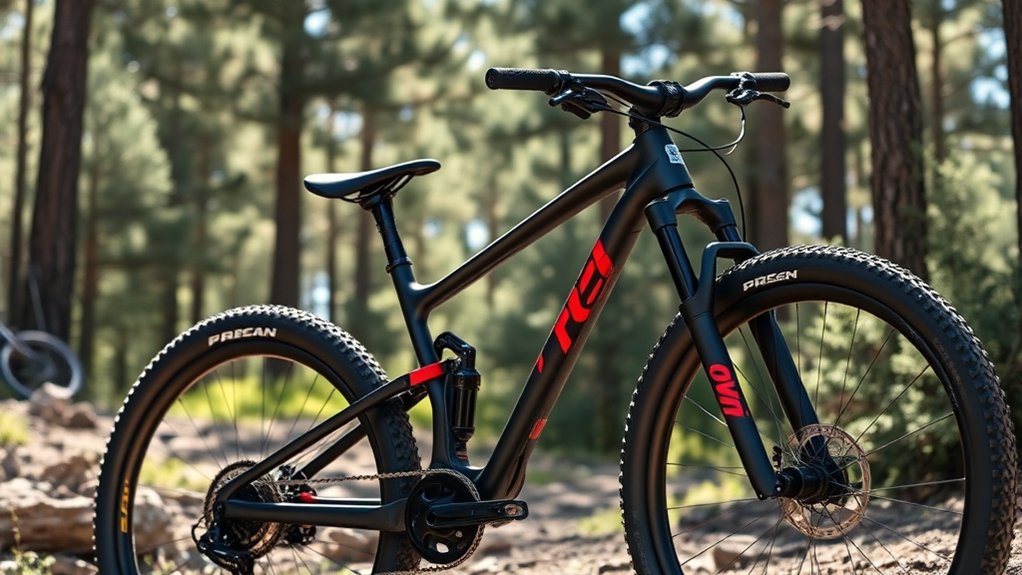
A good mountain bike is built with a tough, lightweight frame that handles rough terrain well. It features a reliable suspension system to absorb shocks and keep you in control on uneven trails.
Wide, knobby tires give you traction and stability, while adjustable components guarantee comfort. Proper fit and geometry improve handling and reduce fatigue.
Want to know how these features work together to boost your riding experience? Keep exploring to find out more.
Key Takeaways
- A durable, lightweight frame made from materials like aluminum or carbon fiber helps with handling. It’s important that the frame can withstand rough trails without adding unnecessary weight.
- A reliable suspension system is key. It absorbs shocks and keeps the wheels in contact with the ground, making your ride smoother on uneven terrain.
- Wide, knobby tires with the right tread pattern give you better traction and stability. They help you stay confident whether you’re climbing or descending.
- Effective braking components, like disc brakes, are essential. They provide consistent stopping power in all weather conditions, so you can ride safely.
- Proper bike fit and geometry also matter. They improve your control, comfort, and overall riding efficiency, making longer rides more enjoyable.
What Are the Most Important Features of a Mountain Bike?
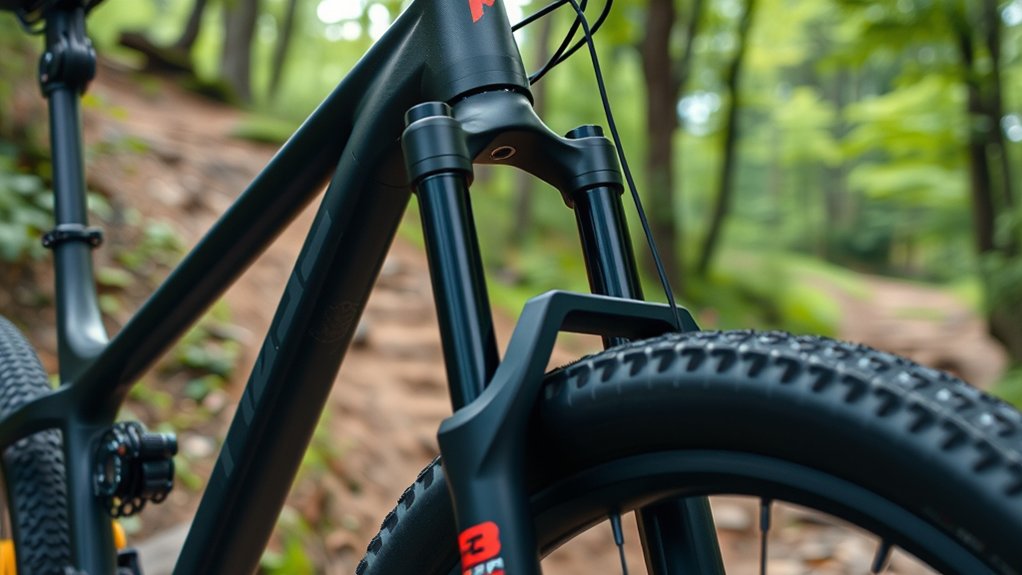
What makes a mountain bike truly suitable for off-road adventures? First, you need a sturdy frame designed to handle rough terrain without flexing or breaking. The suspension system is vital; front suspension forks absorb shocks from rocks and roots, giving you control and comfort.
Wide, knobby tires provide traction on loose or uneven surfaces, preventing slips and boosting stability. The gearing system should offer a broad range so you can handle steep climbs and fast descents easily. Disc brakes are essential for reliable stopping power in muddy or wet conditions.
Finally, a lightweight yet durable build helps you maneuver through technical sections without getting tired. When these features come together, your bike becomes a dependable companion on rugged trails.
How Does Frame Material Affect Durability and Performance?
The material of a mountain bike frame is key to how durable and high-performing it is on tough trails. Different materials bring different strengths, flexibility, and weight to the table.
Aluminum frames are lightweight, affordable, and resistant to rust—making them a popular pick for many riders. Steel frames are heavier but very durable and absorb shocks well, giving you a smoother ride on rough terrain.
Carbon fiber frames are the lightest and stiffest, which boosts speed and responsiveness, but they come with a higher price tag. Titanium offers a great combo of strength and lightness, along with excellent durability and corrosion resistance.
Your choice of material affects how well your bike handles impacts and how efficiently it performs, especially during tough climbs or downhill runs. Picking the right one really depends on your riding style and the terrain you prefer.
Why Suspension Systems Are Key for Trail Riding?
Suspension systems are crucial for trail riding because they absorb shocks and vibrations from uneven terrain. This helps you stay in control and ride comfortably.
When you go over rocks, roots, or rough patches, suspension keeps your wheels grounded. That prevents you from losing balance, making your ride safer.
It also reduces fatigue, so you can enjoy longer rides without feeling worn out. A good suspension setup adjusts to different trail conditions, giving you confidence on tricky sections.
Without suspension, bumps and jolts could throw you off course or make you tire quickly. This makes your ride less fun and more exhausting.
Which Components Make a Mountain Bike Easy to Control and Comfortable?
The efficiency of your suspension system really impacts how smoothly you can control your bike over rough terrain. A good suspension absorbs shocks and keeps your wheels in contact with the ground, making handling easier.
Having a handlebar that fits comfortably is also key. It helps you steer with confidence and reduces fatigue during long rides. Together, these components make your ride more comfortable and easier to manage.
Suspension System Efficiency
A well-designed suspension system greatly improves a mountain bike’s control and comfort, especially on rough terrain. It absorbs shocks, keeps the tire in contact with the ground, and reduces rider fatigue.
Key components that influence suspension efficiency include:
- Type of Suspension: Full suspension offers better shock absorption, while hardtail setups are lighter and simpler.
- Adjustability: Features like preload, rebound, and compression can be tuned to match different terrains.
- Travel Distance: Longer travel gives more cushion on rough trails, but too much can make the bike less responsive on smooth paths.
Handlebar Design and Fit
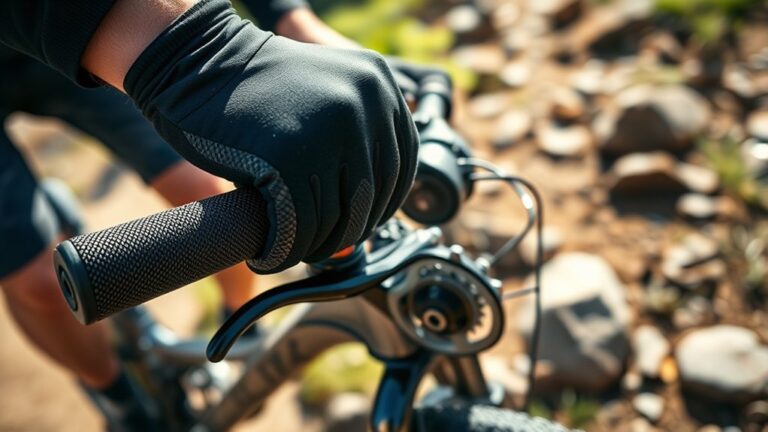
Your handlebar design and fit are key for controlling your mountain bike and staying comfortable on rides. The shape, width, and height of your handlebars affect how precisely you steer and your overall posture.
A wider handlebar gives you better control on descents, while a narrower one makes you more agile. The angle and rise influence your riding comfort and help reduce fatigue.
Getting the right fit is crucial too. It helps keep your wrists and shoulders aligned, preventing strain during long rides. Think about these factors:
| Handlebar Feature | Impact on Control & Comfort |
|---|---|
| Width | Affects steering precision and control |
| Rise & Drop | Influences riding posture and comfort |
| Material | Impacts weight, vibration dampening |
How Do Tire Choices Impact Traction and Handling?
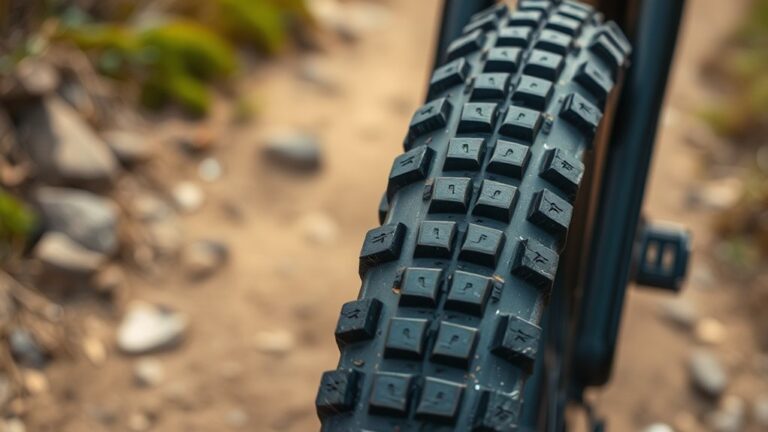
Choosing the right tires can really change how your mountain bike handles rough terrain and sharp turns. The tire’s width, tread pattern, and rubber compound all play a role in traction and control.
Wider tires give you more grip and stability on loose surfaces. Narrower tires, on the other hand, reduce rolling resistance on smoother trails.
Aggressive tread patterns with larger knobs are great for mud and loose dirt, while smoother treads work best on hard-packed trails.
The rubber compound also matters. Softer compounds offer better traction but tend to wear out faster.
How Can Bike Fit and Geometry Improve Your Riding Experience?
When bike fit and geometry are tailored to your body and riding style, they can really boost your control, comfort, and efficiency on the trail. Getting your fit right makes sure you’re in the best position to transfer power and avoid fatigue.
The right geometry also plays a big role in how your bike handles, stays stable, and maneuvers. For example, a steeper head angle means quicker steering, which is great for technical descents. A slacker angle offers more stability at high speeds.
Steeper head angles improve agility for technical descents; slacker angles enhance stability at high speeds.
Adjusting your saddle height and position helps you pedal better and reduces strain. When your bike matches your body and riding needs, you’ll feel more confident, less tired, and better equipped to handle tough terrain.
In the end, a well-fitted bike with the right geometry turns your ride into a more enjoyable and capable adventure.
Frequently Asked Questions
How Often Should I Maintain and Service My Mountain Bike?
You should service your mountain bike every 1-3 months, depending on how often you ride and the terrain conditions.
After each ride, check tire pressure, brakes, and chain wear. This helps catch any issues early and keeps your bike running smoothly.
Perform a thorough cleaning and lubrication once a month. Also, do a full inspection every few rides to catch anything that needs attention.
If you ride in muddy or rugged conditions, consider increasing your maintenance frequency to keep your bike in top shape.
Staying on top of these tasks ensures your bike stays safe, responsive, and ready for your next adventure.
What Safety Gear Is Essential for Mountain Biking?
You should always wear a helmet to protect your head during mountain biking. Imagine hitting a trail and unexpectedly falling; without a helmet, a serious head injury becomes a real risk.
Besides a helmet, consider gloves for grip and hand protection, knee and elbow pads for falls, and reflective gear for visibility. Prioritizing safety gear can turn a fun adventure into a safe, memorable experience, even if accidents happen.
How Do I Choose the Right Size Mountain Bike?
You choose the right size mountain bike by first measuring your inseam and thinking about how you plan to ride.
Stand over the bike with your feet flat on the ground; there should be about 1-2 inches of clearance for a mountain bike.
Try out different sizes to see which feels most comfortable and responsive.
A good fit helps reduce fatigue and gives you better control, making your rides safer and more fun.
What Are Common Signs of Bike Wear and When to Replace Parts?
You’ll notice worn brake pads when they become thin or make squealing sounds, signaling it’s time to replace them. If your chain skips or feels loose, it’s a sign to get a new one to prevent damage.
Look for cracked or bent rims, and check tires for cuts or low tread. Regularly inspecting and replacing worn parts keeps your bike safe, efficient, and ready for the trails.
How Can I Improve My Riding Skills on Different Terrains?
To get better at riding on different terrains, keep practicing regularly and try new trails to challenge yourself.
Pay attention to your body position—lean into turns and keep your weight balanced to stay in control.
Learn to read the terrain ahead so you can adjust your speed and choose the best line.
Riding with experienced bikers is a great way to pick up tips and tricks.
You might also want to take a skills clinic to sharpen your cornering, braking, and handling of tricky sections.
Conclusion
Just like a trusty steed from legend, your perfect mountain bike becomes an extension of yourself.
By choosing the right features, materials, and components, you’ll unlock a legendary riding experience.
Remember, the right bike isn’t just about speed or style. It’s about harmony and confidence on every trail.
So, channel your inner hero, welcome the adventure, and let your mountain bike be the Excalibur that leads you to new heights and thrilling journeys.