How Much Air Should You Put in Mountain Bike Tires?
Many mountain bikers find themselves frustrated trying to get the perfect tire pressure. You’re not alone—striking the right balance can feel confusing, especially with so many factors at play.
The ideal air pressure for your mountain bike tires depends on factors like rider weight, trail type, and tire size, but generally, you should aim for 30-40 PSI. Heavier riders need higher pressure, while rough, rocky trails benefit from lower PSI for better grip and comfort.
Regularly check your tires with a reliable gauge, and adjust as needed for maximum control and safety.
Keep exploring to learn more about customizing your tire pressure for every ride.
Key Takeaways
- Check the tire sidewall for the recommended PSI, which is usually between 20 and 40 PSI for mountain bikes.
- Adjust the pressure based on your weight — heavier riders should go for higher PSI.
- If you’re riding on rough or rocky terrain, lower the PSI to around 20-25. This helps improve grip and control.
- For smooth, flat trails, a higher PSI of about 30-40 can give you more speed and efficiency.
- Remember to regularly recheck your tire pressure, especially if the weather changes or after riding in different conditions.
Why Does Proper Tire Pressure Matter for Mountain Biking?
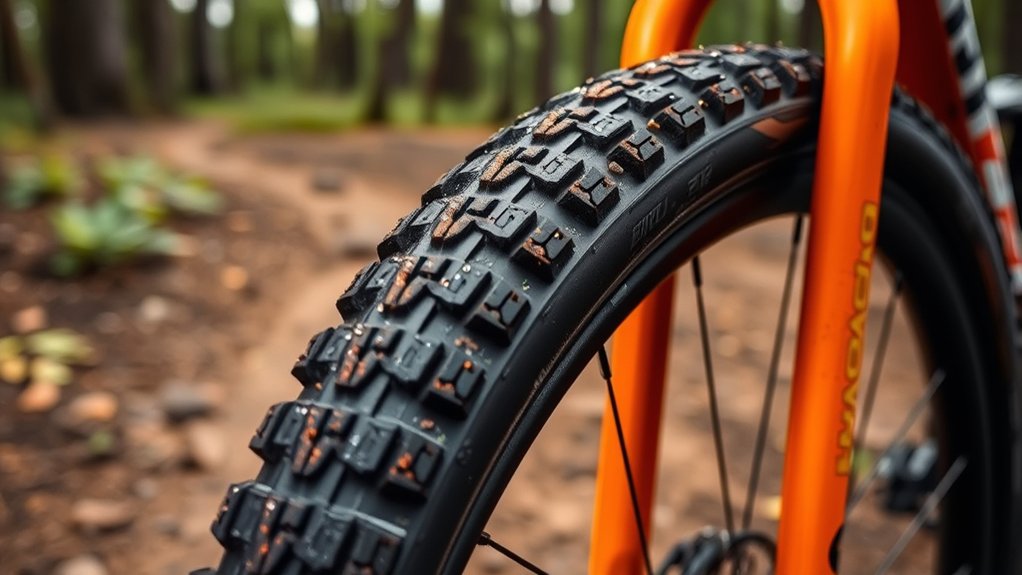
Proper tire pressure is essential because it directly affects your bike’s performance and safety on the trail. When your tires are properly inflated, you get better control, traction, and efficiency.
Overinflated tires can make your ride feel harsh, reduce grip, and increase the risk of punctures or damage from rough terrain. Conversely, underinflated tires create more rolling resistance, making pedaling harder and increasing the chances of pinch flats or rim damage.
Overinflated tires feel harsh and risk damage; underinflated tires increase resistance and the chance of flats.
Maintaining the right pressure guarantees your tires absorb shocks effectively, giving you a smoother ride and more confidence on technical sections. It also helps you conserve energy so you can ride longer and enjoy your trail adventures safely.
Proper tire pressure is a simple but critical part of mountain biking.
Understanding How Mountain Bike Tires React to Air Pressure
When you adjust the air pressure in your mountain bike tires, you’ll notice how it changes the way your bike reacts on different terrains. Lower pressure gives you more grip and comfort on rough trails, while higher pressure helps you go faster and more efficiently on smooth surfaces.
Too much air makes your tires stiff, which reduces traction and increases the chance of punctures. On the other hand, too little air causes the tires to deform too much, making steering less precise and rolling more difficult.
Finding the right balance helps you get the most out of your ride. Lower pressure gives you better traction and shock absorption on uneven terrain, making your ride smoother. But beware—too low and you’ll risk pinch flats.
Higher pressure is great for flat trails, offering better speed and efficiency. Just keep in mind that too high a pressure can make your ride harsh and less grippy on rough surfaces.
What Factors Influence Your Ideal Tire Pressure?
Several factors can influence the ideal air pressure for your mountain bike tires, and understanding them helps you customize your ride for peak performance. Your weight plays a big role—heavier riders need higher pressure to prevent pinch flats, while lighter riders can go lower for better grip.
Your weight influences tire pressure: heavier riders need more, lighter riders can go lower for better grip.
Terrain type also matters. Rocky or technical trails benefit from lower pressure for traction, while smoother surfaces need higher pressure for speed. Bike setup, including tire width and rim size, impacts the best pressure as wider tires often require less pressure for comfort.
Riding style influences your choice too. Aggressive downhill riding might need different pressure than casual trail riding. Finally, ambient temperature affects air pressure—colder weather reduces pressure, so you might need to adjust accordingly.
Keep these factors in mind to fine-tune your tire pressure for each ride.
How to Determine the Right Tire Pressure Based on Rider Weight
Your weight directly affects the ideal tire pressure. Heavier riders usually need higher PSI for better support. Check the recommended PSI ranges for your tires, but keep in mind that you should adjust based on your terrain.
Go softer for rough trails and firmer for smooth surfaces. Making these tweaks helps ensure your ride stays comfortable and efficient.
Rider Weight Impact
Have you ever wondered how your weight influences the ideal tire pressure for mountain biking? Your weight directly affects how much air your tires need to support you comfortably and safely.
Heavier riders generally require higher pressures to prevent pinch flats and ensure stability. Lighter riders, on the other hand, can use lower pressures to improve traction and ride comfort.
Consider these key points:
- Heavier riders should increase PSI for better support.
- Lighter riders can reduce PSI for better grip.
- Adjusting tire pressure helps prevent pinch flats.
- Proper pressure enhances control and comfort.
Balancing your weight with the right PSI maximizes performance and reduces flats. This makes your ride safer and more enjoyable.
Recommended PSI Ranges
Determining the right PSI for your mountain bike tires depends a lot on your weight and riding conditions. Generally, lighter riders should aim for lower pressures, around 20-30 PSI, to maximize comfort and grip.
Heavier riders need higher pressures, typically between 30-40 PSI, to prevent pinch flats and keep control. For versatile riding, a common range is 25-35 PSI, offering a good balance of traction and durability.
Always check your tire sidewall for manufacturer recommendations, which give you a useful starting point. Keep in mind these ranges are flexible—you might need to adjust based on terrain, temperature, and your riding style.
Finding the right pressure is about balancing comfort, control, and puncture resistance for your specific weight and riding needs.
Adjusting for Terrain
Adjusting tire pressure for different terrains means paying attention to how the landscape affects your ride. When riding on rocky trails, loose soil, or wet surfaces, you’ll want to tweak your tire pressure to get the best grip and comfort.
Lower pressures generally boost traction and help absorb bumps on rough terrain, while higher pressures cut down on rolling resistance on smooth surfaces. Keep in mind that your weight also plays a role. Heavier riders need slightly higher pressures to avoid pinch flats, while lighter riders can go lower for better traction.
Use lower PSI for technical, uneven, or loose terrain. Increase PSI for flat, smooth trails. Adjust based on your weight to prevent flats and improve control. Always test and fine-tune your pressure before hitting the trail.
Adjusting Tire Pressure for Different Trail Conditions
Different trail conditions call for different tire pressures to get the best performance and stay safe. On smooth, paved paths, you can run higher pressures to reduce rolling resistance and boost efficiency.
For rocky or technical terrain, lower pressures give you better grip and shock absorption, helping prevent pinch flats. When riding through mud or soft surfaces, a slight reduction in pressure helps the tire conform to uneven surfaces and maintain traction.
On stable, hard-packed trails, higher pressures improve speed and reduce tire deformation. Always check trail conditions before heading out, and adjust your tire pressure accordingly. This can really make a difference in your control, comfort, and safety.
Keep in mind that you might need to make frequent adjustments if trail conditions change unexpectedly or if you switch routes.
Signs Your Tires Need More or Less Air
You’ll notice your tires flattening easily or feeling softer than usual, which signals they might need more air. Changes in handling, like feeling sluggish or having less control, also indicate your pressure needs adjusting.
Pay attention to these signs to guarantee a smoother, safer ride.
Tire Flattening Indicators
Knowing the signs that your mountain bike tires need more or less air can help prevent flats and improve ride quality. Pay attention to how your tires look and feel during rides.
If your tires appear visibly flat or bulge at the sides, they probably need more air. On the other hand, if they feel overly hard or don’t absorb bumps well, they might be overinflated.
Also, watch out for frequent pinch flats or a rougher ride than usual. These can be signs that your tire pressure isn’t quite right.
Here are some key indicators:
- Visible tire bulging or flattening
- Difficulties maintaining control or traction
- Frequent pinch flats
- Excessive vibrations or a harsh ride
Handling and Ride Feel
When your tires aren’t properly inflated, your handling and ride feel can quickly give you away. If your bike feels sluggish or unresponsive, your tires might be underinflated, causing more tire contact with the ground and reducing efficiency.
Conversely, overinflated tires will make your ride feel harsh, with less grip and a bumpy, uncomfortable experience. You may notice your bike bouncing or skimming over rough terrain instead of absorbing shocks smoothly.
Sharp turns could feel unstable, and you’ll struggle to maintain control on technical trails. Pay attention to these cues: if your ride feels sluggish or overly stiff, adjust the pressure accordingly.
Properly inflated tires give you better control, improved traction, and a more comfortable, confident ride.
How to Measure and Set Your Mountain Bike Tire Pressure Correctly
Getting your mountain bike tire pressure right is key for top performance and safety. To do this accurately, you’ll need a reliable pressure gauge.
First, look for the recommended PSI on your tire sidewall or in the rider’s manual. Use your gauge to get an exact reading of your current pressure. Then, add or let out air until you hit that ideal PSI for your riding conditions.
Keep in mind, temperature changes can influence tire pressure. So, it’s a good idea to check it regularly to stay on top of things.
Use a quality pressure gauge for the best accuracy. Starting with a lower PSI can give you better grip and control on tricky terrain.
Adjust your pressure based on the type of terrain you’re riding and your weight. After riding or if temperatures shift, recheck your pressure to ensure you’re always riding safely and efficiently.
Tips to Keep Your Tire Pressure at Its Best for Every Ride
Maintaining ideal tire pressure throughout your ride can greatly boost your performance and safety, so make it a habit to check regularly. Before each ride, quickly use a reliable gauge to verify your tire pressure, making sure it matches your bike’s recommended range.
Adjust the pressure depending on the terrain. Lower pressures work better on rough or loose surfaces, while higher pressures are ideal for smooth trails and pavement. Consider carrying a portable pump or CO2 inflator for quick tweaks on the go.
After riding, take a moment to inspect your tires for air loss, cuts, or debris that could cause leaks. Store your bike in a cool, dry place to prevent pressure changes caused by temperature fluctuations.
Frequently Asked Questions
How Often Should I Check My Mountain Bike Tire Pressure?
You should check your mountain bike tire pressure before every ride or at least once a week, especially if you ride often. Changes in temperature, terrain, and riding style can affect the pressure, so regular checks help ensure peak performance and safety.
Use a reliable pressure gauge, and adjust the air as needed to stay within the recommended PSI range on your tire sidewall. Staying consistent keeps your ride smooth and helps prevent flats.
Can Overinflated Tires Cause Damage to My Bike or Ride?
Yes, overinflated tires can cause damage to your bike and affect your ride. When tires are too hard, they don’t absorb shocks well, which makes the ride harsher and increases the risk of punctures or blowouts.
Overinflation can also put extra strain on rims and spokes, potentially causing damage over time. To keep everything in good shape and ensure a comfortable ride, always inflate your tires to the recommended pressure. This balances comfort, traction, and safety.
What’s the Best Way to Store My Mountain Bike Tires?
To store your mountain bike tires, keep them in a cool, dry place away from direct sunlight. Think of it as giving them a cozy vacation. Store them upright or flat, and avoid extreme temperatures that could cause cracking or deterioration.
It’s a good idea to remove the tires from the bike if possible. This helps prevent pressure buildup and keeps them in better shape.
Basically, treat your tires like royalty, and they’ll reward you with a longer lifespan and better rides.
How Does Terrain Type Affect Ideal Tire Pressure?
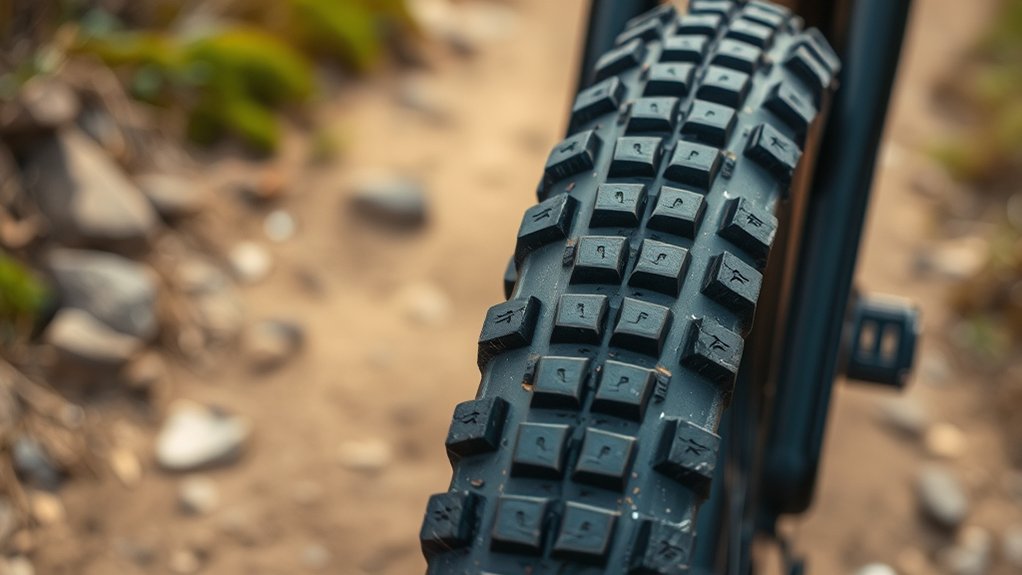
Terrain type greatly influences your ideal tire pressure. For rocky, technical trails, lower pressure increases grip and comfort, so you might go down to 20-25 PSI.
On smooth, hard-packed surfaces, higher pressure around 30-35 PSI helps reduce rolling resistance. For loose or sandy terrain, a slight deflation can prevent burping and improve traction.
Adjust your tire pressure based on the terrain to get the best control, comfort, and performance during your ride.
Are There Specific Pressures for Tubeless Versus Tubed Tires?
You should set tubeless tires a bit lower than tubed ones for better grip and comfort.
Tubeless setups typically run around 20-30 PSI, while tubed tires might need 30-40 PSI depending on terrain.
Think of tubeless as giving you a softer touch on rough trails, absorbing shocks better.
Always check manufacturer recommendations, and don’t be afraid to experiment to find what feels best for your ride.
Conclusion
Staying on top of your tire pressure is key to conquering any trail. Think of it as your trusty steed’s armor—adjust it wisely for the terrain and your weight.
Don’t wait for signs of trouble; check and tweak your pressure regularly, just like a knight tending his armor before battle.
With a little attention, you’ll ride smoother, faster, and more confidently—whether you’re tackling rocky paths or gentle trails.
Remember, knowing how much air to put in mountain bike tires makes all the difference for a great ride.