Why Do Mountain Bike Helmets Have Visors?
If you’ve ever hit the trail and found your view blocked by the sun, mud, or flying debris, you’re not alone. Many mountain bikers struggle to keep their eyes clear and stay safe during rides. That’s why choosing the right helmet is so important.
Mountain bike helmets have visors to protect your eyes from the sun, glare, mud, and debris, helping you see clearly and stay safe on the trail. They also shield you from branches and flying particles during rides, reducing the risk of facial injuries.
Plus, visors keep dirt and wind from distracting you.
If you want to uncover more about how these features improve your riding experience, keep exploring to learn all the details.
Key Takeaways
- Protects your eyes from sun glare, making it easier to see and reducing eye strain while you ride.
- Shields your face from mud, dirt, and flying debris so your vision stays clear.
It also acts as a barrier against branches, rocks, and wind, helping to cut down on facial injuries.
Having a visor means you can adjust the shading, which is great for different sunlight conditions.
Plus, it helps minimize distractions, so you can focus better on the trail and any obstacles ahead.
Why Do Mountain Bike Helmets Have Visors?
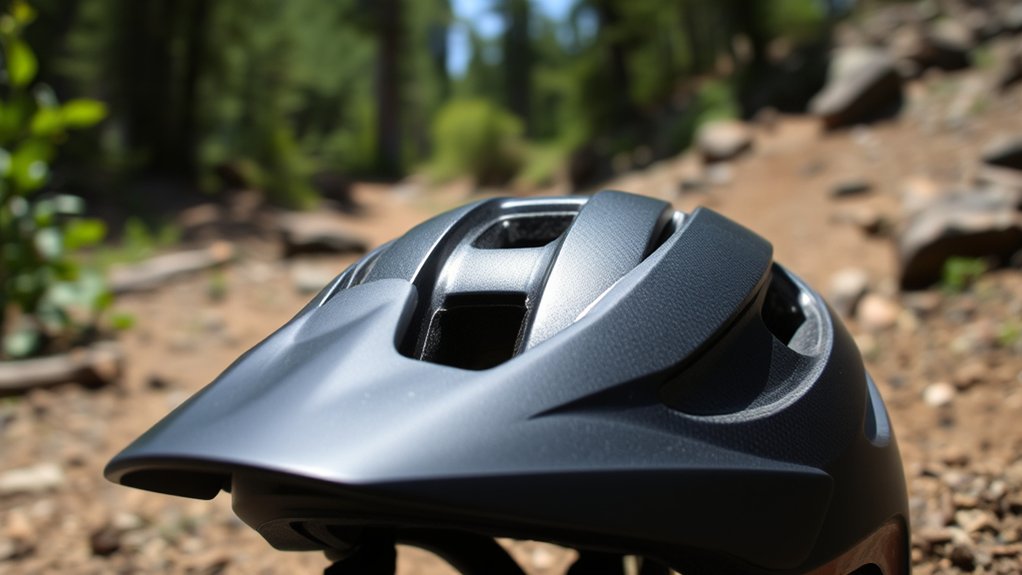
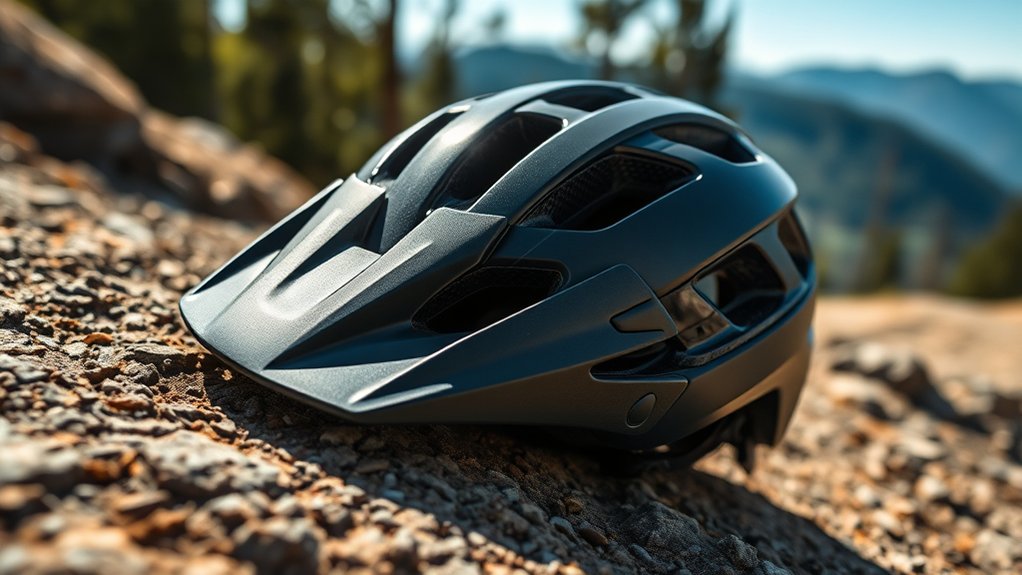
Mountain bike helmets have visors primarily to protect your eyes from the sun, mud, and debris you encounter on rugged trails. When you’re riding, glare from the sun can make it hard to see obstacles clearly. A visor helps shade your eyes, reducing strain and improving visibility.
It also keeps mud, dirt, and small stones from splattering into your face, especially during wet or muddy rides. Without a visor, you might find yourself constantly wiping your eyes or squinting, which can be distracting and unsafe.
The visor acts as a shield, letting you focus on the trail ahead without interruptions. Overall, it’s a simple but essential feature that boosts safety and comfort during your ride.
Types of Mountain Bike Helmet Visors and Their Features
There are several types of mountain bike helmet visors designed to meet different riding needs and preferences. Fixed visors are the most common; they’re sturdy and directly attached to the helmet, providing reliable shade and protection from debris.
Adjustable visors let you tilt or remove the visor for better airflow or visibility, especially useful in changing weather conditions. Some helmets feature removable visors, giving you the flexibility to ride without one or switch between styles.
Others incorporate vented or aerodynamic designs that reduce weight and boost airflow. Brightly colored or reflective visors improve visibility, especially in low-light conditions.
Choosing the right type depends on your terrain, riding style, and comfort preferences. This ensures you get the best sun protection and functionality during your ride.
What Are the Main Safety Benefits of Helmet Visors?
Helmet visors play an essential role in boosting rider safety by offering direct protection against environmental hazards. They shield your face from debris, branches, and mud, helping to reduce injuries during falls or crashes.
Visors also act as a barrier against wind, stopping dust and tiny particles from hitting your eyes. This keeps your vision clear and prevents distractions while riding.
Here’s a quick overview of their main safety benefits:
| Benefit | Explanation |
|---|---|
| Impact Protection | Shields your face from flying debris and branches |
| Eye Shielding | Keeps dirt, mud, and dust from reaching your eyes |
| Fall Safety | Lessens facial injuries during crashes |
How Visors Protect You From Sunlight and Glare
Visors are great at blocking out sunlight and glare, which can mess with your vision and make riding harder. When the sun’s bright, glare can make it tough to see the trail clearly, increasing your chances of accidents.
A visor helps by blocking direct sunlight, so your eyes don’t get strained. This makes it easier to stay focused and see everything around you. It also cuts down on reflections from shiny surfaces and wet patches, so you’re not distracted.
By controlling how much light hits your eyes, visors help you spot obstacles, hazards, and trail features more clearly. Better visibility means you can react faster and stay safer.
Whether you’re riding in bright sun or changing light conditions, a visor helps keep your vision sharp and your ride smooth.
How Visors Shield You From Trail Debris and Branches
When you’re riding through dense woods or over rugged terrain, trail debris and branches can suddenly become hazards. A visor helps shield your face from flying twigs, leaves, and small rocks that can strike unexpectedly. It acts as a barrier, deflecting these objects away from your eyes and face, reducing the risk of injury or distraction.
| Debris Type | How the Visor Helps |
|---|---|
| Small rocks & dirt | Deflects particles away from your face |
| Twigs & branches | Blocks direct hits, preventing injuries |
| Leaves & mud | Keeps your face clear, improving comfort |
This protective feature keeps your vision unobstructed and minimizes surprises on the trail.
How Visors Help You Maintain Visibility and Focus
Visors on mountain bike helmets help cut down on glare, so you can see the trail clearly even when the sun’s really bright.
They also protect your eyes from debris that might distract you or make it harder to focus.
With a visor, you’ll stay more alert and keep better visibility during your ride.
Reduces Glare Effect
Bright sunlight or glaring reflections can distract you and make it hard to see the trail clearly. A visor on your helmet helps cut down this glare, so you can focus better on your ride. It shades your eyes from direct sunlight and stops bright spots from overwhelming your vision.
This makes it easier to spot obstacles and handle tricky sections smoothly. When glare isn’t interfering, your eyes stay relaxed and less tired during long rides.
- Blocks harsh sunlight that causes visual discomfort
- Prevents distracting reflections from shiny surfaces
- Improves clarity and contrast on the trail
With a visor, you can keep sharper focus, ride more confidently, and enjoy your mountain biking without squinting or losing sight of the trail ahead.
Shields From Debris
Riding through rough, debris-filled trails can quickly block your view and distract you from staying focused. Small rocks, mud, and leaves get kicked up, making it hard to see clearly ahead. A visor acts as a shield, deflecting debris and preventing it from hitting your face or eyes.
This helps you keep better visibility and stay concentrated on the trail. The table below highlights common debris types and how they impact your vision:
| Debris Type | Effect on Vision | How Visors Help |
|---|---|---|
| Rocks | Cause distraction | Deflects larger objects |
| Mud | Blurs vision | Blocks splashes |
| Leaves | Obstructs view | Shields from falling debris |
| Dust | Causes irritation | Reduces airborne particles |
Choosing the Best Mountain Bike Helmet Visor for Your Riding Style
When selecting a visor, make sure it’s compatible with your helmet to avoid any issues during your rides.
Look for sun protection features that match your typical riding conditions.
Prioritize adjustability to ensure a secure and comfortable fit.
Thinking about these points will help you choose a visor that actually enhances your riding experience.
Compatibility With Helmet
Choosing a visor that fits your helmet properly is essential for safety and comfort, especially since not all visors are compatible with every helmet model. You need to verify the mounting system matches your helmet’s design, whether it uses screws, clips, or a snap-on mechanism.
Compatibility also depends on the helmet’s shape and size, so a visor that fits one helmet perfectly might not fit another. To make the right choice, consider the mounting system and whether it matches your helmet.
Check the size and shape of the visor relative to your helmet, and look for any specific compatibility notes from the manufacturer. Properly matching your visor to your helmet guarantees a secure fit and peak performance during rides.
Sun Protection Features
Selecting a visor with effective sun protection features can really enhance your riding experience, especially in bright or changing light conditions. Look for visors with built-in UV protection to shield your eyes from harmful rays.
Some visors have tinted or polarized lenses that cut down on glare, making it easier to see on sunny days. Consider the size and shape—larger visors offer more shade but might feel bulky.
Adjustable visors let you change the coverage based on your needs. Materials like matte finishes or anti-reflective coatings help reduce sun glare and reflections.
Ultimately, pick a visor that fits your riding environment and feels comfortable. This way, you stay focused and safe without straining your eyes or sacrificing visibility.
Adjustability and Fit
Finding a helmet visor that fits well and stays secure during your ride is key for both comfort and safety. An adjustable fit helps keep the helmet in place, so you won’t be distracted or uncomfortable.
Look for visors with quick-release mechanisms or multiple settings. This lets you customize the fit to match your head shape and riding style easily.
Proper adjustability also helps prevent pressure points and keeps the visor from wobbling or shifting while you ride.
Important features to consider include adjustable straps for a snug, personalized fit and multiple visor angle positions for different riding conditions.
A lightweight design is also helpful to prevent fatigue during long rides.
Choosing a visor with these features ensures it complements your helmet, boosts comfort, and stays securely in place on any terrain.
How Visors Affect Helmet Fit and Compatibility
Visors on mountain bike helmets can really affect how well the helmet fits and how compatible it is with other gear. If a visor is too bulky or rigid, it might press against your forehead or goggles, causing discomfort or pressure points.
Some visors are adjustable, so you can change their position for a better fit and comfort. But others are fixed, which can limit your options.
Visors can also interfere with accessories like goggles or eyewear, especially if they’re large or angled. You should check that the visor doesn’t block your peripheral vision or press uncomfortably when you wear your helmet.
Choosing a helmet with a compatible visor design helps you stay comfortable, secure, and ready for any trail conditions.
Common Myths About Helmet Visors Debunked
Many people assume that helmet visors are only for blocking sunlight or protecting against debris, but several common myths cloud their true purpose and functionality.
One myth is that visors weaken helmet safety. In reality, they’re designed to be lightweight and don’t compromise protection.
Another misconception is that visors are purely cosmetic, but they actually help shield your eyes from glare and rain.
Finally, some believe visors are unnecessary on mountain bikes, yet they serve practical functions like reducing distractions from environmental elements.
Understanding these myths helps you appreciate the real benefits of helmet visors, which go beyond aesthetics. They’re an essential accessory that improves safety, visibility, and comfort during your ride.
Tips for Maintaining and Adjusting Your Helmet Visor
Regularly inspecting and cleaning your helmet visor is key to keeping your visibility clear and your helmet working its best. Dirt, bugs, and smudges can block your view and make riding unsafe. Use a soft cloth with mild soap or lens cleaner to gently wipe away the debris. Stay away from harsh chemicals that might damage the visor material.
To adjust the visor, check for loose screws or hinges and tighten them carefully with a screwdriver if needed. Proper adjustment helps it stay in place during your ride. Here’s a quick guide:
| Maintenance Tip | Adjustment Tip |
|---|---|
| Clean regularly | Check screws for tightness |
| Use gentle cleaners | Adjust tilt for comfort |
| Avoid harsh chemicals | Confirm visor moves smoothly |
| Inspect for cracks | Test visor stability |
When Should You Upgrade or Remove Your Helmet Visor?
You should think about upgrading or removing your helmet visor when you see signs of wear and tear that could affect your safety.
New safety features might also make your current visor outdated, so an upgrade could be a good idea.
Plus, your riding style or comfort needs might lead you to swap out or remove the visor for a better experience.
Wear and Tear Signs
Over time, signs of wear and tear on your helmet visor can compromise its effectiveness and safety. You should regularly inspect your visor for cracks, deep scratches, or cloudiness, which can impair your vision.
If the visor is scratched or cloudy, it won’t provide clear visibility, increasing your risk during rides. Also, check for loose or damaged mounting points. If the visor wobbles or doesn’t stay securely in place, it’s time to replace it.
- Cracks or deep scratches obstructing view
- Cloudiness that reduces clarity
- Loose or damaged mounting points
Improved Safety Features
While helmet visors are designed to improve safety, there are times when upgrading or removing them is necessary to keep your protection top-notch. If your visor is cracked, warped, or loose, it could weaken your helmet’s integrity if you fall.
A damaged visor can also block your view or fall off unexpectedly, which raises the risk of injury. If the visor no longer fits well or causes discomfort during rides, replacing or removing it can give you better safety and comfort.
Sometimes, newer helmet models have advanced visors with better impact resistance or adjustable angles that enhance protection. Regularly checking your visor and considering upgrades helps you stay safe.
When unsure, it’s a good idea to consult your helmet manufacturer’s guidelines or a safety expert to make sure your visor still meets current safety standards.
Personal Riding Preferences
Personal riding preferences are key when deciding whether to upgrade or remove your helmet visor. If you find the visor distracting or unnecessary during your rides, taking it off might make you more comfortable.
On the other hand, if you like having extra shade from sun glare or want protection from debris, keeping or upgrading your visor is a good idea. Think about your riding style—cross-country riders often prefer lighter helmets without visors, while downhill riders might need more coverage.
Consider situations like when visibility is blocked by glare or mud. If the visor feels bulky or unstable, removing or upgrading it can help. Upgrading for better durability or adjustable features can also make a difference.
Troubleshooting Common Visor Issues and Solutions
Visor issues on mountain bike helmets can be frustrating, but most problems have simple solutions. For example, if your visor won’t stay in place, it might be loose or misaligned.
Check for broken or missing clips, and tighten or replace them as needed. If the visor is scratched or foggy, gently clean it with a microfiber cloth and a mild cleaner.
Sometimes, the visor may be stuck or hard to adjust. In that case, loosen any screws and realign it smoothly.
Frequently Asked Questions
Are Visor Designs Standardized Across All Mountain Bike Helmets?
No, visor designs aren’t standardized across all mountain bike helmets. You’ll find differences in shape, size, and how they attach, depending on the brand and model.
Some visors are adjustable or removable, while others are fixed. These variations are meant to suit different riding styles and personal preferences.
It’s a good idea to try out various helmets to see which visor design feels the most comfortable, protective, and functional for your specific needs.
Can Visor Size Influence Helmet Aerodynamics During Rides?
Visor size can really affect how your helmet cuts through the air during rides. Larger visors add more surface area, which can increase drag and slow you down, especially on fast descents.
Smaller visors, on the other hand, slide through air more smoothly, reducing resistance and helping you go faster and stay more stable.
So, it’s all about finding the right balance. Choose a visor size that offers enough protection but still keeps airflow smooth.
That way, you’ll stay comfortable and aerodynamic whether you’re hitting trails or cruising downhill.
Do All Mountain Bike Helmets Come With Adjustable Visors?
Not all mountain bike helmets come with adjustable visors, but many do.
Adjustable visors give you the flexibility to change their position for better sun protection or airflow, depending on your riding conditions.
Some helmets have fixed visors that can’t be moved. When choosing a helmet, check if it offers an adjustable visor to ensure you get the level of customization and protection you need for your rides.
Are There Any Safety Regulations Regarding Helmet Visor Materials?
Yes, safety regulations set standards for helmet visor materials, making sure they’re tough but lightweight. Imagine a visor that protects your eyes from debris and the sun without adding extra weight or cracking when you hit something.
These rules require visors to be made from durable plastics that resist shattering and can handle temperature changes. So, whether it’s hot or cold outside, you stay protected.
You can ride with confidence knowing your helmet meets safety standards for visor material. It’s all about keeping you safe and comfortable out on the road.
How Do Visors Impact Helmet Weight and Rider Comfort?
Visors slightly increase the helmet’s weight, but they’re designed to be lightweight so they don’t compromise comfort. You’ll notice a minimal difference, and it often feels negligible during rides.
The added weight helps shield your eyes from sun, mud, and debris, improving visibility without causing fatigue. Overall, a well-designed visor balances protection and comfort, so you can focus on your ride without feeling weighed down or distracted.
Conclusion
While some think visors are just for style, they actually play important safety and comfort roles. Scientific studies show that visors cut down on glare and protect against trail debris, helping prevent accidents.
Whether you’re racing or just riding for fun, keeping your visor in good shape ensures you get the best protection. Don’t see it as just an accessory—your visor is a key part of your helmet that boosts safety and riding enjoyment.
Stay alert, take care of your visor, and ride with confidence. A good visor makes a real difference on the trail.