How Much PSI for Hybrid Bike Tires: Guide
Many hybrid bike riders struggle with finding the right tire pressure, which can impact comfort, safety, and performance.
You’re not alone—getting it just right can feel confusing, especially with so many factors to consider.
For hybrid bike tires, aim for a pressure between 50 and 70 PSI, depending on your weight, tire size, and riding conditions.
Lighter riders may prefer lower PSI for comfort, while heavier riders need higher pressure for stability.
Adjust the pressure based on terrain—lower for rough surfaces and higher for smooth pavement.
Be sure to check your tire sidewall for manufacturer recommendations.
Keep your tires properly inflated to guarantee safety, efficiency, and comfort, and you’ll find more helpful tips ahead.
Key Takeaways
- Typical PSI range for hybrid bike tires is 50 to 70 PSI, depending on your weight and riding conditions.
- If you’re a heavier rider, aim for 65-70 PSI.
- Lighter riders might prefer 50-60 PSI for a more comfortable ride.
Be sure to check the tire sidewalls for the manufacturer’s recommended PSI.
These specs are specific to your tires and will give you a good starting point.
Adjust your PSI based on the terrain, weather, and how much load you’re carrying.
This helps you ride safely and efficiently.
Use a reliable gauge regularly to keep your tires properly inflated.
Maintaining the right pressure also helps prevent uneven tire wear over time.
Why Proper Tire Pressure Matters for Your Hybrid Bike
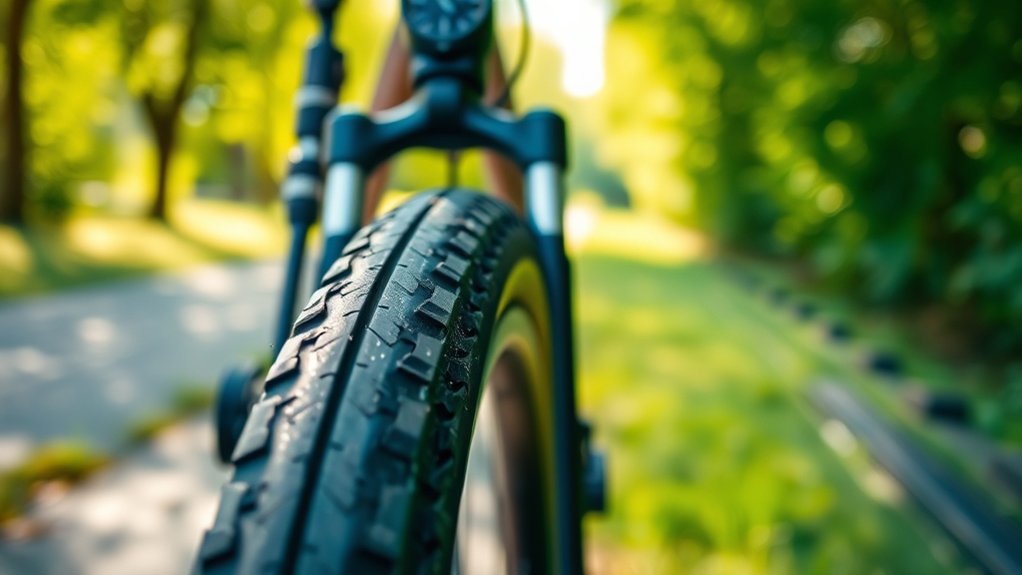
Proper tire pressure is essential because it directly affects your hybrid bike’s performance, safety, and comfort. When your tires are properly inflated, you’ll notice smoother rides, better control, and increased efficiency.
Underinflated tires increase rolling resistance, making pedaling harder and risking flats or pinch punctures. Overinflated tires, on the other hand, can lead to a harsh ride, reduced grip, and a higher chance of blowouts.
Maintaining the correct PSI guarantees your tires absorb shocks effectively, which protects your wheels and improves comfort. It also helps prevent accidents caused by poor traction or sudden tire failure.
Regularly checking and adjusting your tire pressure keeps your bike in prime condition, so you get the best ride every time without compromising safety or performance.
How Your Rider Weight Affects the Right PSI
Your weight plays a key role in choosing the right tire pressure for your hybrid bike. Heavier riders generally need higher PSI within the proper inflation range.
Lighter riders can go lower for comfort. Adjusting your tire pressure based on your weight helps you ride smoothly and efficiently.
Impact of Rider Weight
Rider weight plays a big role in determining the right PSI for hybrid bike tires because heavier riders put more pressure on the tires, which affects how they perform and how long they last.
When you ride with extra weight, you need to inflate your tires accordingly to prevent pinch flats and ensure good contact with the road. Under-inflation can cause more rolling resistance and tire damage, while over-inflation might make your ride harsh and cause faster wear.
To get your tire pressure just right, keep these factors in mind:
- Increased weight means you should use higher PSI to stay stable and avoid tire deformation.
- Lighter riders can go for slightly lower PSI to boost comfort without risking damage.
- Regularly adjust your PSI based on how much weight you’re carrying to get the best performance and extend your tire life.
Proper Inflation Range
The right inflation range for hybrid bike tires varies depending on rider weight, usually between 50 and 70 PSI.
If you’re lighter, around 50-60 PSI might give you a smoother ride and better traction. Heavier riders may need closer to 65-70 PSI to avoid pinch flats and ensure efficient power transfer.
Check your tire sidewall for manufacturer recommendations, which often include a range. Adjust within this based on your weight, terrain, and riding style.
Overinflating can make your ride harsh and increase the risk of punctures, while underinflating causes sluggishness and tire squish.
Regularly check your tire pressure, especially before long rides or changing terrains, to keep your bike performing well and stay safe.
Getting the right inflation for your weight improves comfort and control on the road or trail.
Adjusting for Comfort
With regard to achieving a comfortable ride, rider weight plays a big role in setting the right tire pressure. Heavier riders usually need higher PSI to avoid pinch flats and stay stable, while lighter riders can go lower for a smoother experience.
To fine-tune your tire pressure based on weight, keep these points in mind: Increase PSI gradually if you notice too many bumps or vibrations. If you’re riding over rough terrain, lowering the pressure slightly can help with shock absorption.
Always check your tire pressure regularly, especially if your weight changes or terrain varies. This helps ensure you’re riding comfortably and safely.
What’s the Best PSI for Different Hybrid Tire Sizes?
Ever wonder how the right PSI changes with different hybrid tire sizes? Generally, bigger tires need lower pressures because they spread your weight out more and offer better comfort.
Smaller tires, on the other hand, require higher PSI to avoid pinch flats and keep their shape. For example, 700c tires usually run between 50 and 70 PSI, while 26-inch tires might need around 50 to 65 PSI.
If you have wider tires like 38mm or 42mm, you might want to go lower—around 40 to 60 PSI—to improve grip and cushioning. Always check your tire sidewall for the manufacturer’s recommended PSI range.
Adjust your pressure within that range based on your riding style, load, and terrain. Proper inflation for your tire size helps keep your ride smooth, safe, and efficient.
How Riding Conditions Change Your Tire Pressure Needs
Riding conditions greatly influence how you should adjust your tire pressure since different terrains and weather can change how your bike handles. When riding on rough or uneven surfaces, you’ll want lower pressure to improve grip and cushion impacts.
On smooth pavement, higher pressure helps with efficiency and speed. Weather also matters: hot conditions can cause pressure to rise, while cold weather might mean you need to increase PSI to keep things just right.
Keep these factors in mind:
- Terrain Type: Off-road or rocky trails need lower PSI, paved roads need higher PSI.
- Weather: Adjust for temperature changes to avoid under- or over-inflation.
- Riding Style: Aggressive riding calls for different pressures than casual cruising.
How to Find and Set the Correct PSI for Your Hybrid Tires
Start by checking your tire sidewalls or the bike’s manual to find the recommended PSI.
Then, use a reliable pump with a pressure gauge to adjust your tires to that level.
Getting the PSI right ensures a smooth ride and better overall performance.
Locating Recommended PSI
To find the recommended PSI for your hybrid bike tires, look closely at the sidewall of each tire. This area shows the manufacturer’s suggested pressure range, often printed as a range of numbers like 50-70 PSI. The ideal PSI usually falls within this range, depending on your riding style and load.
To pinpoint the exact pressure, check the maximum PSI printed on the sidewall to avoid over-inflation. Then, think about your weight and riding conditions to pick a pressure within the recommended range.
Finally, use a reliable pressure gauge to verify the PSI before each ride.
Adjusting Tire Pressure Properly
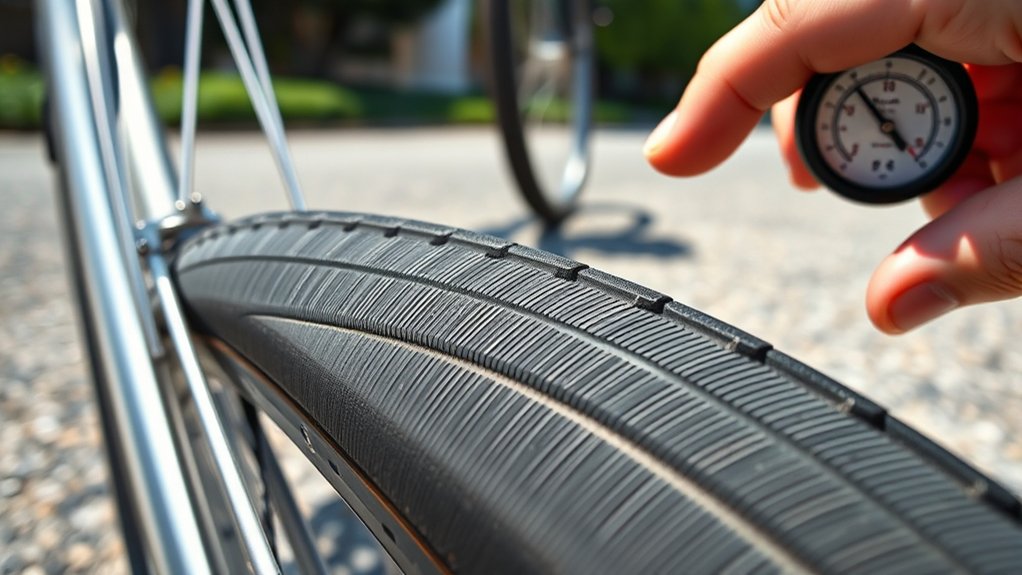
Once you know the recommended PSI range for your hybrid tires, the next step is to set the pressure accurately. Use a reliable pressure gauge to measure the current PSI. Remove the valve cap, attach the gauge securely to the valve stem, and read the pressure.
If it’s too high, release some air by gently pressing the valve; if it’s too low, add air using a pump. Make small adjustments and check the pressure again to avoid overfilling. Confirm the tires are cold, as heat can increase pressure readings.
Properly inflated tires improve ride comfort, handling, and longevity. Regularly checking and adjusting your tire pressure keeps your hybrid bike performing at its best. It also helps prevent flats or damage caused by under- or over-inflation.
Signs Your Tires Are Under- or Over-Inflated
If your tires are under- or over-inflated, you’ll probably notice some warning signs when riding. Spotting these early helps you keep the right pressure for safety and good performance.
Poor handling: Your bike might feel unstable or sluggish, making turns and stops harder to control.
Uneven wear: The tread could show irregular patterns, like excessive wear on one side or in the center.
Decreased comfort: You’ll feel more bumps and vibrations, which means your tires aren’t absorbing shocks properly.
If you notice any of these signs, it’s a good clue that your tires need some attention. Keeping the correct PSI helps you enjoy a smoother ride, better grip, and longer-lasting tires.
Tips to Maintain Proper Tire Pressure and Make Your Tires Last
Maintaining proper tire pressure is key to making your tires last longer and perform better on every ride. Regularly check your tire pressure with a reliable gauge, preferably before each ride, to catch any drops in pressure.
Don’t wait until your tires look flat or feel soft—small pressure losses can reduce efficiency and cause uneven wear. Keep your tires inflated to the manufacturer’s recommended PSI, adjusting for riding conditions or load.
Store your bike in a cool, dry place to prevent pressure loss from temperature changes. Rotate your tires periodically if you notice uneven wear to ensure even use.
Common Mistakes to Avoid When Inflating Your Hybrid Bike Tires
Inflating your hybrid bike tires correctly is essential, but many riders make simple mistakes that can mess with performance and tire life. First, never guess your tire pressure; always check the recommended PSI on the sidewall.
Second, avoid over-inflating, which can reduce traction and increase the risk of blowouts. Third, don’t neglect to use a reliable gauge—eyeballing the pressure isn’t accurate enough.
Failing to keep your tires properly inflated can lead to uneven wear, less comfort, and lower efficiency. Make sure to regularly check your tires and adjust the PSI as needed.
Frequently Asked Questions
Can Temperature Fluctuations Affect My Hybrid Bike Tire Pressure?
Yes, temperature fluctuations can affect your hybrid bike tire pressure. When it gets colder, the air inside your tires contracts, which lowers the pressure.
On the other hand, warmer temperatures cause the air to expand, increasing the pressure.
That’s why it’s a good idea to check your tire pressure regularly, especially when the weather changes.
Adjust your tire pressure as needed to keep it at the recommended PSI for a smooth and safe ride.
How Often Should I Check and Adjust My Tire PSI?
You should check and adjust your hybrid bike tires at least once a month, or more often if you ride a lot.
Think of your tires as the heartbeat of your bike — they need regular monitoring to keep your ride smooth.
Temperature changes, riding conditions, and time all affect pressure.
Is It Better to Over-Inflate or Under-Inflate Hybrid Tires?
It’s best to avoid over-inflating or under-inflating your hybrid tires. Over-inflation can make your ride less comfortable and increase the chance of punctures. Under-inflation, on the other hand, can cause sluggishness and lead to faster tire wear.
You want to find a good balance by keeping the PSI within the recommended range printed on your tires. Regularly check your tire pressure, especially before long rides, to ensure optimal performance and safety.
Do Different Brands of Tires Require Different PSI Settings?
Absolutely, different brands of tires can require different PSI settings—it’s a bit like fitting a key into a lock, each one is a little unique. Some brands make tires with thicker rubber or different internal structures, which might mean you need to adjust the pressure higher or lower for the best performance.
Always check the sidewall for the recommended PSI, but keep in mind that variations between brands can be quite noticeable—like night and day. Tailoring your tire pressure to each brand can help ensure safety and a smoother ride.
How Does Tire Pressure Impact Ride Comfort on Hybrid Bikes?
Higher tire pressure generally leads to a firmer ride, which can make your hybrid bike feel less comfortable on rough surfaces.
Lower pressure absorbs bumps better, giving you a smoother, more comfortable ride.
But be careful—too low pressure increases the risk of flats and can affect handling.
It’s all about finding the right balance based on your weight, riding style, and terrain.
Usually, staying between 50-70 PSI is a good range to optimize comfort without sacrificing performance.
Conclusion
Maintaining the right PSI keeps your ride smooth and efficient. Did you know that under-inflated tires can increase rolling resistance by up to 50%, making pedaling harder? Regularly check your hybrid bike tires—at least once a month—to prevent flats and uneven wear.
With proper inflation, you’ll enjoy better control, comfort, and longer-lasting tires. Staying on top of your PSI helps keep your ride safe and smooth. Remember, for hybrid bike tires, the recommended PSI usually falls between 50 and 70, depending on the tire and rider weight.
Stay proactive about tire pressure, and your hybrid bike will reward you with a safer, more enjoyable ride every time.