How Many Gears Does a Hybrid Bike Have?
Are you feeling overwhelmed trying to choose the right hybrid bike with the perfect gear setup? You’re not alone—many riders struggle with understanding how gear options can improve their ride and match their needs.
Most hybrid bikes have between 8 and 27 gears, depending on their design and intended use. Fewer gears, like 8 to 14, are great for flat city streets, while more gears, such as 18 to 27, help you tackle hills and mixed terrain more easily.
The gear setup varies with front and rear sprockets, and choosing the right number depends on your riding style and terrain.
Investigate further to understand how gears can improve your ride.
Key Takeaways
- Hybrid bikes usually come with between 8 and 21 gears. This range makes them versatile for different terrains and riding styles.
- Most setups have three front gears and seven to nine rear gears. This combination gives you a total of about 21 to 27 gears.
- If you’re mostly riding on flat city streets, fewer gears—around 8 to 14—are usually enough.
- But if you plan to tackle hilly terrain, having more gears—say 18 to 21—can really help you manage those inclines better.
- The number of gears you choose impacts your riding flexibility. More gears mean better control over different terrains.
- Upgrading gear components is possible, but it’s important to check compatibility. It’s usually best to get professional help for installation to ensure everything works smoothly.
How Many Gears Does a Hybrid Bike Usually Have?

Have you ever wondered how many gears a typical hybrid bike offers? Most hybrid bikes come with 8 to 21 gears, giving you a versatile range for different terrains.
If you’re commuting on flat city streets, fewer gears—around 8 to 14—are usually enough. But if you plan to tackle hills or mixed terrain, models with 18 to 21 gears give you more options to adjust your pedaling effort.
The number of gears often depends on the bike’s intended use and your riding style. Some hybrids have a combination of front and rear gears, making shifting smoother and more adaptable.
How Do Gears Work on a Hybrid Bike?
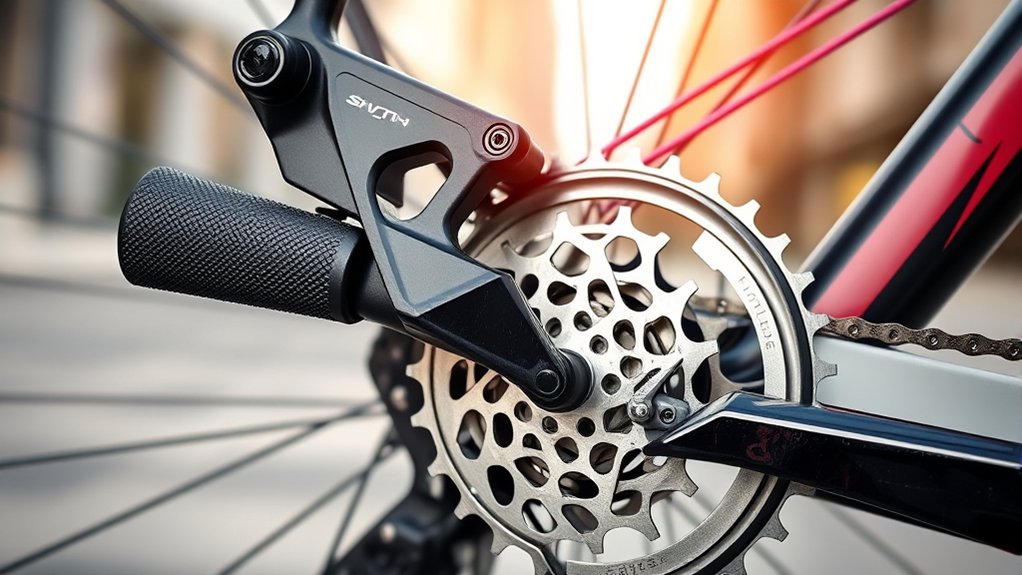
Gears on a hybrid bike work by changing the resistance you feel while pedaling, making it easier or harder to turn the pedals depending on the terrain. When you shift gears, a mechanism moves the chain between different-sized sprockets on the front chainring and rear cassette.
Larger sprockets make pedaling easier, which is perfect for climbing hills or riding against strong winds. Smaller sprockets increase resistance, making them better for faster riding on flat surfaces.
You control the gears using shifters on the handlebars, which engage or disengage the derailleur. As you shift, the derailleur smoothly moves the chain from one sprocket to another.
This system helps you maintain an efficient pedaling cadence whether you’re going uphill, downhill, or cruising on flat terrain.
What Are the Different Gear Ranges in Hybrid Bikes?
Hybrid bikes come with a variety of gear range options to match different riding needs, from wide to narrow spreads. You’ll find different setups depending on the bike model, which affects how easy or challenging your ride feels.
Choosing the right gears depends on your terrain and riding style. Understanding these ranges helps you make the best choice for your adventure.
Common Gear Range Options
Most hybrid bikes offer a variety of gear range options to suit different riding conditions, from flat city streets to hilly terrain. Common gear ranges usually combine front chainrings and rear cogs to give you a wide range of resistance levels.
A popular setup has three front gears paired with seven to nine rear gears, giving you between 21 and 27 gear options. Some models have fewer gears, like 14 or 18, which are great for casual riding.
Others might include wider gear ranges, such as a 24-speed setup, to handle steep climbs and fast descents. The gear range you pick depends on where you ride and what you prefer, but these options help you find a comfortable cadence no matter where you’re going.
Variations by Bike Model
Different hybrid bike models come with various gear ranges to match different riding styles and terrains. Some bikes have compact gear setups, perfect for city commuting, while others have wider ranges for off-road adventures.
The gear range usually depends on what the bike is meant for and who will be riding it. For example, city hybrids tend to have fewer gears to keep things simple, while mountain hybrids often have more gears to handle steep hills.
Keep in mind that narrow gear ranges are easier to use but less versatile. Wide gear ranges give you more options for different terrains. Many models now include internal gear hubs, which are low-maintenance and convenient.
The number of gears can also affect the bike’s weight and complexity. Picking the right gear range depends on your riding needs and the terrain you’ll encounter.
Selecting the Right Gears
Have you ever wondered how the variety in gear ranges affects your riding experience? Choosing the right gears depends on the terrain and your fitness level.
Hybrid bikes typically offer a range from 3 to 24 gears, with gear ranges categorized as low, middle, and high. Low gears make pedaling easier on steep hills and help conserve energy.
Middle gears offer a balance for mixed terrains, providing moderate effort. High gears are best for flat, fast roads and help you maximize speed.
When selecting gears, think about your riding environment. Use lower gears for climbs and higher gears for speed on flat or downhill stretches.
Understanding these ranges helps you optimize comfort and efficiency. This way, you get the most out of your ride without unnecessary fatigue.
How to Choose the Right Number of Gears for Your Ride
How do you determine the right number of gears for your hybrid bike? First, think about your usual riding terrain and distance. If you mostly ride on flat roads, fewer gears will do the trick. For hilly or varied terrain, more gears give you better control and efficiency.
Consider your comfort level with shifting. If you prefer simple, straightforward rides, fewer gears are ideal.
- Choose fewer gears for flat, urban commuting
- Go for more gears if you ride on hills or rough terrain
- Find a balance between gear count and your comfort and shifting ability
- Keep in mind, more gears can mean more maintenance and complexity
In the end, pick your gears based on your riding style and terrain to make your rides smoother and more enjoyable.
What Are the Pros and Cons of Fewer or More Gears?
Having fewer gears makes your bike simpler and easier to operate, which is great for quick rides or beginners. It’s straightforward and less confusing to use.
More gears give you a wider range of options, making your bike more versatile for different terrains. You can handle hills and rough roads better with extra gears.
But choosing between them means balancing ease of use with the ability to handle various riding conditions. It’s about finding what works best for your riding style.
Simplicity and Ease of Use
Choosing between fewer or more gears on a hybrid bike directly affects how simple or complex your riding experience will be.
Fewer gears make shifting straightforward, reducing confusion or mechanical issues. You’ll find it easier to focus on the ride without constantly adjusting gears.
With more gears, you gain flexibility to handle varied terrains, but shifting can become more complicated, especially for beginners.
Consider these points:
- Fewer gears simplify operation and maintenance.
- More gears give you better control over different terrains.
- Using many gears might require more effort to shift correctly.
- Fewer gears often mean less chance of mechanical failure.
Ultimately, your choice impacts how smoothly you can ride and how much effort is needed to change gears.
Versatility and Range
The number of gears on a hybrid bike directly impacts its versatility and range, helping you adapt to different riding conditions. Fewer gears make shifting simpler and quicker, which is great for casual rides or flat terrains.
But with fewer gears, it’s harder to tackle hills or varied terrains easily. More gears give you a wider range of options, helping you find the perfect cadence whether you’re climbing steep slopes or cruising on level ground.
The downside? More gears can add weight, increase complexity, and lead to potential maintenance issues. If you prefer straightforward riding and minimal repairs, fewer gears might be the way to go.
However, if you ride in diverse environments and want maximum flexibility, investing in more gears offers greater adaptability and efficiency across different terrains.
How Gears Affect Comfort and Riding Efficiency
Gears play an essential role in how comfortable and efficient your ride feels, especially on different terrains. Choosing the right gear helps you keep a steady cadence, which reduces fatigue and makes climbing hills easier.
When you shift smoothly, you save energy and avoid putting unnecessary strain on your bike. This not only makes your ride more comfortable but also helps prevent wear on the components.
Using gears properly also extends your bike’s lifespan by minimizing damage and keeping everything running smoothly. Overall, good gear use makes riding more enjoyable and less tiring.
Can You Upgrade or Change Gears on Your Hybrid Bike?
Upgrading or changing gears on your hybrid bike is definitely possible, and many riders do it to improve performance or customize their ride. You can replace the shifters, derailleurs, or cassette to get smoother shifting or expand your gear range.
Just make sure the new components match your existing setup or ask a bike shop for advice. Upgrades often need compatibility checks, like ensuring the drivetrain parts work together and that your frame can handle different gear sizes.
If you’re comfortable working on bikes, you might do some upgrades yourself. But if not, a professional mechanic can make sure everything works perfectly. Remember, upgrading gears can really boost your riding experience, but proper installation and compatibility are key.
Tips for Maintaining and Troubleshooting Your Bike Gears
Regularly inspecting and cleaning your bike’s drivetrain helps keep gears shifting smoothly and prevents dirt and grime buildup that can cause issues. Check the derailleur alignment and cable tension often to make sure shifting stays crisp.
If your gears slip or hesitate, adjust the derailleur or replace worn parts quickly. Don’t forget to lubricate the chain regularly to reduce friction and extend its life.
Here are some quick tips:
- Keep the chain clean and well-lubricated
- Check and tweak cable tension when needed
- Inspect the derailleur for damage or misalignment
- Replace worn or damaged gears and cables promptly
Frequently Asked Questions
Are Gear Counts the Same for Men’s and Women’s Hybrid Bikes?
Gear counts typically aren’t the same for men’s and women’s hybrid bikes, as they often cater to different needs and preferences. Women’s bikes might have slightly different gearing options to fit riding styles or body ergonomics.
However, the core gear range usually overlaps, and both can have anywhere from 7 to 24 gears. Your choice depends more on your riding terrain and comfort than on gender-specific gear counts.
Do Electric Hybrid Bikes Have Different Gear Systems?
Electric hybrid bikes often have different gear systems compared to manual bikes. Many feature electronic shifting, which makes gear changes smooth and precise with just the push of a button.
Some models still use traditional derailleur systems with multiple gears, while others have internal gear hubs for low maintenance. The gear range can vary, but electric bikes usually prioritize ease of use and versatility.
They make gear changes feel effortless whether you’re climbing hills or cruising on flat roads.
How Do Gear Ratios Impact Climbing and Speed?
Gear ratios really shape your riding rhythm, especially when you’re climbing or going fast.
Switching to lower gears makes pedaling easier, so you can handle steep inclines with more confidence. Higher gears boost your speed on flat or downhill sections.
By understanding and adjusting your gear ratios, you control your cadence, making riding more efficient and fun.
This skill helps turn tough terrains into exciting, victorious rides.
Is It Necessary to Have a Wide Gear Range for City Commuting?
No, having a wide gear range isn’t strictly necessary for city commuting, but it can be helpful.
A narrower range can handle most urban terrains comfortably, making your ride smoother and easier.
However, if your route includes hills or varied terrain, a wider gear range helps you maintain a comfortable pedaling cadence.
Ultimately, choose a gear setup that matches your typical routes for the best comfort and efficiency.
Can Gear Setups Vary Between Different Hybrid Bike Brands?
Yes, gear setups can vary between different hybrid bike brands, but that doesn’t mean you should worry. Many brands customize their gear systems to match different riding styles and terrains, giving you options that suit your needs.
Some bikes may have more gears for versatility, while others focus on simplicity. You’ll find plenty of choices, so you can pick a hybrid that fits your riding habits without feeling overwhelmed.
Conclusion
On average, hybrid bikes come with 8 to 11 gears, giving you a versatile range for different terrains. Did you know that having more gears can help reduce fatigue by up to 20% on hilly routes?
Choosing the right gear setup makes your ride more comfortable and efficient. Regular maintenance ensures your gears shift smoothly, saving you time and effort.
So, pick a gear system that matches your riding style. Understanding how many gears a hybrid bike has, and maintaining it well, can make your rides smoother and more enjoyable.