How to Measure a Hybrid Bike in 7 Simple Steps
Many bike enthusiasts want the perfect fit but often find themselves overwhelmed by all the sizing and adjustment details. You’re not alone—getting your hybrid bike just right can feel tricky at first. But don’t worry! Measuring your bike correctly is simpler than you think.
To measure your hybrid bike in 7 simple steps, start by measuring your inseam using a book against a wall and marking the point where your legs meet.
Use your height and inseam to choose the right frame size. Adjust the handlebar reach and width for comfort, then set your saddle height and position for ideal pedal extension.
Fine-tune your fit by testing and making small tweaks. Keep these tips in mind, and you’ll achieve ideal comfort on your bike. If you continue, you’ll uncover even more helpful details.
Key Takeaways
– Measure your inseam accurately by standing with a book against a wall. Place the book between your legs, snugly against your crotch, and mark the point where the top of the book touches the wall.
Then, measure the distance from the floor to that mark and record it.
– Use your height and inseam measurements to check a size chart for the right hybrid bike frame size.
This will give you a good starting point for choosing the correct frame.
– Next, sit on the bike and check the handlebar reach and width.
Make sure they feel comfortable and allow you to ride without straining.
Adjust the handlebars until your arms are relaxed.
– Set your saddle height so that your leg is slightly bent at the bottom of the pedal stroke.
This helps you pedal efficiently without putting too much strain on your knees.
– Finally, adjust the saddle position and handlebar height for maximum comfort.
Take a test ride and fine-tune these adjustments as needed to find what feels best for you.
How to Measure Your Inseam for a Perfect Hybrid Bike Fit
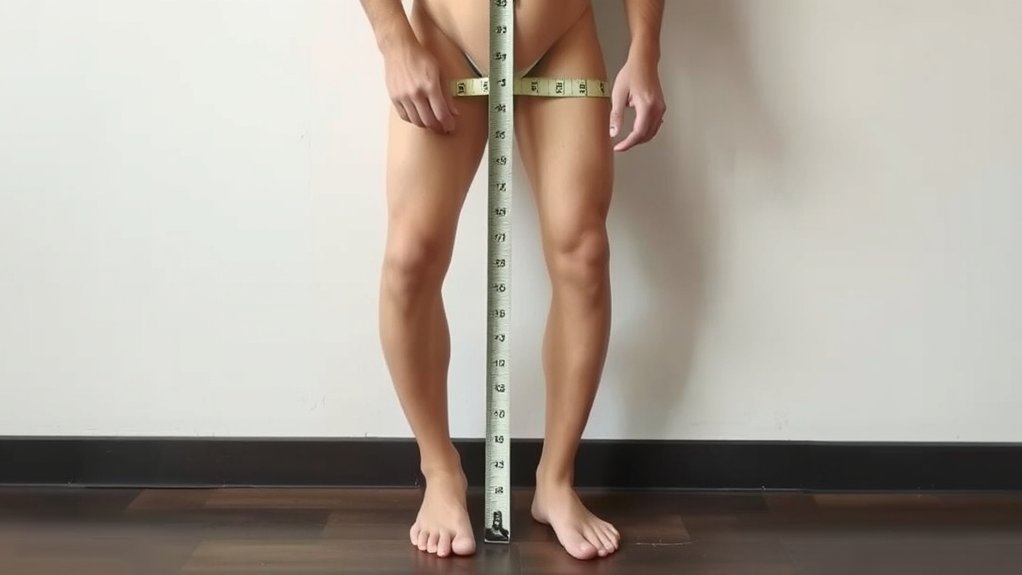
Have you ever wondered how to make sure your hybrid bike fits just right? The trick is to measure your inseam accurately.
First, stand barefoot against a wall with your feet shoulder-width apart. Place a book or ruler between your legs, snug against your crotch, and raise it until it’s pressed firmly.
Stand barefoot, place a book snug between your legs, and raise it until it presses firmly against your crotch.
Mark or note where the book touches your inner thighs. Then, measure from the floor up to that point.
Keep your legs slightly apart and stand up straight for the most accurate reading. This measurement is your inseam length, which helps you pick the right frame size.
Taking your time and being precise now will make finding a comfortable, well-fitting hybrid bike much easier later.
Choosing the Right Frame Size Based on Your Height and Inseam
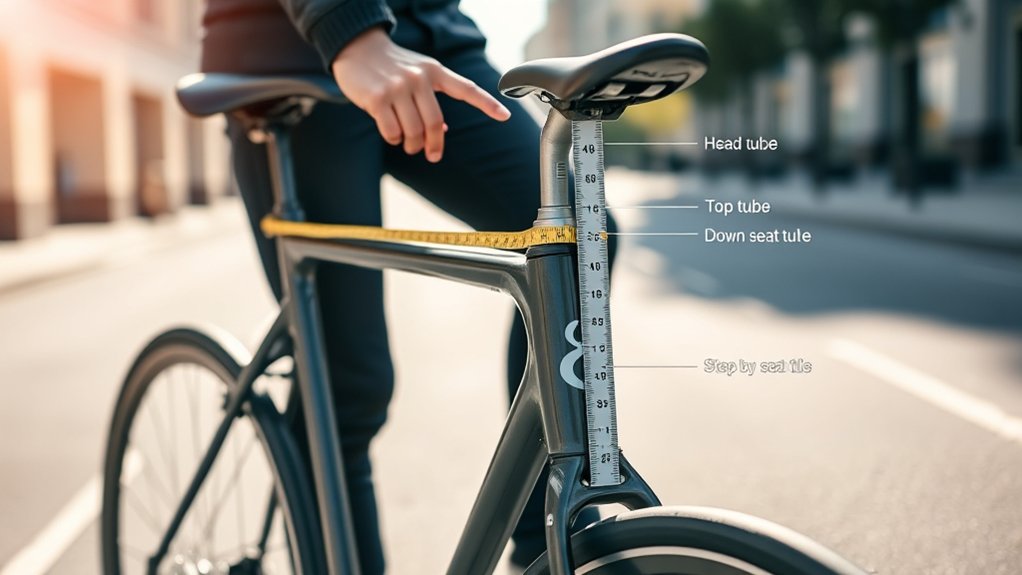
Once you’ve measured your inseam accurately, the next step is to find the right frame size based on your height and inseam. Your height helps narrow down the overall frame size, while your inseam ensures a comfortable fit.
Use this handy table as a guide:
| Height (ft/in) | Recommended Frame Size (cm) | Inseam Range (cm) |
|---|---|---|
| 4’11” – 5’3” | 14 – 16 | 68 – 75 |
| 5’4” – 5’9” | 17 – 19 | 76 – 81 |
| 5’10” – 6’2” | 20 – 22 | 82 – 87 |
| 6’3” and up | 23+ | 88+ |
Pick a frame size that matches your height and inseam for a comfortable, efficient ride.
How to Measure and Adjust Handlebar Reach and Width
To guarantee a comfortable and efficient ride, you need to accurately measure and adjust your handlebar reach and width. Start by sitting on your bike with your hands on the handlebars. Have a friend or use a mirror to see the position.
Your handlebars should be roughly level with your hips or slightly higher, allowing your arms to be relaxed and slightly bent. To measure reach, extend your arm forward and note the distance from your saddle to the handlebars; this should feel natural without stretching or hunching.
For width, measure the distance between the grips of the handlebars. If they’re too narrow or wide for your shoulders, loosen the clamp bolts and carefully adjust the handlebars to fit comfortably. Tighten everything securely once your ideal position is achieved.
Finding the Ideal Saddle Height and Position for Comfort
Finding the ideal saddle height and position is key to a comfortable and efficient ride.
Start by sitting on your bike and placing your heel on the pedal at the lowest point. Your leg should be fully extended but not locked.
If your leg is too straight or bent, adjust the saddle height. When pedaling normally, your knee should have a slight bend at the bottom of each stroke.
For the saddle position, make sure it’s centered over the seat post and aligned with your handlebars. Move it forward or back until you find a comfortable reach to the handlebars.
This helps avoid unnecessary strain on your wrists or shoulders. Proper saddle height and position reduce fatigue and make your ride smoother and more confident.
Adjusting Stem Length and Angle for Better Control
Your stem length really influences how you handle your bike, especially when it comes to steering and stability.
Adjusting the stem angle can also boost your comfort by changing your riding position.
Finding the right mix of both helps you gain better control and makes riding more comfortable.
Stem Length Impact
Adjusting the stem length can really change how your bike handles and feels. A longer stem increases reach, making steering more responsive but possibly less stable, especially at high speeds.
On the other hand, a shorter stem gives you quicker, more agile steering, which is great for tight turns and city riding. If your stem is too long, you might feel stretched out, causing discomfort and less control.
If it’s too short, reaching the handlebars comfortably can be tricky, affecting your posture and precision. Changing the stem length shifts your riding position, impacting your balance and maneuverability.
Pay attention to how these changes feel during your ride. Finding the right stem length helps you optimize handling, making your rides safer and more enjoyable.
Adjusting for Comfort
To improve comfort and control, tweaking both the stem length and angle can make a big difference in your riding experience. Adjusting these parts helps you find a more natural position, which reduces strain and boosts stability.
Shorter stems bring the handlebars closer, making your bike more maneuverable. Longer stems give you a more relaxed ride. Changing the stem angle can also raise or lower your handlebars for maximum comfort.
Here’s how to make adjustments:
- Test different stem lengths to find your ideal reach
- Experiment with angles to raise or lower your handlebars
- Use spacers or different stems if needed
- Ride and fine-tune based on how comfortable and in control you feel
Fine-Tuning Your Fit: Test Rides and Final Adjustments
Before taking your hybrid bike out for a test ride, check that the saddle height and handlebar position feel comfortable. Once you’re ready, go for a short ride to see how your fit feels.
Pay attention to how your body feels—are your knees slightly bent at the bottom of the pedal stroke? Do your wrists and shoulders feel relaxed? Make small adjustments to the saddle height or handlebar position as needed, then ride again.
Focus on your comfort and control during the ride. If you notice any discomfort or awkward movements, tweak your setup accordingly. Remember, the goal is to find a position that allows you to ride smoothly without strain, so you can enjoy longer rides with less fatigue.
Common Bike Fitting Mistakes and How to Avoid Them
Many riders make common mistakes when fitting their bikes, often because they overlook key details or rely on guesswork. These errors can lead to discomfort, pain, or even injury. To avoid them, double-check your setup before riding.
Ignoring proper saddle height can cause knee strain or saddle soreness.
Overlooking handlebar position might result in poor posture and fatigue.
Not considering reach length could make steering awkward and uncomfortable.
Rushing the fitting process may lead to missing small but important adjustments.
Frequently Asked Questions
What Tools Do I Need to Measure My Hybrid Bike Accurately?
To measure your hybrid bike accurately, you’ll want a tape measure or a ruler. A flexible one is best since it makes measuring easier.
You might also find a level or straight edge helpful for ensuring your measurements are accurate when checking angles or lengths.
Having a pen or marker can come in handy for marking points on the bike if needed.
These tools help you get precise measurements for things like frame size, wheel diameter, and other important dimensions.
How Often Should I Re-Measure and Adjust My Bike Fit?
You should re-measure and adjust your bike fit every few months or whenever you notice discomfort, pain, or changes in your riding style. Regular check-ins make sure your bike stays comfortable and efficient.
If you’ve recently been injured, increased your riding intensity, or gained or lost a significant amount of weight, it’s a good idea to reassess sooner. Staying on top of these adjustments helps prevent strain and keeps you feeling good on every ride.
Consistent tweaks can also boost your overall cycling performance. So, checking your fit regularly will help keep you comfortable and riding at your best.
Can I Measure My Bike Fit Without Professional Help?
Yes, you can measure your bike fit without professional help. Start by adjusting your saddle height so your leg is slightly bent at the bottom of the pedal stroke.
Next, check your reach by making sure you’re comfortable on the handlebars without overextending. Use a tape measure or online guides to verify saddle height and handlebar position.
Finally, take your bike for a test ride. Make small adjustments until you feel comfortable and balanced.
What Signs Indicate My Bike Fit Needs Improvement?
Is your ride feeling more like a battle than a breeze? Signs you need a bike fit upgrade include persistent numbness or tingling in your hands or feet, discomfort in your knees or hips, and feeling overly stretched or cramped.
If you find yourself constantly adjusting your position or experiencing pain after rides, it’s time to reassess your fit. Proper alignment helps you ride comfortably and efficiently, preventing injuries and making your rides more enjoyable.
How Does Riding Style Affect My Bike Measurement Choices?
Your riding style really shapes your bike measurement choices. If you enjoy relaxed, casual rides, an upright position with a taller stem and wider handlebars will feel more comfortable.
On the other hand, if you’re into aggressive, fast-paced riding, you’ll want a lower, more aerodynamic fit with a shorter stem and drop handlebars.
Think about the terrain you usually ride on and what feels good for you. Adjust your measurements to match your style, so your bike helps improve your riding experience.
Conclusion
Getting your hybrid bike just right isn’t luck. It’s a mix of proper measurements and a bit of trial and error. When you take the time to carefully fit your bike, you might find that the perfect ride was closer than you thought—just waiting for you to uncover it.
Sometimes, the smallest adjustments make the biggest difference. They can turn a good ride into a great one. So keep tweaking your fit, and enjoy every mile with confidence.
By measuring your hybrid bike correctly, you’ll ensure a more comfortable, enjoyable ride. Remember, the right fit makes all the difference in your cycling experience.