8 Factors That Affect How Far You Can Ride a Hybrid Bike
Many people love riding their hybrid bikes but struggle with how far they can go on a single charge or ride. If you’ve ever felt limited by your bike’s range, you’re not alone. Understanding what affects your distance can make a big difference.
Your hybrid bike’s range depends on several factors. Your weight, riding style, and terrain all influence how far you can go, with lighter loads and smoother routes extending your distance.
Proper bike maintenance, tire inflation, and weather conditions also matter.
Quality batteries and fuels help maximize performance. Well-planned routes that consider these factors can greatly boost your ride’s reach.
Want to learn more tips to maximize your biking distance? Keep exploring to find out.
Key Takeaways
- Rider weight and gear load can really affect how quickly the battery drains and how far you can go. The heavier you are or the more gear you’re carrying, the more energy your bike needs.
- Terrain type and elevation changes also play a big role. Going uphill or riding on rough surfaces takes more effort, which means your range might decrease.
- Your riding style matters too. Speeding up or accelerating a lot can drain the battery faster. Keeping a steady pace helps conserve energy and extend your ride.
- Don’t forget about bike maintenance. Keeping tires properly inflated and doing regular tune-ups makes your bike more efficient and can help you get the most out of each charge.
- Weather conditions like wind and temperature can either help or hinder your ride. Wind resistance can slow you down, and cold weather can affect battery performance.
How Rider Weight Affects Your Hybrid Bike Range
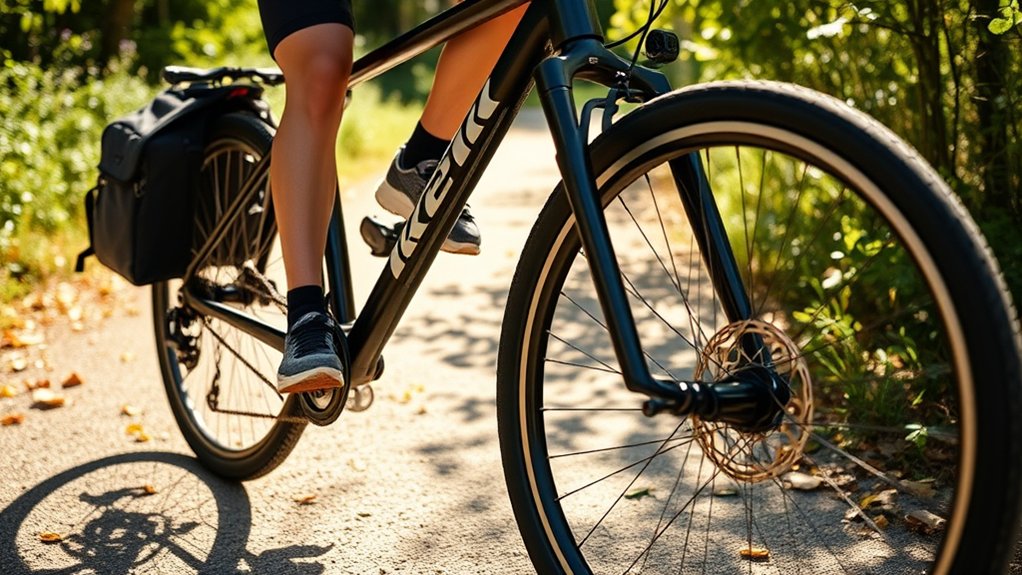
Your rider weight directly affects how far your hybrid bike can go on a single charge or pedal. Heavier riders need more effort from the motor or muscles to move, which drains the battery faster and makes pedaling harder.
When you carry extra weight, the bike’s motor has to work harder to keep up, reducing your overall range. On the other hand, lighter riders put less strain on the system, so they can cover longer distances.
This difference is especially noticeable on hilly terrain or when riding at higher speeds. If you’re packing heavy or carrying extra gear, expect your range to decrease.
Managing your weight by removing unnecessary items and keeping a steady riding pace can help you get the most out of your bike on each ride.
How Riding Style Influences Your Distance
Your riding style really influences how far you can go. Riding hard or pushing your pace burns more energy and can cut your distance short.
Choosing smoother terrain helps you conserve power, making it easier to ride farther. The route you choose matters too—whether it’s flat or hilly, it impacts how much ground you can cover.
Riding Intensity and Pace
The way you ride—how fast, hard, or steady you go—directly impacts the distance you can cover on a hybrid bike. Riding at a brisk pace burns energy faster but lets you cover more ground in less time, making it great for longer rides.
A more moderate pace conserves energy, helping you ride farther over time. Intensity also affects your stamina; pushing too hard can tire you out quickly and reduce your overall distance.
Maintaining a steady, sustainable pace helps you optimize your effort, balancing speed and endurance. Your riding style influences how efficiently you use your energy, shaping how far you can go.
Adjusting your pace based on your fitness level and goals ensures you maximize your riding distance.
Terrain and Route Choice
Choosing the right terrain and route can really impact how far you ride on a hybrid bike. Flat, paved paths make it easier and let you go farther, while hilly or rough terrain takes more effort and may limit your distance.
Planning your route to avoid steep inclines and busy roads helps save energy and keeps your pace steady. The terrain you pick affects both your bike’s efficiency and your stamina.
Think about these factors:
| Terrain Type | Impact on Distance |
|---|---|
| Paved Roads | Maximize distance with minimal effort |
| Gravel Trails | Moderate effort and distance |
| Hilly Terrain | More effort and shorter rides |
| Off-road Trails | High effort, shorter distance |
| Urban Streets | Effort varies depending on traffic |
Choosing routes wisely means you can ride farther with less fatigue.
How Terrain and Elevation Impact Your Ride Distance
When riding a hybrid bike, the terrain and elevation you encounter can really affect how far you’ll go. Flat surfaces make pedaling smoother and put less strain on your bike’s parts, so you can cover more ground with less effort.
On the other hand, hilly or uneven terrain takes more energy because you’re fighting gravity and dealing with rough surfaces. This can cut your distance shorter than on flat roads.
Steep climbs tire you out quickly, so you might need to slow down or stop often. Going downhill might seem easier, but controlling your speed and braking can still drain your energy.
Knowing how terrain impacts your ride helps you plan better routes and set realistic distance goals for each trip.
Bike Maintenance Tips to Maximize Your Range
Regularly maintaining your bike ensures it runs smoothly, helping you get the most out of your rides. Keep your tires properly inflated because under-inflated tires increase rolling resistance and cut down your distance.
Check and replace your chain and derailleurs often to keep gear shifts smooth, which saves energy. Lubricate moving parts to prevent rust and boost overall performance.
Clean your bike regularly to prevent dirt buildup, which can cause wear and make riding less efficient. Make sure your brakes are aligned correctly so they don’t drag, as braking resistance wastes energy.
Inspect your tires for cuts or debris and replace them if needed. Getting regular tune-ups from a bike shop can catch issues early and keep everything in top shape.
Proper maintenance reduces mechanical resistance, allowing you to ride farther with less effort.
How Weather Conditions Can Shorten or Extend Your Ride
Wind resistance can make pedaling harder, which means your ride might be shorter. On the flip side, a good tailwind can help you go further with less effort.
Temperature changes also play a role. They can affect your bike’s performance and how comfortable you feel, either limiting or extending your trip.
Rain and wet conditions increase resistance and make riding more dangerous. Because of that, you might need to cut your ride short for safety reasons.
Wind Resistance Impact
Weather conditions really impact how far you can ride your hybrid bike, especially because of wind resistance. When you face strong headwinds, your bike has to work harder to keep up, using up more energy and cutting your distance.
A tailwind, on the other hand, can give you a nice boost, helping you go farther with less effort. Crosswinds are trickier—they push your bike sideways and make controlling it more challenging.
Wind resistance grows exponentially as your speed increases, so riding faster makes you more vulnerable to its effects. To get the most out of your ride, choose routes that avoid strong winds or ride when the wind is calmer.
Being aware of weather conditions allows you to adjust your pace and conserve energy. This way, you can extend your riding distance and enjoy your ride more.
Temperature Effects on Performance
Temperature plays a big role in how far you can ride your hybrid bike, as extreme heat or cold can affect your performance. When it’s too hot, your body overheats faster, making you tire out quicker. Cold weather can stiffen your muscles and cut down on your flexibility, making pedaling more difficult.
To get the most out of your ride, keep these points in mind:
- Heat exhaustion risk: High temperatures drain your energy faster, so your ride might be shorter.
- Cold effects: Frostbite or stiffness can decrease your efficiency and comfort.
- Clothing choices: Wearing proper layers helps keep your body temperature in check, letting you ride longer.
Being aware of the weather helps you plan better, stay comfortable, and reach your biking goals no matter the temperature.
Rain and Wet Conditions
Rain and wet conditions can really affect your hybrid bike ride, either shortening or extending your trip depending on how you prepare. Wet roads can make it harder to control your bike and increase the risk of slipping.
Rain can also cool you down, sometimes letting you ride longer if you’re comfortable with the weather. To stay safe, wear waterproof gear and check that your brakes work well in wet conditions.
Proper tire pressure and cautious riding can help prevent accidents. Remember, weather can change unexpectedly, so plan your route and carry the necessary gear.
Here’s a quick guide:
| Wet Conditions | Riding Tips |
|---|---|
| Reduced traction | Slow down and brake gradually |
| Cooler temperatures | Dress in moisture-wicking layers |
| Puddles & debris | Avoid large puddles and debris |
How Battery and Fuel Quality Affect Your Travel Distance
The quality of your battery and fuel directly impacts how far your hybrid bike can travel on a single charge or tank. Low-quality batteries may hold less energy, so you’ll need to recharge more often. Similarly, poor fuel quality can lead to inefficient combustion, which reduces your overall range.
High-quality batteries and fuel maximize your hybrid bike’s distance and efficiency on every ride.
To get the most distance, consider these factors:
- Battery Capacity – Higher capacity batteries provide more power and help extend your ride.
- Fuel Purity – Using clean, high-quality fuel ensures better engine performance.
- Battery and Fuel Maintenance – Regular checks and proper storage prevent degradation and keep your bike running smoothly.
Choosing quality batteries and fuel isn’t just about performance; it directly influences how far you can go before needing a refill.
How Proper Tire Inflation and Selection Improve Range
Maintaining proper tire inflation and selecting the right tires can really boost your hybrid bike’s range. When your tires are inflated correctly, there’s less friction between the tire and the road, making pedaling easier and saving energy.
Under-inflated tires increase rolling resistance, so you have to work harder, which reduces the distance you can travel. Over-inflated tires can make your ride rougher and provide less grip, which also wastes your energy.
Choosing tires suited to your riding conditions improves efficiency. For example, wider tires offer better stability and comfort on rough terrain, while narrower tires cut down on rolling resistance on smooth surfaces.
Make sure to regularly check your tire pressure and pick tires that match your typical riding environment. Doing this helps maximize your bike’s range and ensures a smoother, more efficient ride.
Tips for Planning Longer Rides Based on These Factors
Planning longer rides effectively involves considering your bike’s tire condition and choosing the right tires for the terrain you’ll encounter. Proper planning helps you cover more distance and stay safe.
Here are three tips to help you get ready:
- Check your tire pressure regularly to prevent flats and reduce rolling resistance.
- Pick tires that match your route—slick tires for pavement, knobby tires for off-road trails.
- Plan your route and rest stops so you can manage your energy and avoid fatigue.
Frequently Asked Questions
How Does Rider Fatigue Influence Bike Range?
Rider fatigue really impacts your bike range because it lowers your stamina and energy levels. When you’re tired, your pedaling gets less efficient, and you might slow down or stop sooner.
Fatigue also messes with your focus and reaction time, which ups the chance of mistakes or accidents. To get the most out of your ride, take regular breaks, stay hydrated, and pace yourself.
This way, you can conserve your energy and ride farther comfortably without pushing yourself too hard.
Can Carrying Extra Gear Reduce Your Riding Distance?
Ever wonder how hauling extra gear impacts your ride? Yes, carrying extra gear can definitely reduce your riding distance. It adds weight, making your bike work harder and drain the battery or tire energy faster.
You might find yourself stopping sooner than expected. To maximize your range, pack only essentials and distribute weight evenly. Think about it—wouldn’t it be smarter to travel light and go farther?
How Does Bike Frame Material Affect Efficiency and Range?
Your bike’s frame material directly impacts efficiency and range. Lightweight materials like aluminum and carbon fiber cut down on weight, making pedaling easier and helping you go farther.
Steel frames are sturdy but heavier, which can tire you out faster. If you pick a lightweight frame, you’ll save energy and enjoy longer rides.
On the other hand, heavier materials require more effort, limiting how far you can go before you need a break.
Do Different Hybrid Bike Models Have Varying Maximum Distances?
You bet different hybrid bike models can have varying maximum distances. Think of it as apples and oranges—each bike has unique features like weight, gear system, and tire design, which influence how far you can go.
High-quality components and lighter frames help you cover more ground comfortably. So, if you’re planning a long ride, do your homework and pick a model optimized for endurance to avoid hitting a wall.
How Do Riding Cadence and Pedaling Efficiency Impact Range?
Your riding cadence and pedaling efficiency directly impact your hybrid bike’s range. When you pedal at a steady, moderate cadence, you conserve energy and can ride longer distances.
Efficient pedaling means using smooth, circular motions. This reduces fatigue and helps you make the most of your effort. Avoid rapid, irregular pedaling, as it wastes energy.
Conclusion
By understanding these factors, you can extend your hybrid bike’s range more than you thought possible—almost like riding to the moon and back. Keep your weight in check, ride smart on different terrains, and stay on top of maintenance.
Weather, tire choices, and your riding style also play a big role. Master these, and you’ll unlock a biking adventure so epic, the horizon will seem endless. Remember, knowing what affects your range is key to making your hybrid bike ride even farther.