How Do I Find the Size I Need for a Hybrid Bike?
Finding the right size for a hybrid bike can feel overwhelming, especially with so many options out there. You’re not alone—many people struggle with choosing a bike that fits just right, making rides uncomfortable or even painful.
Luckily, with a few simple steps, you can find the perfect fit to enjoy every ride.
To find the right hybrid bike size, start by measuring your inseam and height accurately. Use a size chart to match your measurements to the recommended frame size, typically listed in centimeters or inches.
Test ride the bike to confirm comfort, making sure you can pedal with a slight knee bend and reach handlebars easily.
If you want to learn more about perfecting your fit and avoiding common mistakes, keep exploring for expert tips.
Key Takeaways
- Measure your inseam and overall height to find the right frame size for comfort and proper fit.
- Check brand-specific sizing charts that match your measurements with recommended hybrid bike sizes.
- Take some test rides in different sizes. Pay attention to how comfortable you feel, your reach, and your riding posture.
- Make sure there’s a slight bend in your knee when your foot is at the pedal’s lowest point. That helps with efficient pedaling.
- If you’re unsure or want a perfect fit, consider getting a professional bike fitting. It can make a big difference in comfort and performance.
How Do Hybrid Bike Sizes Compare to Other Types?
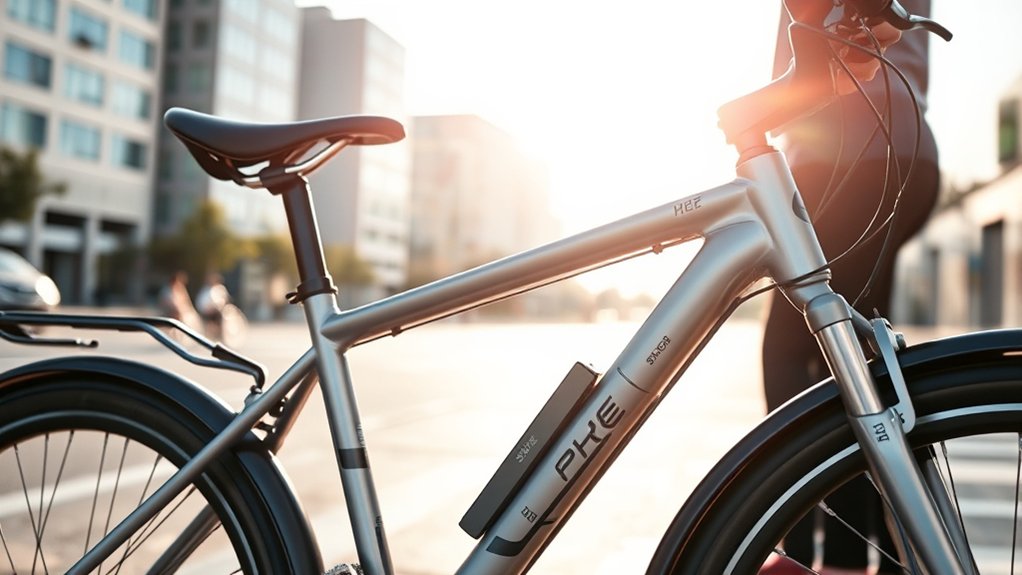
Hybrid bike sizes generally fall between those of road bikes and mountain bikes, making them versatile for different riding styles. Unlike road bikes, which tend to have smaller frames for speed and efficiency on pavement, hybrids offer a more balanced fit suitable for city riding and light off-road trails.
Mountain bikes, with their larger frames and longer travel suspension, prioritize durability and stability over speed. Hybrids sit in the middle, providing a comfortable riding position that’s neither too aggressive nor too relaxed.
They typically come in similar frame sizes as mountain bikes but with a more upright stance like road bikes. This flexibility allows you to pick a size that feels comfortable and gives you control, whether you’re cruising on pavement or tackling uneven paths.
How to Measure Your Inseam and Height for a Perfect Fit
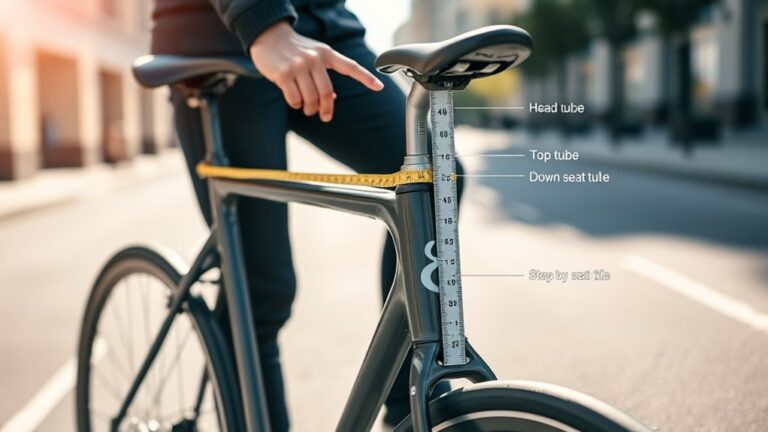
To find the right size for your bike, start by measuring your inseam and height accurately.
For your inseam, stand with your back against a wall, feet shoulder-width apart. Place a book or similar object between your legs, snug against your crotch.
Mark the level of the book on the wall, then measure from the floor to that mark. This gives your inseam length.
To measure your height, stand straight against a wall without shoes. Mark the top of your head with a pencil.
Stand straight against a wall without shoes and mark the top of your head with a pencil.
Use a tape measure to find the distance from the floor to that mark.
Recording these measurements helps you choose a bike size that fits comfortably, making your ride more controlled, comfortable, and safe.
How to Read and Use Bike Frame Size Charts
Understanding how to read and use bike frame size charts is key to choosing a bike that fits comfortably. These charts match your height or inseam to the right frame size, making shopping easier.
Typically, you’ll see frame sizes listed in centimeters or inches alongside rider height ranges. Use your measurements to find the best fit for you.
Keep in mind that different brands might have slight variations, so always check their specific charts before making a decision. Here’s a quick reference:
| Rider Height | Frame Size | Notes |
|---|---|---|
| 5’0” – 5’4” | 14” – 16” | Compact, good for city riding |
| 5’5” – 5’9” | 17” – 19” | Versatile, suits most riders |
| 5’10” – 6’2” | 20” – 22” | Larger frames for taller riders |
| 6’3”+ | 23”+ | For very tall riders |
| Custom | Custom fit | When standard sizes don’t match |
This table helps you quickly identify your ideal frame size.
How to Test Ride Your Bike to Confirm the Right Size
Once you’ve found a bike frame size that looks like a good fit based on measurements and charts, the next step is to take it for a test ride. This is the best way to see how it feels in real life.
During your ride, pay attention to how comfortable you are when seated and pedaling. Your hips should have a slight bend in the knee at the bottom of the pedal stroke, and you shouldn’t feel stretched or cramped.
Check if you can reach the handlebars easily without overextending or leaning too far forward. Make sure you can stand comfortably over the top tube with some clearance.
Shift gears smoothly and test the brakes to see if everything works well. If anything feels awkward or uncomfortable, consider trying a different size or model.
A proper fit makes your ride more enjoyable and efficient, so take your time to find the right one.
Common Mistakes When Choosing Your Hybrid Bike Size
Many riders make the mistake of ignoring proper measurement techniques, which can lead to an ill-fitting bike.
Overlooking frame geometry factors like reach and stack can also affect comfort and handling, even if the size seems right.
Plus, choosing a bike based solely on height often results in a poor fit.
It’s essential to evaluate multiple measurements and factors to find the best fit.
Ignoring Proper Measurement Techniques
Ignoring proper measurement techniques is a common mistake that can lead to uncomfortable and inefficient riding experiences. Many riders skip accurate measurements, relying on guesswork or bike size charts. This can result in bikes that don’t fit well.
To avoid this, always measure your inseam, height, and arm reach. Not doing so can cause discomfort, poor posture, and less control while riding.
Here’s a quick guide:
| Measurement | Why It Matters |
|---|---|
| Inseam Length | Ensures the saddle height is right |
| Arm Reach | Affects handlebar comfort |
| Height | Guides the overall frame size |
| Riding Style | Helps determine the best bike geometry |
Taking precise measurements helps you pick a bike that fits your body perfectly and makes your ride better.
Overlooking Frame Geometry Factors
Frame geometry plays an essential role in making sure your hybrid bike fits well and feels comfortable during your rides. Many riders overlook how different frame measurements can affect handling and comfort.
Ignoring factors like top tube length, head tube angle, and seat tube angle can lead to an awkward riding position or poor maneuverability. For example, a frame with a too-long top tube might cause discomfort in your reach, while a steep head tube angle could make steering less stable.
Be mindful of these key aspects:
- Top tube length for reach and comfort
- Head tube angle for steering responsiveness
- Seat tube angle for pedaling efficiency
- Chainstay length affecting ride stability
Neglecting these factors can compromise your control and comfort. So, consider them carefully when choosing your bike size.
Choosing Based on Height Alone
Have you ever chosen a hybrid bike just based on your height? Relying only on height can lead to a poor fit because everyone’s proportions are different.
Someone with long legs but a shorter torso might need a different frame size than someone with the opposite proportions, even if they’re the same height.
Ignoring these factors can cause discomfort, make pedaling less efficient, and make handling the bike harder. Instead, look at inseam length, torso length, and your riding style to find a better fit.
Try different sizes by taking a test ride and see how comfortable and natural it feels on each one. Remember, the right frame size isn’t just about height. It’s about how well the bike fits your entire body.
How to Adjust Your Bike for Maximum Comfort
To enjoy your ride fully, you need to fine-tune your bike for maximum comfort. Start by adjusting your saddle height so that your knee slightly bends when the pedal is at the bottom. Make sure the saddle is level and at the right height to prevent discomfort.
Next, set your handlebar position. Raise or lower it so your arms and shoulders stay relaxed. Check the reach; you shouldn’t feel stretched out or cramped.
Finally, fine-tune your brake and gear levers for easy access without straining your fingers. Remember, small adjustments can make a big difference in comfort and control.
When to Seek Professional Bike Fitting Help
If you notice persistent discomfort or pain after riding, it’s a sign you might need professional help.
An expert bike fit can improve your comfort, prevent injuries, and make your rides more efficient.
Consider scheduling an appointment when these issues become frequent or if you’re serious about improving your cycling experience.
Signs You Need Assistance
Even if you’ve chosen the right size, discomfort or pain while riding can be a sign that you need professional help. If you notice persistent aches, numbness, or tingling, it’s time to get a bike fit.
If you’re constantly adjusting your position or feeling unstable, a professional can help optimize your setup.
You should consider expert assistance if:
- You experience persistent knee, back, or neck pain
- Your saddle or handlebars feel uncomfortable on long rides
- You often lose control or feel unstable
- You notice uneven wear on your tires or components, which can mean a poor fit
Addressing these signs early can prevent injuries and make your rides more enjoyable. Don’t ignore discomfort—it’s your body telling you to seek help.
Benefits of Expert Fitting
Getting a professional bike fit can really improve your riding experience, especially if you notice discomfort or instability. An expert fitter looks at your body mechanics, flexibility, and riding style to customize your bike setup.
This ensures your saddle height, handlebar position, and reach are just right, which helps reduce strain and prevent injuries. A good fit can also boost your efficiency, making pedaling smoother and saving energy on longer rides.
If you’ve been feeling persistent aches, numbness, or struggling to stay in control, it’s a sign you should consider expert help. Even if you’re new to biking or switching to a different bike, a professional fit can help you find the perfect size and setup.
Investing in this service means more comfort, better performance, and safer rides every time.
When to Schedule Appointment
Knowing when to schedule a professional bike fit is key to riding comfortably and safely. If you’ve been feeling persistent discomfort, pain, or numbness during your rides, it’s a good time to seek help.
Think about booking an appointment after making big bike upgrades or if your riding routine has changed significantly. If you notice your posture isn’t natural or you feel unstable, a fit can help improve your efficiency and lower your injury risk.
Regular check-ins are important too, especially if you ride often or compete. They ensure your bike setup stays just right for you.
- Experiencing discomfort or pain during rides
- Making significant bike adjustments or upgrades
- Noticing instability or poor posture
- Riding consistently over long distances
Frequently Asked Questions
Can I Customize a Hybrid Bike to Fit My Specific Size?
Yes, you can customize a hybrid bike to fit your specific size. You might adjust the seat height, handlebar position, and stem length to make it more comfortable.
Many bikes also allow for frame adjustments or replacing parts like stems and seat posts. Visiting a bike shop for a professional fitting can help you get the perfect setup.
This way, your ride will be more comfortable and efficient.
How Does Riding Style Influence the Ideal Bike Size?
Your riding style really influences the perfect bike size. If you enjoy relaxed rides, a slightly larger frame will give you more comfort and stability.
For those who ride aggressively and want to go fast, a smaller, more responsive frame helps with better control.
Your riding habits also make a difference—leaning forward for speed or sitting upright for comfort.
Pay attention to your posture and handling, and pick a size that matches your style for the best riding experience.
What Are Signs My Bike Is the Wrong Size During Riding?
You’ll notice discomfort or pain, like aching knees, back, or neck, if your bike’s the wrong size.
You might feel unstable or struggle to reach the handlebars comfortably. If your knees hit your elbows during pedaling or you find yourself constantly adjusting your position, it’s a sign you need a better fit.
Also, difficulty maintaining control or feeling overly stretched indicates the bike isn’t suited to your body.
Is a Smaller or Larger Frame Better for Beginner Hybrid Riders?
A larger frame is better for beginner hybrid riders, which might seem a bit surprising. It provides more stability and comfort, especially when you’re just starting out.
While a smaller frame might seem more nimble, it can lead to discomfort and make controlling the bike harder. Choosing a slightly bigger size helps you ride with confidence and ease.
How Often Should I Reassess My Bike Size Over Time?
You should reassess your bike size about once a year or whenever you notice discomfort, pain, or difficulty riding. Changes in your body, riding style, or fitness level can affect your ideal fit.
Regularly checking your bike’s fit helps ensure you stay comfortable and safe. If you experience persistent aches or feel cramped, it’s a good idea to revisit your bike size.
Getting a professional fitting can also help optimize your riding experience and make sure your bike is set up just right for you.
Conclusion
Finding the right hybrid bike size is like fitting a glove—you want it snug but not too tight.
Start by measuring yourself carefully to get accurate numbers. Reading size charts from the manufacturer can also help you find the perfect fit.
Taking the bike for a test ride is key. It allows you to see how it feels and make sure it’s comfortable for your body.
Remember, adjusting your bike is like fine-tuning an instrument—small tweaks can make a big difference.
When in doubt, don’t hesitate to seek professional help. Sometimes, a little expert guidance can turn a good fit into a perfect one.
And if you’re unsure about what size to choose, keep in mind that finding the right hybrid bike size is all about comfort and confidence on your ride.