7 Reasons Road Bikes Are More Expensive Than Mountain Bikes
Many cycling enthusiasts find themselves puzzled by the price gap between road bikes and mountain bikes. If you’re wondering why road bikes often cost more, you’re not alone. It’s a common question among riders looking for the best bang for their buck.
You’ll find road bikes cost more because they use lightweight, high-tech materials like carbon fiber and titanium that boost speed but raise prices. Their precision-engineered parts and advanced gear systems require skilled manufacturing and tight tolerances.
Brands invest heavily in research and technology to improve performance and durability, driving costs up. Plus, market demand and efficiency make road bikes pricier.
Keep exploring, and you’ll uncover exactly how each factor adds to the overall price.
Key Takeaways
- Road bikes are made with lightweight, high-performance materials like carbon fiber and titanium. These materials make production more expensive, and repairs can be costly too.
- They also involve precision engineering and advanced manufacturing techniques. This helps create aerodynamic frames and smooth components, which push up the prices.
- Many road bikes come with electronic shifting systems and advanced gear mechanisms. While these features boost performance, they also add to the overall cost.
- Plus, premium brands and strong market demand play a role. Urban cycling popularity makes road bikes more sought after, which can drive prices higher.
- When you combine superior efficiency, handling, and durability from quality parts, it’s clear why road bikes tend to be more expensive than mountain bikes.
Why Road Bikes Typically Cost More Than Mountain Bikes
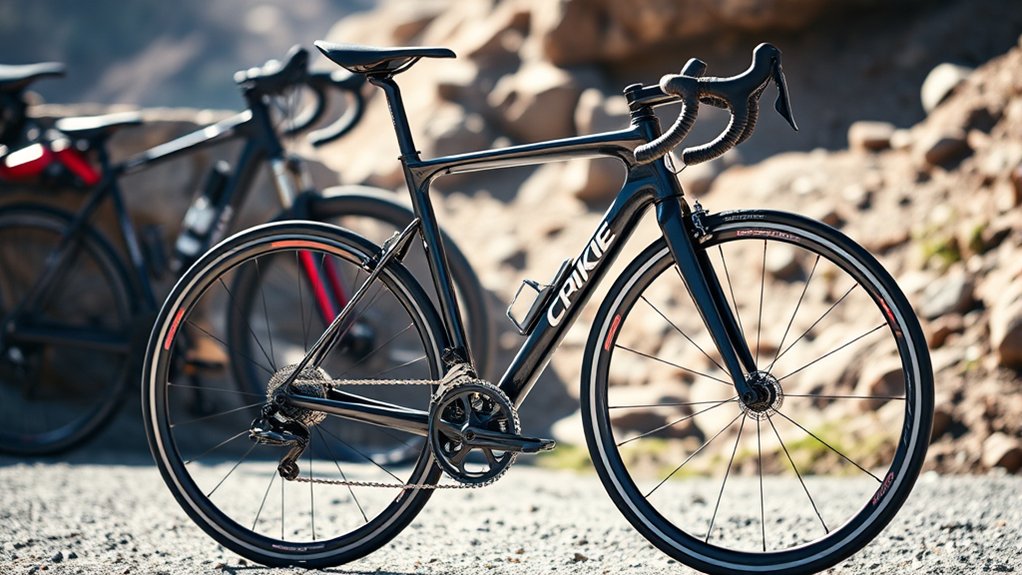
Although both road and mountain bikes offer unique advantages, road bikes typically cost more because they use lighter, high-performance materials and advanced engineering to maximize speed and efficiency. When you buy a road bike, you’re investing in precision components designed for smooth pavement and fast riding.
These parts, like aerodynamic wheels and high-end drivetrains, demand more intricate manufacturing and tighter tolerances, which add to the price. Plus, road bikes often incorporate cutting-edge technology to reduce weight without sacrificing strength, which mountain bikes don’t prioritize as much.
You’ll notice features like streamlined brakes and specialized tires that improve performance but cost extra. So, if you want a bike built for speed and efficiency on the road, be prepared to pay more compared to the rugged, versatile mountain bike.
How Frame Materials Increase Road Bike Costs
When you choose a road bike, the frame material really impacts the overall cost. These bikes often use advanced materials to boost performance, which can make them more expensive.
Here’s why the frame materials matter: Carbon fiber is lightweight and stiff, but it’s costly to produce and repair. Aluminum is more affordable and light, but not as durable as carbon fiber.
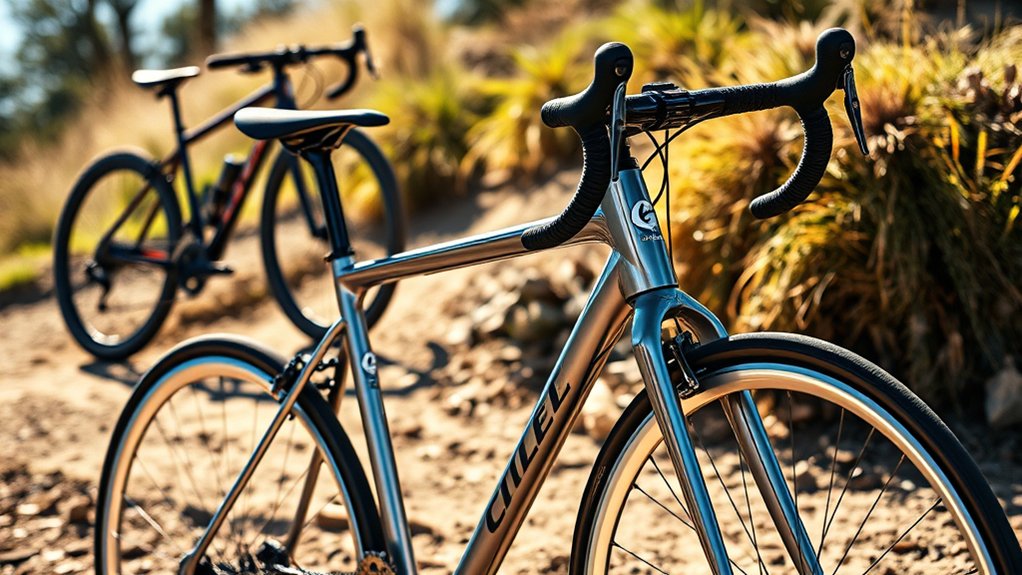
Titanium is strong, light, and resistant to corrosion, but it comes with a higher price tag. Steel is durable and comfortable, but heavier, so you see it less often on high-end road bikes.
Each material affects the bike’s weight, ride quality, and durability, which all influence the price. Since road cyclists focus on speed and efficiency, manufacturers spend more on high-tech materials. That’s why road bike frames tend to be pricier than mountain bike frames.
Why Road Bike Components Cost More Than Mountain Bike Components
You’ll notice road bike components cost more because they demand precision engineering for peak performance. They also use lightweight materials that add to the price but improve speed and handling.
Plus, advanced gear mechanisms designed for smooth shifting increase the overall cost. All these features make road bike parts more expensive than mountain bike components.
Precision Engineering Costs
Three key factors drive up the cost of road bike components compared to mountain bike parts: tighter tolerances, lighter materials, and advanced manufacturing techniques. When you look at road bike parts, they’re engineered to fit perfectly and perform flawlessly under high speeds and smooth surfaces. This precision demands more exact machining and quality control.
Here’s why precision engineering costs more:
- Components require microscopic accuracy to guarantee seamless gear shifts and braking.
- Manufacturing involves CNC machining and hand-finishing for consistency.
- Parts undergo rigorous testing for durability without adding weight.
- Tolerances are so tight that even minor flaws mean scrapping parts.
Because of these factors, you pay more for road bike components that deliver superior performance and reliability.
Lightweight Material Expenses
Many road bike components rely on ultra-light materials like carbon fiber and titanium, which tend to be more expensive than the steel or aluminum used in mountain bikes. When you choose a road bike, you’re investing in materials designed to shed every possible gram without sacrificing strength.
Manufacturers spend more on sourcing and shaping these high-end materials because they require specialized processes and equipment. For example, carbon fiber frames need careful layering and curing in ovens, which increases costs.
Titanium’s durability and resistance to corrosion also make it pricier to work with. You get a lighter, stiffer bike that improves speed and efficiency, but that performance boost comes with higher material expenses that mountain bikes usually don’t face.
Advanced Gear Mechanisms
Although both road and mountain bikes use gear systems to optimize performance, road bike components often feature more advanced mechanisms that drive up their cost. When you look closer, road bikes demand precision and efficiency in shifting, which means their gear systems are more complex and finely tuned.
Here’s why you’ll pay more for road bike gears:
- Micro-adjustments: Road bike gears allow tiny shifts for smooth, quick changes.
- Lightweight materials: Components use expensive alloys to reduce weight without sacrificing strength.
- Higher gear range: Road bikes feature a wider range of gears for varied terrain and speed.
- Advanced technology: Electronic shifting systems are common, offering seamless, reliable performance.
These features guarantee your road bike performs at the highest level but also explain the higher price tag.
How Manufacturing Adds to Road Bike Costs
When you look at road bikes, you’ll notice they require precision engineering to make sure every part fits and works perfectly.
They also use advanced materials like carbon fiber, which cost more to work with. These manufacturing needs directly increase the overall price of road bikes.
Precision Engineering Requirements
Because road bikes demand precise performance, manufacturers use advanced engineering techniques that increase production costs. When you choose a road bike, you’re paying for parts built with tight tolerances to boost speed and efficiency. This ensures every part fits perfectly, reducing friction and making the bike more responsive.
Here’s why precision engineering adds to the price:
- Machining frame joints to exact sizes for better aerodynamics
- Calibrating gear and brake systems for smooth shifting and stopping
- Balancing wheelsets with high accuracy to ensure a smooth ride
- Carefully inspecting every component to meet strict quality standards
These detailed processes take time and skill, making road bikes more expensive but worth it if you want top-tier performance.
Advanced Material Usage
Since road bikes rely heavily on lightweight and durable components, manufacturers use advanced materials like carbon fiber and titanium to keep the weight down without sacrificing strength. These materials cost more to source and require specialized manufacturing techniques.
When you buy a road bike, you’re paying for precise layering of carbon fiber sheets or expertly welded titanium frames. Both of these processes take skilled labor and advanced machinery.
Unlike aluminum or steel, these materials demand more quality control to guarantee safety and performance. Repairs and replacements tend to be pricier, adding to overall ownership costs.
How Weight and Aerodynamics Increase Road Bike Prices
Although you might not notice it at first, the weight and aerodynamics of a road bike really influence its price. Manufacturers put a lot of effort into making bikes lighter and more aerodynamic to improve your speed and efficiency. This focus on performance means using the latest designs and materials.
Here’s how weight and aerodynamics bump up the costs:
- Lightweight frames need advanced composites and precise manufacturing.
- Aerodynamic shapes require extensive wind tunnel testing and design tweaks.
- Components like wheels and handlebars are made to minimize drag.
- Saving every gram or improving airflow involves costly innovation and testing.
When you ride a road bike, these features make a noticeable difference in speed and effort, but they also add to the price you pay.
Why Precision Engineering Makes Road Bikes Pricier
When you choose a high-quality road bike, you’re investing in precision engineering that needs exacting standards and skilled craftsmanship. Every component must fit perfectly to ensure top performance and long-lasting durability.
This careful attention to detail makes road bikes more expensive than mountain bikes, which can handle a bit more ruggedness. Each part’s precision adds to the overall cost but also boosts efficiency.
| Component | Precision Needed | Impact on Price |
|---|---|---|
| Frame | Tight tolerances | Higher material cost |
| Drivetrain | Smooth, exact shifts | Complex manufacturing |
| Wheels | Perfect balance | Specialized rims |
| Brakes | Responsive, light feel | Advanced tech |
| Bearings | Low friction, long life | Premium quality |
This table shows how precision in each part contributes to the overall price. It makes road bikes pricier but also more efficient for you.
How Brand and Market Demand Affect Road Bike Prices
Beyond the precision engineering that drives up the cost of road bikes, the brand name and market demand also play a big role in pricing. When you shop for a road bike, you’re not just paying for materials and tech—you’re paying for reputation and popularity too.
Premium brands invest heavily in R&D, which pushes prices higher. High demand for road bikes, especially in urban and competitive cycling markets, also drives prices up. Limited edition models or collaborations can command a premium as well.
Strong brand loyalty means you might pay more just for the name on the frame. All these factors combine to influence what you’ll pay when choosing a road bike.
Frequently Asked Questions
Are Road Bikes Better for Long-Distance Cycling Than Mountain Bikes?
Yes, road bikes are better for long-distance cycling because they’re designed to be lightweight and aerodynamic. This helps you maintain higher speeds with less effort. Their thin tires reduce rolling resistance, making your ride smoother on paved roads.
The geometry of road bikes puts you in a more efficient riding position, so you’ll feel less fatigue over time. Mountain bikes, with their heavier frames and knobby tires, aren’t optimized for long, steady rides.
How Does Tire Pressure Differ Between Road and Mountain Bikes?
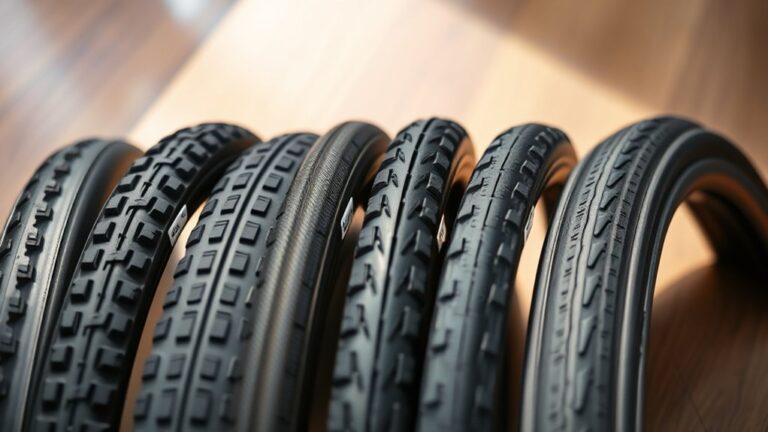
You’ll find that road bike tires usually run at much higher pressures, around 80-130 psi, to reduce rolling resistance on smooth pavement. Mountain bike tires, on the other hand, run at lower pressures, typically 30-50 psi, to improve traction and absorb shocks on rough terrain.
What Maintenance Is Unique to Road Bikes Compared to Mountain Bikes?
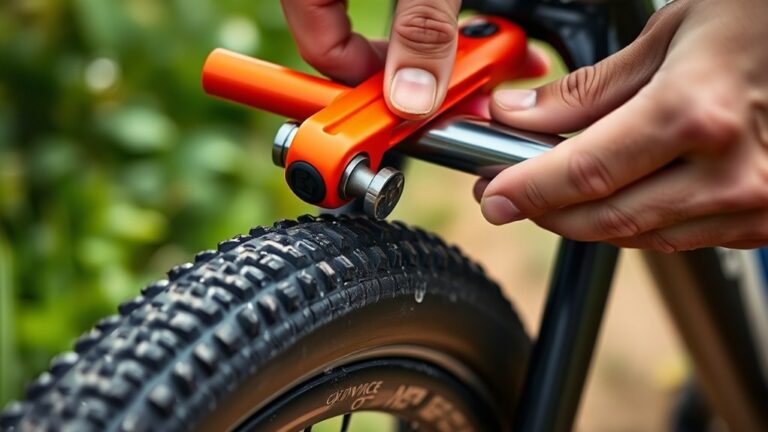
You’ll need to pay special attention to your road bike’s thin tires, checking for wear and maintaining high pressure regularly.
Road bikes also require frequent brake pad replacements because they use rim braking systems, unlike many mountain bikes that use disc brakes.
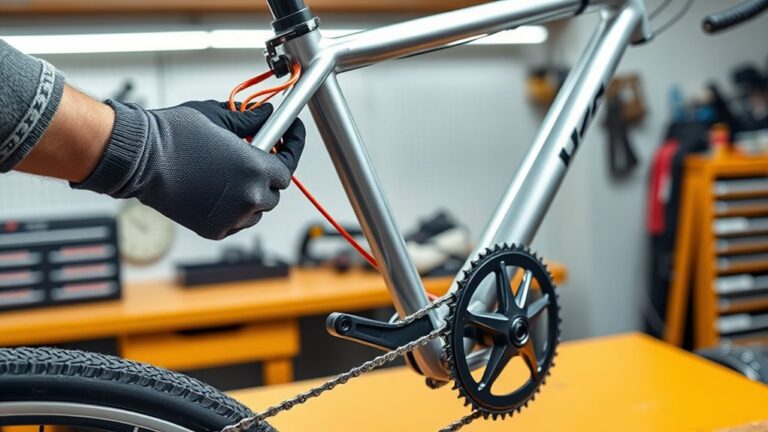
Furthermore, you should keep the drivetrain clean and lubricated often since road bikes rely on precise shifting with closely spaced gears.
These tasks help keep your road bike performing smoothly and efficiently.
Can Road Bikes Be Used on Off-Road Trails Safely?
Using a road bike on off-road trails is like wearing dress shoes on a hiking path. It’s possible but not ideal. You can ride on some smooth, hard-packed trails safely, but the thin tires and lightweight frame aren’t made for rough terrain.
You’ll risk damage and less control if you try to go off-road with a road bike. If you plan to explore trails regularly, a mountain bike built to handle bumps, rocks, and dirt is a much better choice.
Do Road Bikes Require Special Clothing or Gear to Ride Comfortably?
Yes, you’ll want special clothing to ride a road bike comfortably. Padded cycling shorts help reduce chafing and pressure during long rides, making things much more comfortable. Moisture-wicking jerseys keep you dry and cool as you ride.
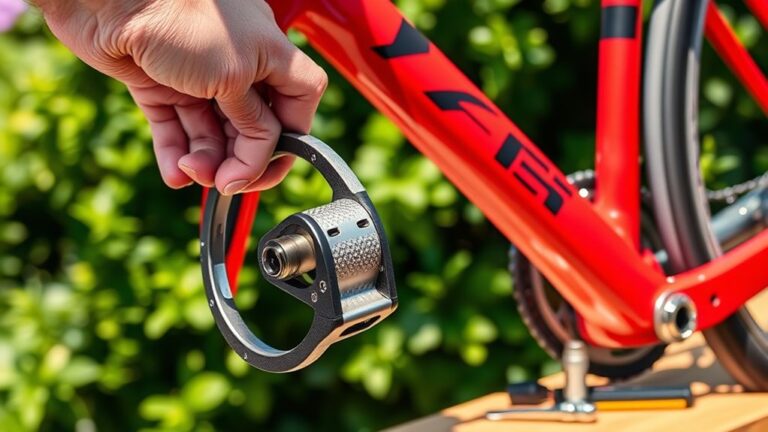
Gloves are great for protecting your hands, especially on long or bumpy rides. Cycling shoes with clipless pedals can boost your efficiency and power, helping you ride more comfortably. And of course, a helmet is essential for safety.
All these gear choices improve your comfort and performance, so you can enjoy your ride without distractions or discomfort.
Conclusion
When you look at why road bikes cost more, it’s clear that precision and performance drive the price. Did you know that high-end road bike components can be up to 30% lighter than mountain bike parts?
This weight difference isn’t just for show. It greatly boosts speed and efficiency. So, when you invest in a road bike, you’re paying for advanced materials, expert engineering, and top-tier performance.
All of these factors are tailored to serious riders like you, making road bikes more expensive but also more capable on the road.