How to Ride Your Road Bike on Gravel Safely
Many road bikers dream of exploring gravel paths but worry about losing control or getting stuck. You’re not alone—gravel riding can feel intimidating at first.
To ride your road bike safely on gravel, start by choosing wider tires with good grip and adjusting tire pressure based on terrain.
Maintain smooth, deliberate movements, stay relaxed, and shift your weight back on rough sections. Wear safety gear like a helmet and gloves, and check your brakes and gears beforehand.
Keep control by riding at a steady pace and using proper braking techniques.
Curious to uncover more tips for confident gravel riding?
Key Takeaways
- Use wider tires, around 38-45mm, with knobby or semi-slick tread. This gives you better grip and control on gravel surfaces.
- Adjust your tire pressure to about 40-50 psi. Lower it slightly for more traction on loose gravel.
- Keep your movements smooth and relaxed. Try to hold your hands steady to stay stable on uneven terrain.
- When riding, shift your weight back a bit. Use gentle steering corrections to avoid the front wheel washing out or slipping.
- Don’t forget safety gear! Wear a helmet and gloves. It’s also smart to carry some essential repair tools just in case of emergencies.
What Is Gravel Riding and Why Is It Different From Road Cycling?
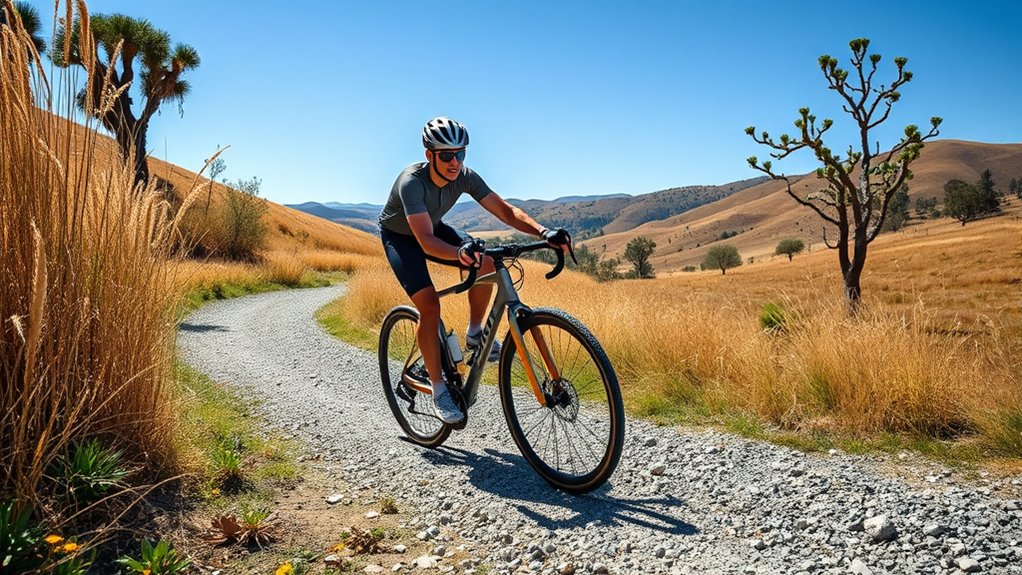
Gravel riding involves cycling on unpaved, loose, or rough surfaces that are quite different from smooth asphalt roads. You’ll encounter gravel, dirt, and uneven terrain that challenge your bike’s stability and your riding skills.
Unlike road cycling, where pavement offers a predictable, smooth surface, gravel riding requires more control and adaptability. You need to adjust your speed and technique to handle loose stones, potholes, and unpredictable terrain.
It’s a mix of endurance, skill, and patience, often needing different bike handling compared to riding on asphalt. This type of riding offers a more adventurous experience, connecting you with nature and less-traveled paths.
Understanding these differences helps you prepare mentally and physically for the unique demands of gravel riding.
How to Prepare Your Bike for Gravel Adventures
To get ready for gravel rides, you need to choose tires suited for rough terrain and lower your tire pressure for better traction.
Make sure to install essential accessories like a sturdy pump, extra tubes, and a bike repair kit. Proper preparation helps you ride confidently and handle unexpected challenges on the trail.
Choose Appropriate Tires
Choosing the right tires is essential for a safe and smooth gravel ride, as they directly impact traction, stability, and comfort. You want tires that can handle uneven surfaces without sacrificing speed or control.
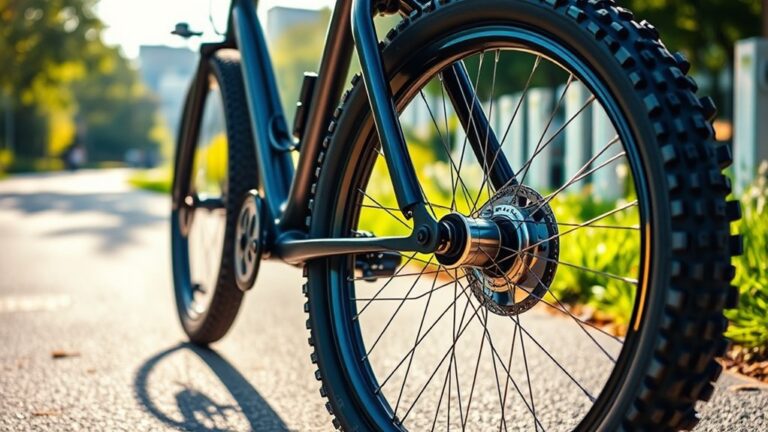
Look for wider tires with a knobby or semi-slick tread to improve grip on loose gravel. Consider the tire’s width—generally, 38-45mm works well for gravel riding.
Durability matters too; choose puncture-resistant options to avoid flats. Check the sidewalls for reinforced protection and ensure the tires are compatible with your rim width.
Finally, think about your typical riding conditions—more aggressive treads for rougher terrain, smoother for mixed surfaces. With the right tire choice, you’ll boost your confidence and ride more comfortably on gravel.
Adjust Tire Pressure Properly
Properly adjusting your tire pressure is essential for tackling gravel terrain safely and efficiently. Too much pressure makes your tires rigid, which reduces traction and increases the risk of punctures or bouncing over rough patches.
Too little pressure can lead to pinch flats or make steering difficult. Aim for a balance based on your weight and the gravel conditions. Generally, lower pressure—around 40 to 50 psi—offers better grip and comfort on loose surfaces.
Use a reliable pump with a gauge to set your pressure precisely. Check your tires before every ride and adjust as needed for changing terrain or weather conditions.
Proper tire pressure improves control, reduces fatigue, and helps you navigate gravel roads smoothly and confidently.
Install Necessary Accessories
Before heading out on gravel roads, it’s important to install the right accessories to boost safety and preparedness. These upgrades can make your ride smoother and more secure.
Start with a durable pump and extra tubes so you’re ready for flats. Add a multi-tool for quick repairs and a spare chain link just in case.
Think about installing gravel-specific handlebars or grips for better control. A high-visibility light or reflective tape will help you stay seen in low light.
Finally, attach a water bottle cage for hydration during long rides. These accessories make sure you’re equipped to handle common issues and stay in control on unpredictable terrain.
With proper prep, you can enjoy your gravel adventure confidently and safely.
Choosing the Best Tires and Tire Pressure for Gravel Roads
Selecting the right tires and setting the correct pressure are essential steps to guarantee a safe and efficient ride on gravel roads.
Opt for wider tires with lower profile knobs for better grip and stability on loose surfaces. Tubeless tires can reduce flats and allow for lower pressures, improving comfort and traction.
Adjust your tire pressure based on terrain, rider weight, and tire width. Lower pressures increase grip but risk pinch flats, while higher pressures reduce rolling resistance.
Use the table below as a quick guide:
| Tire Type | Ideal Pressure Range |
|---|---|
| Wide, knobby tires | 30-40 psi |
| Narrower tires | 40-60 psi |
| Tubeless setup | 28-35 psi |
Choose wisely to improve control and safety on gravel roads.
Techniques for Handling Your Bike on Loose Gravel
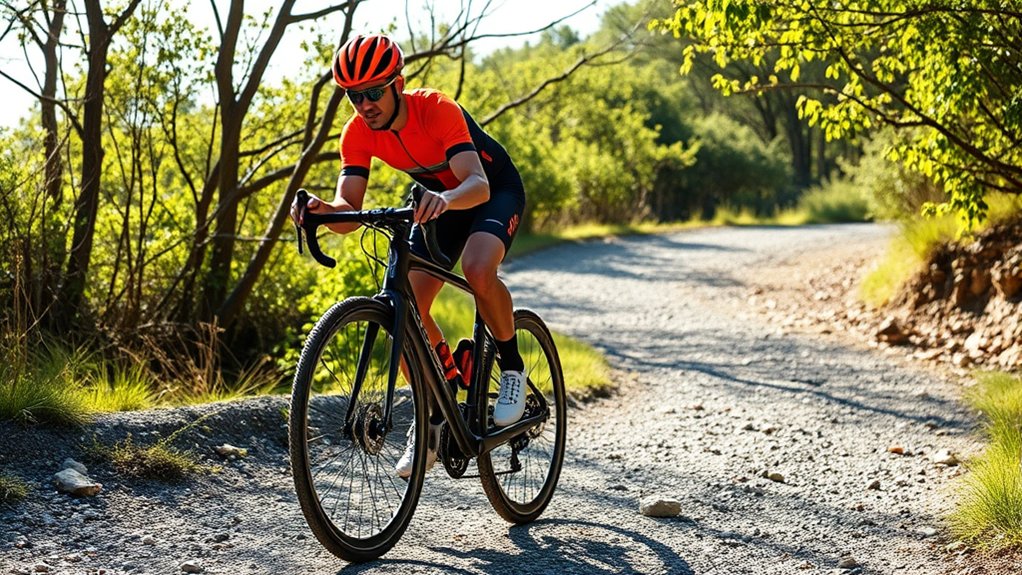
When riding on loose gravel, keep your movements smooth and deliberate to stay in control. Stay relaxed and avoid sudden shifts that could throw off your balance. Keep your hands steady on the handlebars and engage your core muscles to stabilize yourself.
Focus on maintaining a steady speed; slowing down too much can make handling trickier. Look ahead to spot bumps and loose patches, then adjust your line smoothly to navigate them.
Shift your weight slightly back to prevent the front wheel from washing out. Keep your elbows slightly bent for better shock absorption, and use a light grip to avoid overreacting to gravel shifts.
Stay seated as much as possible for better stability, and choose a steady, moderate cadence. Practice gentle steering corrections instead of sharp turns to keep your bike steady on loose surfaces.
Safety Gear Every Gravel Cyclist Should Wear
Staying safe on gravel isn’t just about good riding skills; your gear matters too. A well-fitting helmet is crucial for protecting your head if you fall or collide.
Gloves help you grip better and shield your hands if you slip or crash. Wearing padded cycling shorts cushions impacts and keeps chafing at bay during long rides.
Eyewear keeps dust, debris, and sun glare out of your eyes, so you can see clearly. Light, long-sleeved jerseys and pants protect you from scrapes, sun, and bugs.
Durable, closed-toe shoes with good grip help you stay in control and keep your feet safe. Always carry a small repair kit and first aid supplies to be ready for minor mishaps or bike issues.
Common Mistakes to Avoid When Riding on Gravel Trails
One common mistake is ignoring the importance of proper tire pressure, which can impact your grip and comfort on gravel. It’s easy to overlook, but making sure your tires are inflated correctly makes a big difference.
You also need to pay attention to trail difficulty levels so you don’t end up in situations beyond your skill. Knowing your limits helps keep you safe and confident.
Skipping these considerations can lead to flats, accidents, or even getting lost. Stay aware and prepared to enjoy your ride to the fullest.
Overlooking Proper Tire Pressure
Many riders overlook the importance of proper tire pressure, but it can really make a difference in your safety and comfort on gravel trails.
Underinflated tires can cause pinch flats, reduce efficiency, and make steering unpredictable. Overinflated tires decrease grip, leading to a harsher ride and more bouncing on uneven surfaces.
To avoid these issues, check your tire pressure regularly and adjust it based on trail conditions. Keep in mind:
- Use a reliable gauge for accurate readings
- Lower pressure for rough, loose gravel
- Increase pressure for smooth, packed surfaces
- Experiment with slight adjustments for comfort
- Don’t forget to recheck after changing tires or temperature shifts
Proper tire pressure helps you stay in control, ride more comfortably, and stay safe on every gravel adventure.
Ignoring Trail Difficulty Levels
Ignoring the difficulty level of gravel trails can catch you off guard and lead to tricky situations. If you don’t check trail signs or research the route ahead of time, you might find yourself on terrain beyond your skill level.
Easy trails can turn tough quickly if you hit steep inclines, loose gravel, or technical sections. Riding without knowing the trail’s difficulty can cause accidents or unnecessary fatigue.
Always review trail descriptions or maps to get an idea of what to expect. Adjust your bike setup and riding style accordingly, like slowing down or switching to lower gears on tougher parts.
Respect trail difficulty ratings and pick routes that match your experience. Being aware of this helps you ride confidently and safely without overestimating what you can handle.
Frequently Asked Questions
What Should I Do if I Get a Flat Tire on Gravel?
If you get a flat tire on gravel, stay calm and carefully slow down. Pull over to a safe spot and shift your bike onto a stable surface.
Remove the wheel with a quick-release lever or axle nut, then take out the flat tube. Check for debris causing the puncture, replace or patch the tube, and reassemble everything.
Make sure your tire is properly inflated before continuing your ride.
How Do I Navigate Steep or Technical Gravel Sections Safely?
To navigate steep or technical gravel sections safely, stay relaxed and keep your body loose. Sit down on your saddle and shift your weight back to maintain control.
Look ahead to plan your line and pick a smooth path. Avoid sudden movements and focus on steady, confident actions. Use your core muscles to stay stable and balanced.
Brake gently to avoid skidding, and paddle through tricky spots with confidence. Keep a steady cadence, stay alert, and trust your skills to handle the challenge smoothly and confidently.
What Are the Best Ways to Carry Supplies During Gravel Rides?
You should use a combination of handlebar bags, frame bags, and seat packs to carry supplies during gravel rides. These options keep your gear secure and balanced, making it easier to handle rough terrain.
Pack lightweight essentials like snacks, tools, and a repair kit. Distribute weight evenly to maintain stability. Avoid overloading, and make sure everything is tightly secured to prevent shifting or falling off during your ride.
How Can I Improve My Balance on Uneven Gravel Surfaces?
You can improve your balance on uneven gravel by keeping a relaxed grip on the handlebars and engaging your core muscles. Don’t worry if it feels challenging at first; with practice, your stability will improve.
Focus on small, controlled movements and look ahead rather than down. Riding slowly at first helps, and gradually increasing speed will boost your confidence and balance on tricky surfaces.
What Maintenance Tips Are Essential After Riding on Gravel?
After riding on gravel, give your bike a good cleaning. Make sure to remove dirt and debris from the frame, chain, and gears.
Check your tires for any embedded rocks or cuts, and ensure they’re properly inflated for your next ride.
Take a quick look at your brake pads to see if they’re worn down and lubricate your chain and other moving parts to prevent rust.
Finally, tighten any loose bolts and inspect your bike for loose components to keep it in top shape for future rides.
Conclusion
Welcome gravel riding as a journey of exploration, where every loose stone whispers a new challenge and every pedal stroke reveals resilience. With the right prep, gear, and techniques, you’ll navigate the uncharted with confidence.
Remember, it’s not just about conquering trails but welcoming the adventure beneath your wheels. So gear up, stay alert, and let each ride remind you that the road less traveled often leads to the most rewarding destinations.
Riding your road bike on gravel safely starts with proper preparation. Make sure your tires are suitable for mixed terrain and keep your bike well-maintained.
Keep your speed controlled and be ready for unexpected obstacles. Staying relaxed and flexible will help you handle rough patches smoothly.
Pay attention to your body and bike. Adjust your position for better stability and grip, especially on tricky sections.
With the right mindset and gear, riding your road bike on gravel can be a fun and rewarding adventure. Embrace the challenge and enjoy every mile of the gravel journey.