
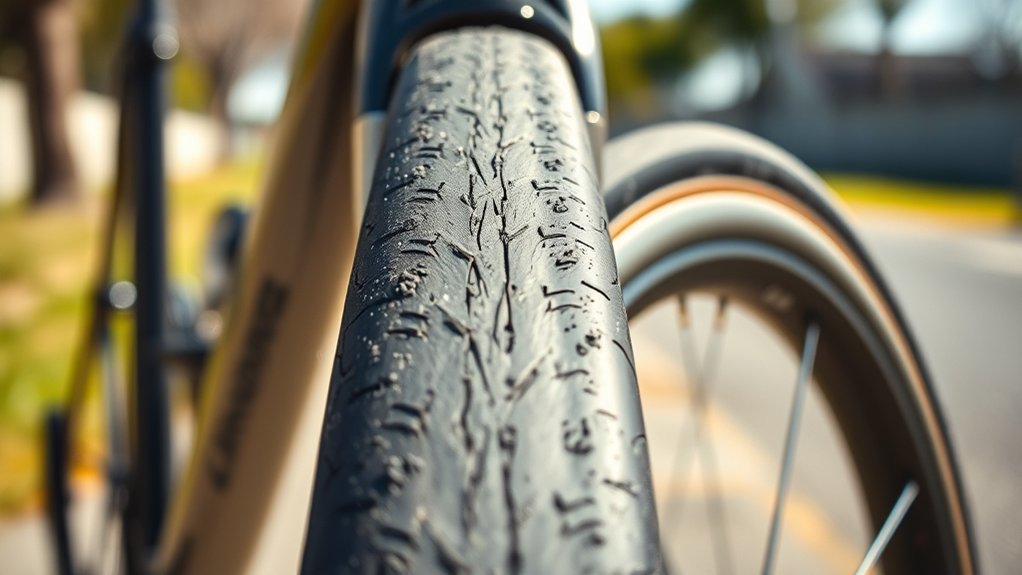
When to Change Road Bike Tires – 8 Key Signs
Are you tired of dealing with unpredictable flats or feeling less confident on your road bike? You’re not alone—many cyclists struggle with knowing when to change their tires to keep rides smooth and safe.
Regularly checking your tires can seem tricky, but it’s a key part of bike maintenance.
You should change your road bike tires when you’ve logged between 1,500 and 3,000 miles, or if you notice worn tread, cuts, or scuffs that expose inner layers.
Watch for cracks, dry rot, or sidewall damage like bulges, as these increase blowout risks.
Frequent flats and a rougher ride also signal tire wear. If your tires no longer grip the road safely, it’s time to replace them.
Keep an eye out for these signs, and you’ll guarantee safer, smoother rides ahead.
Key Takeaways
- Replace tires after 1,500 to 3,000 miles or when your mileage tracker shows you’re nearing the upper limit.
- Check the tread regularly. If it’s worn down, smooth, or shallow, it’s time to swap out the tires. Worn tread means less grip and can be unsafe.
- Take a close look at the sidewalls. If you see cracks, cuts, bulges, or dry rot, these are signs the tire’s structure might be compromised. Don’t ignore these signs.
- If you’re getting frequent flats or noticing consistent air loss, it’s a good indicator that the rubber is thinning or damaged. It’s best to replace the tire before it causes more issues.
- Pay attention to how your bike feels when you ride. If you notice less stability, a harsh ride, or increased rolling resistance, your tires might need replacing.
How Mileage Helps You Know When to Change Road Bike Tires
Mileage plays an essential role in determining when to change your road bike tires. Typically, road bike tires last between 1,500 and 3,000 miles, depending on factors like tire type, riding style, and road conditions.
You’ll want to track your mileage closely—keeping a log or using a bike computer helps. As you approach the upper limit, start inspecting your tires more frequently.
Tires naturally wear down over time, and mileage gives you a solid estimate of their remaining life. Don’t wait for a flat or noticeable damage to make the change.
Changing tires proactively based on mileage helps maintain performance and safety. Remember, consistent mileage tracking empowers you to replace tires before they become a liability on your rides.
Spotting Visible Wear: Tread, Cuts, and Scuffs on Road Bike Tires
You should regularly check your road bike tires for worn tread, since shallow or smooth areas can reduce your grip and safety.
Keep an eye out for cuts and scuffs that might expose the inner layers or cause slow leaks. Catching these early helps you know when it’s time to replace your tires.
Tread Depth Inspection
Although road bike tires often look fine at a glance, closely inspecting the tread can reveal important signs of wear. You should check the tread depth regularly because worn-down tread reduces grip and raises the risk of punctures.
Run your fingers along the tire surface to feel for smooth or bald spots where the tread has worn thin. If the grooves or patterns are shallow or nearly invisible, it’s a clear sign the tire’s performance is compromised.
Some tires have wear indicators—small marks or raised bars within the tread—that help you know when it’s time to replace them. Keeping an eye on tread depth ensures your safety and keeps your ride smooth.
Identifying Cuts And Scuffs
While inspecting your road bike tires, pay close attention to cuts and scuffs that may weaken the rubber and lead to sudden failures. Even small cuts can deepen over time, exposing the casing and increasing the risk of flats.
Scuffs might seem minor, but if they penetrate the surface, they compromise tire integrity. Run your fingers along the tire’s surface to feel for any rough spots or grooves you might miss visually.
Check the sidewalls carefully, too, since damage there can cause blowouts. If you spot any deep cuts or significant scuffs, it’s time to replace the tire.
Don’t wait for a puncture to force your hand. Proactive replacement keeps you safer and avoids inconvenient roadside repairs. Regular inspections help you ride confidently and smoothly.
Seeing Cracks, Dry Rot, and Sidewall Damage Early
If your road bike tires start showing cracks or signs of dry rot, it’s a clear signal they need some attention. These cracks usually show up on the sidewalls and tread, often from exposure to sunlight, heat, and aging rubber.
When you notice these fine lines or flaky surfaces, don’t ignore them. They mean the tire’s structural integrity is weakening. Dry rot can make tires lose flexibility, which increases the risk of blowouts or sudden failures while riding.
Sidewall damage like cuts or bulges also affects safety and performance. Make it a habit to check your tires regularly in good lighting. Catching these early signs means you can replace tires before they fail, keeping your rides safe and smooth.
Frequent Flats? What Your Road Bike Tires Are Telling You
Why do you keep getting frequent flats on your road bike tires? It’s often a clear sign that your tires have worn down and can’t protect you like they used to. The tread might look fine, but over time, the rubber thins out, making punctures more likely.
Small cuts, embedded debris, or thinning sidewalls let sharp objects penetrate easily. Ignoring these signs puts you at risk of sudden flats, which can ruin your ride or even cause accidents.
Check your tires regularly for tiny holes or worn patches. If you patch tubes often or notice more flats than usual, it’s time to think about replacing your tires. Staying ahead of the problem keeps your rides smooth and safe.
Ride Changes That Signal It’s Time for New Tires
Frequent flats often signal worn tires, but changes in how your bike rides can also tell you it’s time for new rubber. If your bike feels less stable in corners or the ride feels harsher than usual, your tires might be losing their integrity.
Tires that start to feel sluggish or require more effort to maintain speed can indicate increased rolling resistance from worn tread or sidewalls. You might also experience more vibrations through the handlebars, suggesting the tires aren’t absorbing shocks effectively anymore.
When your bike’s handling feels unpredictable or you sense a loss of responsiveness, don’t ignore these signs. Replacing tires before they fail completely helps maintain your control, comfort, and overall riding experience.
When Your Road Bike Tires Stop Gripping the Road Safely
You’ll notice your tires aren’t gripping the road like they used to when the tread wears down.
If corners feel slippery or you find yourself skidding more often, it’s a clear sign your tires aren’t safe anymore.
Paying attention to these changes helps you know when it’s time for a replacement.
Reduced Tire Tread
Although road bike tires may look fine at a glance, reduced tread can seriously compromise your grip on wet or uneven surfaces. The tread patterns on your tires help channel water away, preventing slips.
When these patterns wear down, your tires lose their ability to maintain traction, especially in damp conditions. You might not notice this loss immediately, but as the tread thins, your bike becomes less stable and more prone to skidding.
Regularly inspect your tires for smooth patches where the tread used to be. If you spot any, it’s time to replace them. Riding on worn tires increases your risk of accidents, so don’t wait until you feel a loss of control.
Check your tread often to stay safe and confident on the road.
Slippery Cornering Feel
When your bike starts to slide unexpectedly during turns, it’s a clear sign your tires aren’t gripping the road like they should. This slippery cornering feel can compromise your control, especially on wet or uneven surfaces. It’s often caused by worn tread, hardened rubber, or embedded debris reducing traction. Ignoring this warning puts you at risk, so it’s wise to inspect your tires regularly.
Below is a quick guide to what you might experience and why it happens:
| Symptom | Cause | Impact on Ride |
|---|---|---|
| Sliding in corners | Worn tread | Loss of control |
| Reduced grip on wet | Hardened rubber | Skidding potential |
| Vibration | Debris in tread | Unstable handling |
| Tire squirm | Low pressure | Poor cornering response |
| Sudden slips | Sidewall damage | Unsafe turns |
Increased Skidding Risk
If your tires lose their grip, skidding becomes much more likely—especially on wet or slick surfaces. You’ll notice that braking feels less responsive, and your bike might slide unexpectedly during quick stops or sharp turns.
This increased skidding risk means your tires have worn down, losing the tread and rubber compounds that keep you firmly connected to the road. Ignoring this warning puts you at higher risk of accidents, especially in rainy conditions or on loose gravel.
To stay safe, check your tires regularly for smooth patches, cracks, or bald spots. When you feel your bike slipping more than usual, it’s time to replace your tires—don’t wait for a fall to remind you.
Good grip means better control and confidence on every ride.
Why Sidewall Damage on Road Bike Tires Shouldn’t Be Ignored
Since the sidewall of your road bike tire bears a lot of stress during rides, any damage there can quickly weaken it. When you see cuts, cracks, or bulges on the sidewall, don’t ignore them.
These flaws make the tire weaker and increase the chance of sudden blowouts, which can cause you to lose control. Even small tears can let air escape or debris get inside, speeding up tire failure.
Riding with a damaged sidewall not only puts your safety at risk but can also harm your rim. Addressing sidewall damage quickly helps keep your bike performing well and avoids costly repairs.
Make sure to regularly check your sidewalls and replace the tire if you notice any concerning damage. Staying alert helps you stay safe on the road.
Checklist: Key Signs You Need to Replace Road Bike Tires
Recognizing when to replace your road bike tires can help you avoid unexpected flats and keep your rides safe. Check the tread: if it’s worn down or smooth, it’s time for new tires.
Look for cracks or cuts on the sidewalls, as these can weaken the tire’s structure. Feel for any bulges or deformities, which might mean internal damage. Also, watch out for debris like glass or sharp stones embedded in the rubber, as they can cause punctures.
If your tires keep losing air or flats happen frequently, that’s a sign you need to replace them. And if the rubber feels hard or brittle, it’s a clear sign of aging. Following these simple checks helps ensure your tires stay grip-worthy, durable, and reliable on every ride.
Frequently Asked Questions
How Do Tire Pressures Affect Road Bike Tire Lifespan?
Tire pressure directly affects your road bike tire’s lifespan. If you run pressures too low, you risk pinch flats and excessive sidewall wear, which shortens tire life.
Too high, and the tire wears unevenly, especially in the center, reducing grip and comfort. You should inflate your tires within the recommended range to balance durability, performance, and comfort.
Regularly checking pressure helps you get the most miles out of your tires.
Can Tire Type Influence When I Should Replace Them?
You might think tire type doesn’t impact when you should replace them, but it actually does. Different tire compounds wear differently—softer tires give better grip but wear out faster, while harder tires last longer but don’t grip as well.
If you’re using lightweight racing tires, you’ll need to replace them sooner than you would with durable training tires. Paying attention to your tire type helps you guess when it’s time to swap them out.
This way, you can keep your ride safe and smooth without surprises.
Are Tubeless Tires Less Prone to Wear Than Clinchers?
Yes, tubeless tires are generally less prone to wear than clinchers because they run at lower pressures and reduce friction between the tire and tube. This means you’ll often get a longer lifespan out of tubeless setups.
But they’re not immune to wear—you still need to check for cuts, punctures, or worn tread regularly. Proper maintenance and riding conditions also play a big role in how long your tires last.
How Does Weather Impact Road Bike Tire Durability?
Weather throws curveballs at your road bike tires, speeding up wear and tear. Hot sun can dry out rubber, making it brittle and prone to cracks. Cold temperatures stiffen the tire, reducing grip and flexibility.
Rain and wet conditions increase the risk of cuts and punctures from debris. So, you’ll need to check your tires more often if you ride in extreme or varying weather to keep them in top shape.
Should I Replace Tires After a Crash Even Without Visible Damage?
Yes, you should replace your tires after a crash, even if you don’t see visible damage. Crashes can cause internal damage like hidden sidewall cuts or weakened tire beads that might lead to sudden failure.
It’s better to be safe than risk a blowout mid-ride. Inspect carefully, and if you’re unsure, swapping them out guarantees your safety and peace of mind on the road.
Conclusion
When your tires start looking like worn-out shoes, with cracks, cuts, or bald spots, it’s time to swap them out. You want to feel confident gripping the road, taking every twist and turn without that nerve-wracking slip.
Don’t wait until flats slow you down or sidewalls crumble beneath you. Keeping your tires in good shape is key to a smooth, safe ride.
Watch for those key signs, and you’ll always roll strong and steady, ready for your next adventure. Remember, timely tire replacements help maintain your bike’s performance and your safety.