What Size Road Bike Do I Need?
Finding the perfect size road bike can feel overwhelming, especially with so many options out there. You’re not alone—many people struggle to figure out what fits best for a comfortable and enjoyable ride.
Luckily, a few simple steps can help you choose the right size and get you on the road with confidence.
To find the right road bike size, measure your height standing straight against a wall and your inseam by placing a book between your legs and measuring to the floor. Use these measurements—height and inseam multiplied by 0.67—to choose a frame size, usually between 48 and 62 cm.
Verify you have enough standover clearance and a comfortable reach for relaxed riding. Proper seat and handlebar adjustments also matter.
Keep exploring to make sure your bike fits perfectly for a smooth, enjoyable ride.
Key Takeaways
- Measure your height and inseam to get an idea of the right road bike size.
- For a more accurate fit, multiply your inseam length (cm) by 0.67. This gives you a good estimate of your ideal frame size.
- Make sure there’s at least 1-2 inches of standover clearance. This is important for safety and comfort when you’re riding.
- Check that your arm reach feels relaxed and that your seat height is proper. This helps you maintain an efficient riding posture.
- Once you have a bike, take it for a test ride. If you feel any discomfort, consider getting a professional bike fitting for the best results.
How To Measure Your Height And Inseam For Road Bikes
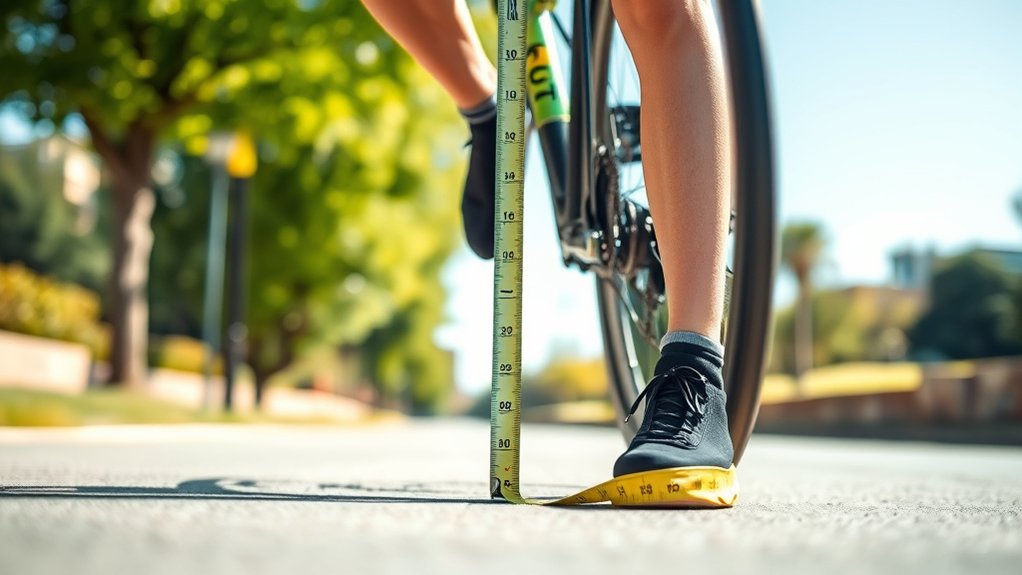
How do you determine the right road bike size? Start by measuring your height and inseam accurately.
Stand straight against a wall without shoes, with your feet flat and together. Have someone mark the top of your head on the wall. Measure from the floor to this mark for your height.
Stand barefoot with feet together against a wall; mark and measure your height from floor to head.
Next, measure your inseam by standing barefoot with your feet about 6-8 inches apart. Place a book or similar object snugly between your legs, pushing up as if it’s a bike saddle.
Measure from the floor to the top of the book. These two measurements give you the essential data to find a bike frame that fits your body.
Getting these right guarantees comfort and efficiency when riding.
Which Road Bike Frame Size Fits Your Height And Inseam
Wondering which road bike frame size matches your height and inseam? Start by using your height as a general guide: if you’re between 5’6″ and 5’9″, a 54-56 cm frame often works well.
Next, factor in your inseam length for better accuracy. Measure your inseam in centimeters, then multiply it by 0.67 to estimate the ideal frame size.
For example, a 78 cm inseam suggests a frame size around 52 cm. Keep in mind, frame sizes typically range from about 48 cm to 62 cm.
Knowing your measurements helps you avoid guessing and ensures a better fit. This way, the bike feels comfortable and offers a smoother riding experience.
Always check sizing charts from manufacturers because geometry can vary slightly.
Why Standover Height And Reach Are Key For A Comfortable Ride
Although frame size based on height and inseam gives you a good starting point, standover height and reach are essential for making sure your road bike feels comfortable and secure.
Standover height is the clearance between your crotch and the top tube when you stand over the bike. It helps prevent discomfort or injury while riding.
Reach measures how far you stretch to reach the handlebars. It impacts your riding posture and how well you can control the bike.
Focus on these key points:
- Confirm at least 1-2 inches of standover clearance for safety.
- Check that your reach allows a relaxed, natural arm bend.
- Avoid overstretching, which causes fatigue and strain.
- Verify you can comfortably place your feet flat on the ground when stopped.
- Proper reach promotes better handling and reduces back pain.
Prioritizing standover height and reach guarantees a safer, more enjoyable ride.
How Your Riding Style Affects Road Bike Size And Fit
Since your riding style influences how you position yourself on the bike, it directly affects the size and fit you need. If you prefer a more aggressive, aerodynamic posture, you might want a slightly smaller frame to allow for a lower handlebar position and a stretched-out reach.
On the other hand, if you enjoy a relaxed, upright ride, a larger frame with a taller front end will suit you better. It provides comfort without straining your back or neck. Your intended use—whether racing, long-distance touring, or casual weekend rides—also plays a role.
Take into account how you naturally sit and pedal, as this helps determine frame geometry that complements your style. Choosing the right size based on your riding style guarantees better control, comfort, and efficiency on the road.
How To Adjust Your Seat And Handlebars For The Perfect Fit
Adjusting your seat and handlebars correctly is key for a comfortable and efficient ride. Start by setting your seat height so your leg has a slight bend at the bottom of the pedal stroke.
Proper seat and handlebar adjustments ensure comfort and efficiency during your ride.
Next, position the seat horizontally to support your sit bones. Then, adjust the handlebars for reach and height to avoid strain on your back and wrists.
Here’s how to fine-tune your adjustments:
- Raise or lower the seat post for proper leg extension
- Slide the seat forward or backward for ideal knee alignment
- Adjust handlebar height to match your riding style
- Set handlebar reach to prevent overextension
- Check that your wrists remain neutral while holding the bars
These tweaks will help you ride longer with less discomfort and better control.
How To Test Road Bike Fit Before You Buy
Once you’ve fine-tuned your seat and handlebars, it’s important to check that the bike truly fits your body and riding style before buying. Take the bike for a short test ride on different types of terrain to see how it feels.
Pay attention to your knee alignment over the pedals, how far you reach to the handlebars, and your overall posture. Make sure you can control the bike easily without straining or awkward positions.
Also, test your balance when stopping and starting—your feet should touch the ground comfortably. If possible, try riding in different positions, like climbing or sprinting, to see if the bike suits your needs.
Doing this thorough check helps you avoid costly returns and makes sure you get the best ride possible.
When To Consider Custom Or Professional Road Bike Fitting
If you’re feeling discomfort or think your bike isn’t fitting quite right, it might be time to consider a professional fitting.
Getting a custom fit can really boost your comfort, efficiency, and overall performance on the road.
Knowing when to ask for expert help can make a huge difference in how much you enjoy your rides.
Benefits Of Professional Fitting
Although choosing the right road bike size gets you started, professional fitting takes your ride to the next level by tailoring the bike precisely to your body and riding style. When you get professionally fitted, you’ll enjoy benefits that boost comfort, performance, and injury prevention.
A fitting guarantees your bike adapts to your unique proportions instead of forcing you to adapt to the bike. Here’s what you gain from a professional road bike fitting:
- Customized saddle height and position for efficient pedaling
- Optimized handlebar reach and drop to reduce strain
- Improved posture to elevate endurance and comfort
- Better power transfer through proper cleat alignment
- Reduced risk of repetitive stress injuries and discomfort
Investing in a fitting means your bike works with you, not against you.
Signs You Need Customization
When your bike feels uncomfortable or gets in the way of your performance, it’s a sign you might need customization or a professional fitting. If you keep feeling numbness, pain in your knees, back, or hands, or if you find yourself constantly adjusting your position mid-ride, your bike probably doesn’t fit you right.
Also, if you recently changed your riding style or the intensity of your rides, your current setup might not be suitable anymore. Signs like having trouble reaching the handlebars or pedals, inefficient pedaling, or feeling tired all the time mean it’s time to consider a tailored fit.
Getting your bike customized ensures it matches your body and riding goals perfectly. It helps you ride longer, prevents injuries, and boosts your efficiency. Don’t ignore these signs—address them early for a more enjoyable and comfortable cycling experience.
Frequently Asked Questions
What Materials Are Best for a Lightweight Road Bike Frame?
You’ll want a carbon fiber frame if you’re after the lightest road bike. It’s strong, stiff, and absorbs vibration well, making your ride smoother.
Aluminum is another good choice for a lightweight frame. It’s usually more affordable but a bit less comfortable on rough roads.
Titanium offers a great balance of lightness, strength, and durability. However, it’s pricier.
Steel frames are heavier but provide excellent ride quality if weight isn’t your top priority.
How Often Should I Replace My Road Bike Tires?
You should replace your road bike tires about every 2,000 to 3,000 miles, kind of like changing the soles of your favorite shoes before they wear thin. It’s a good idea to keep an eye out for signs like cracks, bald spots, or frequent flats.
If your tires start feeling rough or slippery, it’s definitely time for a change. Riding on worn tires can lead to punctures and poor grip, which isn’t safe or fun.
Keeping your tires fresh means smoother, safer rides every time you hit the road. So, check them regularly and replace as needed to stay at your best.
What Accessories Are Essential for Road Bike Safety?
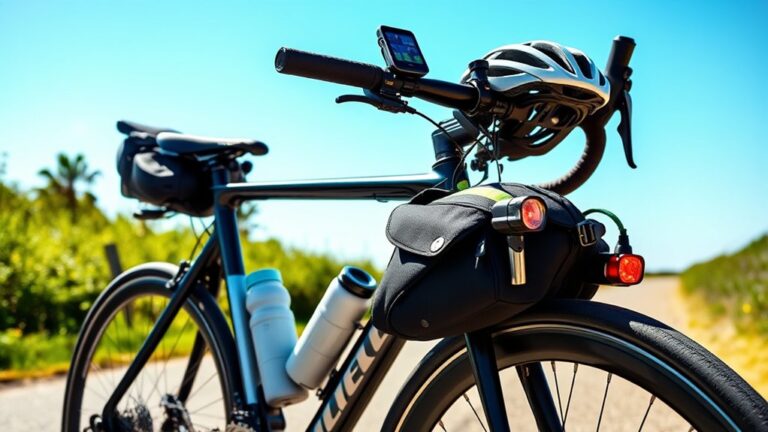
You’ll want a helmet that fits snugly and meets safety standards to protect your head. Bright front and rear lights are essential for visibility, especially in low light. Don’t forget reflective gear or stickers to increase your presence on the road.
A bell helps alert pedestrians and other cyclists. Also, carry a tire repair kit and a mini pump so you’re prepared for flats during your rides.
How Do Different Weather Conditions Affect Road Bike Performance?
Ever wondered why your ride feels tougher on rainy days? Different weather conditions directly impact your road bike’s performance.
Wet roads reduce tire grip, making braking less effective. Strong winds can slow you down or push you off balance.
Cold temperatures stiffen your bike’s components, while heat can cause tires to overinflate. You’ll want to adjust your riding style and gear to stay safe and maintain control no matter the weather.
What Maintenance Is Required to Keep My Road Bike in Top Shape?
You need to regularly clean your chain, lubricate it, and check tire pressure before every ride.
Inspect brakes and gear shifting to make sure they work smoothly. Tighten bolts and look for any cracks or wear on the frame.
Don’t forget to replace worn brake pads and tires when needed. A thorough tune-up every few months keeps everything running smoothly, so you can enjoy your rides safely and efficiently without unexpected breakdowns.
Conclusion
Choosing the right road bike size is like finding the perfect pair of shoes—too tight, and you’re uncomfortable; too loose, and you lose control.
By measuring your height and inseam, you can get a good starting point for your size. Considering standover height and reach helps fine-tune your fit for comfort and control.
Adjusting your seat and handlebars is key to making your ride smooth and enjoyable. Remember, your riding style influences what size is best for you.
Always test the bike before you buy to make sure it feels right. Don’t hesitate to seek professional help if you’re unsure.
Your perfect road bike awaits—ready to turn the road into your playground. Choosing the right size ensures you enjoy every mile.