What Size Mountain Bike Fits Someone 7’10?
Finding the right mountain bike size can be a real challenge, especially if you’re tall. Many people struggle with fitting standard bikes, and that’s completely normal. If you’re 7’10”, you’re not alone—most bikes just aren’t built for your height.
At 7’10”, a standard mountain bike won’t fit you properly—you’ll need an XXL or custom frame tailored to your longer limbs.
Focus on key measurements like inseam, torso, and arm length to find a frame with the right standover height and reach for comfort and control. Larger 29-inch wheels usually work best, and you might need extended seatposts and wider handlebars.
Keep your fit precise to avoid discomfort, and investigate further to get the perfect mountain bike setup just for you.
Key Takeaways
- Riders at 7’10” should look for XXL or custom mountain bike frames to get the best fit and comfort.
- The standover height needs to be 1-2 inches lower than your inseam. This helps with safety and makes it easier to get on and off the bike.
- You might need extended seatposts and adjustable stem lengths. These help you set the perfect seat height and handlebar reach.
- Wider handlebars and riser bars can make control easier and reduce strain, which is especially helpful for very tall riders.
- Custom builds usually start around $2,000. They’re a good idea to match your unique body proportions and avoid discomfort or injury.
Why Don’t Standard Mountain Bikes Fit Riders 7’10?
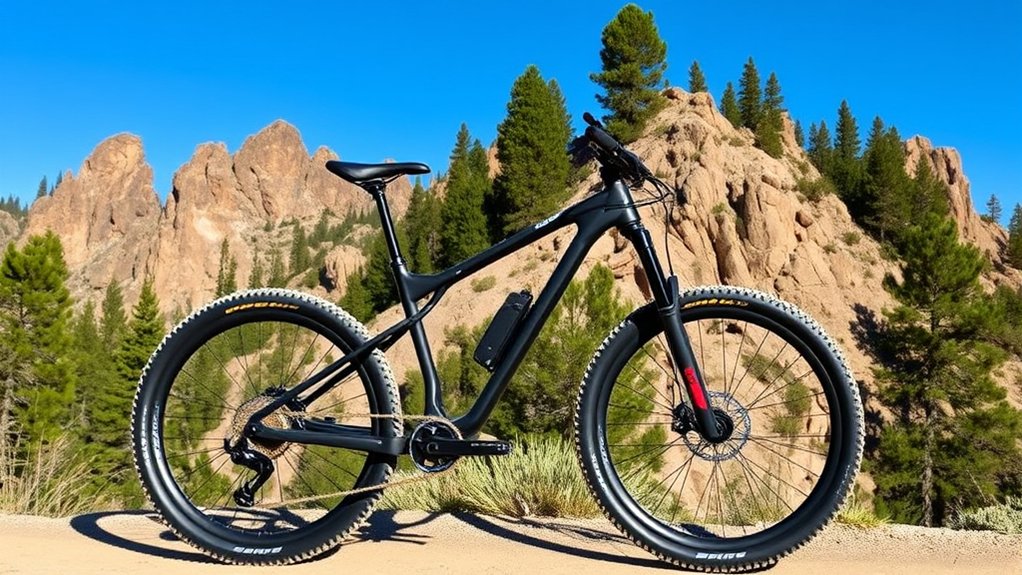
Because standard mountain bikes are made for average heights, they usually don’t work well for someone who’s 7’10”. The frame size, standover height, and reach on regular bikes just don’t fit tall riders.
When you’re that tall, the bike feels cramped and uncomfortable. Your knees might hit the handlebars, or you can’t fully extend your legs while pedaling. It just doesn’t feel right.
At extreme heights, bikes feel cramped, causing discomfort and limited leg extension while pedaling.
The smaller frames push you into awkward positions, which can cause discomfort and make riding less controlled. Plus, parts like the seat post and handlebar stem might not go high enough for your height.
Trying to ride a regular bike at that size can leave you feeling restricted, which affects both your performance and safety. That’s why tall riders need bikes that are specifically designed or custom-built to match their proportions.
Key Body Measurements To Find Your Perfect Mountain Bike Size
To find the perfect mountain bike size, focus on key body measurements like your inseam length, torso, and arm length. These help ensure the bike fits comfortably and handles well.
Don’t forget to check the standover height to make sure you can stand over the bike safely. Getting these measurements right makes a big difference in your riding experience.
Inseam Length Importance
When choosing a mountain bike that fits your tall height, your inseam length is really important for comfort and control. This measurement directly affects your standover height, which is the space between your crotch and the top tube.
If the bike frame is too small compared to your inseam, you might feel uncomfortable and have limited maneuverability. On the other hand, a frame that matches your inseam allows your legs to fully extend when pedaling.
This helps reduce fatigue and improves power transfer. To find your inseam, measure from the floor to your crotch while standing barefoot.
Use this number to pick a frame size that gives enough clearance and proper leg extension. Prioritizing your inseam length helps prevent injuries and makes your ride safer and more enjoyable, tailored to your height.
Torso And Arm Length
Your torso and arm length are key when choosing a mountain bike that fits well and performs nicely. These measurements influence your reach, which is the distance between the saddle and handlebars. Reach impacts your riding posture and how much control you have.
If you have long torso and arms, you’ll want a bike with a longer top tube and maybe a longer stem. This helps prevent feeling cramped or overly stretched out on your bike. On the other hand, shorter torso and arms mean you’ll need a more compact frame for comfort and better maneuverability.
To measure, sit upright and measure from the base of your neck to your wrist for arm length. For torso length, measure from your sternum to your waistline. Use these numbers to compare with bike geometry charts. This way, you can pick a frame that matches your proportions perfectly.
Standover Height Measurement
Although it might seem simple, standover height is really important for a safe and comfortable fit on your mountain bike. To measure it, stand with your feet about shoulder-width apart and measure from the ground up to your crotch.
Your bike’s standover height should be at least 1 to 2 inches lower than that measurement. This extra clearance helps prevent discomfort and injury if you need to quickly dismount or stop.
If you’re 7’10”, finding a bike with the right tall frame and standover height is crucial. Don’t guess—make sure to test the bike by standing over it before buying.
Having the proper standover height helps you stay in control and confident on rough trails. It makes your ride safer and way more enjoyable.
Why Frame Size Matters For Tall Riders
Because taller riders face unique challenges, choosing the right mountain bike frame size is essential for comfort and performance.
If the frame is too small, you’ll feel cramped, which can cause discomfort and limit your control.
On the other hand, a frame that’s too large can make handling awkward and increase the risk of injury.
A properly sized frame guarantees your body aligns correctly, reducing strain on your back, knees, and wrists during long rides.
It also helps you maintain balance and stability on uneven terrain.
Since standard frames rarely accommodate someone 7’10”, paying close attention to size assures you get a bike that fits your height and proportions, letting you ride confidently and enjoy every trail without compromise.
Choosing The Right Mountain Bike Frame Geometry For A 7’10 Rider
When choosing a mountain bike frame for your 7’10” height, pay close attention to frame size and top tube length to ensure a comfortable fit.
You’ll want to adjust the reach and stack measurements to match your long limbs and riding style. Getting these geometry details right helps you ride efficiently and avoid discomfort on the trail.
Frame Size Considerations
Finding the right frame size is essential if you’re 7’10” and want a mountain bike that feels comfortable and performs well. You’ll need a larger-than-standard frame, typically an XXL or custom size, to support your height.
Focus on a frame with a taller seat tube to guarantee proper leg extension and a standover height that prevents discomfort. Make sure the frame geometry matches your riding style, whether it’s cross-country or downhill, since different styles need different shapes.
Avoid choosing a frame that’s too small; it can cause strain and reduce control. Don’t forget to check the frame’s reach and stack numbers too, as these affect your riding posture and comfort.
Prioritize frames designed for tall riders or custom builds to get the best fit.
Top Tube Length Importance
Two key measurements define how well your mountain bike fits: top tube length and frame geometry. For someone who’s 7’10”, the top tube length is especially important because it directly affects your reach and comfort.
If the top tube is too short, you’ll feel cramped, which can cause strain in your back and shoulders. On the other hand, a top tube that’s too long might lead you to overextend, reducing control and increasing fatigue.
You want a top tube length that lets you maintain a natural, relaxed posture while pedaling and handling the bike. Manufacturers often offer custom or extra-large frames with extended top tubes to fit taller riders like you.
Paying attention to this measurement ensures your bike feels balanced, responsive, and comfortable on every trail. This makes your rides more enjoyable and safer.
Adjusting Reach And Stack
Because your height demands a unique fit, adjusting the reach and stack of your mountain bike frame is essential for comfort and control. Reach measures how far you stretch to the handlebars, while stack is the vertical distance from the bottom bracket to the top of the head tube.
For someone 7’10”, you’ll need a longer reach to avoid feeling cramped and a taller stack to prevent excessive bending over. Look for frames with extended top tubes and increased head tube height.
You might also consider customizable components like adjustable stems or spacers to fine-tune your fit. Prioritizing these geometry adjustments will help you maintain better posture, reduce fatigue, and improve handling, making your rides safer and more enjoyable.
What Wheel Size Works Best For Extremely Tall Mountain Bikers?
When you’re exceptionally tall, choosing the right wheel size can really improve your mountain biking experience. Larger wheels offer better rollover ability, stability, and control, which suit your height and longer limbs. For someone 7’10”, 29-inch wheels usually work best because they provide a smoother ride and better momentum on rough trails.
Here are some advantages of 29-inch wheels for tall riders:
Advantages of 29-inch wheels for tall riders include better clearance, traction, stability, and a more comfortable fit.
- Better obstacle clearance reduces jarring impacts
- Improved traction helps with climbing and cornering
- Increased stability at high speeds
- More efficient energy transfer on long rides
- They fit larger frame sizes for a proper, comfortable fit
While 27.5-inch wheels are more agile, they might feel cramped for your stature. Sticking with 29ers will give you the best comfort and performance.
Adjusting Seat Height And Handlebar Reach
You’ll want to set your seat height so your legs have a slight bend at the bottom of each pedal stroke for maximum power and comfort.
Adjusting the handlebar reach is key to avoiding strain in your back and shoulders, especially at your height.
Let’s investigate how to fine-tune these settings for a better ride.
Optimal Seat Height
Finding the ideal seat height is crucial for riders standing 7’10” to maximize comfort and control. You want your leg nearly fully extended at the bottom of each pedal stroke but not locked out. This balance reduces strain and boosts pedaling efficiency.
To get the best seat height, start with your heel on the pedal at its lowest point. Adjust until your leg is almost straight without locking the knee. Then, make sure you can comfortably reach the ground when stationary.
Using a dropper post can help with quick height changes on varied terrain. After a short test ride, recheck and fine-tune your seat height for peak comfort.
Proper seat height keeps your hips stable and prevents fatigue. It helps you enjoy longer rides without discomfort.
Handlebar Reach Adjustment
After setting your seat height for comfort and efficiency, adjusting the handlebar reach helps you maintain proper posture and control while riding. For someone 7’10”, extended reach is key to avoiding cramped positions and reducing strain on your back and shoulders.
You can change the handlebar reach by adjusting the stem length or choosing a different handlebar type. Make sure your elbows have a slight bend and your wrists stay neutral to prevent fatigue.
| Adjustment Method | Impact on Fit |
|---|---|
| Longer Stem | Increases reach and extends posture |
| Adjustable Stem | Lets you fine-tune reach easily |
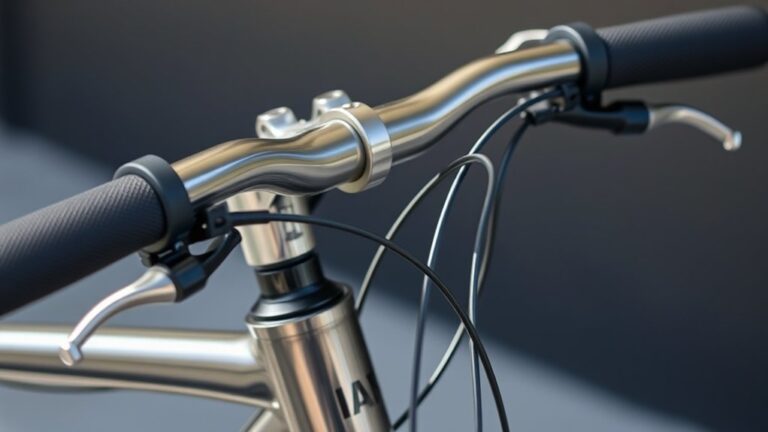
| Riser Handlebars | Raises grip height for better control |
| Flat Handlebars | Lowers grip for an aggressive stance |
Try out these options to find the perfect balance of comfort and control.
When And Why To Choose A Custom Mountain Bike
Because riders who stand 7’10” fall well outside standard sizing charts, choosing a custom mountain bike becomes essential. You’ll get a bike tailored specifically to your body, ensuring comfort and control.
Custom bikes help prevent awkward postures that can cause pain or injury on long rides. They also boost your riding efficiency and performance by matching the frame geometry to your height and reach.
Consider going for a custom mountain bike when:
- Standard sizes feel cramped or overstretched
- You experience discomfort or numbness while riding
- You want handling that’s optimized for your body proportions
- Off-the-shelf bikes lack necessary component adjustments
- You’re serious about maximizing ride quality and safety
With a custom build, you can ride confidently without having to settle for compromises that standard bikes might force on very tall riders.
Top Brands Offering Large Or Custom Mountain Bikes
Top mountain bike brands understand that taller riders need special options. They offer large or customizable bikes to make sure everyone can ride comfortably.
Companies like Trek, Specialized, and Santa Cruz have extended size ranges or custom frame builds made for taller riders. Trek’s Project One program lets you customize geometry and components for the perfect fit.
Specialized offers S-Works custom builds where you can choose your frame size and features. Santa Cruz also provides custom options focused on fitting very tall riders without sacrificing performance.
Boutique brands such as Yeti and Pivot also offer custom sizing. They give you the chance to get a frame that fits your height perfectly. These brands prioritize fit and ride quality, so you don’t have to settle for off-the-shelf sizes.
How To Work With A Bike Shop To Build Your Ideal Fit
When you work with a bike shop to build your ideal mountain bike fit, clear communication about your height and riding style is key. Don’t hesitate to share your precise measurements and describe how you plan to ride, whether it’s aggressive downhill or casual trail riding.
Ask the experts for their recommendations on frame size, components, and adjustments. Make sure they measure you properly and consider custom options if standard sizes don’t fit comfortably. Stay involved throughout the process.
Focus on providing your exact height, inseam, and reach. Explain your preferred terrain and riding intensity so they understand your needs. Testing multiple bike sizes or frames can help find the best fit.
Don’t be afraid to request tailored adjustments like saddle height and handlebar width. Be open to custom builds or modifications that could improve comfort and performance.
This collaboration guarantees your bike fits perfectly and rides comfortably.
Budgeting For A Custom Or XXL Mountain Bike
Finding the right custom or XXL mountain bike can come with a higher price tag than standard models. You’ll want to budget more for a longer frame, reinforced components, and possibly custom geometry to guarantee comfort and durability. Expect costs to start around $2,000 and climb considerably depending on brand, materials, and tech features.
Don’t forget additional expenses like wider tires, stronger wheels, and specialized handlebars that suit your height. It’s smart to set aside extra funds for professional assembly and any adjustments needed after purchase.
Keep in mind, investing in a bike that fits perfectly not only improves your riding experience but also helps prevent injury. Planning your budget carefully helps avoid surprises and ensures you get a quality bike tailored to your size.
Fit Testing And Adjustments For Tall Mountain Bikers
Budgeting for a custom or XXL mountain bike sets the stage, but making sure it fits your height perfectly is just as important. You’ll want to take a test ride and make key adjustments to avoid discomfort and get better control.
Start by checking your stand-over height and seat position. Adjust the handlebar height and reach to prevent strain. Don’t forget to fine-tune the suspension settings for your weight and riding style.
Begin with stand-over height and seat position, then adjust handlebars and suspension for comfort and control.
Here are some fit testing tips to keep in mind:
- Measure your inseam to confirm your frame size
- Adjust saddle height for the best leg extension
- Customize handlebar width and stem length
- Test brake and shifter reach for comfort
- Evaluate your overall bike balance during rides
Taking these steps helps ensure your mountain bike fits you like a glove.
Common Fit Mistakes To Avoid For Riders Over 7 Feet Tall
Although having a custom or XXL mountain bike is key for riders over 7 feet tall, many still make common fit mistakes that can cause discomfort and reduce control.
You might overlook frame size, settle for standard parts, or ignore proper handlebar and seat adjustments. These errors can lead to pain and limit your riding performance.
Here’s a quick guide to help you avoid these pitfalls:
| Mistake | Consequence | Solution |
|---|---|---|
| Choosing a small frame | Knee and back pain | Opt for XXL or custom frame |
| Using a standard seatpost | Inadequate saddle height | Use an extended seatpost |
| Ignoring handlebar width | Poor bike control | Select wider handlebars |
| Neglecting reach | Strained arms and shoulders | Adjust stem length accordingly |
Frequently Asked Questions
What Suspension Type Is Best for a 7’10 Mountain Biker?
You’ll want a full suspension mountain bike if you’re 7’10”. It gives you better control and comfort on rough terrain, which is really important given your height and weight.
Full suspension absorbs shocks more efficiently, helping reduce fatigue during long rides. Just make sure the bike frame is large enough to fit you comfortably.
That way, you’ll enjoy smoother rides and better handling on technical trails without sacrificing stability.
How Does Tire Pressure Affect Ride Comfort for Very Tall Riders?
Tire pressure directly affects your ride comfort, especially at your height. Lower pressure lets your tires absorb bumps better, giving you a smoother, more forgiving ride on rough terrain. But don’t go too low—risking pinch flats or rim damage increases.
Higher pressure means less rolling resistance but a harsher ride. You’ll want to experiment with pressures to find a balance that supports your weight while keeping comfort and control ideal.
Are There Specific Pedals Recommended for Riders Over 7 Feet?
Pedals are the bridge between you and the trail, so you need ones built for giants. For riders over 7 feet, look for pedals with a wider platform and extra grip to keep your massive feet secure.
Brands like Crankbrothers and Shimano offer models with adjustable pins and large surface areas, so you won’t feel like you’re balancing on a tightrope.
Comfort and control matter most—don’t settle for anything less.
What Clothing Brands Cater to Extremely Tall Mountain Bikers?
You’ll want to check out brands like Patagonia, Mission Workshop, and Fox Racing, as they offer extended sizes or customizable options for tall riders. Some companies, like REI Co-op and 7mesh, also provide gear designed with taller athletes in mind.
Don’t forget to investigate specialized tall clothing brands like Long Tall Sally or TallMenShoes for casual wear that fits well off the bike. Tailoring might be your best friend for a perfect fit.
How to Transport a Large Mountain Bike for Travel or Storage?
Transporting a large mountain bike is like fitting a giant puzzle piece into your travel plans. You’ll want a sturdy bike bag or hard case designed for big frames.
Remove the wheels and pedals to save space, and protect the frame with foam or bubble wrap. Make sure everything is secured tightly to prevent shifting during transit.
For storage, use a wall mount or ceiling hoist to keep your bike safe and out of the way.
Conclusion
Riding a mountain bike at 7’10” means finding a frame that feels like an extension of yourself, not a constraint. Think of your bike as a tailored suit—crafted to fit every curve and reach perfectly.
When you choose the right size and geometry, you’re not just riding; you’re soaring, turning every trail into your personal mountain.
Don’t settle for less—your bike should lift you up, not hold you down. For someone 7’10”, look for XXL or custom-sized mountain bikes designed for tall riders to ensure a perfect fit.