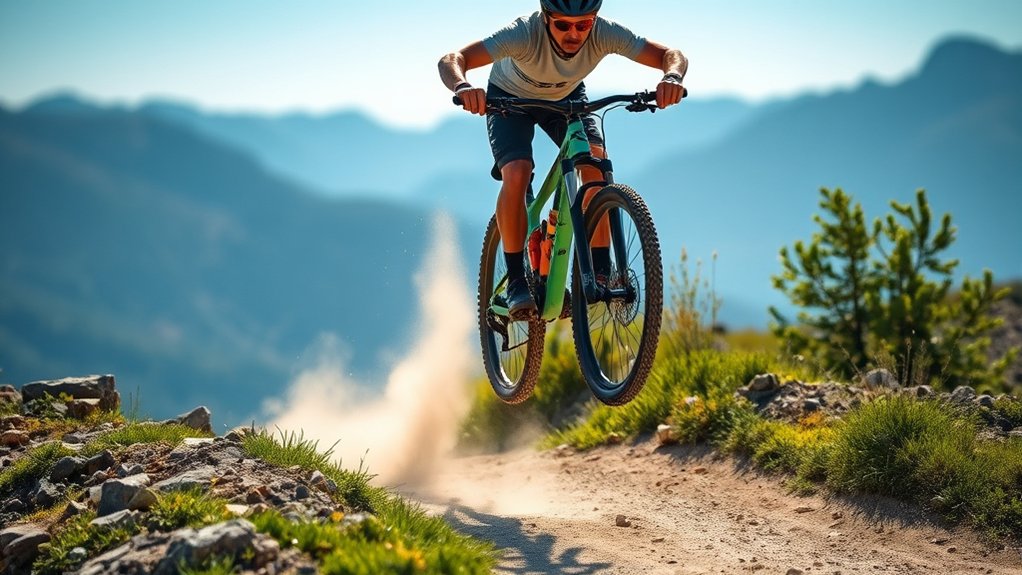
10 Easy Steps to Bunny Hop on a Mountain Bike
Feeling stuck trying to master the bunny hop on your mountain bike? You’re not alone—many riders struggle with this essential skill. But don’t worry, with a little guidance, you’ll be hopping over obstacles smoothly in no time.
To bunny hop on your mountain bike, first check your bike’s condition and stand with knees slightly bent and weight centered. Lean forward slightly, keep your eyes ahead, and pull up the handlebars to lift the front wheel smoothly.
Then, scoop the rear wheel up by pushing down and then up on the pedals. Time your movements so both wheels lift and land together for a smooth hop.
Master these basics, and you’ll be ready for bigger challenges ahead.
Key Takeaways
- Stand on level pedals with your knees and elbows slightly bent. Lean forward a bit to keep your weight centered over the bike.
- Compress your body by bending your knees and elbows. This loads energy so you’re ready to hop.
- Pull up the handlebars while pushing down and then up on the pedals. This helps lift the front wheel first.
- Quickly scoop the rear wheel up by pulling with your feet. This makes it easier to clear obstacles smoothly.
- Land both wheels at the same time with your knees and elbows bent. This absorbs the impact and keeps your momentum going.
What Is a Bunny Hop and Why It Matters
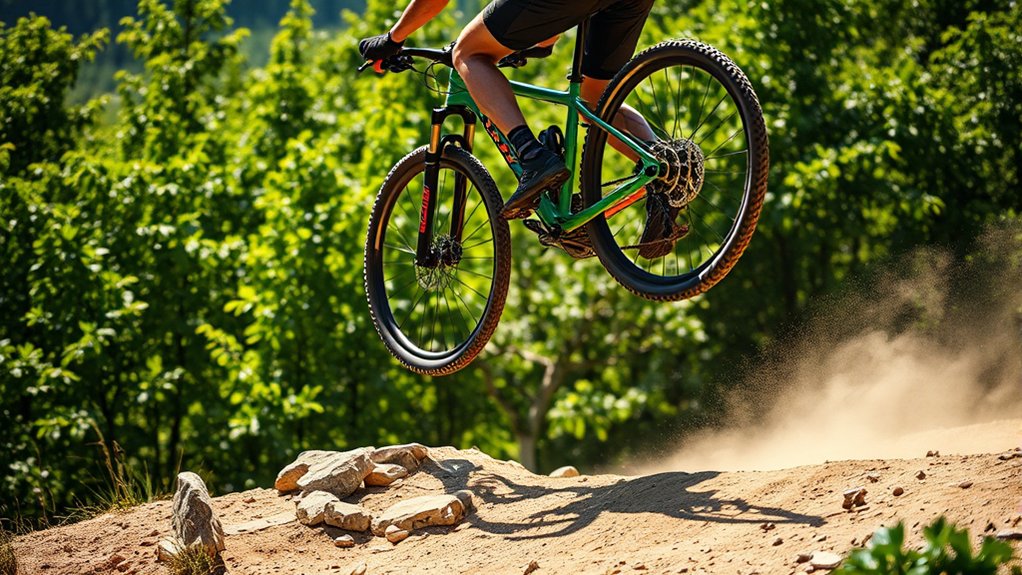
Mastering the bunny hop allows you to lift both wheels off the ground at the same time, making it easier to clear obstacles and tricky terrain. It’s a game-changer for staying in control.
When you bunny hop, you gain more control over your bike than simple wheel lifts can give. It helps you jump over rocks, roots, and small gaps without stopping or losing momentum.
Bunny hopping lets you clear obstacles smoothly without losing speed or breaking your flow.
This skill isn’t just about looking cool; it’s about safety and getting through tough spots smoothly. You’ll avoid crashes caused by unexpected obstacles and keep your speed on rough trails.
Plus, learning to bunny hop builds your confidence. It makes you more adventurous on challenging paths and makes your rides smoother and more fun.
Once you get the hang of it, you’ll see your riding improve. It’s a fundamental move every mountain biker should have in their toolkit for better handling and more enjoyment.
Set Up Your Bike and Body to Bunny Hop
Before you try a bunny hop, it’s important to get your bike and body in the right position to stay in control and lift smoothly. First, check that your bike is in good shape—make sure the tire pressure is right and loosen your suspension a bit for better response.
Stand on the pedals with your feet level and knees slightly bent. Keep your arms relaxed but ready to pull up the handlebars. Lean a little forward, centering your weight over the bike without locking your elbows or knees.
This stance helps you generate the upward force needed to lift both wheels. Grip the handlebars firmly but not too tight, and keep your eyes focused ahead. Setting up this way prepares you for a smooth, controlled hop and helps prevent losing balance midair.
Find the Right Starting Position on Your Bike
To nail the bunny hop, you need the right starting position on your bike. Keep your body relaxed with a slight bend in your knees and elbows, ready to spring into action.
Make sure your bike setup supports this posture for maximum control and power.
Optimal Body Posture
Although it might seem simple, finding the right starting position on your bike is key to a good bunny hop. Start by standing on your pedals with your knees slightly bent and your feet parallel to the ground.
Keep your shoulders relaxed but engaged, leaning a little forward to stay balanced. Your elbows should be bent outward, ready to absorb the bike’s movement.
Position your weight evenly between the front and rear wheels. This balance helps you pop the bike smoothly. Keep your head up and eyes focused ahead, not down at your front wheel.
This posture allows quick, controlled movements, making it easier to lift both wheels during the hop. Mastering this stance will boost your confidence and control for every bunny hop attempt.
Bike Setup Essentials
Getting your body in the right position sets the stage, but your bike also needs to be dialed in for the best bunny hop. Start by adjusting your saddle height so your feet sit comfortably on the pedals with a slight bend in your knees. Too high or too low throws off balance and control.
Next, set your handlebars at a height that lets you maintain a relaxed grip without overextending your arms. Check your tire pressure—medium firmness works best, offering grip without sacrificing bounce. Verify your pedals are secure and positioned evenly.
Clipless or flat pedals both work, but make sure your feet won’t slip. Finally, confirm your brakes respond well so you can confidently time your hop without hesitation. Proper setup makes your bunny hop smoother and safer.
Master Lifting the Front Wheel Smoothly
When you master lifting the front wheel smoothly, you’ll have better control and confidence on your mountain bike. Start by shifting your weight slightly back while keeping your arms relaxed but ready to pull.
As you approach the obstacle, bend your knees and elbows, then quickly extend your arms forward and pull up on the handlebars in one fluid motion. Timing is key—pull too early or too late, and you’ll struggle to clear the obstacle.
Practice this movement slowly at first to build muscle memory. Focus on a controlled, steady lift rather than a sudden jerk. Remember, smoothness comes from coordinating your body’s motion.
Keep your eyes on the obstacle and stay balanced. This skill lays the foundation for a successful bunny hop.
Pull up the Rear Wheel in Sync With the Front
Now that you’ve got the front wheel up, it’s important to pull the rear wheel up right after. Keep the timing tight so the lifts happen smoothly in succession.
Coordinating both lifts will make it easier to clear obstacles. Practice this sync until it starts to feel natural and controlled.
Timing Your Rear Lift
Although lifting the front wheel is important, timing your rear lift to follow smoothly makes the bunny hop effective. As you pull the front wheel up, get ready to shift your weight back quickly.
Just as the front wheel reaches its peak, snap your hips upward and use your pedals and legs to lift the rear wheel off the ground. Don’t wait too long, or the rear wheel will lag and make the hop awkward.
If you go too soon, you’ll lose momentum. Practice feeling the rhythm between lifting the front and pulling the rear, aiming for a smooth, fluid motion. This timing helps both wheels clear obstacles together, giving you better control and balance.
Mastering this takes patience, but it’s key to hopping confidently and cleanly every time.
Coordinating Front And Rear
Getting the timing right between lifting the front and rear wheels sets the stage, but coordinating both pulls together takes your bunny hop to the next level. You want to pull up the rear wheel just as the front wheel reaches its peak height.
Start by lifting the front wheel firmly by pulling up on the handlebars while shifting your weight slightly back. As the front wheel rises, engage your legs to pull the rear wheel off the ground by scooping upward with your pedals and heels.
Keep your movements smooth and connected so the bike feels like one unit. Avoid pausing between the two lifts—think of it as one flowing motion. Mastering this coordination helps you clear obstacles more efficiently and confidently.
Practicing Smooth Synchronization
Focus on syncing your movements so the rear wheel lifts smoothly just as the front reaches its highest point. Start by practicing the front wheel lift separately until you feel comfortable. Once you master that, add the rear lift by pulling up your knees and shifting your weight backward in one fluid motion.
Timing is key. If you pull the rear wheel too early or too late, you’ll lose balance. Try slow, controlled bunny hops to build coordination. Visualize your body and bike moving as a single unit, not two separate parts.
Repetition will help your muscles remember the rhythm. With consistent practice, you’ll naturally develop smooth synchronization. This will make your bunny hops more effective and boost your confidence every time you ride.
Use Your Legs and Pedals to Boost Your Bunny Hop
Harness your legs and pedals to add power and height to your bunny hop. As you prepare to lift off, bend your knees and ankles, coiling your legs like springs.
Push down hard on the pedals, using your legs to generate upward force. This compression builds energy for the jump. Just as you begin to extend your legs, pull up on the pedals with your feet, helping lift the bike’s front wheel.
Your legs act as the main engine—strong, quick movements translate into a higher hop. Keep your feet firmly on the pedals, ready to snap the bike upward while maintaining control.
Perfect Bunny Hop Timing for a Clean Lift
You’ve got to recognize the perfect moment to jump for a smooth bunny hop.
Timing your pedal pull and body lift together makes all the difference.
When you sync these movements, you’ll get a clean, controlled lift every time.
Recognizing Ideal Jump Moment
When exactly should you lift off for a bunny hop to clear an obstacle smoothly? The ideal jump moment is just before your front wheel reaches the obstacle.
As you approach, focus on the obstacle’s distance and your speed. Timing your lift too early or too late can cause you to catch the obstacle or lose balance.
Watch for a subtle shift in your body weight — that’s your cue to initiate the hop. You want to generate upward momentum by pulling the handlebars up while compressing your legs.
Practicing on various obstacles helps you develop a natural feel for this moment. Trust your instincts and stay relaxed; recognition comes with experience.
Mastering this timing guarantees a clean, controlled bunny hop every time.
Synchronizing Pedal and Body
Timing your lift is only part of the equation; syncing your pedal stroke with your body’s movement can make or break a clean bunny hop.
As you approach the jump, prepare to pull up on the handlebars while simultaneously pushing down and then up on the pedals. Your body should rise smoothly with this motion, creating a fluid lift-off.
Avoid jerky or disconnected movements—your arms and legs need to work together like a spring. When you compress your body down, load energy by bending knees and elbows, then explode upward, pulling the bike up with you.
Practice this rhythm until it feels natural so the bike responds instantly to your body’s cues. Mastering this sync helps you clear obstacles with confidence and control every time.
Land Both Wheels Evenly and Safely Every Time
Although mastering the bunny hop feels exciting, landing both wheels evenly takes focus and balance. As you come down, keep your body centered over the bike to spread the weight evenly.
Avoid leaning too far forward or backward, which can cause the front or rear wheel to hit first. Bend your knees and elbows slightly to absorb impact smoothly, acting like natural shock absorbers.
Try to touch both wheels down at the same time to keep your momentum and prevent jolts that could throw you off balance. Keep your eyes focused ahead, not down at the wheels, to help maintain good posture and steady your landing.
With practice, landing safely and evenly will become second nature. This will boost your confidence for trying more advanced tricks.
Fix Common Bunny Hop Mistakes Like Dragging Wheels
Landing both wheels evenly sets the foundation for a clean bunny hop, but you might still run into common mistakes like dragging your wheels. This usually happens when you don’t lift your front or rear wheel high enough, causing unwanted contact with the ground.
Landing both wheels evenly is key, but dragging wheels often happens if either isn’t lifted high enough.
To fix dragging wheels:
- Commit to the lift – Push and pull firmly with your legs and arms to fully clear the obstacle.
- Timing is key – Coordinate the front and rear wheel lifts smoothly to avoid dragging.
- Practice popping the front wheel – Get comfortable with an explosive front wheel lift before pulling the rear.
- Adjust your body position – Stay centered and balanced to maintain control and maximize clearance.
With these tweaks, you’ll stop dragging and land cleaner bunny hops in no time.
Take Your Bunny Hop to Clear Bigger Obstacles
Once you’ve nailed clean bunny hops, it’s time to challenge yourself with bigger obstacles that need more height and control. Focus on generating more upward force by compressing your suspension deeper and exploding upward with more power.
Pull up harder with your arms while scooping the rear wheel by lifting your feet and knees. Timing is key — start lifting the front wheel slightly earlier, then snap the rear wheel up to clear larger objects.
Keep your body centered and relaxed to stay balanced mid-air. Practice on taller obstacles gradually to build confidence and refine your technique.
Frequently Asked Questions
What Type of Mountain Bike Is Best for Learning Bunny Hops?
You’ll want a trail or hardtail mountain bike to learn bunny hops. These bikes give you a good balance of control and responsiveness without the complexity of full suspension.
Hardtails, with their rigid rear, help you get the timing and technique right. Make sure your bike has flat pedals for better foot grip and a lower stand-over height so you can easily maneuver and practice hopping confidently.
How Often Should I Practice Bunny Hops to Improve?
If you practice bunny hops about 3 to 4 times a week, you’ll see steady improvement.
Studies show that consistent short practice sessions, around 15-20 minutes each, can boost skill retention by up to 70%.
You don’t need hours every day. Regular, focused practice helps your muscles and brain sync up faster.
Can Bunny Hopping Help Prevent Injuries While Mountain Biking?
Yes, bunny hopping can help prevent injuries while mountain biking. When you master this skill, you’ll be better at avoiding obstacles like rocks and roots, which reduces the chance of crashes.
It also improves your bike control and balance, letting you react quickly to sudden terrain changes. By practicing bunny hops regularly, you’ll build confidence and protect yourself from common trail injuries.
This makes your rides safer and more enjoyable.
Are There Specific Safety Gear Recommendations for Bunny Hopping?
Yes, you should wear a helmet, gloves, and knee and elbow pads when bunny hopping to protect yourself from falls. A full-face helmet offers extra protection if you’re trying advanced tricks.
Wearing sturdy shoes with good grip helps you control the bike better. Don’t forget eye protection like goggles to shield your eyes from dirt and debris.
Safety gear keeps you confident and reduces the risk of injury while practicing bunny hops. It’s always better to be safe than sorry!
How Do Different Terrains Affect Bunny Hop Techniques?
Different terrains change how you bunny hop because each surface demands adjustments. On loose dirt, you’ll want to lift higher and land softly to avoid slipping.
Rocky terrain requires precise timing and controlled hops to clear obstacles without losing balance. Hard-packed trails let you be more aggressive with your lift and landing.
Always read the terrain first, then adapt your speed, hop height, and body position to stay in control and stay safe.
Conclusion
Now that you’ve revealed the secret dance of the bunny hop, you’re ready to float effortlessly over trails and obstacles. With practice, your bike will feel like it’s gliding on air, and those tricky roots and rocks will become mere whispers beneath your wheels.
Keep refining your timing and balance. Soon, you’ll be soaring with the grace of a forest breeze, turning every ride into a smooth, joyful adventure. Mastering the bunny hop will make your mountain biking experience even more exciting and fun.