How to Brake on Riverside Hybrid Bike 700c in 8 Easy Steps
Many Riverside hybrid bike 700c owners know the frustration of trying to brake smoothly, especially in tricky situations like wet or steep surfaces. You’re not alone—getting confident with your brakes takes practice and some know-how.
But don’t worry, with a few simple steps, you can master effective braking and ride with more confidence.
To brake effectively on your Riverside hybrid bike 700c, start by inspecting your brake levers, cables, and pads for wear and smooth operation. Understand the type of brakes you have—rim or disc—and perform regular maintenance.
Use both brakes evenly, applying gentle pressure for smooth stops, especially on wet or steep surfaces. Practice controlled braking and avoid sudden pulls.
If you’re curious about handling specific situations or adjusting your brakes, there’s more to investigate to keep you safe and confident.
Key Takeaways
- Familiarize yourself with your bike’s brake type—whether it’s rim, disc, or V-brakes. Knowing this helps you use them correctly and safely.
- Regularly check and maintain your brake pads, cables, and levers. Keeping everything in good shape ensures your brakes work when you need them.
- When braking, use both brakes evenly. Apply pressure gradually to avoid skidding and losing control.
- Start braking early and anticipate stops, especially on wet or downhill surfaces. This gives you more control and time to slow down safely.
- Make sure your hand position is comfortable, and double-check all brake components before you start riding. This small step can prevent surprises while you’re on the road.
Prepare Your Bike for Safe Braking
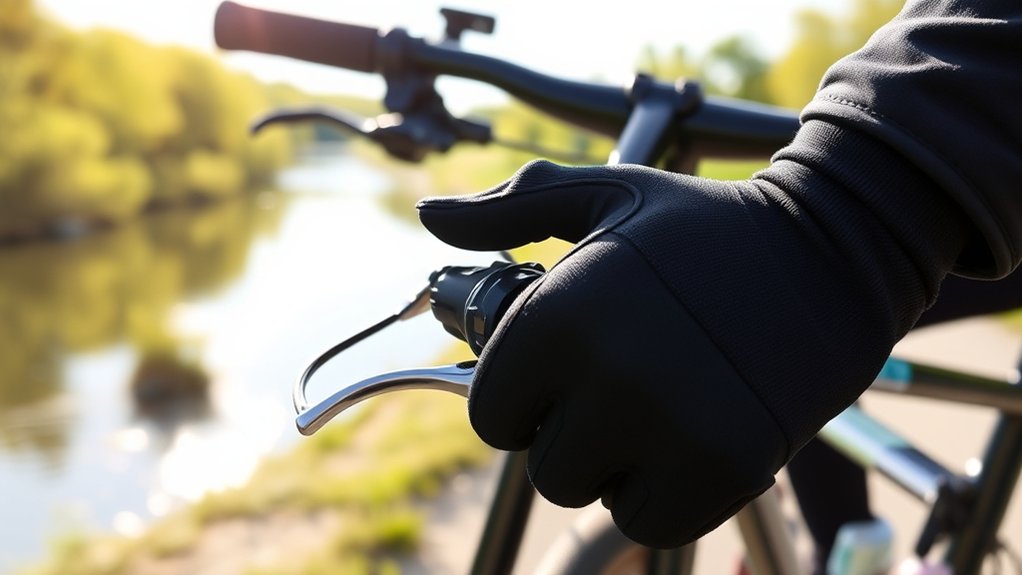
Before hitting the road, it’s essential to make sure your bike is ready for safe braking. Start by inspecting your brake levers; ensure they respond smoothly when pressed.
Check the brake cables or hydraulic lines for any signs of wear, fraying, or leaks, and replace them if needed. Make sure your brake pads are clean and have enough material left—worn-out pads reduce stopping power.
Spin your wheels and watch if they rotate freely without wobbling or rubbing against the brake pads. Lightly lubricate moving parts if necessary, but avoid getting lubricant on brake surfaces.
Finally, test your brakes in a safe area by applying firm pressure to confirm they engage properly. Proper preparation boosts your safety and helps you stop confidently and effectively during your ride.
Understand Your Riverside Hybrid Bike’s Brake Types
Understanding the brake types on your Riverside Hybrid Bike helps you choose the right stopping power. You’ll find different systems with unique features, each suited for various riding conditions.
Knowing these options guarantees you can maintain safe and effective braking when you need it most.
Types of Brakes
Riverside hybrid bikes typically come with different types of brakes, each offering unique advantages for various riding conditions. You might find rim brakes, disc brakes, or V-brakes, depending on your model.
Rim brakes are lightweight and easy to repair, making them perfect for city commuting. Disc brakes provide reliable stopping power in wet or muddy conditions, giving you confidence on rough terrains.
V-brakes are simple and affordable, making them ideal for casual rides.
| Brake Type | Pros | Best Use |
|---|---|---|
| Rim Brakes | Lightweight, easy maintenance | City streets |
| Disc Brakes | Strong, reliable, weather-resistant | All terrains |
| V-brakes | Affordable, straightforward | Leisure riding |
Brake System Features
Knowing the different brake types on your Riverside hybrid bike helps you choose the right one for your riding style and conditions. Hybrid bikes usually have rim brakes, disc brakes, or V-brakes.
Rim brakes, like caliper or cantilever, work by squeezing the wheel rim. They’re lightweight and easy to maintain.
Disc brakes, whether mechanical or hydraulic, apply force directly to the rotor. They offer better stopping power in wet or muddy conditions.
V-brakes are a type of rim brake with wide arms. They provide strong braking and are easier to adjust.
Each system has its own features: rim brakes are simple and affordable, while disc brakes perform better in wet weather.
Knowing these features helps you pick and maintain the brakes that fit your riding environment.
Check and Maintain Your Brakes Regularly
Regularly inspecting and caring for your brakes is key to ensuring safe and reliable stopping power when riding your Riverside Hybrid Bike 700c. Start by looking at the brake pads; if they’re worn down close to the metal, replace them right away.
Regular brake inspections ensure safety and reliable stopping power on your Riverside Hybrid Bike 700c.
Next, examine the brake cables for fraying, corrosion, or looseness. Tighten or swap them out if needed. Make sure the brake levers engage smoothly without pulling too much, which shows they have proper tension.
Test how your brakes respond, and listen for squeaking or grinding sounds. These often mean dirt or worn parts. Keep the braking surfaces clean and free of debris. Regular maintenance helps prevent sudden failures, extends the life of your brakes, and keeps you safe on every ride.
Make these checks part of your regular bike care routine so you can ride confidently every time.
How to Brake Properly and Smoothly
To brake smoothly, use both brakes evenly to spread out the pressure and avoid skidding.
Press the levers gently and gradually instead of jerking them suddenly.
Keep your posture balanced so you can stay in control and react quickly if needed.
Use Both Brakes Equally
Using both brakes consistently is key for smooth and effective stopping. When you apply the front and rear brakes together, you spread out the stopping force evenly, which helps prevent skidding or losing control.
Don’t rely only on one brake, since that can cause abrupt stops or wheel lockup. Instead, apply gentle, steady pressure on both levers at the same time for a controlled slowdown.
This balanced approach also keeps your bike stable, especially on uneven or slippery surfaces. Keep your hands comfortably on both brake levers and practice applying pressure evenly.
Over time, this habit will give you smoother braking, better control, and a safer ride. Using both brakes consistently is a simple but essential skill for stopping effectively.
Apply Gentle Pressure Gradually
Start braking early and ease into it gradually instead of slamming on the levers all at once. This gives your bike time to respond smoothly and helps prevent sudden stops or skidding.
Apply gentle pressure with your fingers, gradually increasing it as needed. If you feel the bike slowing down too quickly, ease off slightly to stay in control.
Avoid squeezing the brake levers too hard at first. Instead, focus on a steady, controlled squeeze. This gradual approach reduces stress on your brake system and makes for a smoother ride.
Remember, smooth and gentle pressure helps you maintain better balance and prevents sudden shifts that could cause you to lose control.
Practice this technique consistently to develop a natural, instinctive braking rhythm.
Maintain Balanced Posture
Keeping your body centered and relaxed while braking helps you maintain control and stability. As you slow down, avoid leaning too far forward or backward, which can cause imbalance.
Keep your elbows slightly bent and your shoulders relaxed, letting your arms absorb any shocks. Sit upright with a comfortable, balanced posture so your weight stays evenly distributed between the handlebars and the seat.
This stance gives you better control and responsiveness. Look ahead instead of down at your front wheel, so you can anticipate obstacles and adjust smoothly.
Maintaining a steady, balanced posture prevents wobbling and sudden shifts that could lead to falls. Stay calm and focused to make braking smoother and your ride safer.
When and How to Use Both Front and Rear Brakes
Knowing when and how to use both the front and rear brakes is key for safe and effective stopping on your Riverside Hybrid Bike 700c. Use the rear brake for gentle stops or when riding at low speeds; it gives you stability and control.
When you need to stop quickly, apply both brakes evenly to prevent skidding and keep your balance. Engage the front brake gradually, especially on downhill slopes, to avoid losing control.
Common Mistakes to Avoid When Braking
One common mistake to avoid when braking is applying both the front and rear brakes too aggressively at once, which can cause you to lose control or skid. Sudden, forceful braking shifts your weight forward, increasing the risk of the front wheel locking up.
Likewise, squeezing the rear brake too hard can cause the bike to skid or slide sideways. Instead, apply gentle, gradual pressure to both brakes, especially on slippery surfaces or steep descents.
Applying gentle, gradual pressure to both brakes prevents skidding, especially on slippery surfaces or steep descents.
Avoid grabbing the brakes abruptly; instead, squeeze steadily to maintain balance and control. Overusing the front brake without proper modulation can also lead to a forward fall.
Always anticipate stops early and brake smoothly to prevent accidents. This way, you’ll enjoy a safer, more comfortable ride.
Troubleshooting Brake Problems and Adjustments
If your brakes aren’t responding as they should, troubleshooting and making proper adjustments can restore safe and reliable stopping power. First, check the brake pads for wear and replace them if they’re too thin.
Next, make sure the cables are tight and free of rust or fraying. Adjust the tension by loosening or tightening the barrel adjuster until the brake lever feels firm.
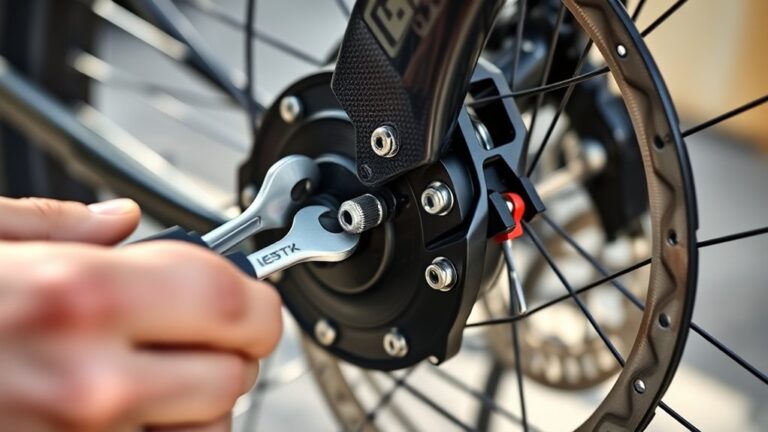
Also, inspect the brake calipers to confirm they move smoothly and evenly. If needed, realign or tighten the caliper mounting bolts.
Finally, verify the rotor or rim for dirt or debris, cleaning as necessary.
- Replace worn brake pads
- Tighten or loosen brake cables
- Realign calipers for even contact
- Clean rotors or rims thoroughly
Braking Safety Tips for Your Riverside Hybrid Bike
Braking safely on your Riverside hybrid bike is key to staying protected and confident on the road. Always try to anticipate stops early and give yourself plenty of space.
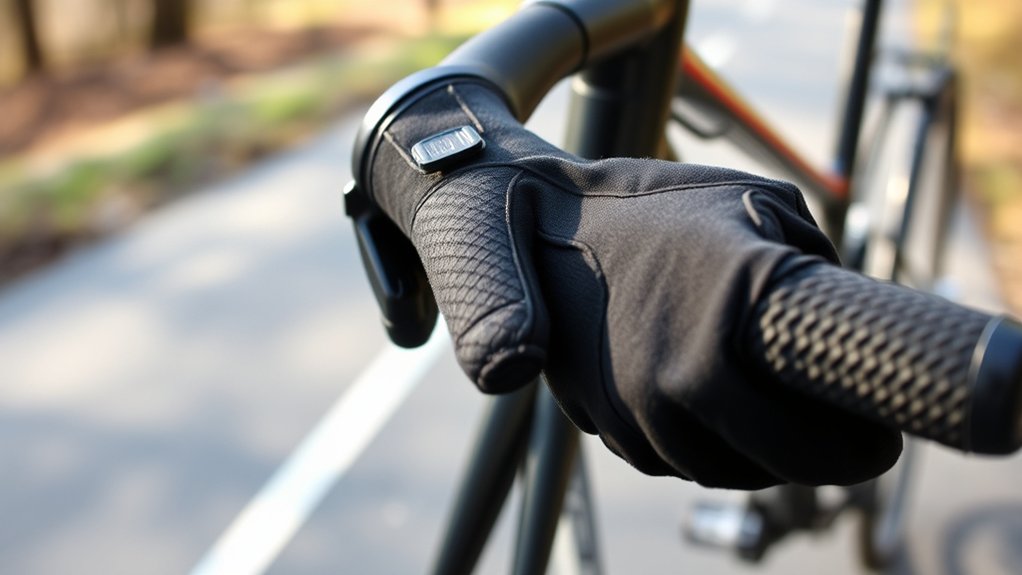
Use both brakes smoothly, avoiding sudden jerks that could make you lose control. Keep your hands comfortably on the brake levers so you can respond quickly.
Regularly check your brake pads and cables to make sure everything’s working at its best. When riding in traffic or on slippery surfaces, slow down more and give yourself extra stopping distance.
Remember, gentle and controlled braking helps reduce wear and prevents accidents. Here’s a quick safety tip table:
| Situation | Recommended Action | Key Reminder |
|---|---|---|
| Wet or slippery roads | Brake gradually | Avoid sudden stops |
| Descending hills | Use both brakes evenly | Keep control at all times |
| Heavy load | Allow extra stopping distance | Be patient and cautious |
| Urban riding | Signal your intentions early | Be predictable to others |
| Night riding | Use lights and brake early | Increase visibility and caution |
Frequently Asked Questions
How Do I Brake Safely on Wet or Slippery Roads?
When braking on wet or slippery roads, you should brake gently and gradually to avoid skidding. Use both brakes evenly, applying less force to prevent locking the wheels.
Keep your weight centered and avoid sudden movements. Reduce your speed early and steer smoothly.
Check your brakes regularly to make sure they work properly, and verify your tires have enough tread for better grip. Staying cautious and controlled helps you stop safely in tricky conditions.
Can I Upgrade My Riverside Hybrid Bike’s Brake System?
Yes, you can upgrade your Riverside hybrid bike’s brake system. You might think about switching to disc brakes for better stopping power and control, especially when it’s wet outside.
Alternatively, upgrading to higher-quality rim brake pads or hydraulic brakes can also boost your braking performance. Just make sure to check that any upgrades are compatible with your bike frame and wheels.
It’s a good idea to look at your bike’s manual or talk to a professional mechanic. They can help ensure a smooth and safe upgrade process.
What Are Signs My Brakes Need Replacement?
You’ll know your brakes need replacing if they feel less responsive, make squealing noises, or if the brake pads are visibly worn down.
You might notice a longer stopping distance or a vibrating brake lever when you squeeze it. If you see cracks, glazing, or uneven wear on the brake pads, it’s time for new ones.
Regularly inspecting your brakes helps guarantee safe, effective stopping whenever you need it.
How Do I Brake Effectively on Downhill Slopes?
When riding downhill, you should brake gradually to control your speed and stay balanced. Squeeze the brake levers smoothly, avoiding sudden pulls that can cause skidding or make you lose control.
Use both front and rear brakes evenly, but be careful with the front brake to prevent flipping over. Keep your weight slightly back, and release the brakes occasionally to avoid overheating.
Stay alert and adjust your braking as needed for safety. Remember, smooth and controlled braking is key to a safe downhill ride.
Are There Different Braking Techniques for City and Trail Riding?
They say, “know your terrain,” and that’s true for braking. For city riding, you mainly use the front brake gently to avoid skidding and rely on the rear for stability.
On trails, you tend to apply both brakes smoothly to control speed on uneven surfaces. Adjust your technique based on your environment, always staying alert and ready to adapt to sudden stops or obstacles.
Conclusion
Mastering your Riverside Hybrid Bike’s brakes keeps you safe and confident on every ride.
Did you know that proper braking can reduce stopping distances by up to 50%? Regular maintenance and smooth techniques help you stay in control, even when surprises pop up.
By following these easy steps, you’ll enjoy safer and more enjoyable cycling adventures. So, pay attention to your brakes—your safety and riding experience depend on it.