7 Tips for Setting the Right Pressure in Mountain Bike Tyres
Many mountain bikers struggle with finding the perfect tyre pressure for different trails and conditions. You’re not alone—getting it just right can be tricky but makes a huge difference in your riding experience.
To set the right pressure in your mountain bike tyres, start by considering your weight and the terrain you’ll ride on. Use a reliable pressure gauge to check and adjust frequently, avoiding over- or under-inflation.
Lower pressure gives better grip on rough trails, while higher pressure suits smoother surfaces. Don’t forget to tweak your pressure for technical descents and adjust for different conditions.
Keep a routine for maintenance, and if you want expert tips, you’re in the right place.
Key Takeaways
- Use a reliable pressure gauge to get accurate readings before every ride. It’s the best way to make sure your tyres are at the right pressure.
- Adjust your tyre pressure depending on the terrain. Go lower for loose surfaces and higher for hard-packed trails. This makes your ride smoother and safer.
- Think about your weight too. If you’re heavier, increase the pressure a bit. If lighter, you can lower it. Usually, 2-5 psi adjustments are enough.
- Keep an eye out for signs that your tyres are under or over-inflated. Bulging tyres indicate low pressure, while tyres that feel overly firm might be over-inflated.
- Don’t forget to check your tyres regularly for wear and tear. It’s also a good idea to recheck the pressure after storing your bike or doing repairs.
Why Finding the Right Tyre Pressure Matters for Mountain Biking
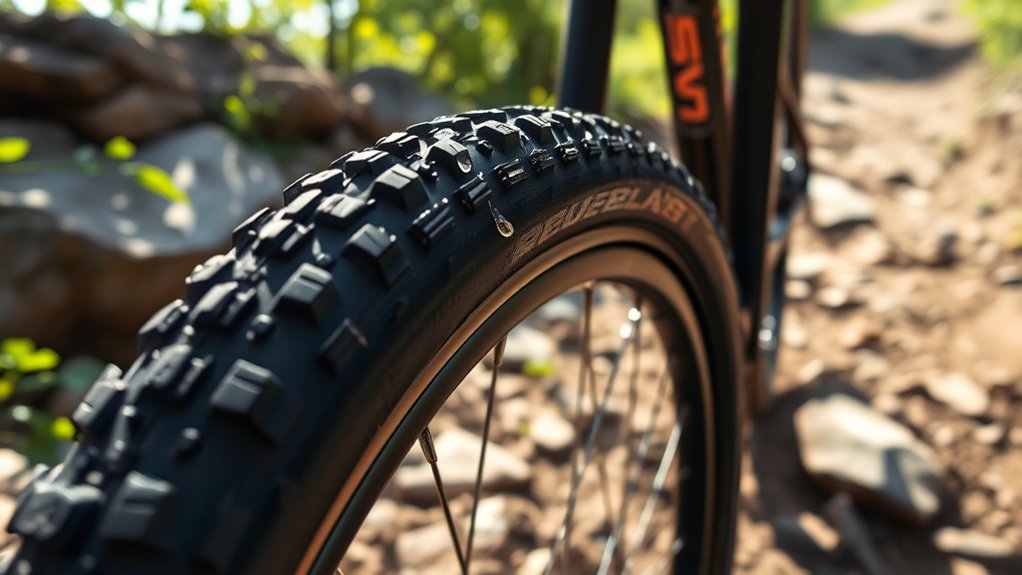
Finding the right tyre pressure is crucial because it directly impacts your ride’s safety, performance, and comfort. When your tyres are correctly inflated, you get better grip, control, and stability, helping you navigate trails confidently.
Overinflated tyres can make your ride harsh and reduce traction, increasing the risk of slipping or losing control. Underinflated tyres can cause pinch flats, slow you down, and make pedaling less efficient.
Overinflated tyres reduce traction and make rides harsh; underinflated tyres cause flats and decrease pedaling efficiency.
Proper pressure also helps prevent unnecessary wear and extends tyre life. By maintaining the ideal pressure, your bike responds accurately to your input.
This makes your ride smoother and more enjoyable. Ultimately, finding the right tyre pressure keeps you safer and helps you perform at your best on every trail.
How Terrain Affects Your Mountain Bike Tyre Pressure
The type of terrain you ride on really affects the ideal tyre pressure because different surfaces need different levels of grip and shock absorption.
On smooth trails or hard-packed dirt, you can run higher pressures to reduce rolling resistance and boost efficiency.
But for loose, rocky, or muddy terrain, lower pressures are better to improve grip and shock absorption.
Lower pressures let the tyre conform to uneven surfaces, giving you better traction and control.
Just be careful not to go too low, as it can cause pinch flats or damage the rim.
Find a balance based on the terrain to keep your ride safe and performing well.
For technical descents or rocky sections, slightly softer pressures help absorb shocks better.
Always adjust your tyre pressure to match the terrain for the best performance and safety.
How Rider Weight Influences Tyre Pressure Settings
Your weight plays an important role in choosing the right tyre pressure because heavier riders put more force on the tyres. This means you might need a different setup than lighter riders.
Heavier riders should increase tyre pressure for better control and safety.
If you’re heavier, try increasing the pressure by about 2-5 psi to prevent the tyres from squishing too much and losing control.
Lighter riders, on the other hand, can lower the pressure by 2-4 psi to get better grip and comfort.
Remember to make adjustments gradually and test your setup on similar terrain to find what works best for you.
Tools to Measure and Set Tyre Pressure Accurately
To get your tyre pressure just right, you need the right tools, like reliable pressure gauges.
Make sure you use proper measuring techniques to get accurate readings, especially when adjusting for different terrains.
Knowing how to select and use these tools helps you optimize your bike’s performance on any trail.
Types of Pressure Gauges
Choosing the right pressure gauge is essential for accurately measuring and setting your mountain bike tires. There are three main types to evaluate:
- Digital gauges offer precise readings with a clear display. They’re perfect if you want accuracy at a glance.
- Analog (dial) gauges use a dial indicator, providing reliable measurements and durability for frequent use.
- Stick (pencil) gauges are compact and affordable. They’re simple to use but might lack the precision of digital or dial options.
Each type has its advantages, so pick one based on your riding style and preferences. Digital gauges are great for precision, dial gauges for durability, and stick gauges for portability. Whatever you choose, make sure it’s easy to read and maintain.
Proper Measuring Techniques
Using the right tools properly is key to measuring and setting your mountain bike tires accurately. Start by selecting a reliable pressure gauge, whether digital or analog, and make sure it’s calibrated correctly.
When measuring, remove the valve cap and firmly attach the gauge to the valve stem without over-tightening. Hold it steady until the reading stabilizes, then note the pressure.
For consistency, measure each tire multiple times, especially if you’re fine-tuning pressure. Always check when tires are cold, as heat from riding can increase pressure readings.
Use a gauge with a wide pressure range suitable for your tires’ specifications. Proper technique minimizes errors, ensuring you maintain ideal pressure for performance and safety.
Regularly verify your gauges’ accuracy to keep your measurements precise.
Adjusting for Terrain
Adjusting your tire pressure for different terrain conditions is essential for peak performance and safety. To do this effectively, you need the right tools and techniques.
First, use a high-quality pressure gauge to measure your tires accurately before riding. Second, consider a portable pump with a built-in gauge for quick adjustments on the trail.
Familiarize yourself with recommended pressure ranges for various terrains: lower pressures for muddy or rocky trails, and higher pressures for smooth, hard-packed surfaces. By consistently checking and adjusting your pressure with these tools, you optimize traction, reduce pinch flats, and improve control.
When and How to Adjust Tyre Pressure on the Trail
Have you ever wondered when it’s necessary to tweak your tyre pressure during a ride? If you hit unfamiliar terrain, it’s a good idea to adjust your pressure for better grip and comfort.
For rough or rocky sections, slightly lowering your pressure can improve traction and absorb shocks. On smooth trails, increasing pressure helps reduce rolling resistance and keeps you moving faster.
Keep an eye on your tyre’s behaviour. If it feels sluggish or you notice excessive vibrations, it’s time to make a change. Use your gauge to check pressure quickly—don’t guess.
Make small adjustments, about 2-5 psi at a time. Remember, the goal is to find a balance that suits the terrain you’re riding on, so stay flexible and attentive.
Common Tyre Pressure Mistakes Mountain Bikers Make
Ever wonder why your ride feels off or why you’re constantly battling vibrations? One common mistake is ignoring the recommended pressure range for your tires, which can lead to inconsistent grip and control.
You might also be over-inflating your tires, reducing traction and increasing the risk of flats. On the flip side, under-inflating can cause pinch flats, poor handling, and faster tire wear.
Many riders forget to check their tire pressure before each ride, assuming it stays the same. This oversight can affect your performance and safety on tricky trails.
To avoid these issues, always verify your tire pressure with a reliable gauge and stick to the manufacturer’s guidance. The right pressure balances comfort, grip, and durability, so don’t overlook these common pitfalls.
Tips for Maintaining Consistent Tyre Pressure for Better Performance
Maintaining consistent tire pressure is key for top mountain biking performance. The trick is to develop a routine that keeps your tires at the right level before each ride.
Check your tire pressure at least once a week and before long rides. Use a reliable pump with a pressure gauge—don’t guess or rely on memory. Precise measurements really matter.
To make it easier, create a simple schedule and keep your pump nearby. Use the table below to track your preferred pressures for different terrains and bike setups, ensuring consistency:
| Terrain | Front Tire (psi) | Rear Tire (psi) |
|---|---|---|
| Smooth Trails | 20 | 22 |
| Technical Trails | 18 | 20 |
| Muddy Trails | 22 | 24 |
| Loose Gravel | 19 | 21 |
| Climbing | 21 | 23 |
Sticking to this routine improves performance and helps reduce the risk of flats.
Frequently Asked Questions
How Often Should I Check and Adjust My Mountain Bike Tyre Pressure?
You should check and adjust your mountain bike tyre pressure before every ride, especially if you’re riding on different terrains or in changing weather.
Regularly inspecting your tyres helps ensure you get the best grip, comfort, and safety. If you notice the pressure is low, just inflate your tyres to the recommended PSI from the manufacturer.
Frequent checks help prevent flats and keep your bike performing well. This makes your rides smoother and more enjoyable.
Can Changing Tyre Pressure Improve Bike Handling and Control?
Think of your bike as an extension of yourself on the trail. When you tweak your tyre pressure, you sharpen your control like a master chef seasoning a dish.
Lowering pressure gives you better grip and absorbs shocks, making handling smoother on rough terrain. Conversely, higher pressure reduces rolling resistance for speed.
Adjusting pressure to match your trail conditions boosts your confidence, helping you maneuver with precision and enjoy a more responsive ride.
What Are the Signs of Under-Inflated or Over-Inflated Tyres?
If your tyres are under-inflated, you’ll notice a softer ride, more rolling resistance, and a higher chance of pinch flats or rim damage.
Over-inflated tyres feel very stiff, which can reduce grip, cause a harsher ride, and make riding on rough terrain uncomfortable.
You might also see uneven wear or bulges on the tyre sidewalls, which are signs of incorrect pressure.
Properly maintaining tyre pressure helps optimize performance and prevents damage.
How Does Tyre Pressure Influence Puncture Resistance?
Think of your tyre pressure as the shield protecting your ride. When you keep it at the right level, your tyres act like a fortress, absorbing impacts and resisting punctures from sharp objects.
If the pressure is too low, the tyre becomes like a vulnerable sponge, easily punctured and prone to damage. On the other hand, if it’s too high, it’s like brittle armor that can crack under pressure.
Getting the inflation just right gives you a good balance. It offers comfort and makes your tyres more resilient against the threats you encounter on the trail.
Are There Recommended Pressures for Different Types of Mountain Biking Races?
For different mountain biking races, you should adjust your tyre pressure based on terrain and race type.
For cross-country races, aim for slightly higher pressures around 30-40 psi to reduce rolling resistance. In downhill or enduro races with rough terrain, lower pressures around 20-30 psi improve grip and comfort.
Always consider your weight and tyre volume, and experiment to find the best balance between traction and efficiency.
Conclusion
Getting your tyre pressure just right isn’t just about speed—it’s about feeling connected to every twist, turn, and bump of the trail. Think of your tyres as your bike’s heartbeat, pulsing with each ride.
When you master this balance, every ride becomes a symphony of control and confidence. So, tune your pressures wisely.
Let the trail reveal its true soul—waiting to be felt, conquered, and enjoyed. Your perfect ride is just a pump away, and setting the right pressure is key to a smooth, fun mountain biking experience.