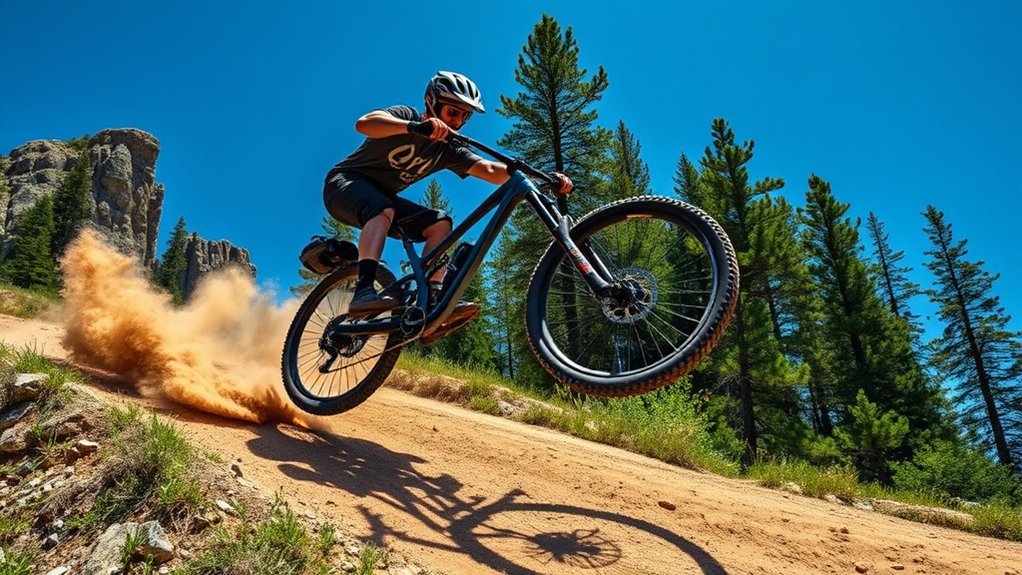
How to Whip a Mountain Bike in 10 Essential Steps
Are you tired of feeling stuck when trying to whip your mountain bike? You’re not alone—many riders struggle with nailing that perfect, stylish whip on jumps and turns.
But don’t worry, mastering this move is totally achievable with the right technique and practice.
To whip your mountain bike effectively, start by understanding the technique and shifting your weight backward and to the side using your hips and shoulders.
Maintain a low, athletic stance and set up your bike with proper gear adjustment.
Approach jumps with speed and control, compressing suspension and focusing on smooth body movements.
Keep your eyes on the landing, practice safety measures, and watch out for common mistakes.
Keep exploring this guide to master how to perfect your whip.
Key Takeaways
- Shift your weight back and to the side using your hips and shoulders to get the whip moving.
- Keep a low, athletic stance with your knees slightly bent. This will help you stay stable and control your bike better.
- When approaching jumps, build up some speed and compress your suspension. Keep your eyes on the landing spot to make sure you land smoothly.
- Control the whip mainly with your hips and core. Be careful not to over-rotate, and use your arms mainly to guide the bike.
- Always wear proper protective gear. Practice in a safe environment to avoid injuries and build your confidence.
How to Master the Art of Whipping Your Mountain Bike
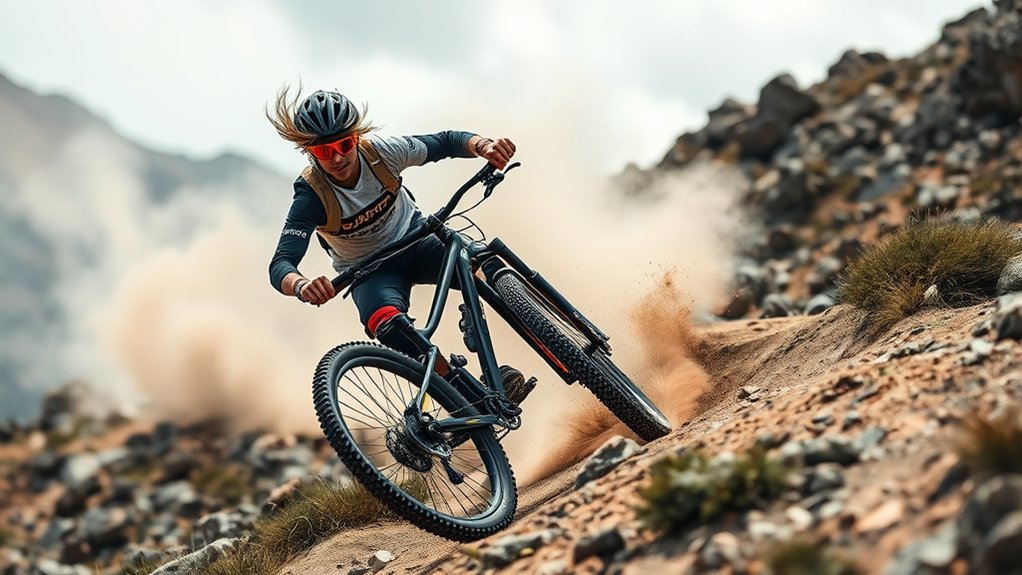
Mastering the art of whipping your mountain bike starts with understanding the technique and timing needed to execute it smoothly. You need to approach the turn with enough speed and confidence, setting up your body position correctly.
As you reach the corner, shift your weight slightly backward and to the side you want to whip toward. Use your hips and shoulders to initiate the movement, guiding the rear wheel out and around the turn.
Timing is vital. Pulling the bike laterally at just the right moment guarantees a clean whip. Keep your eyes ahead and stay relaxed, allowing your body to flow naturally with the bike.
Timing your pull perfectly ensures a smooth, stylish whip—stay relaxed and let your body flow naturally.
Practice controlling your movements so the whip becomes instinctive and fluid. This will give you style and control on the trail.
What Is a Mountain Bike Whip? The Basics Explained
A mountain bike whip is a stylish move where you intentionally flick the rear wheel out during a jump or turn. It’s all about showing off your control and style on the trail.
The goal is to impress others and prove you can manipulate your bike mid-air.
Getting good at body positioning and bike control helps you pull off different whip styles with confidence.
Definition and Purpose
A mountain bike whip is a stylish and dynamic trick where the rider intentionally flicks their bike side to side while in mid-air, making the rear end swing out. Its main goal is to show off control and style, often used in dirt jumps, slopestyle, and freeride riding.
The whip adds flair to your tricks and demonstrates your ability to manipulate your bike with finesse. It’s also a way to prepare for more complex spins or tricks by building your bike control and confidence in the air.
While it looks impressive, mastering the whip helps you better understand your bike’s movement. This makes your overall riding more fluid and expressive.
At its core, the whip combines technical skill with style, making it a key trick in mountain biking.
Key Techniques Involved
To pull off a mountain bike whip, you need to focus on a few key techniques that work together to create that stylish side-to-side flick. First, generate enough speed to make the motion smooth and controlled.
Next, shift your weight slightly back and to the side you want to whip. Use your hips and shoulders to start the movement, turning the bike beneath you.
Finally, keep your eyes on your landing spot to stay balanced. Important techniques include maintaining a steady throttle, guiding the bike with body rotation, shifting your weight properly, and practicing quick, smooth hip and shoulder movements.
Mastering these basics will help you execute a clean, stylish whip.
Popular Whip Styles
There are several popular whip styles that riders use to add flair and control to their tricks. The most common is the classic whip, where you swing the rear end of your bike horizontally while in the air, creating a smooth, sweeping motion.
Another style is the bar whip, which involves spinning the handlebars during the whip for a more dramatic effect. The no-footer whip removes your feet from the pedals, emphasizing style and control.
Finally, the tail whip involves swinging the entire frame around the handlebars, often combined with other tricks. Each style requires different levels of skill and control but all aim to showcase your riding while staying stable.
Choosing a whip style depends on your experience and the look you’re going for.
How to Set Up Your Bike and Gear for Whipping
Before you start whipping your mountain bike, it’s important to make sure your bike and gear are set up properly for control and safety. Getting everything dialed in helps you do tricks with confidence and keeps you safe.
First, check that your suspension is tuned for your weight and riding style so it absorbs impacts smoothly. Next, look at your tire pressure—go higher for speed, lower for better grip.
Then, adjust your handlebars and saddle height to find the perfect control and comfort. Finally, make sure your brakes are responsive and well-maintained for quick stops.
Getting your gear right allows for precise handling and balance, which is key for clean whips. Taking these steps will ensure your bike is ready for those dynamic moves, making your whipping safer and more fun.
Choosing the Right Terrain and Jump for Your Skill Level
Once your bike setup feels comfortable and responsive, it’s time to choose the right terrain and jumps for your skill level. Stick to beginner-friendly trails with smooth, predictable surfaces to help build your confidence.
Look for jumps that aren’t too steep or high—small, gentle rises are perfect while you’re learning. As you get better, try slightly larger jumps and more technical terrain gradually.
Start with small, gentle jumps and progress gradually to more technical terrain as your skills improve.
Avoid challenging or unfamiliar features until you’re confident in your control and balance. Pay attention to trail signs and markings that indicate difficulty levels.
Picking appropriate terrain helps prevent frustration and reduces the risk of injury. Remember, mastering easier terrain creates a strong foundation for tackling more advanced jumps later on.
How to Approach Jumps With Speed and Control
Approaching jumps with the right speed and control is key for a smooth, safe landing. Too much speed can cause you to overshoot, while too little makes the jump unpredictable. Focus on keeping a steady, controlled pace that matches the size of the jump and terrain.
As you head toward the jump, keep your body centered and your eyes on the landing spot. This helps you stay balanced and anticipate what’s coming next.
Here are some tips to improve your approach:
- Maintain a consistent speed—avoid sudden acceleration or slowing down.
- Stay balanced—keep your weight centered over the bike.
- Look ahead—plan your line and anticipate the jump.
- Compress your suspension—prepare to absorb the impact smoothly.
Following these steps will help you approach jumps confidently, setting you up for a controlled takeoff and landing.
How to Initiate Your Whip in Mid-Air
To initiate your whip in mid-air, start by shifting your hips and shoulders smoothly while keeping control of your handlebars.
As you leave the lip of the jump, gently lean your hips and upper body to one side. This movement begins the rotation, so keep your core engaged for balance.
Keep your arms slightly bent to stay relaxed and responsive. Focus on a fluid motion rather than forcing the turn; it should feel natural.
Your eyes should follow the direction of the whip, helping guide your body. Avoid abrupt movements that could unsettle your bike.
Instead, trust your momentum and body positioning. With consistent practice, this initiation will become smooth, making your whip more controlled and stylish mid-air.
How Body Movements Improve Your Mountain Bike Whip
Your body position and weight shifts are key to controlling your whip. When you get your stance right and move your weight smoothly, your bike becomes much more responsive.
Small, deliberate movements can make a big difference in perfecting your whip. Focus on these subtle shifts to keep control and improve your style on the trail.
Body Position Optimization
Mastering body position is key to executing a smooth, controlled whip on your mountain bike. Your stance affects your advantage, balance, and control during the move.
To optimize your body position, keep your hips centered over the bike to stay balanced. Slightly lean back as you start the whip to counteract the forward motion.
Keep your arms relaxed but firm so you can control the handlebars smoothly. Maintain a low, athletic stance with knees slightly bent for better shock absorption and stability.
Proper positioning helps your body react naturally, making the whip more fluid and controlled. Stay loose and adaptable so you can quickly adjust your stance as you ride.
Good body position is the foundation for mastering the whip.
Proper Weight Shifting
Shifting your weight effectively is the key to controlling the whip’s direction and power. When you lean into the turn, you help the bike pivot smoothly, giving you better control.
Focus on shifting your hips and torso rather than just your arms. This body movement generates momentum and helps you execute a clean, stylish whip.
Practice timing your weight transfer with your bike’s motion, keeping your core engaged. Below is a simple guide:
| Action | Effect |
|---|---|
| Lean into the turn | Initiates the whip and increases control |
| Shift hips backward | Adds momentum for a sharper whip |
| Lean forward slightly | Maintains balance during the move |
| Stay relaxed | Ensures fluid, precise movements |
Mastering weight shifts results in cleaner, more powerful whips.
Landing Smoothly and Maintaining Control
Landing smoothly and maintaining control takes focus and good technique. As you come down from a whip, keep your eyes on the landing spot and stay relaxed. Proper body positioning helps absorb impact and keeps you balanced.
To land smoothly, keep your arms and legs slightly bent to shock absorb. Shift your weight slightly backward to avoid nose-diving. Look ahead, not down, so you can anticipate your landing. Use your core muscles to stabilize your bike during the descent.
Stay alert and move fluidly, adjusting your position as needed. This control helps prevent wobbling or crashing, especially when landing off-center. Practicing these steps will boost your confidence and finesse for smooth whips.
Safety Tips and Risks to Watch Out for When Practicing Tricks
Wearing proper protective gear is a must to help prevent injuries if you fall. Always gear up before trying any tricks.
Keep an eye out for signs of injury, like persistent pain or swelling. These could mean more serious damage.
Being aware of these risks helps you stay safe and avoid long-term setbacks while practicing.
Protective Gear Importance
Protective gear is essential when practicing tricks on a mountain bike because it greatly reduces the risk of injury. Wearing the right equipment keeps you safe while pushing your limits.
Always prioritize your safety by using a well-fitting helmet to protect your head from impacts. Gloves are important too—they improve your grip and shield your hands in falls.
Knee and elbow pads help prevent scrapes and fractures, giving you extra confidence on tricky spots. Don’t forget eye protection to guard against debris and insects that can distract or harm you.
Recognizing Injury Signs
How can you tell if you’re hurt after practicing tricks on your mountain bike? Look for sharp or persistent pain, swelling, or bruising around muscles and joints.
If you notice numbness, tingling, or difficulty moving, these are signs something’s seriously wrong. Headaches or dizziness after a fall could mean a concussion.
Bleeding that won’t stop or deformities suggest broken bones or serious injury. Don’t ignore any of these signs—pushing through pain can make injuries worse.
Rest and seek medical attention promptly if you experience any of these symptoms. Being aware of injury signs helps you respond quickly, preventing long-term damage and keeping you safe while practicing tricks.
Always listen to your body and prioritize safety above everything else.
Troubleshooting Common Mistakes in Mountain Bike Whipping
Even experienced riders can make common mistakes when whipping a mountain bike, which can compromise both performance and safety. Recognizing and fixing these errors is key to improving.
Even seasoned riders can make mistakes when whipping, affecting safety and performance—recognize and correct them for better control.
Here are some troubleshooting tips:
- Incorrect Body Position: Keep your weight centered and use your hips to control the whip, not just your arms.
- Poor Timing: Practice your approach and extension to ensure a smooth, controlled whip instead of a rushed motion.
- Over-committing: Avoid over-rotating; aim for controlled, moderate flicks to stay balanced.
- Not Looking Ahead: Always keep your eyes on the trail to anticipate landings and maintain proper form.
Fixing these mistakes helps you whip confidently, safely, and with better control on your mountain bike.
Frequently Asked Questions
What Are the Best Types of Bikes for Whipping?
The best bikes for whipping are usually freestyle or park bikes because they’re made for tricks and jumps. They have a sturdy frame, a shorter wheelbase, and often come with tough tires and a freecoaster hub to make spins easier.
BMX bikes and dirt jump bikes are great options because their design gives you better control for whipping. They offer the agility and stability you need for smooth, stylish tricks.
How Long Does It Take to Master a Mountain Bike Whip?
Mastering a mountain bike whip is like learning to dance with a wild, spirited partner. It takes time and practice.
Usually, you’ll start feeling confident after several weeks of consistent effort. But truly perfecting it could take months.
Your progress depends on your riding skills, dedication, and how often you hit the trails. Keep pushing, stay patient, and soon you’ll be throwing those stylish whips with ease and flair.
Can Beginners Safely Learn to Whip on Any Terrain?
Yes, beginners can safely learn to whip on suitable terrain, but it’s important to start slow and build your skills gradually.
Look for open, smooth areas with minimal obstacles to practice basic control. Always wear protective gear like a helmet and pads, and stay within your comfort zone.
As you gain confidence, you can move on to more challenging terrains, making sure to stay safe and have fun every step of the way.
What Safety Gear Is Essential for Practicing Whips?
You need a helmet, gloves, knee and elbow pads, and possibly a chest protector to stay safe while practicing whips. Some might think gear limits movement, but proper protection actually boosts confidence and helps you focus on your tricks.
Always check your gear’s fit and condition before riding. Wearing the right safety equipment minimizes injury risk, so you can practice confidently and enjoy the thrill of mastering your whip.
How Do Weather Conditions Affect Whip Execution?
Weather conditions greatly impact your ability to whip effectively. Rain or mud can make the trail slippery, reducing your control and making it harder to execute clean, controlled whips.
Wind can also affect your balance and timing, especially on exposed terrain. Hot or humid weather may tire you faster, impacting your precision.
Always assess the conditions before attempting a whip, and adjust your technique for safety and better execution.
Conclusion
Mastering the art of whipping your mountain bike is like tuning a fine instrument—you’ll find your rhythm and feel the thrill grow. With patience, practice, and the right techniques, every jump can turn into a dance of control and style.
Remember, safety always comes first. Each ride brings you closer to mastering your flow and riding with confidence.
So gear up, stay focused, and let the trail be your stage for your riding symphony. Whipping your mountain bike is all about practice and passion—enjoy the journey!