How to Go on Trails Safely With a Hybrid Bike
Many hybrid bike enthusiasts want to explore trails but often feel unsure about how to do so safely. You’re not alone—navigating unfamiliar terrains can be tricky, and safety is a top concern.
Luckily, with a few simple tips, you can enjoy trail adventures confidently and worry-free.
To go on trails safely with a hybrid bike, start by choosing trails suited to your skill level and check trail conditions before heading out.
Prepare your bike with proper tire pressure, working brakes, and smooth gear shifts.
Wear a helmet, bring essentials like water, snacks, and repair tools, and stay alert to terrain changes.
Follow trail etiquette and protect the environment.
Keep exploring for more tips to make your trail adventures safer and more enjoyable.
Key Takeaways
- Choose trails that match your skill level. Start with beginner-friendly paths and gradually move on to more challenging terrains.
- Before each ride, check and maintain your hybrid bike. Pay attention to the tires, brakes, and gears to make sure everything is in good shape.
- Always wear a helmet and carry safety gear. Don’t forget essentials like water, snacks, and a repair kit just in case.
- Adjust your riding style based on the terrain. Slow down on rocky paths and shift gears when riding on loose gravel.
- Follow trail etiquette by staying on designated paths. Respect the environment to keep trails safe and beautiful for everyone.
How to Choose the Right Trail for Your Hybrid Bike Adventure
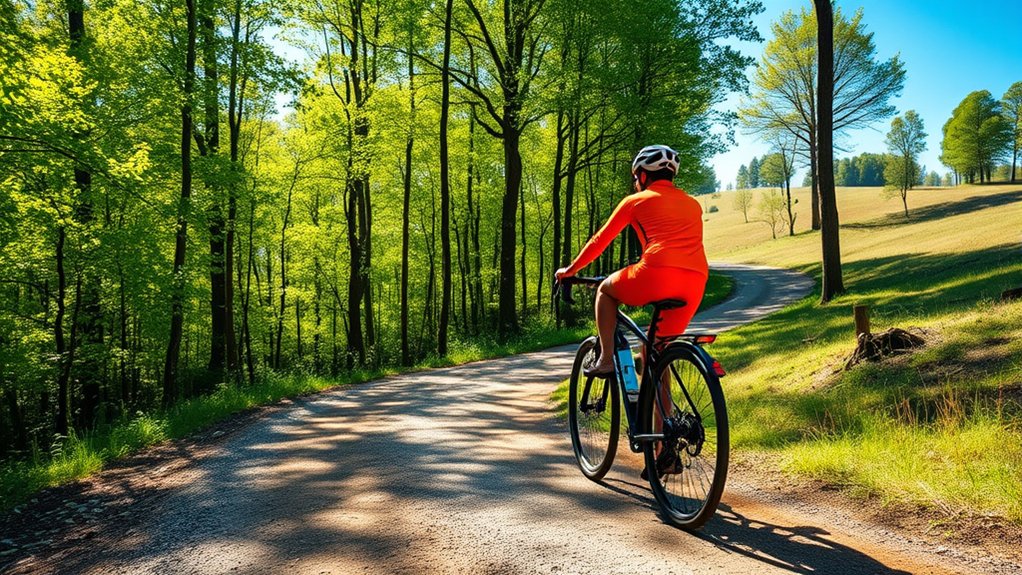
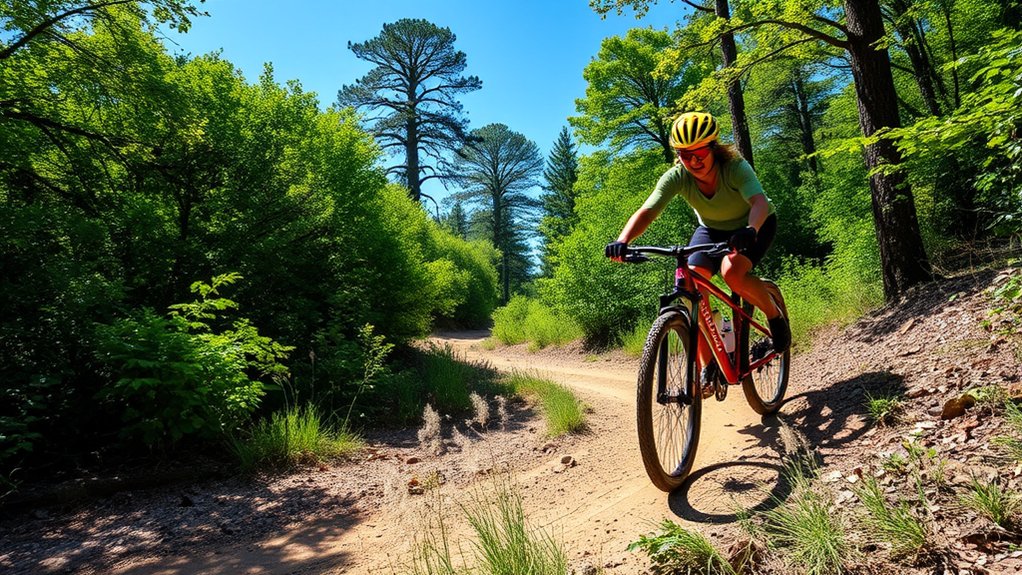
How do you pick the best trail for your hybrid bike adventure? First, think about your skill level and experience. If you’re new to trail riding, look for beginner-friendly paths with smooth surfaces and gentle inclines.
Choose trails that match your skill level, starting with smooth, gentle paths for a safe, enjoyable ride.
As you get more comfortable, you can explore more challenging terrains like dirt paths or rocky trails. Check trail descriptions to see the difficulty rating, surface type, and length.
Pay attention to weather conditions and trail status. Muddy or wet trails can be be tricky for hybrids. Always pick trails that match your fitness level and comfort zone.
Use trusted sources like local park websites or trail apps to find the right routes. Choosing the right trail makes your ride fun, safe, and enjoyable.
Preparing Your Hybrid Bike for Trail Riding
Before hitting the trail, make sure your hybrid bike is ready by checking your tire pressure. This helps prevent flats and makes handling easier.
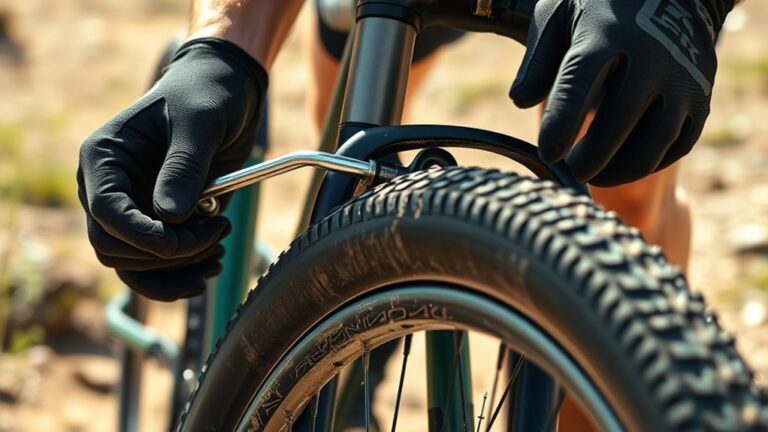
Next, test your brakes to ensure they work properly for quick stops. Then, adjust your gear settings for smooth shifting.
Taking these simple steps keeps your ride safe and efficient so you can enjoy your trail adventure.
Check Tire Pressure
Ensuring your tires are properly inflated is essential for a smooth and safe trail ride. Check the sidewalls of your tires for the recommended pressure range. Use a reliable bike pump with a gauge to measure the pressure accurately.
Under-inflated tires can cause sluggish handling, increase the risk of flats, and make pedaling harder. Over-inflated tires, on the other hand, can reduce grip and comfort on rough terrain.
Before hitting the trail, take a moment to adjust your tire pressure accordingly, especially if you plan to ride on different surfaces. For gravel or rocky trails, slightly lower pressure can improve traction.
Properly inflated tires help you maintain control, improve efficiency, and enjoy a safer trail experience.
Inspect Brake Functionality
Checking your brake functionality is an essential step to guarantee safe and reliable stopping power on the trail. Start by testing both front and rear brakes, squeezing the levers firmly to confirm they engage smoothly without excessive resistance or sponginess.
If the brake levers feel soft or sink to the handlebar, your brake fluid might need topping off or bleeding. Inspect the brake pads for wear; if they’re worn down close to the metal, replace them to maintain effective braking.
Check the brake cables or hydraulic lines for any fraying, rust, or leaks. Make sure the calipers move freely and align properly with the rims or disc rotors. Properly functioning brakes give you confidence and help you respond quickly to trail hazards.
Adjust Gear Settings
Adjusting your gear settings is key for smooth and reliable shifting on the trail. Start by shifting through all gears to make sure they engage properly and smoothly.
If you notice any hesitations or slipping, use the barrel adjuster or derailleur limit screws to fine-tune the tension. Make sure your derailleur is aligned correctly and that the cable tension is just right; too loose or tight can cause shifting problems.
Check that your shifters respond quickly and that the chain moves smoothly between gears. Properly adjusted gears help you keep a steady cadence, especially on different types of terrain.
Before heading out, test your gear changes on flat ground. This way, you can confirm everything shifts seamlessly and reduce the chance of mechanical issues during your ride.
Navigating Different Trail Terrains Safely
Different trail terrains can pose unique challenges, so it’s essential to approach each with awareness and preparation. Knowing how to handle different surfaces guarantees your safety and enjoyment.
On rocky paths, reduce your speed and stay relaxed to absorb shocks. When riding over roots or uneven terrain, keep your weight centered and look ahead to anticipate obstacles.
On rocky paths, slow down, stay relaxed, and keep your eyes on the trail to handle shocks and obstacles smoothly.
For muddy trails, maintain steady momentum to avoid getting stuck. When riding over sandy or loose gravel, shift to a lower gear and pedal smoothly to stay in control.
Adjust your speed based on how tough the terrain is. Keep a balanced posture to stay stable. Use your body to absorb shocks and maintain traction.
Stay alert and scan ahead for hazards so you can react quickly and keep your ride safe.
Essential Gear and Tips for Trail Safety
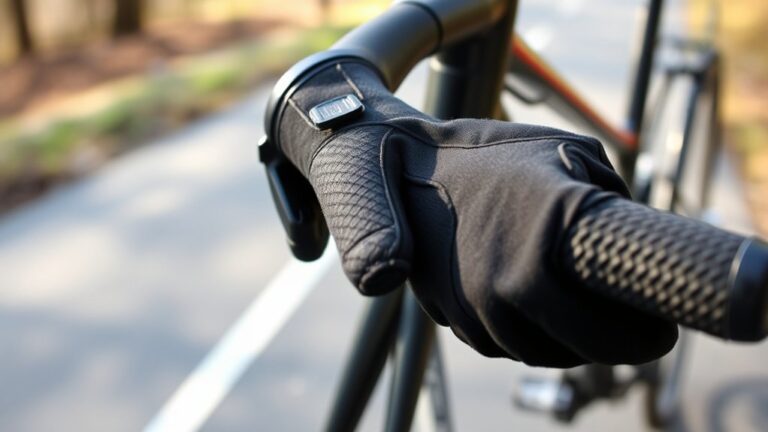
To stay safe on the trail, you need the right gear and a few essential tips. Wear a well-fitting helmet to protect your head, and consider gloves for better grip and hand protection. Bright clothing or reflective gear makes you more visible to others.
Carry a basic repair kit, including a pump, spare tube, and multitool, so you’re prepared for minor breakdowns. Bring water and snacks to stay energized and hydrated.
Always check your bike’s brakes, tires, and gears before heading out. Pack a small first aid kit for minor injuries. Keep your phone charged for emergencies, and tell someone your route.
With the right gear and mindset, you’ll enjoy your trail adventures safely and confidently.
Trail Riding Etiquette and Environmental Responsibility
Having the right gear and safety tips is just the start; respecting the trail and fellow riders guarantees everyone can enjoy the outdoors. Follow trail rules to protect the environment and ensure safety. Yield to hikers and uphill riders, and stay on designated paths to prevent erosion and habitat damage.
Leave no trace by packing out trash and avoiding disturbance to wildlife. Be considerate of other riders’ pace and communicate politely when passing. Respect private property and land boundaries, and keep noise levels low to preserve the natural experience.
By practicing responsible riding, you help maintain the trail’s integrity and ensure everyone can enjoy nature’s beauty. Stay on marked trails to prevent environmental damage, and yield to other trail users, including hikers and horses.
Pack out all trash and dispose of waste responsibly. Avoid disturbing wildlife and fragile plant life to keep the environment healthy for everyone.
Common Trail Challenges and How to Handle Them
Trail challenges like loose gravel, uneven terrain, or unexpected obstacles can catch even experienced riders off guard. When you hit loose gravel, slow down and keep steady, controlled pressure on your pedals to avoid slipping.
For uneven terrain, stay relaxed and shift your weight back slightly to keep your balance. If you come across unexpected obstacles like roots or rocks, scan ahead and pick the safest line around them.
Use your arms and legs as shock absorbers to absorb impacts. When tackling tricky sections, keep your momentum steady—stopping on difficult terrain can make things worse.
Use your arms and legs to absorb shocks and maintain steady momentum on tough sections.
Always stay alert and adjust your speed as needed. Being prepared and attentive helps you handle these common challenges smoothly, keeping your ride safe and fun.
Post-Ride Bike Maintenance and Safety Checks
After your ride, it’s important to do a quick maintenance check to keep your bike in good shape. Start by inspecting the tires for any cuts, punctures, or debris that might be stuck.
Next, check the brake pads and levers. Make sure they respond smoothly and aren’t overly worn out. Spin the wheels to see if they stay true and don’t wobble.
Finally, look over the chain and gears for dirt, rust, or slack. Lubricate them if needed to keep everything running smoothly. Regular maintenance helps keep your bike safe and lasts longer.
Frequently Asked Questions
What Should I Do if I Encounter Wildlife on the Trail?
If you encounter wildlife on the trail, stay calm and keep your distance. Slow down or stop your bike to avoid startling animals.
Speak softly to let them know you’re nearby, and avoid sudden movements. Back away slowly if they come too close, and never feed or try to touch them.
Respect their space and give wildlife plenty of room to move freely. This way, you help keep both yourself and the animals safe.
How Can I Improve My Stamina for Longer Trail Rides?
To boost your stamina for longer trail rides, start by gradually increasing your riding distance and intensity. This helps your body adapt and build endurance over time.
Incorporate interval training by alternating between fast and slow paces. It’s a great way to improve your overall stamina efficiently.
Keep your rides consistent, and don’t forget to rest and recover. Giving your muscles time to recover is key to avoiding injury.
Proper nutrition and staying hydrated are also super important. They help keep your energy levels up during those longer rides.
Over time, you’ll notice your energy improves, making those extended adventures more enjoyable and less tiring.
Are There Specific Hybrid Bike Models Best for Trails?
Yes, some hybrid bikes are better suited for trails. Look for models with wider tires, like 2.1 to 2.3 inches, which give you better grip and stability on uneven terrain.
Choose bikes with front suspension to absorb shocks and make your ride more comfortable. Brands like Trek, Specialized, and Cannondale offer hybrid models designed for trail riding.
Make sure the bike’s geometry supports handling rough terrains. That way, your rides will be safer and more enjoyable.
How Do I Handle Sudden Weather Changes During a Ride?
When weather suddenly shifts, stay calm and assess the situation. If rain starts, slow down to keep control and avoid slipping on wet surfaces. Use waterproof gear and keep your hands on the brakes for better control.
If lightning strikes or conditions become dangerous, find a safe spot to take cover. It’s always a good idea to check the weather forecast before your ride, but be ready to adapt quickly for safety.
What Are Signs of Bike Damage During Trail Riding?
You’ll notice signs of bike damage during trail riding if you hear unusual sounds like creaking or clicking, or if the bike feels different to handle, like slipping or wobbling.
Check for flat tires, bent rims, or loose and broken spokes. It’s also a good idea to inspect the brakes to ensure they’re working properly.
Look for any cracks or dents in the frame. Regularly stopping to visually inspect your bike helps you catch issues early and ride safely.
Conclusion
Remember, safety on the trails starts with preparation and respect for your bike, the environment, and fellow riders.
By choosing suitable trails, prepping your bike, and riding responsibly, you’ll enjoy your adventure while keeping risks at bay.
As the saying goes, “A stitch in time saves nine.” Stay vigilant, keep learning, and cherish every ride.
With these tips, you’ll turn every trail into a safe and memorable journey with your hybrid bike.
Happy riding!