10 Key Size Differences Between Fixed Gear Vs Road Bike
Are you feeling overwhelmed trying to choose the right bike? Many riders struggle with understanding the differences that impact how a bike handles and feels.
You’ll notice fixed gear bikes have shorter wheelbases and steeper angles for quick handling and an aggressive posture, while road bikes use longer top tubes and slacker angles for comfort and stability.
Fixed gears use narrower 700c tires with higher bottom brackets for agility, versus wider tires and lower brackets on road bikes for shock absorption.
Handlebar widths are narrower on fixed gear bikes for nimble urban riding, compared to the wider, multi-position bars on road bikes.
Keep exploring to uncover how these details affect your ride.
Key Takeaways
- Fixed gear frames tend to have shorter wheelbases and steeper angles. This makes handling quicker and more aggressive compared to the longer, slacker frames of road bikes.
- When it comes to sizing, fixed gear bikes usually use simple labels like S, M, and L. On the other hand, road bikes offer more precise sizing, often in centimeters, so you can get a better fit.
- The handlebars on fixed gear bikes are narrower, typically around 38-40 cm. This makes maneuvering easier in urban environments.
- Road bikes, however, have wider handlebars, usually between 40-44 cm, which provide more stability when riding at higher speeds.
- Fixed gear bikes generally use narrower tires, about 23-25mm on 700c wheels, making them more agile.
- Road bikes, in contrast, come with wider tires, around 25-32mm, for added comfort during longer rides.
- The bottom bracket height on fixed gear bikes is usually higher to avoid pedal strikes when riding over obstacles.
- Road bikes tend to have a lower bottom bracket, which helps with stability and better power transfer during pedaling.
Key Frame Geometry Differences Affecting Size
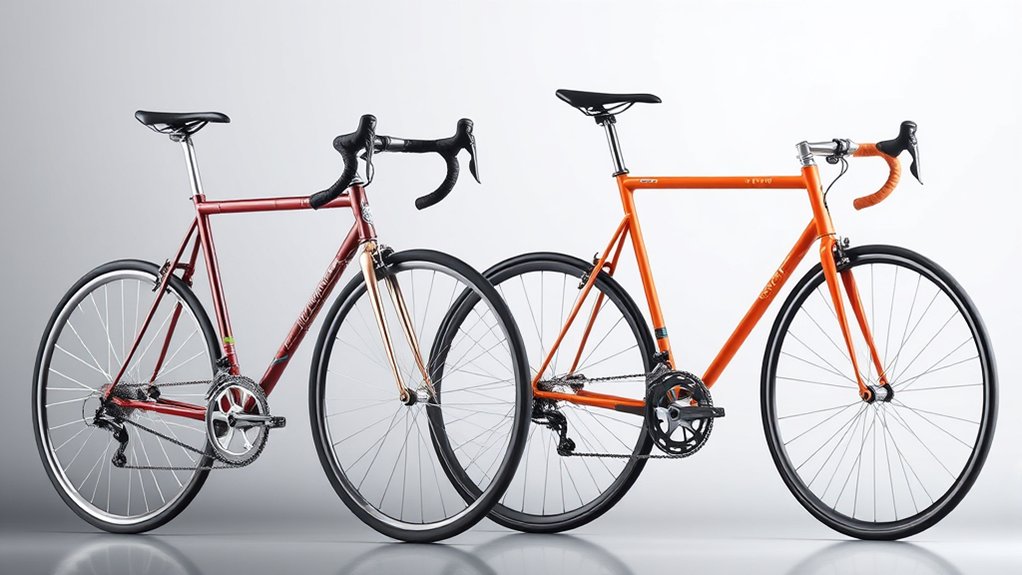
Although fixed gear and road bikes may look similar at first glance, their frame geometries differ in ways that directly impact sizing and fit. When you hop on a fixed gear bike, you’ll notice a more straightforward, minimalist design with a slightly shorter wheelbase and steeper angles. This offers quicker handling but requires a more precise fit.
Road bikes, on the other hand, tend to have longer top tubes and slacker angles, giving you a stretched-out position that’s more comfortable for long rides. You’ll also find that fixed gear frames often have less stack height, making your riding posture feel more aggressive.
Knowing these geometry differences helps you pick the right size and ensures your ride feels just right, whether you go for a fixed gear or a road bike.
How Wheel Size Changes Ride Feel on Fixed Gear Vs Road Bikes
When you compare fixed gear and road bikes, wheel size plays a big role in how each bike feels on the road. Fixed gear bikes usually have 700c wheels like road bikes, but tire width and pressure can be different, which affects ride quality. Here’s how wheel size influences ride feel:
- Acceleration: Smaller or narrower wheels on fixed gears let you accelerate quickly and feel more responsive.
- Comfort: Road bikes often have wider tires on 700c wheels, which provide more cushioning and make for a smoother ride.
- Maneuverability: Fixed gear bikes feel nimble because of their wheel setup, making them great for city riding.
- Rolling resistance: Larger wheels on road bikes roll over obstacles more easily, which helps make long rides less tiring.
Knowing these differences can help you choose the bike that matches your riding style best.
Comparing Frame Size Options for Fixed Gear and Road Bikes
You’ll notice that frame geometry varies between fixed gear and road bikes, which affects how each feels on the road.
Sizing standards aren’t always consistent, so choosing the right frame size takes some attention.
Understanding these differences helps you find a bike that fits comfortably and rides smoothly.
Frame Geometry Variations
Because fixed gear and road bikes are built for different riding styles, their frame geometries can vary a lot. When you’re choosing between them, keep these key differences in mind:
- Top Tube Length: Fixed gear frames often have shorter top tubes, which give you a more upright position. Road bikes tend to have longer top tubes to promote an aerodynamic posture.
- Seat Tube Angle: Fixed gears usually have steeper seat tube angles for quick responsiveness. Road bikes strike a balance with moderate angles that combine comfort and power.
- Head Tube Angle: Fixed gear bikes have steeper head tube angles for nimble handling. In contrast, road bikes feature slacker angles to improve stability at higher speeds.
- Bottom Bracket Height: Fixed gear bikes tend to have a higher bottom bracket to avoid pedal strikes. Road bikes are designed with a lower bottom bracket for smooth efficiency.
Knowing these differences can help you pick the right frame for your riding style.
Sizing Standards Comparison
Although fixed gear and road bikes might look similar, their sizing standards often differ, which can impact how comfortable and well-fitting your bike feels. Fixed gear bikes usually have simpler sizing—just small, medium, and large—while road bikes offer more precise measurements based on centimeters.
This means it might be easier to find a good fit with a road bike if you’re between sizes. Fixed gear bikes tend to focus on a more general fit, which works well for many riders.
| Bike Type | Common Sizes | Measurement Unit |
|---|---|---|
| Fixed Gear | Small, Medium, Large | Generic (inches) |
| Road Bike | 48-62 cm | Seat tube length |
| Road Bike | 49, 52, 54, 56, 58 cm | Precise sizing |
Knowing these differences can help you pick the right frame size for your riding style and comfort.
Impact on Riding Comfort
When choosing between fixed gear and road bikes, the frame size really affects how comfortable you’ll be. A properly fitted frame helps you avoid strain and enjoy longer rides. Here’s how frame size influences your comfort:
- Reach and Posture: Fixed gear frames often have a shorter reach, keeping you more upright, which reduces back fatigue. Road bikes tend to promote a more forward-leaning position, which is great for speed but can be tougher on your core.
- Leg Extension: Proper frame height for both bikes is key to avoiding knee pain. Fixed gear frames usually offer less adjustment, so getting the size right is especially important.
- Handling and Stability: A well-sized frame makes controlling your bike easier, especially on fixed gear bikes where you’re pedaling constantly and need good balance.
- Vibration Absorption: Road bike frames usually have more give, helping soften bumps and making your ride smoother compared to rigid fixed gear frames.
Handlebar Width and Shape: What Sets Fixed Gear Apart
You’ll notice fixed gear bikes often have narrower handlebars compared to road bikes, which changes how you handle the bike.
The shape varies too, with fixed gear bars favoring simplicity and control over aerodynamic design.
These differences directly affect your riding style, making fixed gear bikes feel more nimble and responsive in urban settings.
Handlebar Width Comparison
Since handlebar width directly affects control and comfort, understanding the differences between fixed gear and road bike handlebars is key. When comparing widths, keep these points in mind.
Fixed gear handlebars are usually narrower, around 38-40 cm, to improve maneuverability in city settings. Road bike handlebars tend to be wider, often 40-44 cm, for better stability at high speeds.
Narrower bars on fixed gears make it easier to navigate tight corners and crowded streets. Wider road bike bars give you a stronger grip and help with breathing during long rides.
Knowing these differences can help you choose handlebars that match your riding style and environment, keeping you comfortable and in control.
Shape Variations Explained
Three main handlebar shapes set fixed gear bikes apart from road bikes, each designed to enhance different riding styles. First up are bullhorn bars, common on fixed gear bikes. Their forward and upward curve gives you more control and a sleek look.
Next are track bars, which are straight and flat. They help you maintain an aggressive, aerodynamic posture. Finally, drop bars, typical on road bikes, offer multiple hand positions for comfort and versatility during long rides.
Fixed gear handlebars tend to be narrower and simpler, emphasizing style and urban functionality. Road bike handlebars, however, focus on ergonomics and provide varied grip options to support endurance.
Understanding these shape differences helps you pick the right setup for your riding needs. It’s all about choosing style without sacrificing function.
Impact on Riding Style
Although handlebar width and shape might seem like minor details, they greatly impact how you ride a fixed gear bike compared to a road bike. Fixed gear handlebars are usually narrower and simpler, which changes your control and comfort.
Here’s how that affects your riding style:
- Maneuverability – Narrow bars make it easier to weave through traffic or tight spots quickly.
- Control – Simple shapes give you direct feedback, making urban riding feel more responsive.
- Riding Position – You tend to stay more upright, which helps reduce back strain on short trips.
- Aggressiveness – Road bike handlebars are wider and drop-shaped, encouraging a more aerodynamic and aggressive stance for speed.
Knowing these differences helps you pick the setup that fits how and where you like to ride.
Why Top Tube Length Matters More on Fixed Gear Bikes
When you ride a fixed gear bike, the top tube length really matters for your comfort and control. Unlike road bikes, fixed gear bikes depend a lot on your ability to stay in a steady, efficient position because you can’t coast or shift gears.
A top tube that’s too long or too short can throw off your balance and make handling less precise. You want a frame that allows you to reach the handlebars comfortably without overstretching.
This way, you stay nimble and responsive, especially in traffic or during quick maneuvers. Since fixed gear bikes often have a more aggressive, forward-leaning stance, getting the top tube length right helps you avoid unnecessary strain.
It also keeps your ride smooth and controlled every time you hit the road.
Seat Tube Angle Differences on Fixed Gear Vs Road Bikes
You’ll notice the seat tube angle influences how you sit and pedal on fixed gear versus road bikes.
This difference impacts your riding position, which can affect both comfort and efficiency.
Understanding these angles helps you choose the right bike for your performance needs.
Impact On Rider Position
How does the seat tube angle shape your riding experience on fixed gear versus road bikes? The angle directly influences your body position and how comfortable you feel during rides.
On fixed gear bikes, a steeper seat tube angle pushes your hips forward, encouraging a more aggressive and upright stance. Road bikes tend to have a slacker angle, which helps you stretch out and stay aerodynamic.
Here’s how it impacts you:
- Hip Position – Steeper angles on fixed gear bikes put your hips over the pedals, which can improve power transfer.
- Back Posture – The slacker angles on road bikes reduce strain on your lower back.
- Knee Alignment – Fixed gear geometry can help align your knees better for sprinting.
- Comfort – Road bikes generally offer a more relaxed position, great for long rides.
Knowing this can help you pick the right bike for your riding style.
Performance Implications
Although the seat tube angle might seem like a small detail, it really has a big impact on your bike’s performance.
On fixed gear bikes, a steeper seat tube angle puts you more forward, which means quicker power transfer and more aggressive pedaling. This setup helps you accelerate faster and stay in control during urban rides or sprints.
Road bikes tend to have a slightly slacker seat tube angle, balancing power with endurance. This position lets you generate steady power over long distances without losing stability.
Knowing these differences can help you pick the right bike for your riding style. Fixed gear angles are great for sharp, responsive performance, while road bike angles support sustained, efficient power.
Ultimately, your choice affects how well you can ride in different conditions.
Comfort And Efficiency
While fixed gear bikes prioritize a steeper seat tube angle for power, this positioning can affect your comfort during longer rides. Road bikes usually have a slightly slacker angle, which balances efficiency with comfort. Here’s what you should know:
- Fixed Gear: The steep angle puts you in a more aggressive position, which boosts pedal efficiency but can put more pressure on your lower back and hips.
- Road Bike: A slacker angle offers a more relaxed posture, helping to reduce fatigue on long rides.
- Comfort Tradeoff: If you ride fixed gear for extended periods, you might feel discomfort because of the forward-leaning position.
- Efficiency Balance: Road bikes aim to maximize power output while keeping you comfortable, making them ideal for endurance cycling.
Understanding these differences helps you pick the right bike for your riding style.
How Chainstay Length Affects Bike Handling
When you change the chainstay length, it directly impacts how your bike handles. Shorter chainstays make your bike feel more nimble and responsive, which is great for quick turns and urban riding.
Longer chainstays, on the other hand, add stability. That makes them perfect for steady cruising and controlling high speeds.
Here’s a quick breakdown of how chainstay length affects handling:
| Chainstay Length | Handling Effect |
|---|---|
| Short (< 410mm) | Agile, quick turns |
| Medium (410-430mm) | Balanced stability |
| Long (> 430mm) | Stable, smooth ride |
| Very Long (> 440mm) | High-speed stability |
Tire Clearance and Width: Fixed Gear Vs Road Bikes
Chainstay length influences how your bike maneuvers, but tire clearance and width also play a big role in comfort and performance. Fixed gear bikes usually have tighter tire clearance, which limits you to narrower tires. Road bikes, on the other hand, offer more clearance, letting you run wider tires for extra grip and comfort.
Here’s what you should know:
- Fixed gear bikes often fit 23-25mm tires, which are great for smooth city streets.
- Road bikes can handle 25-32mm tires, helping with shock absorption on rough roads.
- Wider tires on road bikes reduce rolling resistance and boost stability.
- Narrow tires on fixed gears keep weight down and improve agility but might feel harsher.
Understanding these differences helps you choose the right tires for your riding style and terrain.
How Bottom Bracket Height Influences Pedaling Efficiency
Because the bottom bracket height directly affects your pedal stroke and bike handling, it plays an essential role in pedaling efficiency.
Bottom bracket height crucially influences pedal stroke and bike handling, impacting overall pedaling efficiency.
When the bottom bracket sits higher, you get more ground clearance, which helps reduce the chance of pedal strikes on corners or obstacles.
This lets you pedal more confidently and keep a smooth cadence, especially on a fixed gear bike where pedal control is constant.
On the flip side, a lower bottom bracket can boost stability and power transfer by lowering your center of gravity.
This is often preferred in road bikes for long rides and varied terrains.
Understanding this balance helps you pick a bike that matches your riding style and maximizes pedaling efficiency without sacrificing control or comfort.
Weight and Material Effects on Bike Size and Performance
Adjusting your bottom bracket height affects more than just pedal efficiency. It also interacts with the bike’s overall weight and material, which play a big role in performance and size.
When choosing between fixed gear and road bikes, think about these factors:
- Frame Material: Carbon fiber frames are lighter and stiffer, which boosts speed and responsiveness. Steel frames add durability but tend to be heavier.
- Bike Weight: Lighter bikes accelerate faster and climb better. That gives road bikes an edge over heavier fixed gears.
- Size Impact: Materials like aluminum allow for thinner tubing, helping reduce frame size without sacrificing strength.
- Ride Feel: Heavier materials absorb vibrations differently, influencing comfort and control.
Frequently Asked Questions
How Does Gear Ratio Impact Speed on Fixed Gear Versus Road Bikes?
Gear ratio directly affects how fast you can pedal and how much effort it takes. On a fixed gear bike, a higher gear ratio means you’ll go faster but pedal harder since you can’t shift gears.
On a road bike, you can change gears to keep your speed and cadence steady. This makes it easier to handle hills or sprint when needed.
Are Fixed Gear Bikes Easier to Maintain Than Road Bikes?
Yes, fixed gear bikes are easier to maintain than road bikes. You don’t have to worry about derailleurs, multiple gears, or complex shifting systems.
With fewer parts, you spend less time cleaning and adjusting. You’ll mainly focus on the chain, tires, and brakes.
This simplicity means fewer mechanical issues and lower maintenance costs. Fixed gear bikes are a great choice if you want a straightforward, hassle-free ride.
What Are the Common Uses for Fixed Gear Bikes Compared to Road Bikes?
Imagine riding a sleek arrow through city streets. That’s your fixed gear bike, perfect for quick, agile urban commuting and simple, direct control. You’ll use it to weave through traffic with minimal fuss.
On the other hand, your road bike is like a thoroughbred horse built for endurance and speed. It’s ideal for long-distance rides, racing, or weekend adventures on varied terrains.
You’ll feel the difference in stamina and performance right away.
How Do Braking Systems Differ Between Fixed Gear and Road Bikes?
You’ll find fixed gear bikes often rely on the pedals themselves to slow down since they don’t always have traditional brakes. Some fixed gear riders use a front brake for extra stopping power, but many control speed by resisting pedal motion.
Road bikes, on the other hand, come equipped with effective caliper or disc brakes on both wheels. This gives you precise and reliable stopping power in various conditions.
Can Fixed Gear Bikes Be Used for Long-Distance Rides Like Road Bikes?
Yes, you can use a fixed gear bike for long-distance rides, but it might be tougher than riding a road bike. Fixed gear bikes don’t have multiple gears, so you’ll rely more on your strength and cadence.
They also lack the comfort features and braking versatility found on road bikes. If you’re prepared for a more challenging ride and like simplicity, a fixed gear can work.
But generally, road bikes are better suited for long distances because they offer more gears and comfort features.
Conclusion
Choosing between a fixed gear and a road bike isn’t just about picking a ride. It’s like deciding whether you want to sprint through city streets or glide effortlessly on open highways. Every size difference, from frame geometry to tire width, changes your whole experience.
Get it wrong, and you might feel like you’re riding a unicycle on a mountain. So, knowing these key size differences will help you conquer every ride like a pro, no matter which bike you choose.