8 Factors That Determine How Fast a Road Bike Can Go
Many road cyclists dream of going faster but often feel stuck, unsure what really makes a difference. You’re not alone—improving speed can seem complicated with so many factors at play. Luckily, focusing on a few key areas can give you a noticeable boost.
You can make your road bike faster by focusing on eight key factors. Your bike’s frame design and weight affect acceleration and efficiency, while tire choice impacts rolling resistance and grip.
Aerodynamics and your riding position reduce drag, helping you move quicker. Gearing and cadence determine how smoothly you maintain top speed. Weather conditions like wind and rain influence your ride, and regular maintenance keeps everything running smoothly.
Investigate these areas to considerably boost your cycling performance.
Key Takeaways
- Aerodynamic frame design and lightweight materials help cut down air resistance and make acceleration smoother, so you can go faster.
- Tire width, pressure, and tread patterns play a role in rolling resistance and grip, which directly affect your speed and comfort.
- Your riding position also matters—lowering your torso and tucking your elbows can reduce drag and boost aerodynamic efficiency.
- Environmental factors like wind direction, temperature, and road conditions can really influence how fast you can ride and how safe you are.
- Regular maintenance, such as chain lubrication and checking tire pressure, keeps your bike running well and minimizes energy loss.
How Road Bike Frame Design Boosts Your Speed
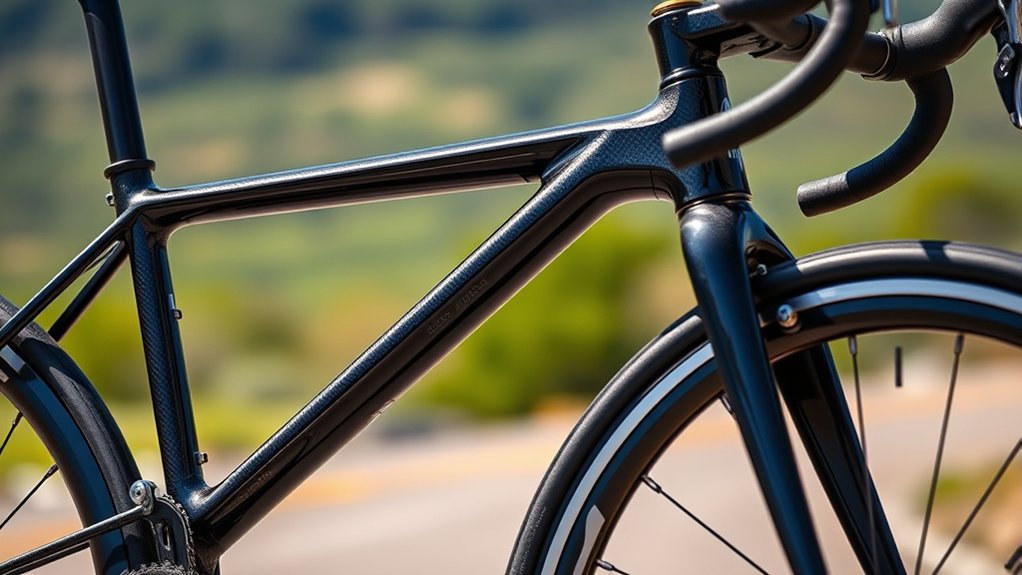
Although many factors affect your speed, the design of your road bike frame is really important. Choosing a frame with aerodynamic shapes helps cut down air resistance, so you can ride faster with less effort.
Lightweight materials like carbon fiber allow you to accelerate quickly and stay at high speeds without wasting energy. The frame’s geometry also influences your riding position, helping you adopt a more streamlined posture that reduces drag.
Stiffness in the frame is key because it ensures your pedaling power goes directly into forward motion. This prevents energy from being lost and makes your ride more efficient.
Why Tire Choice Affects Road Bike Speed and Efficiency
You’ll notice that tire width plays a big role in how fast and efficient your road bike feels. Narrower tires usually reduce rolling resistance, making your ride smoother.
The tread pattern can also affect grip and speed on different surfaces. Picking the right combination helps you ride faster and more comfortably.
Tire Width Impact
Because tire width directly affects rolling resistance and aerodynamics, choosing the right tires can really impact your road bike’s speed and efficiency. Narrower tires usually cut through the air more easily at higher speeds, thanks to less aerodynamic drag.
But they also increase rolling resistance because of higher tire pressure and less contact with the road. Wider tires, on the other hand, can be run at lower pressures, which makes for a more comfortable ride and reduces rolling resistance by better conforming to road imperfections.
This means you might actually go faster with slightly wider tires on rough surfaces. Ultimately, finding the right width depends on your usual terrain and riding style. Picking the ideal size helps you maximize both speed and comfort without sacrificing control.
Tread Pattern Effects
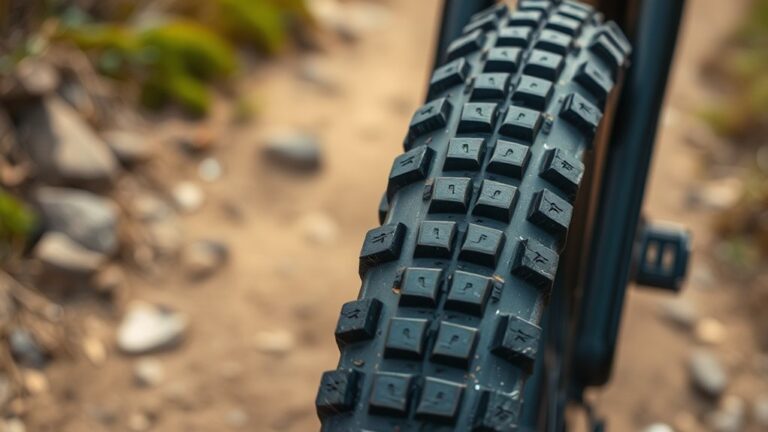
Three main tread patterns—slick, semi-slick, and knobby—are key to how your road bike handles speed and efficiency. Slick tires have a smooth surface that reduces rolling resistance, helping you glide faster on paved roads.
Semi-slick tires combine a smooth center with treaded edges, giving a good mix of speed and grip. They’re great for mixed surfaces where you might encounter different terrain types.
Knobby tires offer maximum traction on rough or loose terrain but tend to increase rolling resistance. This makes them slower on smooth pavement.
Choosing the right tread depends on where you mainly ride. If you stick to clean, paved roads, slicks are your best choice for speed.
But if you often encounter gravel or wet conditions, a semi-slick or knobby tire can give you better control—even if it means sacrificing a bit of efficiency.
How Bike Weight Influences Your Speed on the Road
Although bike weight isn’t the only thing that affects your speed, it definitely plays a big role in how fast you can accelerate and climb hills. When your bike is lighter, you use less energy to push it forward, especially on steep climbs or quick sprints.
Bike weight significantly impacts your acceleration and hill climbing, making lighter bikes easier to push forward.
A heavier bike takes more effort to get moving and keep up momentum, which can tire you out faster. But once you’re cruising on flat ground, the weight difference isn’t as noticeable as it is on inclines.
Keep in mind that reducing weight should be balanced with durability and comfort. Upgrading to lighter components can improve your performance, but don’t compromise on reliability.
In the end, managing your bike’s weight helps you ride more efficiently, making it easier to maintain higher speeds with less effort across different terrains.
How Aerodynamics Can Help You Ride Faster
When you reduce air resistance, you can ride faster with less effort. Aerodynamics is key to cutting through the wind. Streamlined helmets, smooth bike frames, and tight clothing all help lower drag.
Even small tweaks can make a big difference in your speed. Here’s a quick look at how different aerodynamic factors compare:
| Factor | Drag Reduction | Speed Impact |
|---|---|---|
| Aero Helmet | High | +1-2 mph |
| Smooth Frame | Medium | +0.5-1 mph |
| Tight Clothing | Low | +0.2-0.5 mph |
How Your Riding Position Impacts Road Bike Speed
Because your body creates much of the wind resistance you face, adjusting your riding position can really boost your speed. Small changes can have a big impact on how smoothly you cut through the air. Here’s how you can optimize your position:
- Lower your torso to bring your chest closer to the handlebars and reduce your frontal area.
- Tuck your elbows to narrow your arm position and minimize drag.
- Keep your head low and look forward without lifting it too high.
- Engage your core to stay stable and maintain an aerodynamic posture without wasting energy.
These tweaks not only help you go faster but also boost your confidence as you slice through the wind with less effort. Give them a try and feel the speed difference right away.
How Gearing and Cadence Affect Your Top Speed
Adjusting your riding position reduces wind resistance, but to really hit your top speed, you need to focus on your gearing and cadence. Gearing controls how hard you push with each pedal stroke, while cadence is how fast you pedal. Finding the right combo helps you stay at top speed without burning out.
| Gear Combination | Cadence (RPM) | Effect on Speed |
|---|---|---|
| Low Gear | 90-100 | Easier pedaling, slower |
| Mid Gear | 80-90 | Balanced control |
| High Gear | 70-80 | Harder pedaling, faster |
| Too High Gear | <70 | Risk of exhaustion |
| Too Low Gear | >100 | Inefficient speed |
Try experimenting to find the gear and cadence that make your ride smooth and fast.
How Weather Conditions Can Slow You Down or Speed You Up
You’ll notice that wind direction can either push you forward or hold you back, which can really change your speed.
Temperature also matters, affecting how your muscles perform and how long you can keep going.
And don’t forget, rain can make roads slippery, so you might need to slow down to stay safe.
Wind Direction Effects
Though wind might seem like just another element of your ride, its direction can dramatically impact your speed. Facing a headwind means you’ll push harder, draining energy and slowing down.
A tailwind, on the other hand, can boost your momentum, letting you glide faster with less effort. Crosswinds challenge your balance and steering, demanding focus and skill.
Here’s how wind direction affects you:
- Headwind: Feels like a wall, sapping your strength and reducing speed.
- Tailwind: Acts as a helpful push, increasing your pace effortlessly.
- Crosswind: Tests your control, making the ride more demanding and less efficient.
- Variable winds: Keep you guessing, requiring constant adjustment and mental toughness.
Understanding these effects helps you plan and ride smarter.
Temperature Impact On Performance
When temperatures rise or fall, your body reacts in ways that directly affect your cycling speed and endurance.
In warmer weather, your body works harder to cool down, diverting blood flow to the skin and increasing sweat production. This can lead to quicker fatigue and slower speeds if you don’t stay hydrated.
Conversely, colder temperatures cause your muscles to tighten, reducing flexibility and power output unless you warm up properly. You might also burn more energy just to maintain body heat, impacting stamina on longer rides.
Ideal performance often occurs in moderate temperatures, where your body balances heat production and loss.
Being aware of how temperature affects you helps you adjust your effort, clothing, and hydration to ride faster and longer.
Rain And Road Grip
Because wet roads reduce tire traction, rain forces you to adjust your riding style to stay in control and avoid slipping. You’ll need to slow down, brake earlier, and pick your lines carefully. Rain doesn’t just slow you down; it challenges your confidence and skill.
Here’s how it affects your ride: Reduced grip makes cornering riskier, so you need to stay more focused. Wet surfaces also mean longer braking distances, so anticipate your stops. Puddles can hide potholes, which can lead to sudden jolts or crashes. Damp conditions often cool your muscles, which can impact your power output.
While rain might slow your speed, mastering these conditions will sharpen your technique and make you more resilient. Embrace the challenge, and you’ll ride safer and smarter no matter the weather.
How Regular Maintenance Keeps Your Road Bike Fast
Keeping your road bike in top shape guarantees it performs at its highest speed. Regular maintenance ensures all parts work smoothly, reducing friction and resistance that slow you down.
Make sure to clean and lubricate your chain often to prevent wear and keep power transfer efficient. Checking tire pressure before each ride helps you avoid rolling resistance from underinflated tires.
Inspecting brakes and gears allows you to catch issues early and keep shifting crisp and safe. Don’t forget to tighten bolts and check wheel alignment, as loose or misaligned parts can drain your energy.
Frequently Asked Questions
How Does Nutrition Impact a Cyclist’s Speed?
Nutrition impacts your cycling speed by fueling your muscles with the energy they need. When you eat the right balance of carbs, proteins, and fats, you’ll have sustained energy and quicker recovery.
Proper hydration also helps prevent fatigue and keeps you moving faster. If you don’t fuel well, you’ll feel weak and tire out sooner.
Focusing on good nutrition helps you maintain both speed and endurance throughout your ride.
Can Mental Focus Improve My Road Bike Performance?
Yes, mental focus can definitely improve your road bike performance. When you stay concentrated, you react faster to changes in terrain and traffic, maintain better form, and push through fatigue more effectively.
Staying mentally sharp helps you make smart decisions, like when to conserve energy or sprint. Training your mind, just like your body, boosts endurance and speed, so don’t underestimate the power of focus during your rides.
What Role Do Cycling Shoes Play in Speed?
Cycling shoes play a big role in your speed by improving power transfer from your legs to the pedals. They clip into the pedals, so your feet won’t slip, which helps you pedal more efficiently and with better control.
This means you can push harder and pedal smoother, boosting your speed. Plus, the stiff soles reduce energy loss, so less effort is wasted. Wearing good cycling shoes definitely helps you ride faster.
How Does Road Surface Quality Affect Bike Speed?
You can lose up to 30% of your speed on rough roads compared to smooth pavement. When you ride on high-quality, smooth surfaces, you face less rolling resistance, which helps you go faster with less effort.
On rough or uneven roads, you’ll slow down because your tires have to absorb more bumps and vibrations. So, choosing well-maintained routes can really boost your speed and make riding easier.
Does Altitude Influence How Fast I Can Ride?
Yes, altitude does influence how fast you can ride. At higher altitudes, the air is thinner, which means there’s less oxygen available for your muscles. This can make you feel more tired and reduce your performance, especially if you’re not used to it.
But the thinner air also creates less aerodynamic drag, which can help you go faster once you get used to it. Overall, how altitude affects your speed depends on how well you’ve adapted to it.
Conclusion
To ride faster, you need to tune every detail like a finely tuned engine. From your bike’s frame and tires to your riding position and gearing, each factor adds up.
Don’t forget how weather and regular maintenance can either slow you down or keep you flying. Proper care and awareness of conditions make all the difference.
By mastering these eight factors, you’ll glide down the road like a breeze. Feel the pure thrill of speed with every pedal stroke on your road bike.