How Do Mountain Bike Gears Work
Many mountain bikers find themselves frustrated when their gears don’t shift smoothly or feel unsure about how to choose the right gear for the trail. You’re not alone—understanding how mountain bike gears work can really boost your confidence and ride quality.
Mountain bike gears work by moving the chain across different-sized sprockets on the cassette and chainrings, changing your pedaling effort and speed. You use the front derailleur to shift between chainrings and the rear derailleur to shift across the cassette’s gears.
Lower gears make climbing easier, while higher gears boost your speed on flats. Shifting at the right time keeps your ride smooth and efficient. Keep exploring, and you’ll uncover how to optimize gears for any trail.
Key Takeaways
- Mountain bike gears use derailleurs to move the chain across different sized sprockets and chainrings. This allows for a variety of pedaling resistance depending on the terrain.
- When you’re climbing uphill, lower gear ratios make pedaling easier. On flat terrain, higher ratios help you ride faster.
- Shifting gears helps you adjust your cadence, so you can stay efficient and avoid getting too tired as the trail changes.
- Both electronic and mechanical systems control gear shifting. Electronic systems tend to be more precise and require less maintenance.
- To keep your drivetrain in good shape, it’s important to shift smoothly and at the right time. This prevents strain and keeps your bike rolling smoothly on the trail.
Mountain Bike Gear Components: Derailleurs, Cassette, and Chainrings
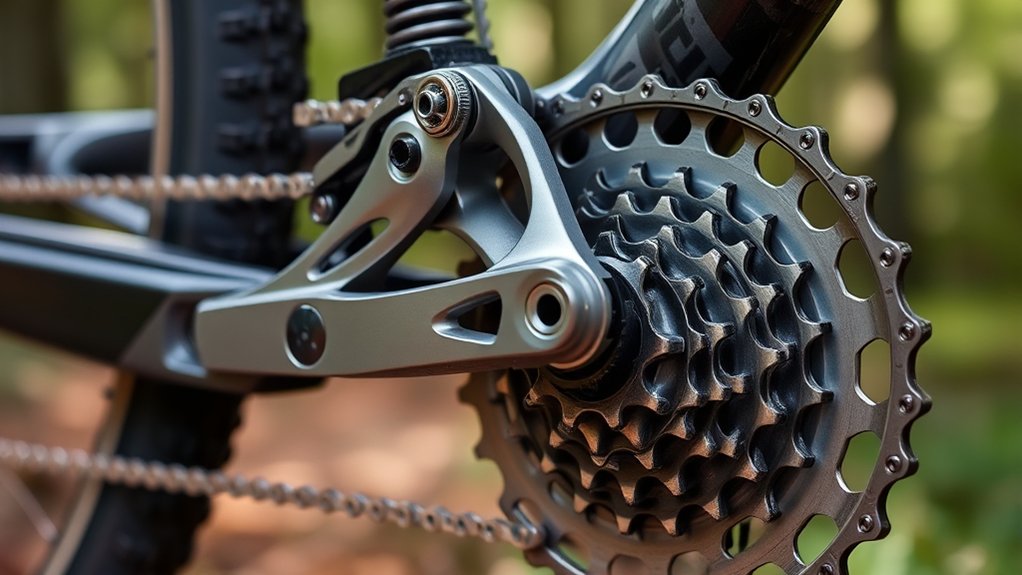
Understanding your mountain bike’s gear components is key to mastering its performance on varied terrain. Your bike’s drivetrain includes three main parts: derailleurs, cassette, and chainrings.
The derailleurs guide the chain across gears. The front derailleur moves the chain between chainrings near the pedals, while the rear derailleur shifts the chain across the cassette on the rear wheel.
Derailleurs precisely guide the chain, shifting it between front chainrings and rear cassette sprockets for smooth gear changes.
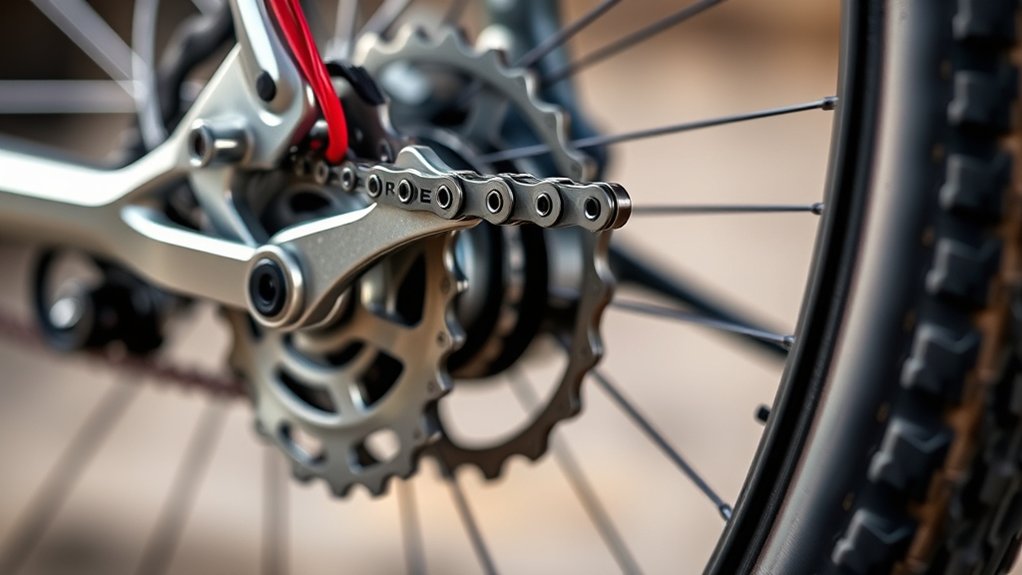
The cassette consists of multiple sprockets of varying sizes, allowing you to adjust your pedaling resistance. Chainrings are the large gears attached to your crankset.
When you shift gears, the derailleurs reposition the chain onto different sprockets or chainrings, changing your bike’s mechanical advantage. Knowing how these components work together helps you keep your bike running smoothly and ready for any trail challenge.
How Mountain Bike Gears Affect Your Pedaling Effort and Speed
Although mountain bike gears might seem complicated at first, they really affect how hard you have to pedal and how fast you can go.
When you shift to a lower gear, pedaling gets easier, so you can climb steep hills without getting too tired.
On the other hand, higher gears need more effort but let you pedal faster on flat or downhill terrain.
Choosing the right gear helps you control your cadence—the speed at which you pedal—and keeps you efficient.
If you push too hard in a high gear, you’ll tire quickly. If you’re too easy in a low gear, you won’t gain much speed.
Getting this balance right helps you ride longer, handle different trails, and adjust your effort easily.
Gear Ratios and Their Importance on Trails
To get the most out of your ride, you need to understand gear ratios and how they affect your trail performance.
Gear ratios determine how hard or easy it is to pedal depending on the terrain. Knowing this helps you choose the right gear for climbing, descending, or cruising smoothly.
Understanding Gear Ratio Basics
Gear ratios are key to how your mountain bike handles different terrains. Basically, a gear ratio is the relationship between the number of teeth on your front chainring and the rear cassette sprocket. It shows you how hard or easy pedaling feels and how fast you can go.
Here’s a quick look at gear ratios:
| Chainring Teeth | Cassette Teeth | Gear Ratio (Chainring ÷ Cassette) |
|---|---|---|
| 32 | 16 | 2.0 |
| 32 | 24 | 1.33 |
| 32 | 32 | 1.0 |
Lower ratios make pedaling easier, especially when climbing. Higher ratios give you more speed on flat sections.
Impact on Trail Performance
When you hit the trail, your bike’s gear ratios directly affect how well you handle climbs, descents, and flat sections.
Lower gear ratios make pedaling easier on steep climbs, letting you keep momentum without tiring yourself out.
Higher gear ratios give you more speed on flats and downhills, so you can power through without spinning out.
Choosing the right gear ratio helps you adapt quickly to changing terrain, improving your control and efficiency.
If your ratios are too high for a climb, you’ll struggle and tire quickly.
Too low on flats, and you’ll spin inefficiently. Understanding gear ratios helps you pick the best setup for your trail style.
This makes every ride smoother, faster, and more enjoyable.
When and Why to Shift Mountain Bike Gears
Although shifting gears might seem confusing at first, you’ll quickly find that doing it at the right moments makes your ride smoother and more efficient.
Shifting gears may seem tricky initially, but timing it right enhances your ride’s smoothness and efficiency.
You want to shift gears to keep your pedaling comfortable and adapt to changing trail conditions. Here are three key times to shift:
- Before changes in terrain. Shift just before you hit a different surface or incline to avoid sudden strain.
- When your pedaling feels too hard or too easy. Adjust gears to keep your effort steady and prevent fatigue.
- During acceleration or deceleration. Shift to match your speed, which helps prevent awkward pedaling or chain slippage.
Mastering these shifts keeps your momentum steady and protects your bike’s drivetrain.
Using Gears to Climb Steep Hills Efficiently
Shifting at the right moments sets you up for success when tackling steep hills. When you hit a steep incline, switch to a lower gear before you feel strain. This reduces the pedaling resistance, helping you maintain a steady cadence without exhausting your legs.
Don’t wait until you’re struggling—that’s when shifting becomes harder and can disrupt your momentum. Use your bike’s granny gear (the smallest chainring and largest sprocket) for the steepest climbs to make pedaling easier.
Keep your cadence smooth and steady, focusing on spinning the pedals rather than mashing down hard. This approach conserves energy and helps you climb more efficiently.
Shifting Gears for Fast Descents and Flat Terrain
As you speed down hills or cruise on flat trails, choosing the right gear helps you stay in control and ride efficiently.
On fast descents, shift to a higher gear so your pedaling stays smooth without spinning out.
For flat terrain, a moderate gear keeps your cadence steady without tiring you out too quickly.
Here’s how to shift effectively:
- Descents: Use a larger chainring and smaller rear cog for more speed and better control.
- Flat Trails: Pick a middle chainring and mid-range rear cog to balance effort and speed.
- Anticipate Changes: Shift before terrain shifts to avoid sudden gear jumps or losing momentum.
Common Gear Issues and Easy Fixes
When your gears start slipping or hesitate to shift, you’ll want to fix the issue quickly to keep your ride smooth and safe. One common problem is a misaligned derailleur, which can cause the chain to jump between gears. You can fix this by adjusting the derailleur’s limit screws or cable tension.
Another frequent issue is a stretched or dirty cable, which leads to sluggish shifting. Replacing or lubricating the cable usually solves this problem. If your chain skips under load, check for a worn chain or cassette and replace them if needed.
Sometimes, simply tightening loose bolts on the shifters or derailleur improves performance. By spotting and fixing these issues early, you’ll avoid bigger problems and enjoy a hassle-free ride.
How to Maintain and Clean Your Mountain Bike Gears
To keep your mountain bike gears running smoothly, you should clean the gear components regularly to remove dirt and grime.
This helps prevent buildup that can cause shifting issues or wear down parts faster.
After cleaning, applying the right lubrication is key.
It reduces friction and helps your gears move smoothly without sticking or grinding.
Let’s go over some simple steps to maintain and clean your gears effectively.
Cleaning Gear Components
Keep your mountain bike gears running smoothly by regularly cleaning the gear components. Dirt and grime buildup can cause poor shifting and wear down parts faster. To clean effectively, focus on these key areas:
- Chain: Use a degreaser and a brush to remove dirt from the chain links. Rinse with water and dry thoroughly.
- Derailleurs: Wipe down the front and rear derailleurs, paying attention to jockey wheels where debris can gather.
- Cassette and Chainrings: Scrub between the teeth with a stiff brush or a specialized gear cleaning tool to clear out stuck grime.
Make cleaning part of your regular maintenance routine to extend gear life and ensure smooth performance every ride.
Lubrication Techniques
Mastering proper lubrication techniques is key to keeping your mountain bike gears running smoothly. After cleaning, apply a suitable bike chain lubricant to the chain and derailleur pivots.
Use a drip or spray method sparingly because too much lube can attract dirt, which speeds up wear on your components. Focus on the chain’s rollers and inside plates, turning the pedals backward to spread the lubricant evenly.
Let it sit for a few minutes, then wipe off any excess with a clean rag to prevent grime buildup. Avoid using general-purpose oils—choose lubricants made for mountain biking, like wet or dry lube, based on your usual trail conditions.
Regular lubrication helps your gears shift crisply and prolongs the life of your drivetrain.
Pick the Right Number of Gears for Your Riding Style
How many gears do you really need on your mountain bike? It depends on your riding style and the terrain you tackle. More gears give you a wider range for climbing steep hills and going fast on flats, but they add weight and make things more complicated. Fewer gears make shifting simpler and reduce maintenance, but they might limit your options.
Think about these points to pick the right number:
- Casual Riding: A 1x drivetrain with 7-10 gears keeps things simple and reliable.
- Trail Riding: A 2x or 3x setup with 18-27 speeds offers versatility for different terrain.
- Technical or Competitive Riding: More gears, up to 30, help you fine-tune your cadence and power.
Choose the gearing that matches your comfort level and the challenges you face.
Modern Gear Technologies That Boost Mountain Biking
You’ll notice that modern gear technologies can seriously improve your ride. Electronic shifting systems offer precise, effortless gear changes, making your ride smoother.
Wide range cassettes give you more options for tackling any terrain, so you’re always prepared for whatever’s ahead. Plus, lightweight components help keep your bike nimble and responsive on the trail.
Electronic Shifting Systems
Although traditional mechanical shifting has worked well for mountain bikers for decades, electronic shifting systems have changed gear changes with more precision and speed. When you switch to electronic shifting, you’ll notice smoother, quicker gear changes without needing manual cable adjustments.
These systems use motors controlled by buttons or paddles, making shifting effortless even in tough conditions. Here’s why electronic shifting really stands out:
- Consistency – Gear changes happen exactly as you command, every time.
- Low Maintenance – No cables to stretch or corrode, which means less upkeep.
- Customization – You can program shift patterns and multi-shift options to match your riding style.
Wide Range Cassettes
Electronic shifting systems offer impressive control, but pairing them with wide range cassettes takes your gear options to the next level. Wide range cassettes have a larger spread of sprockets, often from 10 to 50 teeth or more.
This setup gives you low gears for climbing steep trails and higher gears for fast descents. It makes it easier to keep a steady cadence no matter the terrain. The expanded gear range reduces the need for multiple chainrings, simplifying your drivetrain and lowering the risk of mechanical issues.
When you combine wide range cassettes with precise shifting, you get smoother shifts and more efficient power transfer. This technology truly upgrades your mountain biking by offering versatility and reliability on different types of trails.
Lightweight Gear Components
Lightweight gear components can really change your mountain biking experience by making your bike lighter without losing durability or performance. When your bike is lighter, climbing hills gets easier and accelerating is quicker, helping you stay in control and ride longer on tough trails. Modern materials and designs make this possible without sacrificing strength.
Here are three key innovations in lightweight gear components:
- Carbon fiber cassettes and chainrings. They drastically cut weight while staying stiff enough for good power transfer.
- Titanium bolts and small parts. These replace heavier steel pieces, shaving grams off your setup.
- Hollow or machined aluminum components. They keep things light but durable by removing unnecessary material.
How Derailleurs Shift Mountain Bike Gears
When you shift gears on your mountain bike, the derailleur is key to changing gears smoothly. It guides the chain sideways to line up with the right sprocket.
When you twist the shifter or click the lever, it pulls or releases a cable attached to the derailleur. This moves the derailleur’s cage, pushing the chain onto your chosen sprocket.
Springs inside the derailleur keep tension on the chain, preventing it from slipping. Because the derailleur reacts quickly to your shifts, you can easily adjust your pedaling effort for different terrains.
This precise movement helps you stay in control and maintain momentum as you ride through various trails.
Cassette and Chainrings: Key Parts of Mountain Bike Gears
The cassette and chainrings are key parts of your mountain bike gears. They help determine how easy or hard pedaling feels and your overall gearing range.
The cassette is a bunch of sprockets attached to your rear wheel. The chainrings are the larger gears connected to your crankset. Together, they control your bike’s mechanical advantage.
The cassette and chainrings work together to control your bike’s mechanical advantage for smoother riding.
You can change your riding experience by choosing different sizes. Larger chainrings need more effort but boost speed on flat terrain. Smaller chainrings make climbing hills easier by reducing resistance.
A wider cassette range gives you more gear options, so you can handle different terrains smoothly. Understanding these parts helps you get the most out of your mountain rides.
Frequently Asked Questions
How Do Gear Shifters Differ Between Mountain Bike Brands?
You’ll find that gear shifters differ between mountain bike brands mainly in design, shifting mechanism, and compatibility. Some brands use trigger shifters for quick thumb and finger control, while others prefer twist grips or electronic shifting.
The feel, precision, and the number of gears you can shift at once also vary. Brands like Shimano, SRAM, and Campagnolo each have their own tech, so your riding style and bike setup help decide which shifter is best for you.
Can Electric Mountain Bike Gears Be Manually Adjusted?
You can definitely take the reins and manually adjust electric mountain bike gears when needed. While the system often handles shifts smoothly on its own, giving you a helping hand, you’re still in control to fine-tune gear changes or override automatic settings.
This flexibility lets you tailor your ride perfectly, whether you want a gentle glide or a power-packed climb. So, you’re not just along for the ride—you’re actively shaping your adventure.
What Are the Best Gear Settings for Bikepacking Trips?
For bikepacking trips, you’ll want to use a wide range of gears to handle varied terrain. Start with a lower gear for climbing steep hills and a higher gear for flat or downhill sections.
Make sure your setup includes a granny gear for tough ascents and a strong middle range for cruising. Adjust your gears frequently to maintain a comfortable cadence and conserve energy throughout your journey.
How Do Tubeless Tires Impact Gear Performance?
Tubeless tires are like the silent partners in your gear system, boosting performance without drawing too much attention. They cut down on rolling resistance, so pedaling feels easier, especially in lower gears on rough trails.
With fewer flats, you can keep your speed and momentum steady, letting your gears work smoothly. Plus, their lower pressure gives you better grip, so shifting on tricky terrain feels more controlled.
Are There Special Gears for Downhill Versus Cross-Country Biking?
Yes, there are special gears for downhill versus cross-country biking. Downhill bikes usually have lower, wider-range gears to help you power through steep, technical descents and rough terrain without losing control.
Cross-country bikes tend to use higher gears focused on speed and efficiency. They’re designed for longer rides and climbing, making pedaling easier over varied terrain.
Conclusion
Don’t worry if mountain bike gears seem complicated at first. You’ll get the hang of them quickly once you start riding.
Using your gears right makes climbing hills easier and riding faster. It also gives you more control and helps reduce fatigue.
Remember, shifting isn’t just for speed; it’s about saving energy and making your ride better.
With a little practice, you’ll find the perfect gear for every trail and enjoy smoother, more efficient rides every time. Understanding how mountain bike gears work will make your rides more enjoyable and less tiring.