How Do You Do Downhill Mountain Biking in 10 Essential Steps
Many downhill mountain biking enthusiasts struggle to find the right way to tackle challenging trails with confidence. You’re not alone—getting comfortable and staying safe on steep descents can feel overwhelming at first.
With the right approach, you can build your skills and enjoy the thrill of downhill riding.
To do downhill mountain biking well, start by choosing a bike with strong suspension and protective gear. Get comfortable with basic handling and maintain a balanced body position.
Use smooth braking to control speed and learn to read trails for the best riding line. Confidently navigate obstacles like rocks and drops while building your skills on progressively harder trails.
Keep your bike in top shape for safety and practice falling techniques. Keep exploring to boost your technique and confidence even more.
Key Takeaways
- Choose a downhill bike with strong suspension, a durable frame, hydraulic disc brakes, and wear full protective gear for safety.
- Master bike handling by keeping your body centered, bending your knees and elbows.
- Look ahead on the trail to anticipate upcoming turns and obstacles.
- Use smooth, balanced braking with both brakes. Feather the pressure and brake before turns to control your speed and stay stable.
- Read the trail to spot obstacles early. Use berms for better cornering and lean the bike, not your body.
- Keep your inside pedal up when turning to maintain balance and control.
- Build confidence by starting on easier trails.
- Practice navigating obstacles with a relaxed posture.
- Regularly check and maintain your bike components to keep everything in top shape.
Choose Your Downhill Bike and Essential Gear
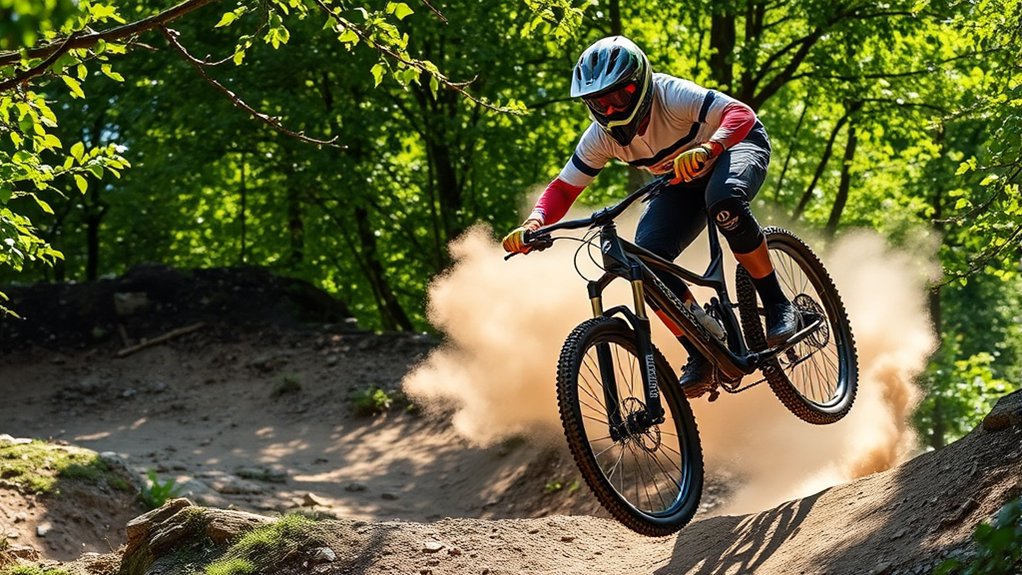
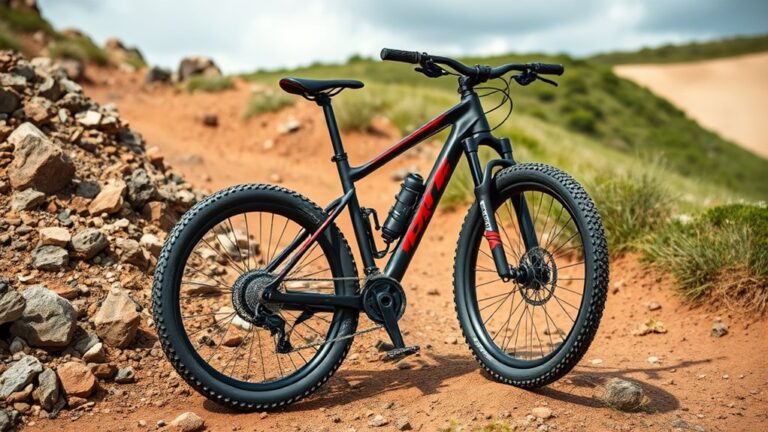
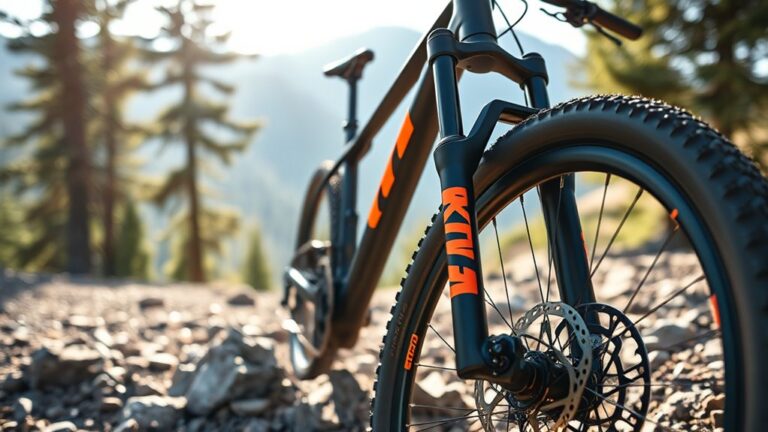
Before you hit the trails, you need to choose the right downhill bike and gear that match your skill level and riding style. Look for a bike with strong suspension, typically 200mm travel, to absorb big drops and rough terrain.
A sturdy frame made from aluminum or carbon fiber guarantees durability without adding unnecessary weight. Don’t forget about powerful hydraulic disc brakes. They’re essential for controlling your speed on steep descents.
Regarding gear, invest in a full-face helmet, gloves, knee and elbow pads, and body armor to protect yourself from falls. Choose shoes with good grip for stability on the pedals.
Selecting the proper bike and protective equipment sets you up for a safe and enjoyable downhill experience.
Get Comfortable With Basic Bike Handling Skills
Before hitting the trails, you need to master balancing and steering techniques to stay in control. Get a feel for braking so you can manage your speed smoothly.
Plus, practicing the right body positioning will help you handle rough terrain with confidence.
Balancing and Steering Techniques
Mastering basic bike handling skills is key to staying in control and feeling confident on downhill trails. To keep your balance, stay centered over the bike with your knees and elbows slightly bent to soak up bumps.
Stay relaxed and avoid stiffening up, as that can throw off your stability. When steering, make subtle movements—lean the bike into turns instead of forcing the handlebars.
Look ahead, not directly down, so you can anticipate trail changes and adjust your line smoothly. Shift your body weight slightly forward or backward depending on the terrain to keep traction without losing balance.
Practicing these techniques on easier trails helps build muscle memory, so you react naturally when the terrain gets technical or steep.
Braking Control Fundamentals
Although controlling your speed might seem straightforward, learning proper braking techniques is key for staying balanced and safe on downhill trails. You want to use both brakes smoothly and evenly to avoid skidding or losing control.
Relying only on the front brake can make you flip forward, while using just the rear might cause you to slide out. Practice feathering the brakes—applying light, steady pressure—to control your speed without stopping suddenly.
Try to brake before entering turns, not during them. This helps keep your bike stable and maintains your momentum. Start practicing these basics on easy slopes so you can build confidence. Mastering this skill helps you react quickly and stay in control on steeper or more technical trails.
Body Positioning Basics
A solid body position is key to staying balanced and in control on any downhill ride. Keep your knees slightly bent and elbows out to absorb shocks easily.
Shift your weight back when going down steep sections to avoid going over the handlebars, but stay centered enough to keep traction on both wheels.
Keep your head up and eyes on the trail ahead, not your front wheel. Make sure your pedals are level to stay stable and ready to make quick adjustments.
Relax your grip on the handlebars to reduce fatigue and make your bike more responsive. Practicing these basics helps you react smoothly to obstacles and keep your momentum going.
Mastering your body position is crucial for handling your bike confidently and safely on challenging downhill terrain.
Master Your Body Position for Downhill Riding
To ride downhill confidently, you need to master your body position by practicing your stance and managing your weight carefully.
Keep your arms and legs slightly bent to absorb shocks and stay in control. This simple foundation will help you handle rough terrain with stability and ease.
Optimal Stance Techniques
Mastering your body position is the key to confident and controlled downhill riding. To get into an ideal stance, keep your knees and elbows slightly bent so your body can absorb shocks and stay balanced.
Stand with your feet shoulder-width apart, with your pedals level to avoid hitting obstacles. Keep your hips centered over the bike but stay loose enough to adjust quickly.
Your head should stay up, eyes scanning the trail ahead rather than looking down at your front wheel. Grip the handlebars firmly but not too tight—this gives you precise control without tiring your hands.
This stance keeps you agile and ready to respond to sudden changes in terrain, helping you ride smoothly and safely down even the toughest descents every time.
Weight Distribution Tips
Three key points will help you perfect your weight distribution on a downhill ride. First, keep your weight centered over the bike to stay balanced and in control. Shift slightly back when descending steep sections to avoid going over the handlebars.
Second, stay low by bending your knees and hips. This lowers your center of gravity and boosts stability. It also helps you absorb shocks better and react quickly to changes in terrain.
Third, distribute your weight evenly between the front and rear wheels. Too much weight forward can cause slippage on the rear tire, while too much on the rear makes steering tricky. Mastering these adjustments keeps your ride smooth, responsive, and confident on downhill trails.
Arm and Leg Position
Your arms and legs act as your bike’s natural suspension, so keep them slightly bent and flexible. This helps you absorb shocks and stay in control.
Don’t lock your elbows or knees—let them act like springs that react to changes in terrain. Keep your elbows out a bit for better steering and stability.
Keep your legs loose but firm. Let your knees follow the pedals naturally without stiffening up. This active stance keeps you balanced and ready for obstacles.
Use Braking Techniques to Control Your Speed
Effective braking is key when you’re riding downhill trails to keep control and stay safe. You want to modulate your brakes carefully to avoid skidding or losing your balance. Instead of squeezing the brakes hard, apply steady pressure and use both front and rear brakes evenly.
Modulate your brakes with steady, even pressure to maintain control and avoid skidding on downhill trails.
Here’s how to control your speed effectively:
- Use the front brake for most stopping power, but don’t lock it up.
- Gently feather the rear brake to prevent sliding.
- Brake before entering turns, not during.
- Release brakes slightly on steep drops to keep traction.
- Adjust braking pressure depending on trail conditions like wet or loose surfaces.
Mastering these techniques keeps your ride smooth, confident, and under control on any downhill trail.
Read the Trail and Pick the Best Line
You need to quickly spot key trail features like rocks, roots, and drops before you reach them.
Choosing the ideal path means finding the smoothest, fastest line that matches your skill level.
Trail Features Analysis
Although downhill mountain biking demands speed and agility, reading the trail carefully before you ride can make all the difference. You need to analyze each feature to anticipate how it will affect your ride and adjust your approach accordingly.
Pay close attention to rock gardens that require sharp handling and controlled speed. These sections can be tricky, so stay alert and be ready to react.
Drops and jumps demand commitment and proper body positioning. Approaching them confidently will help you land safely and maintain your flow.
Roots and uneven surfaces challenge your balance. Keep your weight centered and stay relaxed to stay in control.
Berms offer banking to help you maintain momentum. Use them to carry speed through turns smoothly.
Narrow sections test your precision and focus. Slow down if needed, and stay calm to navigate these tricky spots safely.
Optimal Path Selection
Anyone tackling a downhill trail quickly learns that choosing the right line can make or break your run. You need to read the trail carefully, spotting obstacles like rocks, roots, and tight corners early.
Look ahead and identify smooth, stable paths that maintain your momentum while minimizing risk. Sometimes the fastest route isn’t the most direct one, so don’t be afraid to take wider, sweeping lines if they offer better control.
Adjust your line based on your skill level and trail conditions, like wet or loose surfaces. Keep your eyes focused a few feet ahead, not just at your front wheel.
This way, you can react to changes quickly and pick the best path to ride confidently and safely down the mountain.
Practice Cornering for Downhill Mountain Biking
Mastering cornering is key to staying fast and in control on downhill trails. When you practice turning, you’ll find it easier to navigate tight corners without losing momentum or balance.
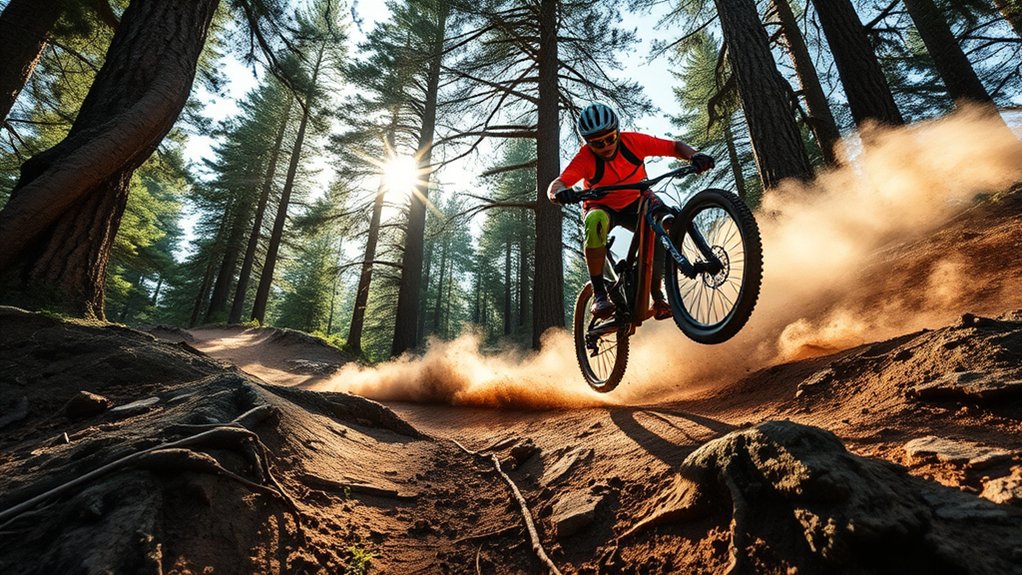
Focus on these main techniques: lean your bike, not your body, into the turn to keep your traction. Look ahead through the corner so you can anticipate the trail’s path.
Keep your inside pedal up to avoid hitting obstacles. Brake smoothly and early before the turn, rather than during it. Shift your weight slightly back to stay stable on steep, tricky turns.
Tackle Rocks, Roots, and Drops With Confidence
When you approach rocky sections, roots, and drops with confidence, you’ll control your bike better and keep your flow on the trail. Keep your weight centered and stay loose to absorb impacts easily.
Look ahead to pick the smoothest line and avoid sudden braking, which can throw off your balance. When riding over roots and rocks, lift your front wheel slightly to roll over obstacles smoothly.
For drops, shift your weight back and extend your arms and legs to absorb the landing. Stay relaxed to prevent stiffness and help with control. Practice these techniques at a comfortable pace until they feel natural.
Build Confidence by Riding Progressive Trails
Gaining confidence on technical features like rocks and drops helps you build a solid foundation for tackling more challenging terrain. To do that, start with trails that gradually increase in difficulty. This way, you can develop your skills step-by-step without feeling overwhelmed.
Focus on mastering each section before moving on to the next. Choose trails that match your current skill level and slowly push yourself to try harder ones as you improve. Practice key techniques like cornering, braking, and body positioning on the easier parts first.
Master each section and practice key techniques on easier trails before tackling more challenging terrain.
Riding with more experienced friends can be really helpful. Watch how they navigate tricky spots and learn from their lines. Taking breaks to analyze difficult sections and plan your approach can also boost your confidence.
Celebrate small wins along the way. Recognizing your progress keeps you motivated and helps you stay on track as you grow more comfortable on those trails.
Maintain Your Downhill Bike for Safety
Because downhill biking puts intense stress on your equipment, you need to keep your bike in top condition to ride safely. Regularly check your suspension for leaks or damage, and make sure it’s properly adjusted for your weight and riding style.
Inspect your brakes before every ride. Ensure the pads have enough material and the rotors aren’t warped. Keep your tires inflated to the right pressure—too low or high can affect control and traction.
Clean your drivetrain often to prevent dirt buildup, which can cause shifting problems. Also, tighten all bolts, especially on the handlebars, stem, and wheels, to avoid unexpected loosening during your ride.
Consistent maintenance helps you avoid mechanical failures and keeps you confident on challenging descents.
Fall Safely and Avoid Injuries
Keeping your bike in top shape reduces the chances of mechanical failure, but falls can still happen on downhill trails. When they do, knowing how to fall safely can help minimize injuries. Focus on staying relaxed and protecting yourself.
Maintaining your bike lowers failure risks, but knowing how to fall safely is key to minimizing injuries.
Here’s how you can fall safely and avoid injury:
- Keep your arms and legs loose to absorb impact better.
- Try to roll instead of landing stiffly to spread out the force.
- Avoid putting your hands out straight to prevent wrist fractures.
- Protect your head with a helmet and tuck your chin during a fall.
- Use your body to shield vital areas and avoid awkward twists.
Frequently Asked Questions
What Are the Best Nutrition Tips for Downhill Mountain Biking?
You’ll want to fuel up with complex carbs like oats or whole grains before riding to keep your energy steady. Staying hydrated is key, so sip water or electrolyte drinks throughout your ride.
Pack protein-rich snacks like nuts or jerky to help with muscle recovery. Try to avoid heavy meals right before biking to prevent feeling sluggish.
After your ride, aim for a balanced meal with carbs, protein, and healthy fats. This will help your body repair and recharge for the next trail.
How Do Weather Conditions Affect Downhill Biking Performance?
Weather conditions directly impact your downhill biking performance by affecting trail grip, visibility, and bike handling. Wet or muddy trails make it slippery, so you’ll need to slow down and adjust your braking.
Dry, dusty conditions reduce traction but can help you go faster. Fog or rain can limit your vision, so you’ll need to ride more cautiously.
Always check the forecast, dress appropriately, and adapt your riding style to stay safe and keep control.
What Mental Preparation Techniques Help With Downhill Biking?
You’ll want to practice visualization to mentally rehearse the trail and anticipate obstacles. Stay calm by focusing on your breathing, which helps keep nerves in check and sharpens your concentration.
Build confidence through positive self-talk, reminding yourself of your skills. Setting clear goals for each ride keeps you motivated and focused.
Finally, adopt a growth mindset. View challenges as opportunities to learn and improve your downhill biking performance.
How to Choose the Right Downhill Biking Trails for Beginners?
Imagine stepping onto a gentle, winding path through a sun-dappled forest. To pick the right beginner trail, look for smooth terrain with minimal technical obstacles and clear signage.
Choose trails rated easy or green to build confidence. Check local trail maps or apps for user reviews, and start with shorter routes.
This way, you’ll enjoy the thrill without feeling overwhelmed, setting the stage for your downhill biking adventure.
What Are the Common Injuries and Recovery Tips for Downhill Riders?
You’ll probably get bruises, scrapes, sprains, and sometimes even fractures when downhill biking.
To recover properly, rest up, apply ice to the injured area, and keep it elevated.
Don’t rush back onto the trails—make sure your body has fully healed first.
Gently stretch and do rehab exercises to help regain strength and flexibility.
Wearing the right protective gear can prevent many injuries, so always gear up before hitting the trails.
Listen to your body and see a doctor if the pain doesn’t go away or gets worse.
Conclusion
Downhill mountain biking might seem intimidating at first, but once you get the hang of your bike and master the basics, it becomes an exhilarating adventure. Picture yourself confidently maneuvering rocky trails and feeling the rush as you control your speed and choose the perfect line.
With the right gear and practice, you’ll stay safe and have a blast. Don’t hesitate—embrace the challenge and let the trail be your playground.
By following these steps, you’ll become more comfortable with downhill mountain biking and enjoy every thrilling ride.