How to Mountain Bike for Beginners
Getting started with mountain biking can be overwhelming, especially if you’re not sure where to begin. You’re not alone—many beginners struggle with choosing the right gear and feeling confident on the trails. Luckily, with a few simple tips, you’ll be riding smoothly in no time.
To start mountain biking, pick the right bike that fits your trails and body well. Test ride both hardtail and full-suspension options to see what feels best.
Gear up with a fitting helmet, gloves, and sturdy shoes to stay safe and comfortable.
Do quick safety checks, keep your bike clean, and adjust tire pressure often. Focus on body posture, gentle braking, and smooth weight shifts while riding.
Control your speed and wear protection for safety.
Keep exploring, and you’ll soon gain more skills and confidence on every ride.
Key Takeaways
- Choose a mountain bike that fits well and suits your trail type, either hardtail or full-suspension.
- Wear essential gear like a helmet, gloves, padded shorts, and grippy shoes for safety and comfort.
- Perform a safety check before riding. Make sure your tires have the right pressure, your brakes are working, and the chain is lubricated.
- Practice proper body positioning. Keep your elbows bent and knees slightly flexed. Keep your weight centered on the bike and use smooth braking techniques.
- Start on easy trails and take your time to control your speed. Use hand signals to communicate with others and carry tools and water so you’re prepared for anything.
How to Choose the Right Mountain Bike for Beginners
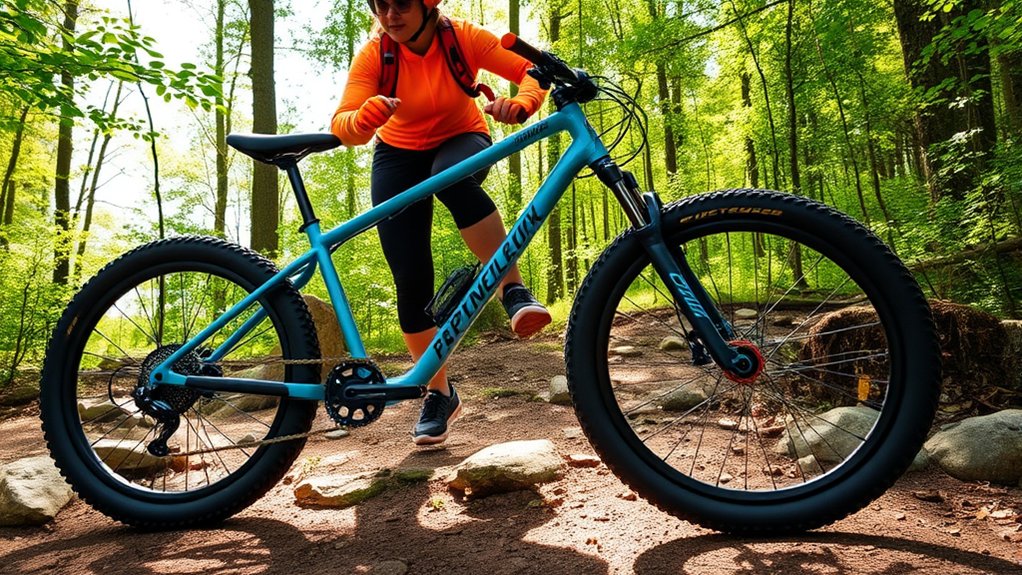
How do you pick the perfect mountain bike when you’re just starting out? First, think about the kind of trails you’ll ride—cross-country, trail, or downhill. Each type needs a different style of bike.
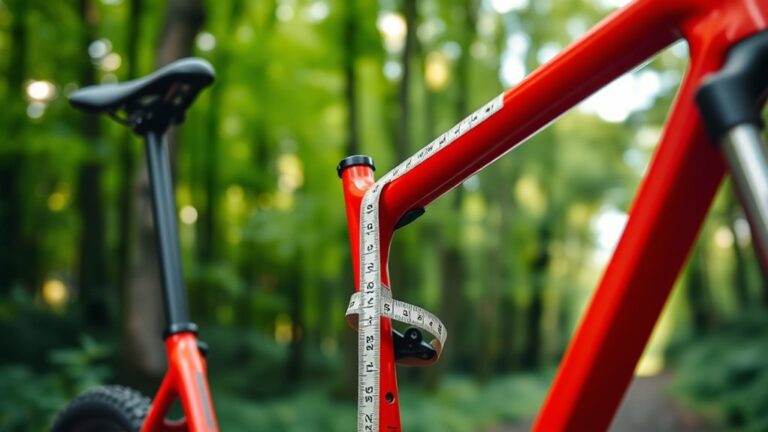
Next, focus on finding the right frame size. The right fit makes a big difference in comfort and control. Don’t be afraid to test ride a few bikes to see what feels best.
Finding the right frame size is key for comfort and control—test ride to discover your perfect fit.
If you want something lighter and easier to maintain, go for a hardtail with front suspension. But if you plan to tackle rougher terrain, a full-suspension bike might be a better choice.
Pay attention to the bike’s weight, gear range, and brake type. Hydraulic disc brakes provide better stopping power, which is important for safety.
Finally, set a realistic budget. You don’t need the most expensive bike to start enjoying mountain biking.
How to Pick Essential Mountain Biking Gear
Choosing the right mountain biking gear can make all the difference in your comfort, safety, and performance on the trails. Start with a good helmet that fits snugly and meets safety standards. Your head’s protection is vital.
Invest in gloves to improve grip and protect your hands from scrapes. Wear padded shorts or pants designed for biking to reduce discomfort on rough rides.
Don’t forget sturdy, grippy shoes that clip into your pedals or provide solid traction. A hydration pack or water bottle keeps you fueled and hydrated.
Finally, consider protective eyewear to shield your eyes from dust, debris, and sunlight. With this essential gear, you’ll ride confidently and stay safe as you navigate mountain biking.
How to Prepare and Maintain Your Mountain Bike
Before you hit the trail, make sure your bike is ready with the right gear and a quick safety check.
Regular maintenance keeps your ride smooth and helps prevent breakdowns.
Let’s go over the essential bike gear, routine upkeep, and what to check before every ride.
Essential Bike Gear
A well-maintained mountain bike guarantees a safer, smoother ride and helps you tackle trails with confidence. To get started, you’ll need essential gear that keeps you protected and prepared.
Always wear a sturdy helmet designed for mountain biking to protect your head. Gloves improve grip and protect your hands from blisters and scrapes. Invest in padded shorts to reduce discomfort on rough terrain.
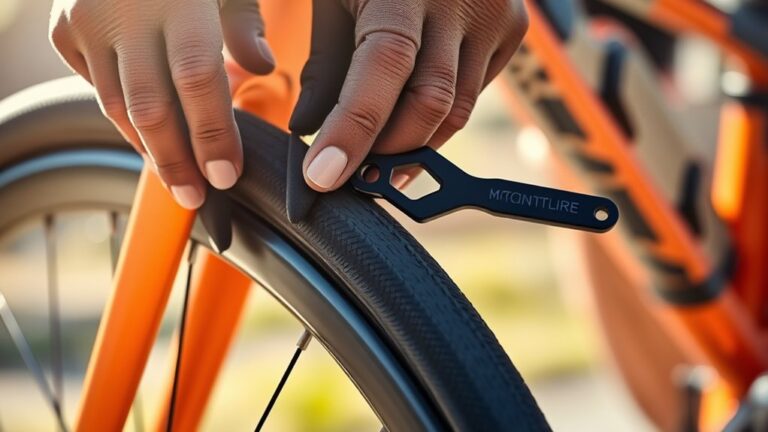
Bring a hydration pack or water bottle to stay hydrated during rides. Equip your bike with a basic repair kit containing tire levers, a pump, spare tubes, and a multi-tool for quick fixes.
Don’t forget protective eyewear to shield your eyes from dust and debris. With these essentials, you’ll enjoy safer, more comfortable rides every time.
Routine Maintenance Tips
Keeping your bike in top shape goes hand in hand with having the right gear. Start by cleaning your bike regularly to remove dirt and grime that can wear down components. Use a gentle brush, water, and bike-specific cleaner.
After cleaning, dry your bike thoroughly to prevent rust. Then, lubricate the chain and moving parts to ensure smooth shifting and pedaling. Check your tire pressure often; properly inflated tires improve control and reduce flats.
Inspect bolts and screws, tightening any loose ones to keep everything secure. Also, examine brake pads for wear and replace them if needed. By sticking to these routine maintenance steps, you’ll extend your bike’s lifespan and enjoy safer, more reliable rides every time you hit the trails.
Pre-Ride Safety Checks
Although you’ve done routine maintenance, it’s still a good idea to do a quick pre-ride safety check to make sure your mountain bike is trail-ready. This simple step can help prevent accidents and mechanical issues while you’re out riding.
Before you hit the trail, check your tire pressure and look for any cuts or punctures. Make sure your brakes respond quickly and feel firm. It’s also important to confirm your chain is clean, lubricated, and properly tensioned.
Don’t forget to tighten all bolts, especially on the handlebars and seat post. Finally, test your suspension to ensure it moves smoothly and rebounds properly. Taking a few minutes now can make your ride safer and more enjoyable.
How to Master Basic Mountain Biking Techniques
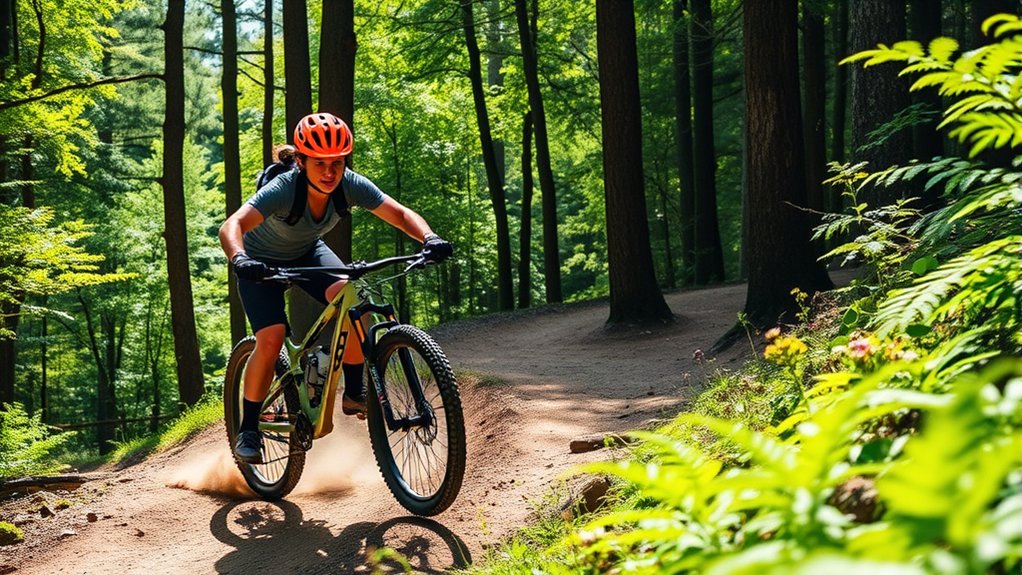
Mastering basic mountain biking techniques sets the foundation for a safe and enjoyable ride. Start by practicing your body position: keep your elbows bent, knees slightly flexed, and stay centered over the bike to maintain balance.
Learn to shift your weight smoothly when climbing or descending to avoid slipping or tipping. Use your brakes wisely—apply both front and rear brakes gently and evenly to control speed without skidding.
Practice pedaling smoothly and maintaining a steady cadence to improve efficiency. Get comfortable with basic turns by leaning your bike slightly while keeping your body upright.
Finally, build confidence by riding on easy trails, focusing on control rather than speed. These techniques will prepare you for more advanced skills and varied terrain.
How to Read Mountain Bike Trails and Navigate Terrain
When you learn to read mountain bike trails effectively, you’ll navigate terrain more confidently and safely. Start by scanning the trail ahead to spot obstacles and choose your line early. Look for changes in surface texture, like rocks or roots, which affect traction.
Notice trail signs or markers that indicate difficulty or directions. Adjust your speed to match trail conditions, slowing down for technical sections. Use your body to absorb bumps and maintain balance.
Key points to read trails and navigate terrain include spotting obstacles early to plan your path, recognizing surface changes for better grip, following trail markers for safe navigation, controlling speed to handle varied terrain, and shifting your weight to stay stable.
Mastering these tips will make every ride smoother and more enjoyable.
Tips for Staying Safe and Confident on Your First Mountain Bike Rides
Reading trails well gives you a good start for your rides, but staying safe and confident is about more than just knowing the path ahead.
Wear a helmet, keep your speed comfortable, and always signal what you’re doing to others. Practice the basic bike skills, and don’t be afraid to walk tricky sections if needed.
Staying hydrated and carrying some essential tools can really boost your confidence too. Here’s a quick guide:
| Tip | Why It Matters | Quick Action |
|---|---|---|
| Wear a Helmet | Protects your head | Always buckle up |
| Control Speed | Prevents crashes | Ride within your limits |
| Signal Others | Avoid collisions | Use hand signals |
| Practice Skills | Builds control | Try easy trails first |
| Carry Essentials | Prepare for issues | Bring water and tools |
These simple steps help you enjoy mountain biking safely and with confidence.
Frequently Asked Questions
What Are the Best Mountain Biking Destinations for Beginners?
You’ll love places like Moab in Utah, which offers smooth beginner trails with stunning views.
Try the Kingdom Trails in Vermont. They have well-marked, gentle paths perfect for newbies.
If you’re near California, check out Downieville for its beginner-friendly routes.
Also, the Whistler Bike Park in Canada has dedicated beginner zones.
These spots give you great terrain to build skills without feeling overwhelmed, so you’ll enjoy your rides and gain confidence quickly.
How Can I Join a Local Mountain Biking Group or Club?
Did you know that 65% of mountain bikers say joining a group helped them improve faster?
To find a local mountain biking group, try searching online forums or social media for clubs nearby. Checking out community centers or bike shops can also be helpful—they often host or know about local rides.
Don’t be shy about attending meetups or group rides to see if the vibe feels right for you.
Once you find a group, jump in and ride regularly to get better and make some new friends!
What Is the Environmental Impact of Mountain Biking?
Mountain biking can impact the environment by causing trail erosion, disturbing wildlife, and spreading invasive plants. When you ride off designated trails, you risk damaging fragile ecosystems.
However, if you stick to marked paths and avoid sensitive areas, you can minimize harm. You should also clean your bike to prevent plant seeds from spreading.
How Do I Improve My Endurance for Longer Rides?
To improve your endurance for longer rides, start by gradually increasing your ride duration and intensity each week. This helps your body adapt without overdoing it.
Incorporate interval training, switching between high and low effort, to build stamina faster. Don’t forget to fuel your body with proper nutrition and stay hydrated along the way.
Cross-training with activities like running or swimming can boost your cardiovascular fitness and overall endurance.
Finally, make sure you’re getting enough rest and recovery so your muscles can adapt and grow stronger for those longer rides.
What Are Common Injuries and How to Treat Them?
Common mountain biking injuries include cuts, bruises, sprains, and sometimes fractures. If you get a minor cut or bruise, clean it right away and put on some antiseptic.
For sprains, RICE—rest, ice, compression, and elevation—helps reduce swelling.
If you think you might have a fracture or a serious injury, don’t wait—seek medical help immediately.
Always wear protective gear to lower your chances of getting hurt, and listen to your body so you don’t push too hard too soon.
Conclusion
Now that you know the basics, keep in mind that over 50% of new mountain bikers quit within their first year. Don’t be one of them! Stay committed by choosing the right bike, gearing up properly, and practicing essential techniques.
Keep learning to read trails confidently and maintain your bike regularly. With patience and persistence, you’ll build skills, enjoy every ride, and stay safe on the trails.
Getting started with mountain biking is exciting, and with the right approach, you’ll develop confidence and have fun exploring new terrains. Embrace the adventure of mountain biking and enjoy every moment on the trails!