How to Jump a Mountain Bike in 7 Essential Steps
Many mountain bikers dream of pulling off big jumps, but the thought of tackling a ramp can be intimidating. You’re not alone—most riders struggle with mastering the proper technique at first. With a little practice, you’ll build confidence and start flying through the air smoothly.
To jump a mountain bike, start by finding a comfortable riding position with bent knees and relaxed elbows. Approach the jump at steady speed, aiming for a square takeoff.
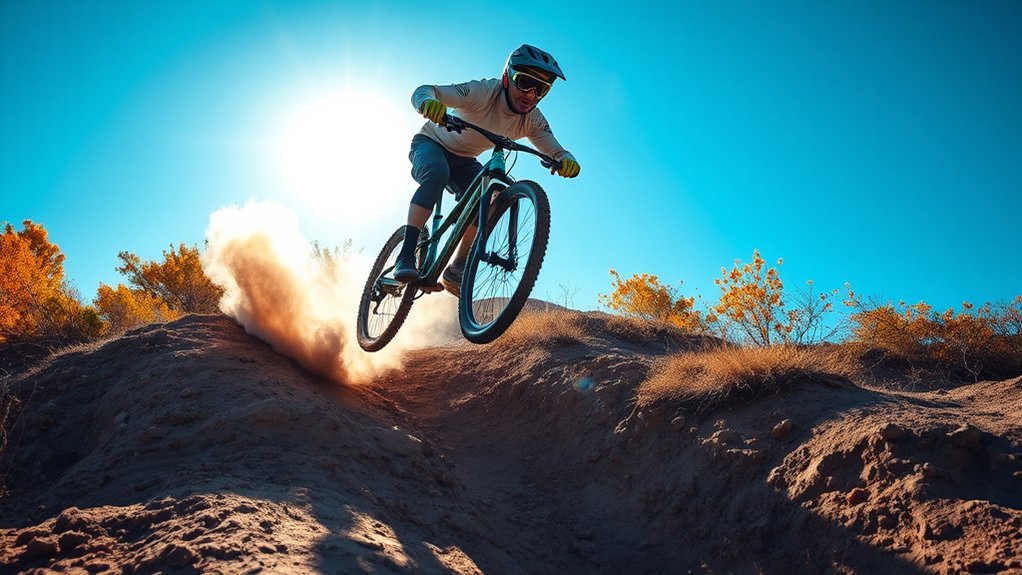
Absorb the ramp using your legs and arms, then pull up the front wheel to launch. Level out the bike in midair for smooth flight, and prepare for a safe landing by staying centered and bending your knees.
Master these basics, and you’ll soon handle jumps confidently and smoothly.
Key Takeaways
- Stand with your knees bent and grip the handlebars firmly but stay relaxed. This helps you maintain a balanced and comfortable riding position.
- Approach the jump at a steady, controlled speed. Aim squarely at the takeoff ramp to keep things smooth and predictable.
- As you reach the ramp, bend your knees and elbows to absorb the shocks. Keep your body relaxed and flexible so you can react easily.
- Use your arms and legs to shift your weight and level the bike while you’re in the air. This helps you stay stable and in control.
- When you land, keep your knees and elbows bent. Try to stay centered over the bike to absorb the impact smoothly.
Find Your Comfortable Riding Position
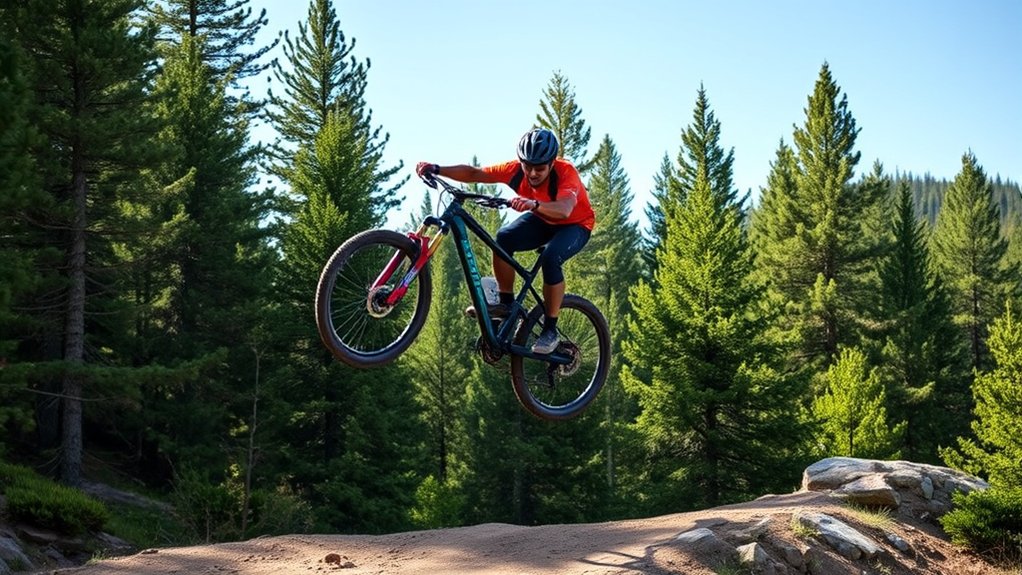
Before you try any jumps, make sure you’re in a comfortable riding position that gives you control and balance. Stand on the pedals with your knees slightly bent and your feet parallel.
Keep your elbows out and stay relaxed to absorb shocks. Your weight should be centered over the bike—neither too far forward nor back.
Maintain relaxed elbows and balanced weight to smoothly absorb shocks and stay in control.
Adjust your seat height so you can shift your weight easily without straining. Grip the handlebars firmly but not too tight, so steering stays smooth.
This stance helps you react quickly and stay stable when you lift off and land. Taking the time to lock in this position builds confidence and sets you up for successful mountain bike jumps.
Approach the Jump With Proper Speed and Line
Once you’re in a comfortable riding position, focus on your speed and line as you get ready for the jump. Keep your pace steady—fast enough to clear the gap but controlled enough to stay balanced.
If you go too slow, you risk not making it; go too fast, and you might overshoot or lose control. Pick a smooth, straight line, avoiding obstacles or uneven terrain along the way.
Approach the takeoff ramp squarely so your wheels hit it evenly. Keep your eyes on the landing spot, not just the jump itself, to help your body prepare for a smooth landing.
Absorb the Takeoff Using Your Legs and Arms
As you reach the takeoff ramp, your legs and arms should flex to absorb the impact smoothly. This helps you stay in control and maintain your balance, setting you up for a clean jump.
Here’s how to do it effectively:
- Bend Your Knees and Elbows: Keep them slightly bent so they act as natural shock absorbers. This prevents a harsh impact when you hit the ramp’s lip.
- Stay Relaxed but Ready: Don’t stiffen up. Tension can throw off your balance. Keep your muscles engaged but flexible.
- Adjust Pressure Dynamically: As you move up the ramp, shift your weight subtly through your limbs. This helps you adapt to changes in terrain and speed.
Absorbing the takeoff with your legs and arms makes your jump smoother and more controlled every time.
Pull Up the Front Wheel to Start Your Mountain Bike Jump
Lift your front wheel by quickly pulling up on the handlebars just as you reach the ramp’s lip. This motion starts your jump and determines your bike’s path. Timing is key—pull too early or too late, and you could lose control or not clear the jump.
Use your arms to smoothly lift, not jerk, the front wheel. Keep your balance and momentum. Your body should stay centered, with elbows slightly bent to absorb impact. Keep your eyes focused ahead so you can react quickly.
Pulling up the right way helps prevent nosedives and gets you ready for the next step. Practice this on smaller ramps first to build confidence before trying bigger jumps. Mastering this will make your mountain bike jumps safer and more controlled.
Level Out Your Bike in Midair for Smooth Flight
Although getting airborne feels thrilling, you need to level out your bike quickly in midair to keep control and prepare for a smooth landing. After pulling up the front wheel, focus on adjusting your bike’s angle to stay balanced and flat.
Here’s how you do it:
- Shift your weight: Move your body slightly forward or backward to counteract the tilt and level the bike.
- Use your arms and legs: Extend or compress your limbs to make small adjustments to your bike’s pitch and stay stabilized.
- Keep your eyes focused ahead: This helps you sense the bike’s orientation and make quick corrections.
Mastering this step makes your jump controlled and sets you up perfectly for landing.
Prepare for a Safe and Controlled Landing
To land safely and stay in control, prepare your body and bike before you touch down. Keep your knees and elbows slightly bent to absorb the impact, acting like natural shock absorbers.
Stay centered over the bike, with your weight evenly balanced on the pedals. This helps you react quickly to uneven terrain when you land.
As you get close to the ground, focus on spotting your landing spot so you can adjust your bike’s angle if needed. Use your legs to soften the impact by bending them as you land, and avoid locking your limbs to reduce jarring forces.
Hold a firm grip on the handlebars, but don’t tense up—relax to keep better control. These steps help you land smoothly and confidently every time.
Avoid Common Mountain Bike Jumping Mistakes
To jump your mountain bike confidently, you need to avoid common mistakes like incorrect body positioning and poor speed control. Staying balanced and keeping your speed in check will help you land jumps smoothly.
Let’s look at how to get these key elements right. Focus on your stance and make sure your body is aligned properly before launching. Practicing these basics will make a big difference in your jumps.
Incorrect Body Positioning
When you jump a mountain bike, keeping the right body position is key for control and safety. Incorrect positioning can throw off your balance and cause crashes. Be sure to avoid these common mistakes:
Leaning Too Far Forward or Backward: Stay centered over the bike to keep stable in the air. Leaning too much can make you nose-dive or tail-whip when you land.
Stiff Arms and Legs: Keep your limbs slightly bent to absorb shocks and adjust your balance mid-air. Rigid limbs make it harder to react quickly.
Looking Down: Always look ahead, not at the front wheel. Looking down throws off your body alignment and timing for landing.
Getting the hang of proper body positioning will help you land smooth, controlled jumps every time.
Poor Speed Control
Mastering your speed is key to successfully jumping on a mountain bike. If you come in too fast, you might overshoot the landing zone, which can cause you to lose control or crash.
On the other hand, going too slow can make you stall mid-air or not clear the obstacle at all. To prevent poor speed control, check the jump’s size and terrain before you start riding.
Adjust your pace smoothly using throttle or pedal inputs instead of sudden bursts. Practice keeping a steady speed that matches what the jump requires.
Frequently Asked Questions
What Type of Mountain Bike Is Best for Jumping?
You’ll want a trail or dirt jump mountain bike for jumping since they’re built tough and handle impacts well. Look for a bike with strong suspension, usually front forks with around 100-150mm travel, or a hardtail with a sturdy frame.
Lightweight frames made from aluminum or carbon help you get more air, while durable tires give you good grip on takeoff and landing. This setup lets you jump confidently and safely.
How Do I Maintain My Bike After Frequent Jumps?
Maintaining your bike after frequent jumps is like tuning a guitar—you need precision and regular care. Check your suspension for leaks and make sure it’s working properly.
Tighten all bolts and inspect your tires for wear or any damage. Clean and lubricate the chain so it stays smooth and responsive.
Don’t forget to look over your brakes and spokes for any signs of stress or damage. Staying consistent with these steps keeps your bike ready to fly again safely.
What Protective Gear Is Essential for Mountain Bike Jumping?
You absolutely need a full-face helmet to protect your head during jumps. Don’t forget gloves to improve grip and shield your hands.
Knee and elbow pads are essential to prevent scrapes and bruises if you fall. Wearing sturdy, supportive shoes helps control the bike better.
Consider padded shorts for added comfort and protection. Investing in quality gear keeps you safe and confident while you push your limits on the trails.
Can Beginners Learn Mountain Bike Jumping on Their Own?
Yes, you can learn mountain bike jumping on your own, but it’s important to start small and take it step by step. Watch tutorials, practice basic skills like bunny hops, and pick safe, controlled spots to ride.
Getting feedback from experienced riders or instructors can help you avoid bad habits and stay safe. Don’t rush—focus on building confidence and perfecting your technique before trying bigger jumps.
Always wear protective gear to reduce the risk of injuries and make your learning experience safer.
How Do Weather Conditions Affect Mountain Bike Jumping?
When weather throws a wrench in the works, it directly impacts your mountain bike jumping. Wet or muddy trails make your tires slip, reducing control and increasing the risk of crashes. Wind can throw off your balance mid-air, making landings tricky.
Even dry, dusty conditions can reduce traction. You’ve got to read the terrain like a book and adjust your speed, approach, and landing to stay safe and in control.
Conclusion
Just as you find your perfect balance on the trail, jumping your mountain bike comes down to timing, control, and confidence.
By nailing your approach, pulling up your front wheel, and leveling out midair, you’ll land smoothly every time.
Remember, every jump is a chance to improve, so don’t fear mistakes. They often lead to your best rides.
Now, go ahead—your next jump might just be the one that feels like flying.
Master these steps and you’ll boost your mountain biking skills with every jump.