How Can You Ride a Mountain Bike Safely on the Road?
Many mountain bikers dream of hitting the road to enjoy a different kind of ride, but navigating traffic can feel daunting. You’re not alone—staying safe on the road while riding your mountain bike is a common concern. The good news is, with a few simple tips, you can boost your confidence and keep yourself protected.
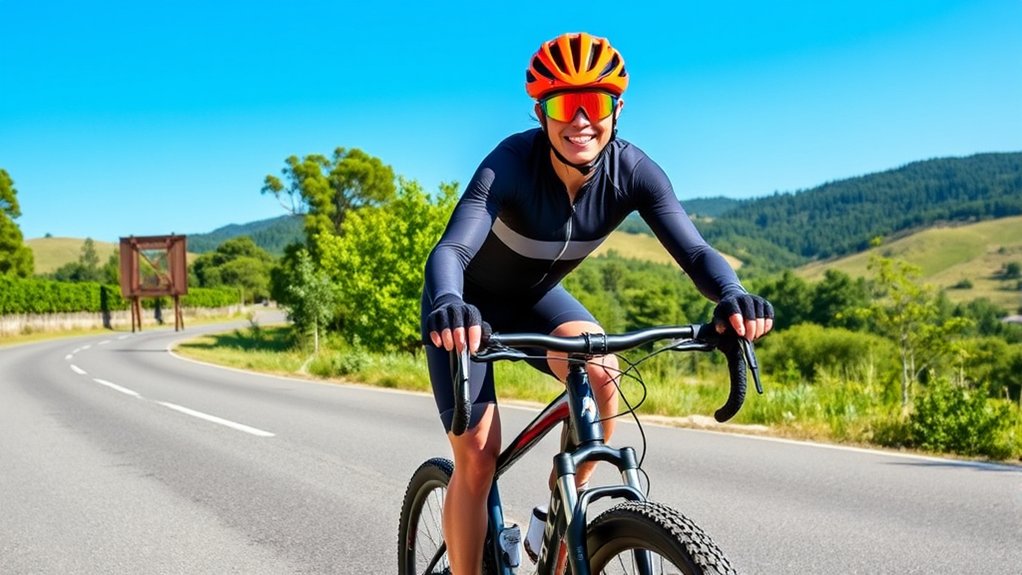
To ride your mountain bike safely on the road, stay alert to traffic and follow all traffic laws like stopping at red lights and signaling turns clearly. Wear bright, reflective clothing and use lights to boost your visibility, especially in low light.
Choose appropriate tires for smoother rides and plan routes with less traffic.
Keep control by watching for hazards and making eye contact with drivers. If you want to feel more confident and prepared on the road, there’s plenty more useful advice ahead.
Key Takeaways
- Always obey traffic laws, including stopping at red lights and signaling turns clearly with hand signals.
- Wear bright, reflective clothing and use front and rear lights to help others see you, especially in low light conditions.
- Position yourself in the right third of the lane, avoiding the curb and keeping a safe distance from parked cars.
- Choose tires that have good grip and puncture protection. Inflate them to a high PSI for a smoother ride.
- Plan your routes to avoid heavy traffic whenever possible. Stay alert for hazards and stay calm if you encounter emergencies.
How To Stay Safe Riding Your Mountain Bike On Roads
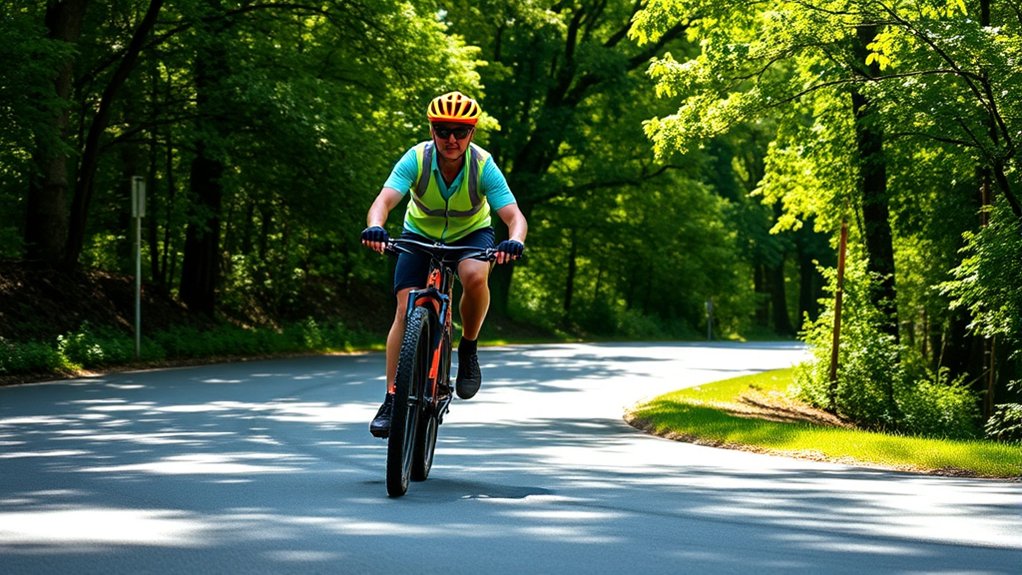
Riding your mountain bike on busy roads requires extra caution and awareness. Stay alert to traffic patterns and try to anticipate what drivers might do next. Always follow traffic laws—stop at red lights, signal your turns, and ride in the same direction as cars.
Keep a safe distance from parked cars to avoid surprises like doors opening. Use both hands to control your bike, but be ready to signal when needed. Look ahead for hazards such as potholes, gravel, or debris that could make you lose balance.
Watch out for pedestrians and other cyclists, especially at intersections. Stay predictable by maintaining a steady line and consistent speed. If you ever feel unsafe, consider taking a quieter route or using a bike lane if it’s available.
Your focus and caution are what keep you safe on the road.
How To Make Yourself Visible On Your Mountain Bike Ride
To stay safe on the road, you need to make sure drivers can see you clearly. Wear bright, reflective gear and equip your bike with front and rear lights.
Also, position yourself where you’re most visible to traffic at all times. This way, you’ll be easier for drivers to spot and avoid.
Wear Bright Reflective Gear
Few things boost your safety on the road more than wearing bright reflective gear. It helps drivers see you better, especially in low light or bad weather.
Choose clothing and accessories that reflect light from all angles so you stand out from the road environment. Reflective vests, jackets, and ankle bands are great options that don’t sacrifice comfort.
Here’s a quick guide to help you pick the right gear:
| Gear Type | Visibility Level | Best Use Case |
|---|---|---|
| Reflective Vest | High | Urban riding |
| Reflective Bands | Medium | Evening rides |
| Reflective Jacket | Very High | Early morning rides |
Wearing bright reflective gear ensures drivers spot you early, making for a safer mountain bike ride.
Use Front And Rear Lights
Bright reflective gear helps you stand out during the day and in low light. But when darkness falls, front and rear lights become your best defense.
Make sure your mountain bike has a bright white front light to illuminate the road ahead and help drivers see you from a distance. A red rear light is just as important—it alerts vehicles approaching from behind.
Choose lights with multiple brightness settings and flashing modes to grab more attention. Always charge your lights before heading out, and carry spare batteries or a power bank to avoid running out of power mid-ride.
Using both lights consistently, especially at dawn, dusk, or night, ensures you stay visible and safe. This helps you share the road smoothly with cars and other cyclists.
Position Yourself For Visibility
Although wearing lights and reflective gear is essential, positioning yourself strategically on the road can really boost your visibility to drivers. Ride where drivers expect you—typically in the right third of the lane—to avoid surprises.
Don’t hug the curb too closely, as that can make you less noticeable and increase your risk of hazards like debris or drainage grates. Instead, claim your space confidently, especially at intersections and when approaching parked cars, to prevent drivers from squeezing past unsafely.
Make eye contact with drivers whenever possible to ensure they see you. Adjust your position to stay clear of blind spots and avoid weaving between lanes.
Essential Traffic Rules Every Mountain Biker Should Know
To stay safe on the road, you need to obey all traffic signals just like any other vehicle.
Always use proper hand signals to clearly communicate your intentions to drivers and pedestrians.
Following these basic rules helps you ride predictably and avoid accidents.
Obey Traffic Signals
When you ride your mountain bike on the road, obeying traffic signals is crucial for your safety and everyone else’s. Traffic lights, stop signs, and pedestrian signals help control the flow of vehicles, so ignoring them raises the risk of accidents.
Always stop completely at red lights and stop signs, even if the road looks clear. This gives you a chance to check for cross traffic and avoid collisions. Only go when the signal shows it’s safe to do so.
Pay attention to green arrows that guide specific turns. Never run a yellow light unless you’re sure you can clear the intersection safely. Following these signals helps you predict what other drivers will do and keeps the road orderly.
Sticking to traffic signals makes your ride safer for you and everyone sharing the street.
Use Proper Hand Signals
Two essential hand signals you should master are turning left and right, as well as stopping, since they communicate your intentions clearly to drivers and other cyclists. Using these signals helps prevent accidents and keeps traffic flowing smoothly.
Here’s a simple guide:
| Signal | How to Perform | When to Use |
|---|---|---|
| Left Turn | Extend your left arm straight out | Before making a left turn |
| Right Turn | Extend your right arm straight out | Before making a right turn |
| Stop/Slow | Extend your left arm downward | When slowing down or stopping |
Always signal well before you change direction or stop so others have enough time to react. Practice these signals until they feel natural. It’s key to riding safely on the road.
Choosing The Right Tires And Gear For Road Riding
Selecting the right tires and gear can really boost your mountain bike’s performance on the road. To ride smoothly and safely, focus on tires that cut down on rolling resistance and pick gear ratios that fit flat, paved surfaces.
Here’s what you should consider:
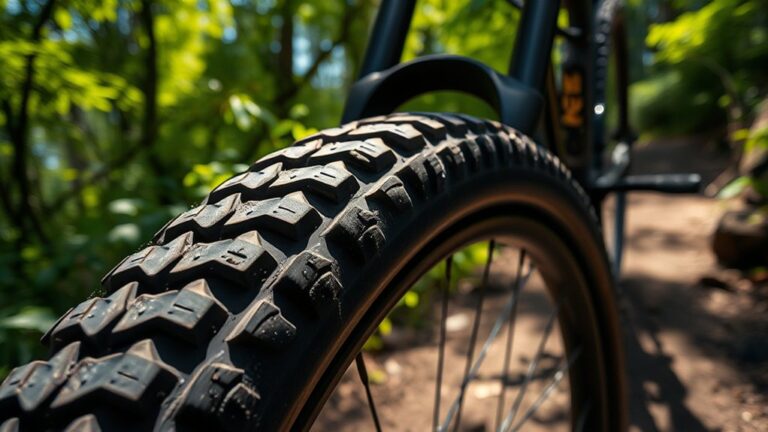
- Tire type: Go for slick or semi-slick tires for better grip and faster rides.
- Tire width: Choose narrower tires, around 1.5 to 2 inches, to reduce drag.
- Tire pressure: Inflate your tires to a higher PSI to help them roll more smoothly.
- Gear ratio: Use higher gears to keep a steady pace on flat roads.
- Durability: Pick tires with puncture protection so you don’t get flats easily.
Planning Your Mountain Bike Route To Avoid Traffic Hazards
Although mountain biking on roads can be exciting, you should plan your route carefully to avoid heavy traffic and hazards. Choose quieter streets or dedicated bike paths when possible.
Avoid rush hours and busy intersections to stay safe. Use cycling-specific mapping apps to find better routes.
Think about the road surface and visibility, too. Smooth pavement and well-lit areas make riding safer. Here’s a quick guide to help you plan:
| Factor | Tip |
|---|---|
| Traffic Volume | Pick low-traffic streets |
| Time of Day | Ride outside peak hours |
| Road Type | Use bike lanes or dedicated paths |
| Visibility | Stay on well-lit, clear roads |
| Surface Quality | Avoid potholes and debris |
Tips To Keep Control On Uneven And Rough Roads
When you come across uneven or rough roads, it’s important to stay in control for your safety and comfort. Keep your balance and stay alert to sudden bumps or debris.
Here are some tips to help you stay steady:
- Slightly bend your elbows and knees to absorb shocks.
- Lean your body a little and shift your weight back for better stability.
- Grip the handlebars lightly to avoid fatigue and stay nimble.
- Keep your eyes on the road ahead to spot obstacles early and find smoother paths.
- Ride at a moderate speed so you can react quickly without losing control.
How To Signal Your Moves Clearly To Drivers And Cyclists
Clear communication is key when sharing the road with drivers and other cyclists. To signal your moves clearly, always use hand signals well in advance.
Extend your left arm straight out to indicate a left turn. For a right turn, bend your left arm upward or, if you prefer, extend your right arm straight out.
To signal slowing down or stopping, bend your left arm downward with your palm facing backward. Make sure your signals are visible and held long enough for others to see.
Always check over your shoulder before changing lanes or turning, combining visual cues with hand signals. This helps keep everyone informed and reduces the risk of accidents.
Clear, timely signals build trust and promote safer road sharing for everyone involved.
What To Do If You Have An Emergency While Riding?
Stay calm and assess the situation immediately if you face an emergency while riding your mountain bike on the road. Your safety and the safety of others depend on how you respond.
First, move to a safe spot off the road to avoid traffic. Then, check yourself and your bike for injuries or damage. If you’re hurt or your bike is damaged, call emergency services or ask a passerby for help.
If you need to signal for assistance, use your phone or a whistle. Remember these steps:
- Pull off the road safely
- Check for injuries
- Inspect your bike
- Call for help if necessary
- Stay visible until help arrives
Staying calm and following these actions can prevent further accidents and help you get the assistance you need quickly.
Frequently Asked Questions
What Type of Mountain Bike Is Best for Road Riding?
You’ll want a mountain bike with smoother, narrower tires, like 29-inch wheels with semi-slick tread. This helps you roll better on pavement and makes riding easier.
A hardtail frame, which has front suspension only, is lighter and easier to handle on roads than full suspension bikes. It’s a more practical choice for road riding.
Look for a bike with multiple gears to handle different terrains and inclines. This will make your ride more comfortable and manageable.
Adding road-friendly accessories like fenders and proper lighting can also boost your ride comfort and safety, especially on longer or darker rides.
How Often Should I Service My Mountain Bike for Road Use?
Think of your mountain bike like a car. You wouldn’t skip oil changes, right?
You should service it every 3 to 6 months if you ride on the road regularly.
Just like a well-oiled engine keeps a car running smoothly, regular tune-ups keep your bike shifting, braking, and rolling safely.
Skipping this can lead to unexpected breakdowns, much like a car stranded on the highway.
Stay ahead to enjoy every ride confidently.
Can I Use Mountain Bike Accessories for Road Cycling?
Yes, you can use mountain bike accessories for road cycling, but choose wisely. Accessories like sturdy pedals, comfortable grips, and reliable lights work well on the road.
However, bulky tires or heavy suspension might slow you down. It’s a good idea to swap in smoother tires for better efficiency.
Tailor your gear to your riding style and comfort. Make sure everything’s secure and suited for road conditions so you can stay safe and enjoy your ride.
What Are the Benefits of Riding a Mountain Bike on Roads?
Riding a mountain bike on roads gives you great control and stability, especially on rough or uneven surfaces.
You’ll appreciate the sturdy frame and wide tires that absorb shocks better than road bikes. Plus, you can explore different terrains without switching bikes.
It’s perfect if you want a versatile ride for both city streets and trails. Just remember to adjust your tires for smoother pavement to boost efficiency and comfort.
How Do Weather Conditions Affect Mountain Bike Road Riding?
Weather conditions greatly impact your mountain bike road riding. Rain makes roads slippery, so you need to slow down and brake earlier.
Wind can push you off balance, requiring you to stay focused and maintain a steady grip. In cold weather, your tires might lose pressure faster, and your hands can get numb, affecting control.
Always check the forecast and dress appropriately to stay safe and comfortable on the road.
Conclusion
Riding your mountain bike on the road can be safe and enjoyable if you stay alert and follow key safety tips. Did you know that wearing bright, reflective gear can reduce your chance of accidents by up to 70%? That’s huge!
By making yourself visible, obeying traffic rules, and choosing the right equipment, you’ll protect yourself and enjoy every ride. Staying aware of your surroundings is key—always look both ways and watch out for cars.
Stick to your lane, use hand signals, and keep a safe distance from vehicles. These simple steps make a big difference when riding your mountain bike on the road.
Remember, riding safely on the road involves staying confident, cautious, and prepared. With the right gear and good habits, you can enjoy every ride safely.